When you click on links to various merchants on this site and make a purchase, this can result in this site earning a commission. Affiliate programs and affiliations include, but are not limited to, the eBay Partner Network.
23 yrs ago I bought a gallon of RM Firefrost Gold for a 69 HO, thinking it would be a short time before needing it, ha ha…. Well, 23 yrs later, the car is getting closer for paint. We recently purchased RM Diamont Cameo white in base coat.
My question is can the Lacquer be used over the base coat ?
Has anyone done this with other situations?
What have the long term results been?
Should I just bite the bullet and have the Firefrost mixed in base coat and be done with it?
is there any value in the gallon of Lacquer?
I would try a test panel to see if they if they will play nice with each other. Spray base over whole panel, add lacquer over half the base then clear over half of that. Don’t use a small panel, at least a square foot if not 1’ x 2’. Make sure that lacquer is fully flashed off and then some before applying clear, 1 very light coat, then one light-med coat, then hose it, each coat flashed as long as you dare push it. This will be interesting but my gut tells me it will work. Lord knows I’m always right, it’s almost a burden! Ya, right.
The safe route is obviously getting some fresh base coat made up, would be good to do a test panel with both to make sure color is what you expect. If not available in Diamont, there might be a formula in Glasurit or R-M that might be compatible, though not technically.
Can you show me the label for the gold?
Check with your paint supplier first and see if they have the knowledge about the product.
If it was me and the two paints will play nice I would lay the white and clear then wet sand and lay the gold and buff.
If it's old lacquer and has aluminum flake, The flake will oxidize just like the original paint did.
In original paint cars you can see the oxidation in the gold.
To retard this keep the exposure to the sun as short as possible.
bccan… yes, it is still liquid. Almost every month since I bought it I would shake it for a few minutes. It has only been opened 4 times since I bought it, most recently this past weekend.
hairy olds… here is a pic of the can with the formula.
Back in 1989 a friend was doing his HO and contacted “Doc” Watson for the formula and he gave that to me when I had mine mixed. I will find the notes and post them when I do.
So if this lacquer has aluminum in it that will oxidize, does the base coat also have the same that will oxidize?
Can you show me the label for the gold?
Check with your paint supplier first and see if they have the knowledge about the product.
If it was me and the two paints will play nice I would lay the white and clear then wet sand and lay the gold and buff.
You and/or your painter will love the extra 1 or 2 days of work! But Hairy O has put a good suggestion out there with clearing between applications of each paint. I would do a test panel on that technique too.
Test panels (man I love those things!) would let you see if oxidation has occurred. If the lacquer is good and can play nice, modern, high quality clear coat has advanced UV protection that would likely preserve the integrity pretty much forever. Lacquer, on it’s own, is a vulnerable paint. Diamont clear is good, Glasurit even better and the highest UV additives, just wear a helmet and shoulder pads to minimize injury when you faint upon hearing the price. You don’t have to use those clears but they at least are under the same corporate umbrella FWIW. There are other good clears available but I have yet to see one as nice as Glasurit.
an old saying:enamel will go over lacquer,but lacquer will not go over enamel.i would test shoot the gold and let it flash then the base flash and clear..
I don't know that much about paint, but everything I've read about it insists that the best way to get good results is to pick one system and stick with it, start to finish.
Technically, any topcoat can go over any basecoat as long as you apply the lacquer within the recoat window of the basecoat. Putting that acrylic lacquer over the basecoat will be no different than putting an acrylic clearcoat over it.
Clearing the white and then wet sanding it to apply the lacquer as suggested is a lot of unnecessary work. It would give you a nice finish, but I would rather buy new paint to avoid the extra labor.
I’ve been painting for about 25 years. Right when I was getting started, my dad was removing that RM from his shops in favor of newer technology from Sherwin-Williams. Seeing that label brings back memories, but I personally never used it on a large scale.
Clearing the white and then wet sanding it to apply the lacquer as suggested is a lot of unnecessary work. It would give you a nice finish, but I would rather buy new paint to avoid the extra labor.
If you want to emulate as closely as you can the way Demmer did it, you would want to finish off the car in white without any stripes, install the chrome bits, and then mask them off and paint the stripes. Then of course, pinstripe the black by hand. Just depends on what you want and what you got to work with.
If you want to emulate as closely as you can the way Demmer did it, you would want to finish off the car in white without any stripes, install the chrome bits, and then mask them off and paint the stripes. Then of course, pinstripe the black by hand. Just depends on what you want and what you got to work with.
I didn’t realize this was a stripe job. I just read back through and still don’t see anything about stripes. I thought he was asking about using the white as a ground coat for the gold. If it is gold stripes on white, then I absolutely agree with you. Paint the car white completely and lay the stripes on top & good to go.
I didn’t realize this was a stripe job. I just read back through and still don’t see anything about stripes. I thought he was asking about using the white as a ground coat for the gold. If it is gold stripes on white, then I absolutely agree with you. Paint the car white completely and lay the stripes on top & good to go.
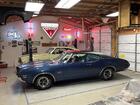
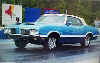
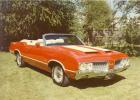
I can only assume it is for a stripe job. Regardless of how you do it, the Cameo white followed by H/O gold usually netted you something that looked a lot like this:
bccan… yes, it is still liquid. Almost every month since I bought it I would shake it for a few minutes. It has only been opened 4 times since I bought it, most recently this past weekend.
hairy olds… here is a pic of the can with the formula.
Back in 1989 a friend was doing his HO and contacted “Doc” Watson for the formula and he gave that to me when I had mine mixed. I will find the notes and post them when I do.
So if this lacquer has aluminum in it that will oxidize, does the base coat also have the same that will oxidize?
Thank you
Before you get too far. Basecast is Urethane FYI. Like others have said. Do a test panel first. Spray out your basecoat on at least a 1'x1' area, flash off, then spray the gold. let dry see what happens. Personally lacquer is old tech, prone to cracking.. If no reaction with the gold, I'd probably shoot a good clear urethane over it. to protect the Lacquer gold, not too heavy on either, just enough to cover nicely. I think too heavy could come and bite ya later.. I can tell you lacquer gold does not hold up well by itself..
Yes, like others have said White 442s were delivered to Demmer and masked off and sprayed gold, then outlined black by hand, probably with a Painter's One Shot enamel..
TEST First and then after dry put in sun for a while like a week , see what happens might save you some grief later..
Personally i Never layer different types of paint , if its lacquer , then lacquer, if Urethane, then all Urethane, and mostly all the same brand to ensure compatibility.
The answer is simple for me. After all the work and materials that goes into painting a car, I wouldn't take any chances on paint that might not work. An old friend of mine had a large inventory of motor cycle lacquer paint. Some really nice metal flake bright colors. In the 80s when we all started painting urethane base clear paints, he would customize some of his cars with stripes and such with lacquer. All the work he did mixing base clear and lacquer didn't hold up well at all. Most of his work had the clear separate from the lacquer. There seemed to be very little adhesion between the different types of paint. Another thing to think about. Do you know how much some one who wants to paint original lacquer fire frost gold on their Hurst would pay for a gallon of lacquer? That stuff is getting impossible to find. ~BOB
Basecoat is typically polyester, could be acrylic and can be either solvent or water based. Clear coat, as applicable here, is a catalyzed urethane polymer that chemically cross links to provide a (relatively) thick, durable finish coating and UV protection. Basecoat is a not too distant cousin of lacquer, it’s very thin, it’s generally non catalyzed, has no durability or UV resistance, it simply sticks to the substrate (primer or sealer). It is just color, possibly containing various metallic flakes and/or micas (pearls). Metallics reflect light, pearls refract light and alter the appearance of the base coat that shows through them. Black basecoat, left uncleared, would like those matte primered cars that are not uncommon except base has a finer texture due to not having nearly the body or substance of a primer.
Basecoat is typically only .5 - 1.5 mils thick, clear coat typically 2-4 mils thick though often applied at 6-8 to leave enough material to wet sand & buff. For comparison, high solids primers can go on at 2 mils per coat and some “spray polyester” primers go on heavier than that. Think about how thick a non saggy coat from an aerosol can is, especially on a vertical surface, that’s right about where basecoat lies.
I still would do some test panels and see what happens. As far as longevity, I can’t say much regarding oxidation of the flake but I am quite sure there will be no oxygen under the clear coat after it is applied. Basically just a matter of material compatibility and integrity of that old paint, which my gut tells me is ok. On the other hand, you wont need more than a quart to do the stripes and making up a new mix may be the prudent course & sell that lacquer as Bob suggested, BUT, I wouldn’t do it until you’ve done test panels.
Do the spray outs and see where you stand, you can use aerosol clear on them so low commitment. When we do quick, on the spot test panels we simply spray them with wax & grease remover to represent the clear coat. Better yet, spray the panels & have body shop (or you) clear (real, catalyzed) them for real, leave them out in sun & see what happens.
To everyone that has replied. Thank you!
I should have mentioned in my original post that the question was in regards to painting out the HO stripes.
Your knowledge and suggestions have been great from each of you, Thank You!
This conversation has lead me to the decision to use a base coat for the stripe as to avoid potential problems mixing two systems, which could effect the paint work down the road.
I will, however, for ***** and giggles, have the painter do a spray out of the cameo white base coat and the lacquer Firefrost to see the color match and results, and will post here later.
Again, a big Thank You to each one of you!
And to the guys that reached out about purchasing the lacquer, I will eventually reach out when I am ready to let it go.
Thanks again to everyone on the best Olds site!