


66 Toronado engine help please


Thread Starter
Slick66
Joined: Sep 2024
Posts: 115
Thanks Koda, actually the origional 425 is in the car now. Problem is I've owned and been driving it for about 5 months. Yesterday I couldn't break 35 mph. The engine has some serious blowby. 150 compression in all cylinders except #7 has 30. Also I put air in that cylinder with the piston at top dead center and could hear air rushing out of the exhaust. 2 weeks ago it was having problems exceeding 60 mph. It doesn't have a tach. Any idea what is going on?

Old(s)GuysRule
Joined: Apr 2016
Posts: 1,550
From: S.E.Georgia
Could be as little as a broken valve spring or as much as a badly burned valve seat according to what you have posted. I would pull the affected cylinder's valve cover and check for a broken valve spring first.
Thread Starter
Slick66
Joined: Sep 2024
Posts: 115
Thanks thats what other people I've talked to are also saying. I've never torn an engine down before but I'm very mechanically inclined. So it does have alot of blowby, smoke and oil comes out of the dipstick, filler tube and breather. Taking the heads off is something that I can handle especially since someone with the knowledge says he'll help me out. My other concern would be the rings though. I guess what I'm asking is what are the odds that if it is a spring or valve issue, that I would also have what appear to be excessive blowby symptoms?

Registered User
Joined: Aug 2011
Posts: 4,098
If that engine sat for a long time the piston rings may be clogged and/or sticking. If it was mine I'd soak the rings for a week or two before condemning them re: the blowby.
#7 blowing air out the exhaust is an exhaust valve related problem. As suggested pull the valve cover to see what is happening in there e.g., the mentioned possible broken spring...seen it before.
As for no power is the distributor by chance loose and rotating causing the timing to retard? Put a vacuum gauge on it to check for an internally collapsed exhaust system. Air intake is unobstructed?
Will it rev without a load?
#7 blowing air out the exhaust is an exhaust valve related problem. As suggested pull the valve cover to see what is happening in there e.g., the mentioned possible broken spring...seen it before.
As for no power is the distributor by chance loose and rotating causing the timing to retard? Put a vacuum gauge on it to check for an internally collapsed exhaust system. Air intake is unobstructed?
Will it rev without a load?
Thread Starter
Slick66
Joined: Sep 2024
Posts: 115
If that engine sat for a long time the piston rings may be clogged and/or sticking. If it was mine I'd soak the rings for a week or two before condemning them re: the blowby.
#7 blowing air out the exhaust is an exhaust valve related problem. As suggested pull the valve cover to see what is happening in there e.g., the mentioned possible broken spring...seen it before.
As for no power is the distributor by chance loose and rotating causing the timing to retard? Put a vacuum gauge on it to check for an internally collapsed exhaust system. Air intake is unobstructed?
Will it rev without a load?
#7 blowing air out the exhaust is an exhaust valve related problem. As suggested pull the valve cover to see what is happening in there e.g., the mentioned possible broken spring...seen it before.
As for no power is the distributor by chance loose and rotating causing the timing to retard? Put a vacuum gauge on it to check for an internally collapsed exhaust system. Air intake is unobstructed?
Will it rev without a load?
Registered User
Joined: Aug 2011
Posts: 4,098
Soaking the rings is an attempt at reducing the blowby on all of the cylinders, it may or may not help. It is unlikely to help with #7's low compression, as mentioned earlier that is valve related. If you can zero in on the problem it may reduce the amount of repair needed e.g., doing a valve job vs. a full rebuild.
Thread Starter
Slick66
Joined: Sep 2024
Posts: 115

Registered User
Joined: Dec 2014
Posts: 16,688
A Kanter overhaul kit begins at ~$1800.


Registered User
Joined: Aug 2011
Posts: 4,098
Nice looking ride...!
Was re-reading post #7 again, often problems are where the last work was done. Check the wiring on the primary on the coil to confirm that the - goes to the distributor/black wire. Wires from the ignition switch and the starter go to the coil +. Check that the secondary/high voltage coil wire ends are making good contact, try another coil secondary/high voltage wire if you have one. Often problems are where the last work was done.
About rebuilding the current engine, I agree with doing that vs. another engine. 39 degree camshaft and .921 lifters may be harder to find, other than that it's pretty straight forward.
Cylinder wall scoring was mentioned in another post. Do you have pics?
Was re-reading post #7 again, often problems are where the last work was done. Check the wiring on the primary on the coil to confirm that the - goes to the distributor/black wire. Wires from the ignition switch and the starter go to the coil +. Check that the secondary/high voltage coil wire ends are making good contact, try another coil secondary/high voltage wire if you have one. Often problems are where the last work was done.
About rebuilding the current engine, I agree with doing that vs. another engine. 39 degree camshaft and .921 lifters may be harder to find, other than that it's pretty straight forward.
Cylinder wall scoring was mentioned in another post. Do you have pics?
Thread Starter
Slick66
Joined: Sep 2024
Posts: 115
Scoring too difficult to even see in the borescope screen through a camera
Nice looking ride...!
Was re-reading post #7 again, often problems are where the last work was done. Check the wiring on the primary on the coil to confirm that the - goes to the distributor/black wire. Wires from the ignition switch and the starter go to the coil +. Check that the secondary/high voltage coil wire ends are making good contact, try another coil secondary/high voltage wire if you have one. Often problems are where the last work was done.
About rebuilding the current engine, I agree with doing that vs. another engine. 39 degree camshaft and .921 lifters may be harder to find, other than that it's pretty straight forward.
Cylinder wall scoring was mentioned in another post. Do you have pics?
Was re-reading post #7 again, often problems are where the last work was done. Check the wiring on the primary on the coil to confirm that the - goes to the distributor/black wire. Wires from the ignition switch and the starter go to the coil +. Check that the secondary/high voltage coil wire ends are making good contact, try another coil secondary/high voltage wire if you have one. Often problems are where the last work was done.
About rebuilding the current engine, I agree with doing that vs. another engine. 39 degree camshaft and .921 lifters may be harder to find, other than that it's pretty straight forward.
Cylinder wall scoring was mentioned in another post. Do you have pics?

So they are there belive it or not. You just can't really see them through the phone camera. They are pretty light there is one line resembling a bit of a heavier scuff.
Thread Starter
Slick66
Joined: Sep 2024
Posts: 115
Last edited by Slick66; Sep 18, 2024 at 07:18 PM.
Registered User
Joined: Aug 2011
Posts: 4,098
A plugged breather system can cause pressure buildup. Rings are the most likely culprit.
Adding something such as MMO to the oil will also help to free stuck/clogged oil scraper rings. If you drive it push it hard uphill and let it coast at high vacuum downhill, repeat, repeat and repeat.
If it is stuck rings hopefully you can free them up, sometime it works sometime it doesn't.
Adding something such as MMO to the oil will also help to free stuck/clogged oil scraper rings. If you drive it push it hard uphill and let it coast at high vacuum downhill, repeat, repeat and repeat.
If it is stuck rings hopefully you can free them up, sometime it works sometime it doesn't.
Thread Starter
Slick66
Joined: Sep 2024
Posts: 115
A plugged breather system can cause pressure buildup. Rings are the most likely culprit.
Adding something such as MMO to the oil will also help to free stuck/clogged oil scraper rings. If you drive it push it hard uphill and let it coast at high vacuum downhill, repeat, repeat and repeat.
If it is stuck rings hopefully you can free them up, sometime it works sometime it doesn't.
Adding something such as MMO to the oil will also help to free stuck/clogged oil scraper rings. If you drive it push it hard uphill and let it coast at high vacuum downhill, repeat, repeat and repeat.
If it is stuck rings hopefully you can free them up, sometime it works sometime it doesn't.
Registered User
Joined: Aug 2013
Posts: 12,762
From: Evansville, IN
Unlikely and that won't pressurize like that. You've got either mad blow by or bad breather system or both. Recommend you pull out the pcv valve and make sure it rattles. Try running without it in the garage, just a hole in the valve cover. Ideally, it should be sucking air in a bit as the intake on the other end sucks it. It could, however, be pressurizing so much that it is pushing fumes out. Or, it could be doing nothing at all and the PCV system is the problem all along. I really think you'll get fumes pushing out of the PCV valve hole when you fire it up without it in there. Should stop the oil pushing out, but you would still have to fix the blowby. Would rule out the PCV, though.
Registered User
Joined: Apr 2007
Posts: 3,217
From: South Central Florida
Old(s)GuysRule
Joined: Apr 2016
Posts: 1,550
From: S.E.Georgia
As ROCKETMAN said, the 39 degree camshaft is the more common one. Finding good aftermarket .921" diameter lifters is the difficult hurdle here; I would check with Mark Remmel, cutlassefi, for replacements or have my originals refaced.

Registered User
Joined: Jun 2009
Posts: 15,176
From: southeastern Michigan
Keep in mind that the Toronado is a heavy car, weighing almost 200 lbs more on average than the next Olds on the list, the 98. While certainly other engines would fit, you don't necessarily want them if you want your Toro to drive and handle as originally designed and as you would expect.
Last edited by jaunty75; Sep 19, 2024 at 10:25 AM.
Thread Starter
Slick66
Joined: Sep 2024
Posts: 115
Thread Starter
Slick66
Joined: Sep 2024
Posts: 115
Actually, you probably want a 66 425 out of another Toronado. The Toronado version of the 425 engine, which was available only for the Toronado, had a special high-lift camshaft, larger diameter lifters, bigger intake ports in the head, and 2.06-inch intake valves. This gave it 385 hp (which was considered a conservative rating), which was listed as 10 hp more than the next engine "down," a 375 hp Starfire V-8.
Keep in mind that the Toronado is a heavy car, weighing almost 200 lbs more on average than the next Olds on the list, the 98. While certainly other engines would fit, you don't necessarily want them if you want your Toro to drive and handle as originally designed and as you would expect.
Keep in mind that the Toronado is a heavy car, weighing almost 200 lbs more on average than the next Olds on the list, the 98. While certainly other engines would fit, you don't necessarily want them if you want your Toro to drive and handle as originally designed and as you would expect.
Thread Starter
Slick66
Joined: Sep 2024
Posts: 115
Unlikely and that won't pressurize like that. You've got either mad blow by or bad breather system or both. Recommend you pull out the pcv valve and make sure it rattles. Try running without it in the garage, just a hole in the valve cover. Ideally, it should be sucking air in a bit as the intake on the other end sucks it. It could, however, be pressurizing so much that it is pushing fumes out. Or, it could be doing nothing at all and the PCV system is the problem all along. I really think you'll get fumes pushing out of the PCV valve hole when you fire it up without it in there. Should stop the oil pushing out, but you would still have to fix the blowby. Would rule out the PCV, though.
Thread Starter
Slick66
Joined: Sep 2024
Posts: 115


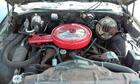
So its very difficult to show the amout of smoke on the camera but the haziness of the pictures is acurate to the amont of smoke in the garage. All this and little to nothing comes out of the tailpipes unless hard acceleration.

Registered User
Joined: Mar 2010
Posts: 1,279
From: Nova Scotia, Canada
Here's a link to my recent thread about having one cylinder down on compression on a '66 Toronado. Mine came back........Seafoam seemed to do the trick better than the MMO. However, I did notice that your PSI didn't come up very much after adding oil and that's something that didn't happen with mine (oil helped a lot more in my case). Mine was definitely stuck rings. I tested it again a few days ago, still up in the mid 185's.
https://classicoldsmobile.com/forums...-425-a-181426/
https://classicoldsmobile.com/forums...-425-a-181426/
Registered User
Joined: Aug 2019
Posts: 2,085
The last one mentioned that the compression should be lowered to 9. something due to me wanting to run the car off of 93 octane.
he also mentioned that it would be doggish. I do belive that some adjustments should be made although I dont like the idea of the engine producing less power.
he also mentioned that it would be doggish. I do belive that some adjustments should be made although I dont like the idea of the engine producing less power.
As both Koda and jaunty75 said. There is a wide selection of engines that will fit, and big block torque is best. You need it to get that behemoth off the schneid. The ideal compromise if you choose not to go big block again is the 403. It has big block torque when true dual exhaust and of course powered the 1977 and 1978 Toronado. Which weighed 250-330 lbs more than the 66. But performance will suffer very badly. Stock to stock the 403 powered Toro is 4-5 seconds slower to 60 MPH.
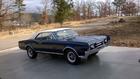
P.S. your ride is beautiful in and out. Shocking to me how good it looks when considering how shot the engine seems to be. The 66 Toro's compression ratio on paper is 10.5:1 the highest for any Olds engine 1964-1970. My 350s compression ratio on paper is 10.25:1 tested at 110,000 miles she ranged 180-190 psi. And is still running lights out at around 140,000 miles. She doesn't obviously smoke but she definitely eats oil and has some slight lifter tick, that seems to come and go...
(150 psi is great, but on a low compression engine.)
Thread Starter
Slick66
Joined: Sep 2024
Posts: 115
The 425 is Oldsmobile's greatest engine. Specifically the one in your car. If there is one Olds engine that should be rebuilt its that one.
That is precisely why I torture myself with constant worry about highest octane at all times plus octane booster. As well as babying my car above 2000 rpm on anything but a level or declining surface. I want her at her factory maximum.
As both Koda and jaunty75 said. There is a wide selection of engines that will fit, and big block torque is best. You need it to get that behemoth off the schneid. The ideal compromise if you choose not to go big block again is the 403. It has big block torque when true dual exhaust and of course powered the 1977 and 1978 Toronado. Which weighed 250-330 lbs more than the 66. But performance will suffer very badly. Stock to stock the 403 powered Toro is 4-5 seconds slower to 60 MPH.
P.S. your ride is beautiful in and out. Shocking to me how good it looks when considering how shot the engine seems to be. The 66 Toro's compression ratio on paper is 10.5:1 the highest for any Olds engine 1964-1970. My 350s compression ratio on paper is 10.25:1 tested at 110,000 miles she ranged 180-190 psi. And is still running lights out at around 140,000 miles. She doesn't obviously smoke but she definitely eats oil and has some slight lifter tick, that seems to come and go...
(150 psi is great, but on a low compression engine.)
That is precisely why I torture myself with constant worry about highest octane at all times plus octane booster. As well as babying my car above 2000 rpm on anything but a level or declining surface. I want her at her factory maximum.
As both Koda and jaunty75 said. There is a wide selection of engines that will fit, and big block torque is best. You need it to get that behemoth off the schneid. The ideal compromise if you choose not to go big block again is the 403. It has big block torque when true dual exhaust and of course powered the 1977 and 1978 Toronado. Which weighed 250-330 lbs more than the 66. But performance will suffer very badly. Stock to stock the 403 powered Toro is 4-5 seconds slower to 60 MPH.
P.S. your ride is beautiful in and out. Shocking to me how good it looks when considering how shot the engine seems to be. The 66 Toro's compression ratio on paper is 10.5:1 the highest for any Olds engine 1964-1970. My 350s compression ratio on paper is 10.25:1 tested at 110,000 miles she ranged 180-190 psi. And is still running lights out at around 140,000 miles. She doesn't obviously smoke but she definitely eats oil and has some slight lifter tick, that seems to come and go...
(150 psi is great, but on a low compression engine.)

Registered User
Joined: Mar 2018
Posts: 517
ive seen seafoam and marvel mystery oil work wonders on stuck rings and lifters-also have u thought of cracks anywhere??
compression RATIO and compression PRESSURE are 2 different things
compression RATIO and compression PRESSURE are 2 different things
Last edited by jollyolds; Sep 20, 2024 at 04:44 AM.
Thread Starter
Slick66
Joined: Sep 2024
Posts: 115
I've thought of cracks yes but I see none and ive spent alot of time looking. If there were any they'd have to be on the inside.
Registered User
Joined: Sep 2017
Posts: 5,215
From: St. Paul Minnesota
Have you actually diagnosed why you have low cylinder pressure in one cylinder / Until you zero in on the problem, you are just guessing. Do you have stuck rings or leaking valves ? How many thousand miles on the engine ?
As far as "advertised compression ratio", actual compression ratio's are generally lower (almost always). Unless you can tell us how far the piston sits down in the bore, and what the combustion chamber volume is, you're just guessing.
Olds engines are very rugged. Take the car to a competent mechanic and fix the problem. You may not need a complete overhaul.
As far as "advertised compression ratio", actual compression ratio's are generally lower (almost always). Unless you can tell us how far the piston sits down in the bore, and what the combustion chamber volume is, you're just guessing.
Olds engines are very rugged. Take the car to a competent mechanic and fix the problem. You may not need a complete overhaul.


