When you click on links to various merchants on this site and make a purchase, this can result in this site earning a commission. Affiliate programs and affiliations include, but are not limited to, the eBay Partner Network.
So, anyway/any who, I changed out both water heater heating elements & my hot water is far, far more stable now. Small tell-tale signs I guess you have to experience, I think since I had noticed over the past two months the water temperature in the house faucets were all getting to the scalding hot temperature level. While the heating elements I removed looked to be in good condition, the new elements I installed are performing wonderfully/optimally - maintaining a constant temperature, now. Win-Win.
While the heating elements I removed looked to be in good condition, the new elements I installed are performing wonderfully/optimally - maintaining a constant temperature, now. Win-Win.
Good deal Norm! 👍
We were talking about the flood in Texas earlier today, and I've now heard multiple sources say the water rose about 26-feet in 90-minutes, that's crazy!
We were talking about the flood in Texas earlier today, and I've now heard multiple sources say the water rose about 26-feet in 90-minutes, that's crazy!
Chris - I've been tracking the event(s). Gut wrenching about the Camp Mystic girls.
I've been playing with this Nikon ZF. I was able to get my dad's old strobe to work with the camera, and sussed out a setting that is essential. In film cameras, the aperture is held open by the camera until you push the button. It snaps to the setting you have set, and trips the shutter, then opens up again. If you want to see what the film sees, there's a button to close the aperture down to setting that you can push and release. This allows you to see, brightly, to focus, but also allows the proper exposure. This is why you have a light meter in the viewfinder. The combination of aperture and shutter speed puts the needle where you want it for proper exposure, meanwhile, you still see well.
On digital cameras, you don't really need a meter per se, as the screen will lighten and darken for you. You can tell intuitively what is proper lighting as you can tell intuitively what is proper focus. However, I don't want that, especially for flash photography, which I want to be able to set the camera for the flash, yet see to focus before I take the shot. There is a menu item that is "allow setting to influence view" or "keep view for ease of viewing." So, now, with the setting changed, the sensor normalizes what it sees to help you, but you MUST use the meter. A lot of people set it to toggle for flash mode only, and cheat and use the image brightness most of the time.
The cool thing is there is a programmable button right where the old F's aperture drop button was. I will put this function there as a toggle so it will be just like it was, or as close to it, and I'll use it to check stuff like on the F. I'm not going to cheat, though, I'm using the meter.
John - Gut wrenching. As the ENORMOUS flood waters were receding from the Buffalo National River I was in the front of a Zodiac as Steve Chaney was maneuvering the Zodiac through some limbs up to some additional limbs in the middle of what is normally 3' of water now over 30' deep in the middle of the river where a young girl (13/14) & her brother about same age had been frantically holding onto tree limbs for their lives as I plucked them into the Zodiac as Steve maintained the boat against a rushing current. The looks on their faces, the crying, the sobbing & the heartfelt jubilation which ensued knowing they had been rescued/saved from a sure death was & remains a chilling reminder of life vs. death for me.
John - You have me reliving my days of alternating between Kodachrome vs. Ektachrome 35mm films. Most of my high quality slides are Ektachrome. Back in the day (1970s/1980s) a fair amount of the challenge was to also find & use processing labs who knew what they were doing. Some did absolutely horrific jobs at processing which made all your efforts damn near worthless. When I finished grad school (1988) the TEM/SEM (Transmission Electron Microscope/Scanning Electron Micrscope) we owned/used still employed 35mm film to capture EM images. By this time I had become a near expert on Ektachrome processing as the EM facility had it's own high quality (as you would expect) processing lab. Still, the challenges working w/ film was so time consuming & laboring. This was during a time when I studied NMR (Nuclear Magnetic Resonance) & development of the first MRI pieces of equipment. The advances in digital imaging is mind-boggling to think of where we used to be up until today - unbelievable advancements. Hell, the SEM used a 5 disk Boernoulli array to capture (store) the data for image processing before it was converted & rendered into a 35mm film format for processing. Today this **** is done in seconds.
Last edited by Vintage Chief; Jul 5, 2025 at 08:29 PM.
Never once considered anything remotely relating to a hero. That flood was the worst natural disaster I have ever experienced - knew several people who lost everything - homes floated into the BNR, down the White River then into the Mississippi River a couple hundred miles downstream. It was all hands on deck for 48 hours along a 138 mile stretch of the BNR. Hell, I wasn't a Park Ranger - I was a resource wildlife biologist residing in a NPS grandfathered home at the top of the river. The worst of the flooding all occurred mid-river where a normal one foot ripple and several foot deep pool turned into 68' of flooding water - it was almost beyond imagination. Something out of Jurassic Park. Absolutely crazed I tell you.
My old man shot Ektachrome and Kodachrome with my grandma. She, Anne Lee, was a PhD of Education and chair of the Indiana State University's Home Economics dept for 40 of the 45 years she was there. I believe she took a hiatus to teach other places to follow my granddad in the Corps of Engineers during the war. One of the things she did was Travel Studies. This was a yearly summer trip of a few weeks with ISU students and staff that was a course credit through a country, or a few neighboring countries. She did this from approx 1950 to approx 1987. They forced her 67 year old self into retirement in 75, but let her run the travel studies for another decade. She was a dynamo from an iron range Minnesota mining town from Slovenian stock who won her education and became about the worldliest person I've ever known via traveling to over 100 nations and everyone loved her. She's been gone some 16 years now having decided that 100 years was enough. I'd do well enough to marry half the woman my grandad did.
Either my dad or my aunt would accompany Dr. Lee on her trips. My dad took his camera case, which I am revitalizing, and typically ran slide film of either of the kinds above in one F body, and prints in another F body. A wide angle lens, a couple telephotos, and a standard lens. She retired from the travel studies in about 1987 or so, and, in the 90s, she and my dad and sometimes my sister and I would go places in the summer. I learned running the manual cameras from my dad. I shot the prints, he shot the slides. Later, in the late 90s, I went off to boarding school for a couple years, and took one of the F's, a meter, a flash, a telephoto and a standard lens, and was the yearbook photographer. I never said much, just showed them I could do it, and they kept me in film and I kept them happy.
Looking through slides of my dad's and prints from my grandma, there is a lesson to be learned. My dad took National Geographic level landscape shots, but people wanted the people pictures from my grandma's Instamatic. The sublime picture is a great people shot, perfectly natural, but perfectly framed, properly or stylistically exposed, with an important background. I hung all this stuff up in 02 with the digital camera revolution. I bought a point and shoot Canon in 06, then used my smart phone for pictures. The Canon did not do well last year, so it's time to get back to real photography.
Never once considered anything remotely relating to a hero. That flood was the worst natural disaster I have ever experienced - knew several people who lost everything - homes floated into the BNR, down the White River then into the Mississippi River a couple hundred miles downstream. It was all hands on deck for 48 hours along a 138 mile stretch of the BNR. Hell, I wasn't a Park Ranger - I was a resource wildlife biologist residing in a NPS grandfathered home at the top of the river. The worst of the flooding all occurred mid-river where a normal one foot ripple and several foot deep pool turned into 68' of flooding water - it was almost beyond imagination. Something out of Jurassic Park. Absolutely crazed I tell you.
My old man shot Ektachrome and Kodachrome with my grandma. She, Anne Lee, was a PhD of Education and chair of the Indiana State University's Home Economics dept for 40 of the 45 years she was there. I believe she took a hiatus to teach other places to follow my granddad in the Corps of Engineers during the war. One of the things she did was Travel Studies. This was a yearly summer trip of a few weeks with ISU students and staff that was a course credit through a country, or a few neighboring countries. She did this from approx 1950 to approx 1987. They forced her 67 year old self into retirement in 75, but let her run the travel studies for another decade. She was a dynamo from an iron range Minnesota mining town from Slovenian stock who won her education and became about the worldliest person I've ever known via traveling to over 100 nations and everyone loved her. She's been gone some 16 years now having decided that 100 years was enough. I'd do well enough to marry half the woman my grandad did.
Either my dad or my aunt would accompany Dr. Lee on her trips. My dad took his camera case, which I am revitalizing, and typically ran slide film of either of the kinds above in one F body, and prints in another F body. A wide angle lens, a couple telephotos, and a standard lens. She retired from the travel studies in about 1987 or so, and, in the 90s, she and my dad and sometimes my sister and I would go places in the summer. I learned running the manual cameras from my dad. I shot the prints, he shot the slides. Later, in the late 90s, I went off to boarding school for a couple years, and took one of the F's, a meter, a flash, a telephoto and a standard lens, and was the yearbook photographer. I never said much, just showed them I could do it, and they kept me in film and I kept them happy.
Looking through slides of my dad's and prints from my grandma, there is a lesson to be learned. My dad took National Geographic level landscape shots, but people wanted the people pictures from my grandma's Instamatic. The sublime picture is a great people shot, perfectly natural, but perfectly framed, properly or stylistically exposed, with an important background. I hung all this stuff up in 02 with the digital camera revolution. I bought a point and shoot Canon in 06, then used my smart phone for pictures. The Canon did not do well last year, so it's time to get back to real photography.
I've been playing with this Nikon ZF. I was able to get my dad's old strobe to work with the camera, and sussed out a setting that is essential. In film cameras, the aperture is held open by the camera until you push the button. It snaps to the setting you have set, and trips the shutter, then opens up again. If you want to see what the film sees, there's a button to close the aperture down to setting that you can push and release. This allows you to see, brightly, to focus, but also allows the proper exposure. This is why you have a light meter in the viewfinder. The combination of aperture and shutter speed puts the needle where you want it for proper exposure, meanwhile, you still see well.
On digital cameras, you don't really need a meter per se, as the screen will lighten and darken for you. You can tell intuitively what is proper lighting as you can tell intuitively what is proper focus. However, I don't want that, especially for flash photography, which I want to be able to set the camera for the flash, yet see to focus before I take the shot. There is a menu item that is "allow setting to influence view" or "keep view for ease of viewing." So, now, with the setting changed, the sensor normalizes what it sees to help you, but you MUST use the meter. A lot of people set it to toggle for flash mode only, and cheat and use the image brightness most of the time.
The cool thing is there is a programmable button right where the old F's aperture drop button was. I will put this function there as a toggle so it will be just like it was, or as close to it, and I'll use it to check stuff like on the F. I'm not going to cheat, though, I'm using the meter.
I have been info-bombing several youtube videos on this thing. There are several customizable buttons and dials, maybe 10. I have found the setting for "view with the lens's settings / view with a setting for ease of view" and programmed that to the button that does that on the Fs. It's nice.
It's late (early morning), my mind does poorly on little sleep; but, if I'm following you. You're able to configure (somehow) the f-stops (aperture), the ISO & the shutter speed via those buttons, I'm guessing? Is there a rudimentary/fundamental starting point which you have to establish in some priority firstly? IOW, you 1st configure shutter speed, 2nd configure ISO, 3rd configure aperture or something similar? Or, maybe you choose to configure one or the other then the camera determines the best aperture, ISO or shutter speed? Sounds extraordinarily innovative & something I have no familiarity with. Yet, I'm curious even though I know nothing about what you're configuring, are these settings (buttons) you're configuring established only for the current lens or do they transfer to various lenses? I'm guessing a particular set of buttons can be configured for each particular type lens you have mounted?
It's late (early morning), my mind does poorly on little sleep; but, if I'm following you. You're able to configure (somehow) the f-stops (aperture), the ISO & the shutter speed via those buttons, I'm guessing? Is there a rudimentary/fundamental starting point which you have to establish in some priority firstly? IOW, you 1st configure shutter speed, 2nd configure ISO, 3rd configure aperture or something similar? Or, maybe you choose to configure one or the other then the camera determines the best aperture, ISO or shutter speed? Sounds extraordinarily innovative & something I have no familiarity with. Yet, I'm curious even though I know nothing about what you're configuring, are these settings (buttons) you're configuring established only for the current lens or do they transfer to various lenses? I'm guessing a particular set of buttons can be configured for each particular type lens you have mounted?
So, it's a camera with multiple modes. Assuming I had smart lenses, in Auto mode it would take care of ISO, shutter speed, aperture, and focus. In program mode, I would set the iso via a dial and it would do everything else. In Aperture mode, I would set ISO and aperture and it would set shutter speed and focus. In Shutter priority, I would set shutter and iso, and it would do aperture and focus. In manual mode, I do iso via a dial, shutter speed via a dial, both of those on the camera, and aperture on the lens. My lenses are dumb, so it doesn't know what f-stop it is, it just meters the light for me in the meter. All of these modes can manual or auto focus.
Right now, the camera is set to manual and I control iso, aperture, shutter, and focus. The button that I set is simply something for the display. You may remember the old film viewfinders with onboard metering, the view was bright because the aperture was wide open, and being held wide open by the camera. The meter, however, knew where you set it, so you set it to the meter, and, when you tripped the shutter, it would drop the aperture down to your setting, hit the shutter, then open it back up.
This is simply an electronic version of that. One setting "holds the aperture open" (it really just brightens the image) so you can focus, and the other one lets you see the aperture as it is. Either way takes the same pictures. The latter is probably more idiot proof, but you need the former for setting up for shooting with a flash, but you want to focus the shot before hand, but you need to see to do that.
So, it's a camera with multiple modes. Assuming I had smart lenses, in Auto mode it would take care of ISO, shutter speed, aperture, and focus. In program mode, I would set the iso via a dial and it would do everything else. In Aperture mode, I would set ISO and aperture and it would set shutter speed and focus. In Shutter priority, I would set shutter and iso, and it would do aperture and focus. In manual mode, I do iso via a dial, shutter speed via a dial, both of those on the camera, and aperture on the lens. My lenses are dumb, so it doesn't know what f-stop it is, it just meters the light for me in the meter. All of these modes can manual or auto focus.
Right now, the camera is set to manual and I control iso, aperture, shutter, and focus. The button that I set is simply something for the display. You may remember the old film viewfinders with onboard metering, the view was bright because the aperture was wide open, and being held wide open by the camera. The meter, however, knew where you set it, so you set it to the meter, and, when you tripped the shutter, it would drop the aperture down to your setting, hit the shutter, then open it back up.
This is simply an electronic version of that. One setting "holds the aperture open" (it really just brightens the image) so you can focus, and the other one lets you see the aperture as it is. Either way takes the same pictures. The latter is probably more idiot proof, but you need the former for setting up for shooting with a flash, but you want to focus the shot before hand, but you need to see to do that.
Norm and John, I couldn't agree more, great stories from both you guys! I appreciate you guys sharing those tremendous personal memories and experiences!
No big plans here for today. Dawn, thankfully, is taking a break from the house painting today, she's been pushing herself pretty hard, but is close to being done. It will be nice to have her home, plus I need laundry done. LoL
It's been a little while since I've posted a pic of our rug rats. Monty actually did better than ever before with the fireworks on the 4th. He just hung close to Dawn on the couch and never got up to go hide in the bathroom like he usually dies. Caught this pic of him just this morning in his favorite napping position with his head totally tucked behind one of the throw pillows on the couch.
The pooches look so relaxed. Glad they fared well through out the fireworks. Had two neighbors lighting them off up until 2:30 in the morning Fri into Sat. It gets on the nerves after awhile.
I just sent a pm to the administrator about my frustration using the photo - my pictures storage. I'm not finding a 'how to' anywhere on the site as to how to organize everything.
Art - Luckily our neighbor's were pretty considerate and things pretty much shut down after around 11pm.
Wish I could help you with the "photo - my pictures storage" functionality, I never use it. When I'm using the site I just download pics from whatever device I am using to this site to use in my Post. There is a "Sticky" tutorial in the Newbie Forum on how to do that. I hope the Administrator can help you!
Wish I could help you with the "photo - my pictures storage" functionality, I never use it. When I'm using the site I just download pics from whatever device I am using to this site to use in my Post. There is a "Sticky" tutorial in the Newbie Forum on how to do that. I hope the Administrator can help you!
Chris - For clarity you aren't downloading - you're uploading. The "Sticky" I created does not demonstrate photo/picture/image storage on this site. Stop creating more work for me! LOL
Walmart was almost a ghost town today. Probably everyone still hung over from the holiday weekend. As usual the Swan Lake neighborhood sounded like World War Three. My neighborhood had an unusual amount of fireworks activity as well. Tiger was unphased.
Chris Dawn's daughter must live in a mansion. Dawn has been painted for weeks it seems. Is this the daughter with the tattoos and guns? Awful nice of her to do all that painting.
I'd like to add to the camera discussion. When I was little I had a square camera that used 126 film. Then I got a rectangular camera that used 110 film. Then I got a camera that used the rolls of film, that's a really nice one. Then my friends gave me a digital camera for my birthday, I'd take the card out of it and load the pictures onto my computer. Now I use my phone. It seems to me the first two camera's said Kodak Instamatic on them.
You know what I could do with the water heater, put a hose on the drain tube and run it to the sump pump sitting right next to it that ejects the condensation water off the AC. There are a couple extra plugs I could knock out and run a hose right in there. The trouble is that pipe is rather hot and I wouldn't want either the hose or the pump to burn up or melt due to the hot water. Or I could replace the heater and do a good job. Unlike Adam. I just thought of something funny. Anything around here that's screwed up I call an Adam Special. That's a bad thing. My friend's dad was a wizard at -anything- mechanical or otherwise. He did a lot of custom stuff just for his own use. We call these things a Pop's Special. That's an incredibly good thing.
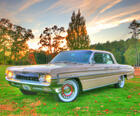
Oh the Corvairs Chris. Yes I appreciate any Corvair picture but my favorites are the late models, 65 and up. I must have breezed over the pictures of the early models, though I seem to remember a twitch going past one of them.
Okay plenty to do. Nice out, hope everyone has a good afternoon.
Mike - I can appreciate the novelty of your water heater situation. That discharged water heater water won't have any ill-effects w/ your sump pump - none. That's a novel workable approach. I thought surely you likely had a sump pump somewhere in your basement - go for it.
What Rambo Adam should have done & what you can do (which MANY do) is to run a PVC/Copper (or whatever piping) from the T&P valve DIRECTLY to the sump pump basin. That is a normal water heater T&P discharge configuration - it simply lays on the floor, buddy.
Last edited by Vintage Chief; Jul 6, 2025 at 11:37 AM.
Mike - I can appreciate the novelty of your water heater situation. That discharged water heater water won't have any ill-effects w/ your sump pump - none. That's a novel workable approach. I thought surely you likely had a sump pump somewhere in your basement - go for it.
What Rambo Adam should have done & what you can do (which MANY do) is to run a PVC/Copper (or whatever piping) from the T&P valve DIRECTLY to the sump pump basin. That is a normal water heater T&P discharge configuration - it simply lays on the floor, buddy.
One of my goals for my new place is excessive drainage capability for the basement. I don't want a sump pump, I want pipes going over the hill and gravity drain.
One of my goals for my new place is excessive drainage capability for the basement. I don't want a sump pump, I want pipes going over the hill and gravity drain.
I worked on a concrete crew during summer months in early college years. The quad birth (basement) condominium buildings we erected/poured did basically/substantially what you're wanting to do. The delta is those tied into the subdivision (buried) storm water discharge lines (conduits) via french drains installed around the perimeter(s) of each concrete footing(s). Assembled together (in a network), gravity discharged the water into the French drains (for all buildings), the French drains (via gravity) discharged into the subdivision storm water drainage system. Actually there was more than one subdivision yet they all created a network tied together. Rather elaborate & ingenious I thought. Took some creativity to design & install during the excavation process for the entire subdivision(s).
I've actually ran and developed some film from it. Nothing great and self taught. Federal Court House - Providence, RI Providence City Hall - Providence, RI