When you click on links to various merchants on this site and make a purchase, this can result in this site earning a commission. Affiliate programs and affiliations include, but are not limited to, the eBay Partner Network.
What I know about body work wouldn't fill a thimble. But a friend of mine is using this stuff to repair pinch weld. Do any of the learned body guys here have any comments pro/com on using Duraglass?.
It's fiberglass-infused bondo. As with any filler, surface prep is the most important factor. Any rust remaining under the filler in pits or whatever will grow and eventually lift the filler. It's also not a structural material. The chopped glass fibers only serve to mitigate cracking in the filler when it gets too thick. The glass fibers have zero adhesive ability - only the resin system that holds them provides any strength. Troweling this into rust holes is not "best practice".
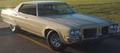
That's the product the auto body teacher showed me how to use to repair the passenger's side fender skirt on my 71.
Sorry for the lousy pic, but it still looks good 8+ year's later.
The passenger's side fender skirt was rusted. I cut out all the rust and we welded a patch to the backside of the fender skirt. Then I filled it with the Duraglass. As I recall, it took quite a bit of sanding to get it to look right. I suppose that's not the way Jay Leno would fix a rusty fender skirt, but...
That's the product the auto body teacher showed me how to use to repair the passenger's side fender skirt on my 71.
Same story here, when I repaired some rusty holes in my '68 back in the mid '80s, I took a night-class in body shop so that I could use the school's tools to work on my own car. Cut out all the rust, welded in a patch, filled it with Duraglass and topped it off with some Kromate Light for a smoother finish (Duraglass has a much rougher finish with sizeable voids even after sanding, the Kromate Light fills these in for a smoother finish for primer). Its still holding strong today. Good stuff.
You can get by w/o the Kromate Light, but you'll end up using more high-build primer or some other fine filler to get the smooth finish you need for the top coats.
Last edited by JohnnyBs68S; Apr 11, 2023 at 09:01 AM.
Duraglas is a good product, it’s a heavy, fibrous filler, not a “finish“ filler. Won’t fix rust but you can use it for a “stuff & pray” application if you choose to, just realize that you put make up foundation on cancer, it’s not a cure. If using for heavy fill, be sure to finish that bodywork with a fine, creamy style filler, then prime it.
Biggest difference is that fiberglass fillers are waterproof and plastic fillers are not. So when doing things like the old school method of drilling holes to pull dents, glass is good to initially wipe over the holes so the filler doesn’t wick up moisture from the back. If you wanna hack patch some small rust holes, it will last a lot longer than bondo.
What I know about body work wouldn't fill a thimble. But a friend of mine is using this stuff to repair pinch weld. Do any of the learned body guys here have any comments pro/com on using Duraglass?.
Great product
We were taught to use this on all welded repair seams skim coat to seal the repair. They also taught us to apply over epoxy primer that was scuffed no filler on bare metal.
I will say I'm not a fan of the over use of any filler including high solid primer. If you need more than a skim coat you have unaddressed body work.
If you remove the lead from the sail panel this what we were taught to use in its place. There is a compatibility issue with some modern paint systems and lead filler so this is an option to avoid the reaction that can occur.
Last edited by Bernhard; Apr 23, 2023 at 03:44 PM.