When you click on links to various merchants on this site and make a purchase, this can result in this site earning a commission. Affiliate programs and affiliations include, but are not limited to, the eBay Partner Network.
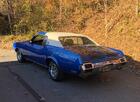
I'm having my 69 repainted most likely BS/CC but was wondering about the paints used back in the day. Since they were all single stage (to my knowledge) I was wondering if they had any flake in them or just came in a solid color? Some of the colors, red, black, white, I figure were just color. But the greens, blues, and golds I wonder about. Did they mix it so you could do a metallic in single stage? My shop says they can do that. He also says if I ever need a repair it is easier to match BC/CC. Is there any real advantage to single stage vs. BC/CC? There is quite a cost difference.
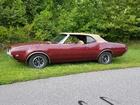
Steve, I repainted my Olds using a SS urethane in OE Sandalwood (light brown). It turned out great.
I also painted a new bumper for my wife's Kia Soul when she was in a collision (with the garage door). I used a SS urethane in Kia Bright Silver Metallic. It turned out pretty good, it is darker than the rest of the car. I've heard that spraying metallic colors at a low psi can cause this. I actually used an LVLP gun I got at Eastwood and sprayed the bumper in the backyard.
I've heard that BC/CC is more forgiving to the novice than SS. I've only used SS though because I worry about getting sags and runs in the paint as well as applying all of the coats with the right timing. Historically, there were metallic cars so even "back in the day" they could do SS paints in metallic.
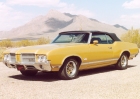
Yes, single stage can (could) be had in metallic. I painted my 70 Supreme back in the mid-80s then painted the current 71 convertible in the late 90s with single stage metallic, both were factory color code paints.
I think one kicker is a BC/CC can be sanded and polished without affecting the flake since the flake is underneath the clear. In a SS the flake is right on top with everything else, so sanding/polishing can change the appearance of the flake.
Oddball is right. A cut and buff on metallic SS will not look as good as Base/Clear. Your cutting into the flakes and polishing them. Can change the color completely on some colors.
Nothing wrong with SS in a non metallic color. It's actually more durable than Base/Clear because the base adhesion is the weak link. Still better than anything back in the day though. Using epoxy sealer will help strengthen this bond and activating the base will also help.
Metallic paint has been used at least as far back as 1957 (Cutlass Bronze Metallic). The size of "metallic" particles should be considered. Those old metallic paints were smooth and shiney. The "metallic" on in several coats and was not just on the surface, it was in every coat applied. They are "labor intensive" and beautiful. BC/CC are easily spotted when you get close.
Do some experimenting to see what you prefer. If you are not interested in originality, do whats easiest for you.
.....Just my two cents worth.
I've sprayed a couple 40's Buicks with acrylic laquer metallic back 25 years ago. They looked fine but nothing like base/clear for metallic. The flakes dance more under the clear because they aren't sanded in half and buffed. If your building a car why not make it look the best it can?
I've done tests with black and had car clubs try to determine which type of paint is what. They were all over the map and nobody ever pin pointed which paint is which. These were sprayed on 1' by 1' metal pieces. I used black single stage polyurethane, Acrylic enamel, Acrylic laquer, Base/clear, Imron polyurethane enamel. Once cut and buffed they all looked great. Acrylic enamel looked the best of all and everybody always thought that one was base/clear.
We have a 31' Buick that is about half base/clear painted about 10 years ago and laquer painted 30 years ago. When it is clean and shiney nobody can tell what paint is what. This isn't metallic though. If it was It would be easier to determine which paint is which.
I'm not sure what is offered below the smallest .004 metal flake for "metallic pigments" but I do know how flakes work.
The smallest common flake is .004 has only 1/4 the reflective surface area of a .008 medium size flake.
.004 flake can be very impressive when applied correctly but you have to commit to burying those flakes in layers and layers of clearcoat, and then deal with the clearcoat.
Single stage paint is by comparison, far less intensive, easier, near foolproof, and relatively maintenance free.
Back to flakes, .004 is way bigger than any factory metallic finish, except perhaps the newer Toyota midnight metallic which is borderline metal flake.
It all depends on what you want the finish to look like.
Single stage can look very pleasing (and original) but it just won't have the 3d effect and depth that even 1 to 2 coats of good clear, let alone a flake or pearl job would provide.
Paint with Pearl offers some pretty amazing metallic paint pigments (not flake size but still metallic) that you can add to their "clear base" product. They also have great pearls and flakes but those are a whole different ballgame.
Almost all the paint codes in 68 were listed as a "metallic" (except the red, white(s), black, and saffron) all the ones listed as such looked like they had metal flake
The first use of metallic car paints was in 1927, about half a century before BC/CC paints were created. Cadillac offered in in 1933. These were lacquer paints. Custom painters would spray clear lacquer over metallic and solid colors to increase the depth, but unlike BC/CC, it was not mandatory. Factory metallic cars did not typically have the clear. I personally sprayed metallic lacquer and enamel paints in the early 70s.
First, a quality lacquer paint job, done properly, will look just as good as base/clear, but will not be as durable.
Do you want an OE finish? Then just put on a few coats (about 4) & don't color sand.
My '64 Starfire has 14 coats of lacquer on it & it looks wet.
It was color sanded to remove every trace of orange peel... yes you can color sand single stage metallic paint as long as you do it evenly.
You cannot just do random spots.
Second, you can color sand acrylic enamel, but it is a lot of work.
I've done it many times, including waterborne acrylic enamel to remove acid rain marks.
Most people just call this enamel.... but there is another more generic type, straight (alkyd) enamel...
It is not buffer friendly due to the softness, but that is basically farm tractor paint or the cheap Maaco paint jobs from 30+ years ago.
You can still get this stuff at farm stores, but I would not recommend painting a car with it... even with the catalyst additive.
I recommend a good BC/CC paint job. It will be more durable & look great for many years.
Why try to make a less than steller lacquer paint job, that requires maintenance to keep it from degrading?
Last edited by Lonnies Performance; Nov 10, 2019 at 08:06 PM.
Speaking of alkyd enamel... I had a 65 Jetstar 1 painted by Earl Schrib in about 1973. It was painted red and I assume just a soft alkyd enamel. When I picked it up and paid the $59.99 I was very disappointed. I was watching one of the guys removing the tape and he touched the front edge of hood with his leg. When he pulled it away it left a jean fabric mark. It looked like crap overall lots of orange peel and dry spots. I took it home and left it out front of my mom's house waiting to see what I would do with it. It was a hot sunny couple days and when I looked at it later it had sort of melted down and really looked great- The jean fabric mark was gone!! I sold the car but I'll bet that paint didn't last long..
My recently acquired '72 V Code Supreme was painted in single stage Flame Orange (code 65) about a dozen years ago and it has traces of metallic in it. They had also clearcoated it, so that gives me some flexibility with how aggressive I'll be able to get with the DA polishing it out this winter. It looked really good to them as-is, so they never did a final buff and polish on it. I'll fix that.
Terry
Yeah, those we the days, I think they even had a paint job for $19.99 around 1970. If you were just looking to clean up a clunker it was worth it. But you can still get a basic paint job at Maaco for under $400. It may not hold up forever but it make a car look like almost new.


 I used a SS urethane in Kia Bright Silver Metallic. It turned out pretty good, it is darker than the rest of the car. I've heard that spraying metallic colors at a low psi can cause this. I actually used an LVLP gun I got at Eastwood and sprayed the bumper in the backyard.