When you click on links to various merchants on this site and make a purchase, this can result in this site earning a commission. Affiliate programs and affiliations include, but are not limited to, the eBay Partner Network.
Lookslike it was a challenge to get those arms out.
when you remove the bushings, if you dent the bushing w a BFH and chisel you can apply some penentrant and they will slide out.
when installing new bushings i used a small press and be sure to support the space between where the bushing fits, this will keep the ears from collapsing and misaligning making new bushing install impossible.
You're making great progress and it looks like you have a good car to work with. I've followed a few frame off restorations and some of them have had some much metal work to deal with I've found it hard to believe. I'm looking forward to seeing your progress.
It took me a couple months figure out where I am going to get the motor machined and rebuilt. I have a date of September 15th to have it stripped down to the long block. I am going to have aluminum heads and intake manifold installed. I was wondering if anyone has any experience putting a sealant on the aluminum to keep it shiny and clean looking? I ask, because I just got my transmission back from the shop and although the casing was steam cleaned, it still looks rough. It is going to take a lot of work to get it looking nice. I don't want the top of my motor looking the same way several years down the road.
It has been a long time since I provided an update on my build. Since my last post:
I finished installing the front suspension;
Had the motor machined and built;
Painted and installed the rebuilt transmission;
Nearly installed the headers
Ran all the brake lines and painted the calipers and drums; and installed all the body mounts
I have a couple items to resolve before I am ready to receive the body which is still waiting for paint.
I need to reroute the brake line from the proportional valve to the driver side front caliper because the header on the driver side is touching it. I bought the SS tubing and found some tools to bend and flare but just need to follow the template to route it under the crossmember and away from the header.
When installing the new transmission pan, I found two bolt holes in the transmission base that were stripped. I bought a package of helicons to make the repair but haven't had the gumption to get under it and install them.
Forgive me for cutting to the chase on my most recent posts. I realized I left out all the details of the build that make it interesting. Let me put a little more color into what has been done so far. Rear end and suspension:
I completed the rear suspension and installing the rear end back in August. The rear end was upgraded with a post-traction carrier from Auburn Gear. I kept the original gear ration of 2.73:1 because this is going to be a daily driver except snow days. I also had all the bearings and seals replaced. While I had it at the gear shop, I had the drive shaft balanced. Unfortunately, it was far enough out of balance, I ended up getting a new center tube to go along with the new u-joints.
The rear suspension was part of the total package. I had no problems installing it. I still need to lube it and set the pinion angle. I put a tag on the rear end to remind me when I get the body on it and the car running down the road. I kept the drum brakes in the back because the rear end is so light that disc brakes would not add much more stopping power to the rear. I did paint the drums silver with POR-15 brake caliper paint. They turned out nice.
Front end and steering:
The Hotchkis front suspension package went together really easy. The springs will lower the front end at least 1" and then there was a 1/4" aluminum spacer that sits in the bottom of the lower control arm spring pocket. I decided to leave that out as well because my motor lost weight with aluminum heads and headers. I am also going to use a fiberglass hood so I figured that would reduce the front end weight even more. I am starting low and will add spacers back later if I need to adjust the ride height.
I used the POR-15 (silver) brake caliper paint on the calipers, backing plates, center link and the new tie rods. I tried the original POR-15 silver paint on the spindles and steering knuckles but it did not go on evenly. That paint supposedly could be used without primer and just apply over the rust. Not sure if it was because my parts were blasted and had no rust of if it was because they were not primed that it was uneven or if the paint just didn't mix well. You can see the results in the idler arm on the passenger side frame.
I used Power Steering.com to rebuild my steering box with a quick turn ratio conversion. (12.7:1). Marty also rebuilt my power steering pump and cleaned up the rag joint on the steering box. Since his shop is only a couple hours away, I drove down there and dropped it off and walked through his shop. He has a nice set up with assembly line stations each with its own procedures posted, tools specific for the step and a lap top if necessary for data entry. Just like in the factory.
Some details on the engine build: Block
After 265,000 miles on the motor, the block looked good. The cylinders were bored to 0.30" over and the main bearing seats were aligned honed. Because the crankshaft bearing surfaces were worn, the machinist could not get replacement bearings tight enough to make it to a 0.10" gap. So a replacement crankshaft was installed with new bearings and ARP bolts. The mains size ended up at 2.4888". A new harmonic balancer was installed and the entire rotating assembly with fly wheel was balanced.
Pistons & Rods
Pistons were replaced with forged flat top from Federal Mogul. New moly rings installed with 0.019"/0.017" gaps top and bottom respectively. Rods were cleaned polished and balanced with the pistons. bearing clearance = 0.0024".
Top End
I purchased the Edelbrock Performer heads/intake manifold and cam package from Mondello. The cam duration is 214/224/112 using hydraulic flat tappet lifters. The head swap led to a cascade of other changes. I knew I would have to use an electric fuel pump instead of the mechanical but I did not realize I would need new roller rockers which led to new push rods and valve covers. The stock covers would not seat and I ended up buying taller chrome covers. Because I went from painted stock covers to chrome, I didn't want to use the painted steel hardware so I ended up buying chrome hardware which cost almost as must as the covers themselves.
I have been dreading the task of rerouting the brake line like a high school book report. I finally attacked the project this week and spent at least 4 hours per day for the last three days bending a new brake line and adding a little extra loop at the end where it connects to the proportioning valve.
They make hard tubing benders that make jobs like that go very quickly, looks like your using heat to make your bends that is very very time consuming, looks great though!
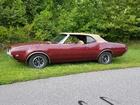
I got the body back from my friend who did the work. This picture might not show the true color but it is a pearl metallic orange. Little bit of a nightmare on getting it home. We ended up driving on a dirt road in the Missouri countryside for 4 miles because we missed the turn onto the highway. Fortunately, no chips or scratches, just a dusting of the engine and firewall.
Last edited by 72Pumpkin; Oct 21, 2022 at 12:53 PM.
Looking Awesome!! Good progress.
FYI.. if you install the starter and headers, better go with the a mini starter. I did the big starter and headers back in 1978, when I did my restore. Plopped the engine in the frame and built the front end around it. Fast forward 32 years.. never had to take the starter out, worked great. But I found out I couldn't get the headers out nor the starter. I ended up cutting the nose off the starter to get it disassembled!! Then I ordered a mini starter.. And I am trying to remember how I got the headers out, so I can install the new ones.. Time flies!! Your project is looking good!
Looking Awesome!! Good progress.
FYI.. if you install the starter and headers, better go with the a mini starter. I did the big starter and headers back in 1978, when I did my restore. Plopped the engine in the frame and built the front end around it. Fast forward 32 years.. never had to take the starter out, worked great. But I found out I couldn't get the headers out nor the starter. I ended up cutting the nose off the starter to get it disassembled!! Then I ordered a mini starter.. And I am trying to remember how I got the headers out, so I can install the new ones.. Time flies!! Your project is looking good!
Thanks for the tip. I was able to install the starter with the headers in place. I haven't wired it yet so that might be a tight fit.
I forgot to mention.. I have a Lakewood bellhousing also.. that did cause interference as I remember.. You will probably be okay with the stock bellhousing.
I am looking for a place to install an electric fuel pump. I mocked up a potential pump with the dimensions given in the specifications and am having a hard time finding a place to mount it. Does anyone have experience installing an electric fuel pump outside of the tank?
I started the Vintage Air installation at the beginning of the summer. The kit is broken up into three sections - Compressor, Condenser and Evaporator. My car came with factory A/C so the kit included different blanks and brackets to replace or fill in where the old evaporator sat inside the engine compartment. At the time, my body was still in the shop so I did what I could and installed the compressor first. The brackets fit well and the instructions were easy to follow. I ended up using "Option 2" for the positioning of the compressor relative to the valve covers. This moves the compressor forward toward the radiator to clear the valve covers. The taller valve covers were a part of my engine build to clear the roller rockers. Option 2 just adds one more spacer between the compressor and brackets and shifts the belt position to the inner groove.
Last edited by 72Pumpkin; Nov 12, 2022 at 10:09 AM.
Here is a picture from the front showing the ability to adjust the belt tension. The belt I bought was a Gates 7555 which is equivalent to the 411236 in the product manual.
I was able to work on the installation a little more last Friday. The hoses were run through the firewall and through the passenger kick panel where the old fresh air damper used to sit. The cover for the kick panel was not a neat fit. It was a little small and the screw holes were off. I ended up splitting the difference and drilling new holes. The instructions say you should put silicone around the edge to seal it in place but that does not work because the hoses still need to be run and adjusted multiple times until the evaporator is set. Besides, it is inside and should be protected from any moisture from the firewall cover.
Here are a couple pictures of the evaporator being installed. The mounting is offset from the firewall blank for the old heater core. It takes at least two pairs of hands to get it set. A third pair would have been beneficial to manage the hoses. My daughter lifted it up to the bolt hole form the inside while I got the top bolt started. Then installed the bottom bolt. I kept the hoses loose and the cover to the kick panel open until we could get it set.
Slowly but surely she is coming together. I fired it up for the first time on December 1st and have worked out all the bugs since then. I have been waiting for the fender eyebrow molding and hood hinges to get painted since then so I can put the fenders and hood on. I have also been waiting on the radiator 4-core top plate for..ever.. from OPGI. Hopefully the hood will fit with the modified set up I have with the original top plate. I really want this car to be road ready in the next couple months. Still need to get side windows and weatherstripping installed.
I am trying to figure out the right size of hole to drill to install hood pins in my fiberglass hood. I am a bit confused by the product manual picture and the service manual makes no mention of hood pin installation. The picture shows a round hole about the same diameter as the vertical shaft of the hood pin. This would mean that I would have to push the cross pin out of the vertical pin and then install the fastener through the hood and then press the cross pin back into the vertical pin. I started this but I don't want to loosen that nice tight press fit by removing and pressing that cross pin back in.
Alternatively, the product manual shows the spring plate having a notch in it like you can maneuver the hood pin through it. Which may imply that the hole in the hood can be much larger to fit the cross pins through the hood with some coordinated manipulation. The spring plate will cover the larger hole but bottom plate, which also shows a notch, is narrow and might not cover a larger diameter hole.
I know I am over thinking this, so go ahead and laugh and then tell me the right answer.