


Tire pressure


Thread Starter
Mikeyt
Joined: Apr 2024
Posts: 356
From: NC
Tire pressure
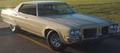
1962 98
Sticker says 22 but I know that's for bias ply.
Current tire 225/70R14
max psi 51
max load 1709lbs
I put 40psi and they look good. Just a slight bulge at bottom
What would yall run?
Sticker says 22 but I know that's for bias ply.
Current tire 225/70R14
max psi 51
max load 1709lbs
I put 40psi and they look good. Just a slight bulge at bottom
What would yall run?

Registered User
Joined: Nov 2022
Posts: 254
I never thought about the psi on our cars was for bias ply tires. With that being said, I would find the right number for you, how you want the stance and the ride to feel.
Most of us will need to replace the tires due to age not wear anyway. The psi is the number the factory gave a vehicle to perform the way they wanted it, not the way you want it necessarily.
I always run my tires closer the max than the recommended, that comes with trades off I'm willing to accept for the performance I want on all of my cars.
Most of us will need to replace the tires due to age not wear anyway. The psi is the number the factory gave a vehicle to perform the way they wanted it, not the way you want it necessarily.
I always run my tires closer the max than the recommended, that comes with trades off I'm willing to accept for the performance I want on all of my cars.
Registered User
Joined: Feb 2013
Posts: 15,409
From: Phoenix, AZ
That is the pressure for the maximum listed load for that tire. Most times the load is much less, and therefore the pressure can be much less. Higher pressures will result in a "firmer" ride, sometimes to the point of rattling fillings in teeth loose.
Registered User
Joined: Aug 2019
Posts: 2,089
👍
Normal appearance.
Oh i wouldn't do that. Going to make for a harsh ride especially on a 98.
35 psi all around on my Olds, 235/60s back, 205/70s front on 15s. 30 psi feels better for comfort.
22 on a bias ply is great because the tire is very rigid to begin with. But would be flat on a radial. In turn 30 on a bias ply turns it into a rock...
Normal appearance.
Oh i wouldn't do that. Going to make for a harsh ride especially on a 98.
35 psi all around on my Olds, 235/60s back, 205/70s front on 15s. 30 psi feels better for comfort.
22 on a bias ply is great because the tire is very rigid to begin with. But would be flat on a radial. In turn 30 on a bias ply turns it into a rock...

Barely Registered
Joined: Feb 2014
Posts: 2,629
From: Gillespie County, Republic of Texas
Instead of guessing, do some research to estimate the maximum loads you expect on your front and rear tires and contact the tire manufacturer to get their recommendation.
But it's way more fun to just do a burnout and look for a consistently-heavy black mark across the entire width of the tire.
If you have the wrong inflation pressure, the tire will wear unevenly. Underinflation causes the outsides to wear out; over-inflation causes the center to wear out.
Whenever you carry a heavier load, increase the rear inflation pressure.
But it's way more fun to just do a burnout and look for a consistently-heavy black mark across the entire width of the tire.
If you have the wrong inflation pressure, the tire will wear unevenly. Underinflation causes the outsides to wear out; over-inflation causes the center to wear out.
Whenever you carry a heavier load, increase the rear inflation pressure.
Thread Starter
Mikeyt
Joined: Apr 2024
Posts: 356
From: NC
👍
Normal appearance.
Oh i wouldn't do that. Going to make for a harsh ride especially on a 98.
35 psi all around on my Olds, 235/60s back, 205/70s front on 15s. 30 psi feels better for comfort.
22 on a bias ply is great because the tire is very rigid to begin with. But would be flat on a radial. In turn 30 on a bias ply turns it into a rock...
Normal appearance.
Oh i wouldn't do that. Going to make for a harsh ride especially on a 98.
35 psi all around on my Olds, 235/60s back, 205/70s front on 15s. 30 psi feels better for comfort.
22 on a bias ply is great because the tire is very rigid to begin with. But would be flat on a radial. In turn 30 on a bias ply turns it into a rock...
I'm not sure thats possible 🙂
Thread Starter
Mikeyt
Joined: Apr 2024
Posts: 356
From: NC
[QUOTE=VC455;1661472]Instead of guessing, do some research to estimate the maximum loads you expect on your front and rear tires and contact the tire manufacturer to get their recommendation.
But it's way more fun to just do a burnout and look for a consistently-heavy black mark across the entire width of the tire.
If you have the wrong inflation pressure, the tire will wear unevenly. Underinflation causes the outsides to wear out; over-inflation causes the center to wear out.
Whenever you carry a heavier load, increase the rear inflation pressure.[/QUOTE]
She a cruiser not a pickup truck😀
I understand the wear part of tire over and under inflation. I was looking for anyone with a similar car and their experience.
But it's way more fun to just do a burnout and look for a consistently-heavy black mark across the entire width of the tire.
If you have the wrong inflation pressure, the tire will wear unevenly. Underinflation causes the outsides to wear out; over-inflation causes the center to wear out.
Whenever you carry a heavier load, increase the rear inflation pressure.[/QUOTE]
She a cruiser not a pickup truck😀
I understand the wear part of tire over and under inflation. I was looking for anyone with a similar car and their experience.

Old(s) Fart
Joined: Mar 2007
Posts: 50,803
From: Northern VA
^^^THIS! The rating on the sidewall is maximum pressure, not where it should be for your particular car. The pressures for bias ply definitely do not apply to radials, and there WILL be a sidewall bulge with radial tires, that's the nature of the beast. If you increase pressure to get rid of the bulge, the tires are over-inflated.
Thread Starter
Mikeyt
Joined: Apr 2024
Posts: 356
From: NC
Thread Starter
Mikeyt
Joined: Apr 2024
Posts: 356
From: NC
^^^THIS! The rating on the sidewall is maximum pressure, not where it should be for your particular car. The pressures for bias ply definitely do not apply to radials, and there WILL be a sidewall bulge with radial tires, that's the nature of the beast. If you increase pressure to get rid of the bulge, the tires are over-inflated.
I'm gonna put some miles on her soon hopefully and will work my way down to the sweet spot.


Out of Line, Everytime😉
Joined: Dec 2006
Posts: 10,108
From: Melville, Saskatchewan
As said, 22 psi for radial tires is ridiculous. The 30 to 35 psi is a good range. The 225/70R14 has the most load capacity short of trailer tires. I once put P215/75R15 on my 1978 Chebby 1/2 ton with Olds V8 power. I was hauling cut Oak wood, even at max pressure, severe bulge. I went with the exact same tire in LT235/75R15, way less bulge at normal pressure loaded. In these modern times, the factory 235/55R19 only call for 30 psi cold on my 2017 DodgeChallenger GT AWD, an over 4000 pound car. The previous owner put on the optional 31x10.5R15 on my 2000 Dodge Dakota. My door says 35 psi with the factory 235/75R15. I looked at the factory manual. For the 15x8 wheel, mine are 15x7 with the 31x10.5R15 is only 30 psi. I put them to 35 psi but since it is now Winter, they are probably very close to 30 psi cold. Temperature variants can change tire pressure a lot. Too much tire pressure is bad and too little is worse, just find the balance.
Last edited by olds 307 and 403; Dec 9, 2025 at 05:56 AM.

Old(s) Fart
Joined: Mar 2007
Posts: 50,803
From: Northern VA
Bias ply tires have stiffer sidewalls than do radials, so they can tolerate lower pressures. The factory pressures on the sticker are selected to balance ride comfort with tire life and handling. I've always found them on the low side, even with bias ply tires. If the repro tires are actually bias ply and not "bias look" radials, then you can run the factory pressures, but I still think they are a little low.
Registered User
Joined: Sep 2017
Posts: 5,219
From: St. Paul Minnesota
I agree with Joe P. I always ran higher air pressure in the front tires to reduce rolling resistance and get rid of squealing on corners. Rear tire pressure depended on tire size and wheel width. I am still a believer in a few short burnouts to set rear tire pressure. Lighter black in the middle, you need more air pressure. No "Anti Spin" ? Set the left tire the same as the right. I always ran more tire pressure on front and rear than factory recommendations.


Thread
Thread Starter
Forum
Replies
Last Post


