When you click on links to various merchants on this site and make a purchase, this can result in this site earning a commission. Affiliate programs and affiliations include, but are not limited to, the eBay Partner Network.
So I recently got a 1971 Cutlass as my first project and first car. I'm only 16 and don't have everything quite down yet. Can't start, I get no voltage off my starter wire when key is in any position including start. When I put the positive lead of my multimeter on the positive battery terminal, and the negative lead on the inside door handle, I get 12.5 volts (found this out by my arm accidentally touching the door handle while putting positive lead of multimeter on my ignition switch with key in start position). So I'm assuming a possible ground from my starter wire? Also, it is a brand new battery, the starter was tested and it works, new ignition switch, and every other wire coming into the ignition switch reads 12+ volts. If it is grounding somewhere, is there any way to find the point where it grounds out? Or am I just gonna have to follow the wire until I see the issue? Please help if you have any info, Thanks.
You need to learn how a 12v negative ground system works. The negative side of all circuits is the car chassis and all metal things bolted to it. Any positive wire "grounding" or touching metal is a short and will result in blown fuses or smoke.
Since you have voltage at the ignition switch, look at the base of the steering column for a switch (Neutral Safety Switch), on the NSS there are 2 purple wires, see if there is 12v on each of them with the key in the start position. If yes, then you need to measure for 12v at the solenoid S terminal which is where the purple wire goes to engage the starter. If no then the NSS is either faulty or out of adjustment.
If no then the NSS is either faulty or out of adjustment.
One easy check is to grab the steering column collar behind the key switch and twist it fully counter-clockwise, then see if the starter will engage when the key is turned to the START position.
One of your priorities should be getting an original print copy of the factory 1971 Olds Chassis Service Manual. It's invaluable when you or anyone you hire to work on the car are trying to service it. Covers about any service the car might need, and it has color wiring diagrams! 😺
Try cleaning the battery terminals and posts. Since it sounds like you know how to use a VOM, check continuity on the (-) cable from the terminal to the ground point at left front of the engine block. Cables don't last forever.
I can't see what you have, but try this. There should be a 10 gage wire running from the battery (+) post to the horn relay on the left fender. It's the main power feed to the entire car. Make sure it's there and connected.
It also has a fusible link between the battery post and the horn relay post. Check for 12v at the horn relay post; if 12v at battery but not at the horn relay, fuse link may be burned out or corroded.
We'll get you going, young'un! I have a soft spot for a young buck with an old car, especially if it's an Oldsmobile.
Thank you for the tip! I just checked and got 0 on one wire, roughly 10 mV on the other. Should I go for a replacement or is there something else I should try first? Thanks.
One easy check is to grab the steering column collar behind the key switch and twist it fully counter-clockwise, then see if the starter will engage when the key is turned to the START position.
One of your priorities should be getting an original print copy of the factory 1971 Olds Chassis Service Manual. It's invaluable when you or anyone you hire to work on the car are trying to service it. Covers about any service the car might need, and it has color wiring diagrams! 😺
Try cleaning the battery terminals and posts. Since it sounds like you know how to use a VOM, check continuity on the (-) cable from the terminal to the ground point at left front of the engine block. Cables don't last forever.
I can't see what you have, but try this. There should be a 10 gage wire running from the battery (+) post to the horn relay on the left fender. It's the main power feed to the entire car. Make sure it's there and connected.
It also has a fusible link between the battery post and the horn relay post. Check for 12v at the horn relay post; if 12v at battery but not at the horn relay, fuse link may be burned out or corroded.
We'll get you going, young'un! I have a soft spot for a young buck with an old car, especially if it's an Oldsmobile.
Thank you for the info! I recently got myself a manual and have looked over those diagrams. They have helped a lot but this has been the first wall I've hit :/ . I gotta get to some yard work, but I will definitely try all the tips you gave in the morning!
Here is an image of the fusible link for a 1971 CS (my car) and an illustration from the 1971 CSM Wiring Diagram I put together demonstrating the fusible link. Note the fusible link matches that which is depicted in the CSM Wiring Diagram - one wire end is black while the other wire end is red.
Thank you for the tip! I just checked and got 0 on one wire, roughly 10 mV on the other. Should I go for a replacement or is there something else I should try first? Thanks.
Did you have the key in the start position when you checked voltage on the purple wires at the NSS?
One of your priorities should be getting an original print copy of the factory 1971 Olds Chassis Service Manual. It's invaluable when you or anyone you hire to work on the car are trying to service it. Covers about any service the car might need, and it has color wiring diagrams! 😺
Try cleaning the battery terminals and posts. Since it sounds like you know how to use a VOM, check continuity on the (-) cable from the terminal to the ground point at left front of the engine block. Cables don't last forever.
I can't see what you have, but try this. There should be a 10 gage wire running from the battery (+) post to the horn relay on the left fender. It's the main power feed to the entire car. Make sure it's there and connected.
It also has a fusible link between the battery post and the horn relay post. Check for 12v at the horn relay post; if 12v at battery but not at the horn relay, fuse link may be burned out or corroded.
We'll get you going, young'un! I have a soft spot for a young buck with an old car, especially if it's an Oldsmobile.
I just finished trying all these out. Everything checked out with a maximum parasitic loss of about 0.2 volts, which is fine according to the manual. Thanks for all the tips!
Unplug the NSS/BU lamp switch connector and jumper across the PURPLE wires. Then try to start. If it starts, the switch is bad or incorrectly adjusted. If no, look at the wiring diagram and trace the purple wire to the starter solenoid.
You'll need a helper. Connect the test light or meter to the PURPLE (S) terminal on the starter solenoid. Then have helper try to start the car. If you get 12v or light but the starter doesn't operate, check the starter solenoid.
If not, but you have 12v/light at the NSS, the problem may be in the bulkhead connector on the firewall. Can be aggravating to get at, but one screw holds it together. If the repair goes that far, get some electrical contact cleaner. Take the connector apart and clean 50 years of grunge and goo out of it, then see if any terminals are corroded, broken or damaged. If it checks good, reassemble it using some synthetic grease or even white lithium grease to retard corrosion.
Run a jumper wire from the positive battery post and touch it to the purple wire on the NSS (Make sure you are in park or neutral). The engine should crank.
Unplug the NSS/BU lamp switch connector and jumper across the PURPLE wires. Then try to start. If it starts, the switch is bad or incorrectly adjusted. If no, look at the wiring diagram and trace the purple wire to the starter solenoid.
You'll need a helper. Connect the test light or meter to the PURPLE (S) terminal on the starter solenoid. Then have helper try to start the car. If you get 12v or light but the starter doesn't operate, check the starter solenoid.
If not, but you have 12v/light at the NSS, the problem may be in the bulkhead connector on the firewall. Can be aggravating to get at, but one screw holds it together. If the repair goes that far, get some electrical contact cleaner. Take the connector apart and clean 50 years of grunge and goo out of it, then see if any terminals are corroded, broken or damaged. If it checks good, reassemble it using some synthetic grease or even white lithium grease to retard corrosion.
Good luck. We're gonna get this car started!
So I tried to jump it but it didn't work, and when testing the starter solenoid I only got about 60 - 70 mV.
Run a jumper wire from the positive battery post and touch it to the purple wire on the NSS (Make sure you are in park or neutral). The engine should crank.
Young'un, do you have a self-powered test light or know how to check continuity of a wire using your multimeter?
With battery disconnected: touch the self powered test light's probe to the starter side purple wire at the NSS. Then touch the test light's wire lead to the purple wire at the starter solenoid. If the purple wire is intact, the test light should light. If not, purple wire is open between those two points.
To use MM, with battery disconnected, set the scale to ohms, zero the meter and touch the test probes to the same points as above. Should read only a few ohms resistance. If the meter reads infinite, there's an open in the purple wire between the NSS and the S terminal on the solenoid. Most likely in the firewall connector.
Young'un, do you have a self-powered test light or know how to check continuity of a wire using your multimeter?
With battery disconnected: touch the self powered test light's probe to the starter side purple wire at the NSS. Then touch the test light's wire lead to the purple wire at the starter solenoid. If the purple wire is intact, the test light should light. If not, purple wire is open between those two points.
To use MM, with battery disconnected, set the scale to ohms, zero the meter and touch the test probes to the same points as above. Should read only a few ohms resistance. If the meter reads infinite, there's an open in the purple wire between the NSS and the S terminal on the solenoid. Most likely in the firewall connector.
So I used the multimeter n Ohms. At first, it just read 0.L(?). Then I wiggled the purple wires and tested again and read between 3 and 10 Ohms. So is there still an opening in the purple wire? Thanks.
O.L. is overload or out of range on a digital multimeter, also indicates infinite resistance as a broken wire or bad connection would do.
3-10 ohms resistance isn't excessive. What range did you have the meter set on? X1, X10, X100? As in if set on X100 you'd actually have 300-1000 ohms resistance.
Where did you wiggle the purple wires?
Tell us your general location and someone might be close enough by to help.
O.L. is overload or out of range on a digital multimeter, also indicates infinite resistance as a broken wire or bad connection would do.
3-10 ohms resistance isn't excessive. What range did you have the meter set on? X1, X10, X100? As in if set on X100 you'd actually have 300-1000 ohms resistance.
Where did you wiggle the purple wires?
Tell us your general location and someone might be close enough by to help.
So here is a picture of the multimeter I use exactly how I used it. I’m not too sure about the range. I wiggled the purple wires where they would plug in to the NSS. I live in Victorville, CA, 92392.
Here's one more thing to try, if you have a long enough piece of wire.
Run a 10 or 12 gage jumper wire from the NSS ignition switch side terminal to the S (purple wire) terminal on the starter solenoid. That will eliminate the factory purple wire from the start circuit.
Then try starting the car. If it starts, there's a fault or open in the factory purple wire. If not, the problem is the starter or solenoid.
Tickles me you're tackling this because I know you're learning things as you go along!👍 and I like to see young people learn and succeed!
Last edited by rocketraider; Jul 30, 2021 at 01:03 PM.
Beautiful area - nicely isolated from the ding bats in the valley down by San Berdo. I used to ride motorcycle and fly an airplane around Big Bear Lake/Victorville area. I bought a 1972 4-4-2 from a gentlemen in Riverside.
Your MM was set to AUTO with the RANGE @ 1 MΩ = 1,000,000 Ω
Since your reading is O.L. I believe that equates to a resistance > your meter can measure (most likely infinite resistance since you're set to AUTO with a MΩ range.
So, before moving any further I figured I would try to just jump the starter right from the battery, even though they said the starter was good when me and my dad took it in to test it. Here’s a picture of my setup. I even tested the wires with my multi meter and I got 12 volts, but nothing from the starter, not even a click. Should I just throw a new starter on?
No. I need a couple minutes to look at how you've wired the starter to bench check. The starter gets its ground from the engine when you mount the starter to the engine. You shouldn't be supplying a ground from the battery to any post on the solenoid I don't believe. You need a jumper wire to test the starter. You should use a set of jumper cables. The battery positive (+) terminal post goes to the large lug bolt on the starter solenoid. The battery (-) negative terminal post goes to the casing of the starter. This then supplies a constant source of 12V. You need now to replicate the function of the IGN SW to engage the starter. So, you'll take a jumper wire (or a screw driver) and jump the 12V battery positive (+) terminal wire across to the other smaller starter bolt. This will then replicate the IGN SW function to supply 12V to engage the solenoid which will then engage the starter.
I can't for the life of me recall the letters "S" or "B" etc. I'm having a brain fart at the moment.
Last edited by Vintage Chief; Jul 30, 2021 at 02:45 PM.
I think the "S" is the Signal post and the "B" is the Battery post. So the "S" post would be the wire which comes from the IGN SW (I think that's the purple wire).
You can look at your wiring diagram you said you have the CSM manual now, correct? Or, look at this one >>>1971 Original GM Oldsmobile CSM Wiring Diagram A Body "V-8"
The starter is a planetary gear reduction motor starter. If you look at the wiring diagram you'll note there are two coils in the solenoid - identified by PULL IN and HOLD IN. The starter motor obtains its ground when mounted to the engine, the solenoid obtains its ground from the starter via a ground strap between the starter motor and the solenoid. So, again you need to run the battery (-) negative terminal jumper cable to the case of the starter motor (just clamp the negative jumper cable to the starter case). Connect the positive battery jumper cable to the large bolt post of the solenoid. That then completes the constant power source feed to the solenoid/starter. You now need to replicate (jump) the IGN (purple wire) from the jumper cable positive (+) battery wire to the "S" terminal (using a jumper wire or a screw driver) to see if the solenoid and starter work.
Sorry for a couple typing errors I corrected and my temporary brain fart(s). I forgot to follow-up on the PULL IN and HOLD IN function(s) of the solenoid coil(s). Notice the yellow wire in the wiring diagram comes from the IGN coil. That wire is going to supply the HOLD IN functionality to the solenoid when the starter/solenoid is mounted to the engine on the car. The PULL IN comes from the purple wire from the IGN SW. Battery negative (-) terminal goes to the engine block; albeit, the engine is grounded. The starter is mounted to the engine; therefore, the starter gains its ground from the engine. The "B" (large bolt) post on the solenoid gets the large positive (+) battery cable. So, you have a constant source of 12V power from the battery and a complete circuit with the ground already established by mounting the starter to the engine.
When you turn the IGN SW (key) to the start position, a 12V signal is supplied to the solenoid "S" terminal. It is this 12V 'pulse' which performs the PULL IN function of the first coil in the solenoid - drawing the pinion shaft gear of the starter motor into the flexplate/flywheel. Once this PULL IN function from the IGN SW has occurred, you need to continually supply a constant high energy 12V signal to HOLD IN the starter bendix/pinion gear to continually engage the flywheel/flexplate of the engine until the car starts - that is the function of the yellow wire from the IGN COIL. So, you now have the yellow, the purple and the red power wires all accounted for in this planetary gear reduction motor starter.
Sorry for a couple typing errors I corrected and my temporary brain fart(s). I forgot to follow-up on the PULL IN and HOLD IN function(s) of the solenoid coil(s). Notice the yellow wire in the wiring diagram comes from the IGN coil. That wire is going to supply the HOLD IN functionality to the solenoid when the starter/solenoid is mounted to the engine on the car. The PULL IN comes from the purple wire from the IGN SW. Battery negative (-) terminal goes to the engine block; albeit, the engine is grounded. The starter is mounted to the engine; therefore, the starter gains its ground from the engine. The "B" (large bolt) post on the solenoid gets the large positive (+) battery cable. So, you have a constant source of 12V power from the battery and a complete circuit with the ground already established by mounting the starter to the engine.
When you turn the IGN SW (key) to the start position, a 12V signal is supplied to the solenoid "S" terminal. It is this 12V 'pulse' which performs the PULL IN function of the first coil in the solenoid - drawing the pinion shaft gear of the starter motor into the flexplate/flywheel. Once this PULL IN function from the IGN SW has occurred, you need to continually supply a constant high energy 12V signal to HOLD IN the starter bendix/pinion gear to continually engage the flywheel/flexplate of the engine until the car starts - that is the function of the yellow wire from the IGN COIL. So, you now have the yellow, the purple and the red power wires all accounted for in this planetary gear reduction motor starter.
What????? Disregard all of the above. The purple wire activates the starter solenoid period. The yellow wire feeds full battery voltage to the ignition coil to bypass the low voltage supplied by the resistance wire. It has nothing to do with starter engagement.
Since you already have the starter off, take it to yer friendly local auto parts store and have it tested. They'll do it for free in hopes of selling you a new one.
If it tests good, back to troubleshooting.
If not, you have two options. A rebuilt unit from the parts store, or get the one you have rebuilt. Bound to think there's a competent auto electric shop near you.
I have a habit of making the parts store test a rebuilt starter or alternator before I leave with it.
So, before moving any further I figured I would try to just jump the starter right from the battery, even though they said the starter was good when me and my dad took it in to test it. Here’s a picture of my setup. I even tested the wires with my multi meter and I got 12 volts, but nothing from the starter, not even a click. Should I just throw a new starter on?
The 12ga wires are too small to power a starter. First lay the starter on the ground to keep it from falling of the car and causing damage to it and/or the car. Use a set of jumper cables by connecting the positive wire to the big terminal on the starter and the negative clamped to the metal case. Then activate the starter solenoid with one of your yellow wires by temporarily touching the S terminal with a wire connected to the positive battery terminal.
This is a simplified drawing of your starter circuit in the car.
If you want to test it yourself, find a set of heavy gauge jumper cables. The yellow wire is not heavy enough to carry the current a starter draws.
First you need to secure that starter motor since it has enough torque to jerk it out of your hands. Also tape up the (+) battery cable at the starter end to avoid an accidental short circuit.
Hook red jumper cable clamp to the large stud on the starter, then hook the other red to battery (+). Hook black cable to the starter frame, then the other end to a good chassis ground- if you can get to it, the bolt that attaches the battery (-) cable to the engine block is good. Otherwise, an alternator bracket or intake bolt works.
Then run a jumper from a 12v source to the "S" terminal on the solenoid- the one the purple wire goes on.
If the starter and solenoid is good it should spin over. But make sure it's secured so it doesn't get loose and hurt you or someone else.
Me, I'd let yer friendly Auto Zone, O'Reilly or other FLAPS do the deed.
Last edited by rocketraider; Jul 30, 2021 at 03:55 PM.
Hey all, I got the starter to crank with all the tips you gave! At first it was super rough but I let it turn for a few more seconds and it worked itself back into being smooth. I got it bolted back up and it cranks the engine! Just waiting for my dad to get home and hopefully get this thing started! I will keep you guys posted, wish me luck. Thank you all for the tips and info!
Hey all, I got the starter to crank with all the tips you gave! At first it was super rough but I let it turn for a few more seconds and it worked itself back into being smooth. I got it bolted back up and it cranks the engine! Just waiting for my dad to get home and hopefully get this thing started! I will keep you guys posted, wish me luck. Thank you all for the tips and info!
If that's the case, the starter is on it's last leg and will leave you stranded away from home. My advise is to rebuild or replace it. Next question, what about the no voltage situation on the purple wire, was that user error?
If that's the case, the starter is on it's last leg and will leave you stranded away from home. My advise is to rebuild or replace it. Next question, what about the no voltage situation on the purple wire, was that user error?
Well I was unaware that the starter grounded through the engine block, and never bolted it back up to the block. I didn’t bolt it back up just in case I had to remove it and take it to get it rebuilt :/
Well I was unaware that the starter grounded through the engine block, and never bolted it back up to the block. I didn’t bolt it back up just in case I had to remove it and take it to get it rebuilt :/
Thank you all so much for the help! Got her running on the third try . I really appreciate all the info and tips you guys gave! Definitely learned a lot and probably wouldn’t have gotten it started any time soon without you guys! Got some ticking while it ran and a pretty epic fireball out of the carburetor on first startup haha. Assuming it’s a timing issue so time to troubleshoot that. I’ll be back in another thread if I need help. Again, thank you all so much for the info. I’ll have to take a road-trip out to you guys one day to buy you breakfast haha. Thanks again.
Glad you got the starter bench-checked correctly, learned a little regarding the grounding of the car. One of the things you might consider which we as a group continually recommend to many new members and many others - right now is a wonderful time for you to consider reviewing your ground terminals. It's easy to do for the basic ones. Look at your battery and follow the negative terminal battery cable. Where does it lead. Find each of those wires and where they lead - clean them, the screws/bolts and the metal they're attached to. Your negative battery terminal provides the ground for your entire vehicle. Every electrical device on your car requires a ground. Without good solid grounding, it's easy to misdiagnose items in the future which very, very often are the result of poor ground connections on 50 year old cars. Find those grounds from battery to engine block, the chassis/frame and clean them. Now is the best time to learn where they are. Good luck and see you down the road.


 Help! possible grounding / no start

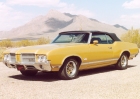




 . I really appreciate all the info and tips you guys gave! Definitely learned a lot and probably wouldn’t have gotten it started any time soon without you guys! Got some ticking while it ran and a pretty epic fireball out of the carburetor on first startup haha. Assuming it’s a timing issue so time to troubleshoot that. I’ll be back in another thread if I need help. Again, thank you all so much for the info. I’ll have to take a road-trip out to you guys one day to buy you breakfast haha. Thanks again.


