


Checking valve lash(?) on heads - 72 98 with 455


Thread Starter
Registered User
Joined: Mar 2023
Posts: 266
From: Bolton, MA
Checking valve lash(?) on heads - 72 98 with 455
I'm about to replace the valve cover gaskets on the "new to me" '72 98 with a 455. It's running quite well, only has 60k miles, but sat for years and I figure with the valve covers off - that would be a good opportunity to make sure things are set the properly. I have the CSM but wondering if you folks have a good "DIY" video you can point me too. I tend to process things a lot better watching videos vs. reading.
Thanks for any suggestions.
Jay
Thanks for any suggestions.
Jay
Thread Starter
Registered User
Joined: Mar 2023
Posts: 266
From: Bolton, MA
Cool. Sounds like no adjustment then. Curious what you mean though with "preload built in should be around .040-.050"??
Thread Starter
Registered User
Joined: Mar 2023
Posts: 266
From: Bolton, MA


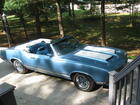
The first couple are from the ad on Facebook Marketplace when it was pulled out of the garage is sat in for the last 20-something years. It ain't perfect, some surface rust here and there and other stuff like trunk pan need immediate work. Interior is incredible - though I did just post in ..."Interior" section about how best to clean the cloth seats; if in fact they're cloth :-). Not hard plastic vinyl. Loving bringer her back to life.

Running On Empty
Joined: Jul 2018
Posts: 25,676
From: Earth
Hydraulic lifters use what is called lifter preload, which compresses the small piston inside the lifter a given distance. This preload compensates for growth so no lash is necessary. Stock factory preload specs are generally ¾ to 1 full turn of preload, which moves the small piston in the lifter roughly 0.050-inch.
Thread Starter
Registered User
Joined: Mar 2023
Posts: 266
From: Bolton, MA
So, when I do the valve cover gaskets - just remove the old, clean, install new and tighten down?
Running On Empty
Joined: Jul 2018
Posts: 25,676
From: Earth
Yes. Don't go ape-$hit w/ any gasket sealant you're using - a light bead with your fingers is all that's needed. Be sure to follow the torque specification. The OEM valve covers aren't designed to be heavily wrenched on - you can warp the metal. An uneven valve cover is not a happy valve cover.

Moderator
Joined: Jul 2007
Posts: 18,176
From: Edmond, OK

Registered User
Joined: Sep 2010
Posts: 472
Make sure the gasket mating service on the valve cover is flat. Very often a previous owner tightened the valve cover bolts and bent the valve cover under the bolt head. Get a flat anvil and a flat hammer and hammer them all flat before reinstalling, otherwise it will continue leaking. Make sure to use a torque wrench to tighten them during the install, otherwise you will bend the covers and they will leak.
Thread Starter
Registered User
Joined: Mar 2023
Posts: 266
From: Bolton, MA
Make sure the gasket mating service on the valve cover is flat. Very often a previous owner tightened the valve cover bolts and bent the valve cover under the bolt head. Get a flat anvil and a flat hammer and hammer them all flat before reinstalling, otherwise it will continue leaking. Make sure to use a torque wrench to tighten them during the install, otherwise you will bend the covers and they will leak.

Registered User
Joined: Dec 2020
Posts: 19
there is shims infer rocker tower to adjust lash , but that should be last thing to worry about so compression test . Crank over with no spark plugs in it build up oil psi , the see if it runs

Registered User
Joined: Oct 2015
Posts: 673


Registered User
Joined: Sep 2012
Posts: 1,413
From: Water Wonderland MI.
If using cork gaskets you could go to 7', un-likely factory ever used 7# or a torque wrench, rubber just tighten it till snug and an additional 1/4 turn. Can always snug up if it seeps but if over tightened the metal will bend and never seal, like stated above.
Last edited by classicmuscle442; Apr 10, 2023 at 06:35 PM.
Registered User
Joined: Jan 2009
Posts: 5,537
From: Harrison, Michigan
No no no..... If you're gonna do this you had better change the blinker fluid first as the muffler bearings get rusty and lash goes verticals and all is lost... ( be careful what you see on the interwebs.....)
Thread Starter
Registered User
Joined: Mar 2023
Posts: 266
From: Bolton, MA
The very first thing to do is follow the advice in Post 12
Are we still using gasket sealer these days, and assuming we still do - what’s the best kind?

Running On Empty
Joined: Jul 2018
Posts: 25,676
From: Earth
Valve covers look excellent. What type gasket you using - cork or poly/fiber? I know folks who don't put any gasket sealant on cork while others do & if they do it's a very thin amount barely enough to wet the surface of the gasket & only enough to hold it in place to the bottom of the valve cover while you install the valve cover. You'll most likely get many suggestions on which to use, but the past several times I've had my valve covers off I've installed them w/ Permatex® Ultra Grey® RTV Silicone Gasket Maker - mostly because I had a tube of it and I've never had any leaks.
Thread Starter
Registered User
Joined: Mar 2023
Posts: 266
From: Bolton, MA
Valve covers look excellent. What type gasket you using - cork or poly/fiber? I know folks who don't put any gasket sealant on cork while others do & if they do it's a very thin amount barely enough to wet the surface of the gasket & only enough to hold it in place to the bottom of the valve cover while you install the valve cover. You'll most likely get many suggestions on which to use, but the past several times I've had my valve covers off I've installed them w/ Permatex® Ultra Grey® RTV Silicone Gasket Maker - mostly because I had a tube of it and I've never had any leaks.

Registered User
Joined: Aug 2011
Posts: 4,093
All good advice^^^
Give the sealer extra set-up time, don't put it together and start it.
If you do the WP take pictures and detailed notes of where the spacers and the non-standard bolts go. I'd suggest drawing a mockup on cardboard and punching holes in it to place the bolts as they are removed and the same for the spacers as they're not identical. Installation in the wrong spot will cause pulley misalignment and headaches.
Good luck!!!
Give the sealer extra set-up time, don't put it together and start it.
If you do the WP take pictures and detailed notes of where the spacers and the non-standard bolts go. I'd suggest drawing a mockup on cardboard and punching holes in it to place the bolts as they are removed and the same for the spacers as they're not identical. Installation in the wrong spot will cause pulley misalignment and headaches.
Good luck!!!
Running On Empty
Joined: Jul 2018
Posts: 25,676
From: Earth
That's very good advice. Additionally, I'll add this. Since you're in no obvious hurry I don't believe, don't torque/tighten the bolts for at least several hours - stay within the cure/set times of the sealant - they're all a little different and I can't recall exactly what the total cure time is for the Permatex® Ultra Grey® RTV Silicone Gasket Maker sealant. Tighten the bolts to just and nothing more than finger tight. Leave the valve cover in place for a minimum of several hours - stay within the cure time, walk away, grab a soda pop, work on sump'n else. Then, torque/tighten them down about one hour prior to total cure time. Silicone sealants are exceptional - most have a cross linker in the compound - much like vulcanization is to rubber. If you torque/tighten too soon while very wet it may have a tendency to provide an ill-formed shape therefore it's been my experience to wait until ~80% of the cure time has elapsed before tightening.

Administrator
Joined: Oct 2009
Posts: 42,456
From: Poteau, Ok
I use weather stripping cement (follow the directions) and glue the gasket to the covers, nothing on the head side. Then install the covers as posted above until the bolts are snug then another 1/4 - 1/2 turn.
Thread Starter
Registered User
Joined: Mar 2023
Posts: 266
From: Bolton, MA
Thread Starter
Registered User
Joined: Mar 2023
Posts: 266
From: Bolton, MA
So. My question is, as I plan to take that cover off and do it all again: Can I re use the gasket? Thinking NO because it will have gasket sealer stuck to it (again, I used rubber gaskets).
Thanks all
Thread Starter
Registered User
Joined: Mar 2023
Posts: 266
From: Bolton, MA
So, after thinking I did a good job on the valve cover gaskets (cleaned the heck out of the heads, razor bladed soooo smooth, wire brushed the surfaces of the valve cover and hammered out the bolt holes where there was “warpage “, put the film of gasket sealer on heads and a little in valve cover to keep the gasket in place, gently tightening bolts in star pattern…..) I am seeing oil leaking from the forward part of the valve cover. Being completely honest, it seems worse than before!!!!
So. My question is, as I plan to take that cover off and do it all again: Can I re use the gasket? Thinking NO because it will have gasket sealer stuck to it (again, I used rubber gaskets).
Thanks all
So. My question is, as I plan to take that cover off and do it all again: Can I re use the gasket? Thinking NO because it will have gasket sealer stuck to it (again, I used rubber gaskets).
Thanks all
Registered User
Joined: Sep 2010
Posts: 472
Double check that the valve covers are truly flat. You could have removed the dimpled bolt holes individually, but the result could be a warp over a large portion of the sealing surface. Use a long straight edge to check the entire upper and lower. If your rubber gasket is very thin 1/16" then you might be able to get thicker rubber gaskets. The other option is to use a thicker cork gasket 1/4" which will make up for larger gaps. The only disadvantage of cork is it's harder to clean up the next time you replace the gaskets.
Last edited by sysmg; Apr 16, 2023 at 12:22 PM.
Thread Starter
Registered User
Joined: Mar 2023
Posts: 266
From: Bolton, MA
Double check that the valve covers are truly flat. You could have removed the dimpled bolt holes individually, but the result could be a warp over a large portion of the sealing surface. Use a long straight edge to check the entire upper and lower. If your rubber gasket is very thin 1/16" then you might be able to get thicker rubber gaskets. The other option is to use a thicker cork gasket 1/4" which will make up for larger gaps. The only disadvantage of cork is it's harder to clean up the next time you replace the gaskets.

Thread
Thread Starter
Forum
Replies
Last Post
Chumpy2112
General Discussion
0
Jun 21, 2013 02:03 PM
<azlake@thedam.com>
Brakes/Hydraulic Systems
0
Jun 21, 2005 10:57 PM


