


Tuneup checklist


Thread Starter
Registered User
Joined: Mar 2010
Posts: 1,323
From: Nova Scotia, Canada
Tuneup checklist
Going to give my car (stock, '66 Toronado) a final tuneup check after sorting out a few issues over the winter. Following the CSM instructions and some excellent advice from the good folks on here, here is my checklist, am I missing anything?
1. Take the car for a drive and get it fully warmed up. Ensure that the choke is fully open and that the fast idle cam isn't still engaged.
2. Make sure the transmission stator is in the high angle position (AFT connector pin on the transmission control switch has 12V)
3. Check the dwell, ensure it's solid @ 30 degrees.
4. Unplug the vacuum advance, plug the line, and raise idle to stabilize at approx. 850 RPM by adjusting the idle screw.
5. Check the timing, in my case it should be 7.5 degrees BTDC. Some people say the engine will be happier at a higher setting, like 10-12 degrees. I'll play with this a bit to see.
6. Adjust the idle mixture screws one at a time to max vacuum or highest idle speed (with vacuum gauge attached to manifold vacuum). Or should I turn the idle speed back down first before I do this?
7. Adjust the idle screw to spec. In my case it's 575 RPM with the car in gear with the wheels against the chocks. I think this should be about 750-800RPM in Park.
Thanks!
1. Take the car for a drive and get it fully warmed up. Ensure that the choke is fully open and that the fast idle cam isn't still engaged.
2. Make sure the transmission stator is in the high angle position (AFT connector pin on the transmission control switch has 12V)
3. Check the dwell, ensure it's solid @ 30 degrees.
4. Unplug the vacuum advance, plug the line, and raise idle to stabilize at approx. 850 RPM by adjusting the idle screw.
5. Check the timing, in my case it should be 7.5 degrees BTDC. Some people say the engine will be happier at a higher setting, like 10-12 degrees. I'll play with this a bit to see.
6. Adjust the idle mixture screws one at a time to max vacuum or highest idle speed (with vacuum gauge attached to manifold vacuum). Or should I turn the idle speed back down first before I do this?
7. Adjust the idle screw to spec. In my case it's 575 RPM with the car in gear with the wheels against the chocks. I think this should be about 750-800RPM in Park.
Thanks!
Last edited by ourkid2000; Jun 2, 2025 at 04:16 AM.

Running On Empty
Joined: Jul 2018
Posts: 26,225
From: Earth
Depends on 'where' or 'what' the idle speed (RPM) is currently set to. The idle RPM screw should not influence your ability to properly tune the engine - it's nothing more than the final RPM you elect to set at idle. Perform the tune-up first, then set idle screw last to appropriate RPM.
1) Dwell
2) Timing
3) A/F mixture
4) Idle screw
In that order.
1) Dwell
2) Timing
3) A/F mixture
4) Idle screw
In that order.
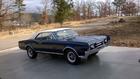
Administrator
Joined: Oct 2009
Posts: 42,512
From: Poteau, Ok
Engine RPM is not that critical when setting timing as long as it's 700 or below.
Last edited by oldcutlass; May 30, 2025 at 06:16 AM.
Thread Starter
Registered User
Joined: Mar 2010
Posts: 1,323
From: Nova Scotia, Canada
Ah yes, oversight on my part. I put a new set in last summer. There's only a couple hundred miles on them so I'll leave em for now. I'll add this to my checklist though.
Another one to add yes. In my case, these parts were replaced last year so again I'll leave them for now. Only a couple hundred miles on them.
The book says I need to set the timing at 850 RPM with the vacuum advance disconnected and plugged. Just wondering why you say differently? Or am I missing something?
Thread Starter
Registered User
Joined: Mar 2010
Posts: 1,323
From: Nova Scotia, Canada


Registered User
Joined: Jun 2009
Posts: 15,200
From: southeastern Michigan
Cookie dough or Reese's peanut butter cup blizzard.
I love to bore the teen-aged clerk taking my order and tell her I remember when the Blizzard was first introduced, in 1985 I think it was. I remember that it came in only one size and that it cost $1.50.
Boy does that get her bored-looking in a hurry! (What do I gotta do to get this old guy to go away?!)
I love to bore the teen-aged clerk taking my order and tell her I remember when the Blizzard was first introduced, in 1985 I think it was. I remember that it came in only one size and that it cost $1.50.
Boy does that get her bored-looking in a hurry! (What do I gotta do to get this old guy to go away?!)
Last edited by jaunty75; May 30, 2025 at 09:54 AM.
Thread Starter
Registered User
Joined: Mar 2010
Posts: 1,323
From: Nova Scotia, Canada
Cookie dough or Reese's peanut butter cup blizzard.
I love to bore the teen-aged clerk taking my order and tell her I remember when the Blizzard was first introduced, in 1985 I think it was. I remember that it came in only one size and that it cost $1.50.
Boy does that get her bored-looking in a hurry! (What do I gotta do to get this old guy to go away?!)
I love to bore the teen-aged clerk taking my order and tell her I remember when the Blizzard was first introduced, in 1985 I think it was. I remember that it came in only one size and that it cost $1.50.
Boy does that get her bored-looking in a hurry! (What do I gotta do to get this old guy to go away?!)
"This is some building, what's the square footage? Harry Fleming used to have an office here. There was a deli on the first floor. You don't get corned beef like that anymore"


Registered User
Joined: Jan 2010
Posts: 6,119
From: central Indiana
Remove the distributor cap. Rotate the engine in its normal direction until the timing marks line up. Slowly rotate the engine backwards while watching the rotor, as soon as you see it move stop. Look at the timing marks again, if the crank moved more than about 8-10 degrees there is some slack in the timing chain. Excessive slack retards the cam timing.
If this is too much work, look at the odometer. If it’s above 75-80k, it’s past time to change it!!

Registered User
Joined: Aug 2011
Posts: 4,121
Remove the distributor cap. Rotate the engine in its normal direction until the timing marks line up. Slowly rotate the engine backwards while watching the rotor, as soon as you see it move stop. Look at the timing marks again, if the crank moved more than about 8-10 degrees there is some slack in the timing chain. Excessive slack retards the cam timing.
If this is too much work, look at the odometer. If it’s above 75-80k, it’s past time to change it!!
If this is too much work, look at the odometer. If it’s above 75-80k, it’s past time to change it!!
CH3NO2 LEARN IT BURN IT
Joined: Jul 2010
Posts: 5,644
From: Land of Taxes
And nobody mentioned to buy top quality parts...not the wilfit-30 day expiration chineasium landfill garbage....run Forest.
Blue Streaks hell ya.
Taylor spiral core wires.
NGK plugs.
Cap and rotor should be Taro or DUI (for HEI). You should be able to find all ignition parts a Taro.
Give Mr.Toro as much timing at it will tolerate w/o pre-ignition with the gas quality and elevation where you live.
Carb ready for a kit yet? Cliffs for the kit. https://www.google.com/search?client...gh+performance
Dont forget to change all fluids...PW Steer, brake, coolant... AND most important the trans!
https://www.taroignition.com/
https://performancedistributors.com/...cap-rotor-kit/
What color combo is your 66?
Blue Streaks hell ya.
Taylor spiral core wires.
NGK plugs.
Cap and rotor should be Taro or DUI (for HEI). You should be able to find all ignition parts a Taro.
Give Mr.Toro as much timing at it will tolerate w/o pre-ignition with the gas quality and elevation where you live.
Carb ready for a kit yet? Cliffs for the kit. https://www.google.com/search?client...gh+performance
Dont forget to change all fluids...PW Steer, brake, coolant... AND most important the trans!
https://www.taroignition.com/
https://performancedistributors.com/...cap-rotor-kit/
What color combo is your 66?


Thread Starter
Registered User
Joined: Mar 2010
Posts: 1,323
From: Nova Scotia, Canada
Ok so here's my final checklist:
Start with replacing oil, filter, air filter, PCV valve, distributor cap & rotor, plug wires, points/condenser, and spark plugs (ensure they're gapped properly = .030"). Check and clean battery terminals, change fuel filter.
1. Take the car for a drive and get it fully warmed up. Ensure that the choke is fully open and that the fast idle cam isn't still engaged. Very important step!
2. Check the dwell, ensure it's solid @ 30 degrees. Adjust as required.
3. Unplug the vacuum advance & plug the line. Also, if the carb still has hot idle compensator - plug that as well. Raise idle to stabilize at approx. 850 RPM by adjusting the slow idle screw.
4. Check the timing, it should be 7.5 degrees BTDC. Some people say the engine is happier at a higher setting, like 10-12 degrees. I'll play with this a bit to see.
5. Adjust the idle mixture screws one at a time to max vacuum or highest idle speed (with vacuum gauge attached to manifold vacuum).
6. Adjust the slow idle screw to spec. In my case it's 575 RPM (A/C car with A.I.R.) with the car in gear with the wheels against the chocks. I think this should be about 725-785 RPM in Park.
7. If feeling adventurous, check compression. Also, if concerned about timing chain slack: Remove the distributor cap. Rotate the engine in its normal direction until the timing marks line up. Slowly rotate the engine backwards while watching the rotor, as soon as you see it move stop. Look at the timing marks again, if the crank moved more than about 8-10 degrees there is some slack in the timing chain. Excessive slack retards the cam timing.
8. If the car is running great, go get some ice cream to celebrate
Start with replacing oil, filter, air filter, PCV valve, distributor cap & rotor, plug wires, points/condenser, and spark plugs (ensure they're gapped properly = .030"). Check and clean battery terminals, change fuel filter.
1. Take the car for a drive and get it fully warmed up. Ensure that the choke is fully open and that the fast idle cam isn't still engaged. Very important step!
2. Check the dwell, ensure it's solid @ 30 degrees. Adjust as required.
3. Unplug the vacuum advance & plug the line. Also, if the carb still has hot idle compensator - plug that as well. Raise idle to stabilize at approx. 850 RPM by adjusting the slow idle screw.
4. Check the timing, it should be 7.5 degrees BTDC. Some people say the engine is happier at a higher setting, like 10-12 degrees. I'll play with this a bit to see.
5. Adjust the idle mixture screws one at a time to max vacuum or highest idle speed (with vacuum gauge attached to manifold vacuum).
6. Adjust the slow idle screw to spec. In my case it's 575 RPM (A/C car with A.I.R.) with the car in gear with the wheels against the chocks. I think this should be about 725-785 RPM in Park.
7. If feeling adventurous, check compression. Also, if concerned about timing chain slack: Remove the distributor cap. Rotate the engine in its normal direction until the timing marks line up. Slowly rotate the engine backwards while watching the rotor, as soon as you see it move stop. Look at the timing marks again, if the crank moved more than about 8-10 degrees there is some slack in the timing chain. Excessive slack retards the cam timing.
8. If the car is running great, go get some ice cream to celebrate


Registered User
Joined: May 2009
Posts: 2,269
From: Northern California
If it’s not plug, cap & rotor replacement time, you can achieve sometimes noticeable improvements by cleaning the carbon off with a dremel at the cost of pulling them, which by the time you’ve done it, you might as well stick in new parts…
If your carb is right on it won’t make much difference, but if the car runs rich a little de-carbonizing can help smooth out the idle and presumably help it run better when you can’t feel the difference at higher RPMs.
Chris
If your carb is right on it won’t make much difference, but if the car runs rich a little de-carbonizing can help smooth out the idle and presumably help it run better when you can’t feel the difference at higher RPMs.
Chris
Thread Starter
Registered User
Joined: Mar 2010
Posts: 1,323
From: Nova Scotia, Canada
If it’s not plug, cap & rotor replacement time, you can achieve sometimes noticeable improvements by cleaning the carbon off with a dremel at the cost of pulling them, which by the time you’ve done it, you might as well stick in new parts…
If your carb is right on it won’t make much difference, but if the car runs rich a little de-carbonizing can help smooth out the idle and presumably help it run better when you can’t feel the difference at higher RPMs.
Chris
If your carb is right on it won’t make much difference, but if the car runs rich a little de-carbonizing can help smooth out the idle and presumably help it run better when you can’t feel the difference at higher RPMs.
Chris
Last edited by ourkid2000; Jun 2, 2025 at 04:03 AM.

Registered User
Joined: Mar 2010
Posts: 3,883
From: Mt.Ary, MD
The old school method is to rev the engine with one hand, and drizzle water down the carb with the other. The desired effect is steam cleaning the combustion chamber.
The more modern approach is to fill an IV bag with your favorite solvent, and introduce it into a vacuum passage with the car running. Thd little valve in the IV line controls flow.
Either way, don't get crazy with too much fluid, as you risk hydrolocking the engine. Also, it creates quite a stinky smoke screen out the exhaust, so try for a windy day.
The more modern approach is to fill an IV bag with your favorite solvent, and introduce it into a vacuum passage with the car running. Thd little valve in the IV line controls flow.
Either way, don't get crazy with too much fluid, as you risk hydrolocking the engine. Also, it creates quite a stinky smoke screen out the exhaust, so try for a windy day.
Registered User
Joined: Sep 2017
Posts: 5,220
From: St. Paul Minnesota
I've seen people talk about the de-carboning using Seafoam and sometimes water works good too. I dunno, I've never done it. What do you use? Did it seem worthwhile? I tend to get "bad luck" vibes off this job. Like a big chunk of carbon breaks off and does a whole bunch of damage or something.
Keep in mind that gasoline, carburetor jetting and additives was different than today. Look at the pics of s[ark plugs people post on here. Most show some or no "color" after 200 miles. Any questionable plugs were the result of oil fouling due to bad valve seals or bad/broken rings. Carbon build up in combustion chambers is basically un-burned gasoline that didn't get exhausted into the exhaust pipe.
Engineers have been working on cleaner burning, more fuel efficient engines (improved gas mileage) since the 1960's. Personally, I think you are chasing a problem that just isn't there.
....Just my two cents worth.
Registered User
Joined: Jan 2010
Posts: 6,119
From: central Indiana
"In the old days", combustion chambers could build up carbon deposits from extensive low speed driving or idling for long periods of time. That being said, you took the car out on a deserted stretch of highway and drove it 100 MPH for a few miles.
Keep in mind that gasoline, carburetor jetting and additives was different than today. Look at the pics of s[ark plugs people post on here. Most show some or no "color" after 200 miles. Any questionable plugs were the result of oil fouling due to bad valve seals or bad/broken rings. Carbon build up in combustion chambers is basically un-burned gasoline that didn't get exhausted into the exhaust pipe.
Engineers have been working on cleaner burning, more fuel efficient engines (improved gas mileage) since the 1960's. Personally, I think you are chasing a problem that just isn't there.
....Just my two cents worth.
Keep in mind that gasoline, carburetor jetting and additives was different than today. Look at the pics of s[ark plugs people post on here. Most show some or no "color" after 200 miles. Any questionable plugs were the result of oil fouling due to bad valve seals or bad/broken rings. Carbon build up in combustion chambers is basically un-burned gasoline that didn't get exhausted into the exhaust pipe.
Engineers have been working on cleaner burning, more fuel efficient engines (improved gas mileage) since the 1960's. Personally, I think you are chasing a problem that just isn't there.
....Just my two cents worth.
Not necessarily the “old days”.
I’m pretty sure I have shared this story, I’m sure some haven’t heard it.
Years ago I worked in a Cadillac dealership. A customer brought in a low mileage Fleetwood that had an engine knock. In my opinion, there was no question it was bottom end noise. The engine in question was the small block TBI Chevy 350.
The tech working on it wasn’t convinced it was bottom end, he was thinking carbon on the pistons. He ran a few cans of Top Engine cleaner thru the engine, then dumped a little into each cylinder and let it sit over the weekend. On Monday, he reassembled, changed the oil, and started it. Needless to say, it fogged for mosquitoes and smoked bad, but the knock was gone! It didn’t take long for 2 large black sooty circles to form on the ground directly under the tailpipes. He then took it for a long spirited drive to clean out the engine.
I would have never imagined an engine could get that carboned up to actually knock. The owner was a very old man who rarely drove it, and when he did he drove it very gently.
Registered User
Joined: Sep 2017
Posts: 5,220
From: St. Paul Minnesota
Thread Starter
Registered User
Joined: Mar 2010
Posts: 1,323
From: Nova Scotia, Canada
My car is probably pretty carbon'd up. It had a couple carb problems for about 40 years that I only straightened out in the past couple of years. This led to it running pig rich that whole time.......mind you, in those 40 years the car only had about 500 miles put on it, tops. Still though, lots of idling and rough running in that period.

Thread
Thread Starter
Forum
Replies
Last Post


