When you click on links to various merchants on this site and make a purchase, this can result in this site earning a commission. Affiliate programs and affiliations include, but are not limited to, the eBay Partner Network.
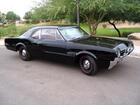
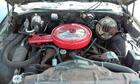
Hello, new member here and I've always been into Pontiacs so my Olds knowledge is limited, but I have a 1969 cutlass convertible project that currently has a 350. A few years ago (before the plague hit) I found some guys selling an Olds 455 in a local buy and sell and after looking it over I scooped it up. Story is it had been sitting outside in some sort of covered shed in an industrial yard of some sort and these guys were cleaning up the yard and just wanted it gone. Engine has alot of surface rust and with my limited olds knowledge looking up the #'s everything says it's a 72 W30 except for a few clues like the iron intake that tell me it's not. So last week I decided to open it up and see what I need to do to revive it with an eye to putting it in my cutlass, first pictures are from when i picked it up, the following pictures are what I found inside.
So can anyone offer any insight into what I've got here? Is it a 72 W30, or is this more likely a marine engine? And if so what's the difference? It looks to me like It is brand new and from all the paint marks on the valves has obviously never been run. The plan is to continue disassembling and see if the rust can be cleaned up with a bit of honing, then reseal it up and run it. Any suggestions on whether I should do a cam swap would be appreciated also and if so what is recommended for a stock engine in a automatic 69 cutlass using W30 exhaust manifolds?
Yeah, that number on the VIN pad is definitely not an original automotive number. It’s maybe an industrial or marine application. Post a better picture of the carb number and the top of the carb.
What a shame! Beautiful pics until you got to the pic of the cylinders. Said part is, if someone had taken the time to pull the valve covers, loosen the rockers so that no valves were open, and then put the valve covers back on, the motor would probably be perfect inside. If you have not tried to get the pisons out yet, I think I would fill the cylinders with metal rescure to above the rusted areas before you do anything. Try to get as much of the loose junk and corrosion as you can out and then pour in the metal rescue. Leave it sit for a day or so and see what happens. You can get it at Home Depot or online.
Any suggestions on whether I should do a cam swap would be appreciated also and if so what is recommended for a stock engine in a automatic 69 cutlass using W30 exhaust manifolds?
If it is a marine 455, it's a kick-*** engine to begin with...
"What a shame! Beautiful pics until you got to the pic of the cylinders" Agreed and my exact thoughts as I pulled the heads off. Actually I have a gallon of that exact product and am intending to get more to try on this engine.
Thanks for that info, the Qjet #'s was one of the main reasons I thought it might be a W30 but It looks to me now like it must have been a marine crate motor, It also came with a flywheel rather than a flexplate, did marine engines use a flywheel?
Thanks for that info, the Qjet #'s was one of the main reasons I thought it might be a W30 but It looks to me now like it must have been a marine crate motor, It also came with a flywheel rather than a flexplate, did marine engines use a flywheel?
Yes, marine and industrial motors typically got a flywheel since they didn't have a heavy torque converter to replace the flywheel mass.
Thanks for that info, the Qjet #'s was one of the main reasons I thought it might be a W30 but It looks to me now like it must have been a marine crate motor, It also came with a flywheel rather than a flexplate, did marine engines use a flywheel?
if it has a flywheel it should have a pilot bearing and that means you can go manual transmission , not sure marine engines have flywheels never seen a clutch pedal in a boat but I’m a land lubber lol , nice find regardless