


rocker adjustments


Thread Starter
major noob
Joined: Sep 2013
Posts: 1,926
From: claremont, nc
 rocker adjustments
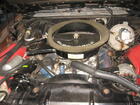
I'm sure this has been covered but I can't find detailed instructions to adjust stock rockers the book I have says tighten to 25ft pounds and be done with them is this the case

Registered User
Joined: Jun 2010
Posts: 3,613
From: Rogues Island, USA
Yes, you're just setting the rocker bridge down on the head. Just remember to do each bridge equally or as close to equal as possible. Unless you do each one on the base circle you could crack a bridge

Registered User
Joined: Jun 2008
Posts: 1,434
From: Chicago
Provided you have stock rockers, unmilled heads, stock valve height, unmilled block, and stock length pushrods, yes, this is the proper procedure. Small deviations won't make much of a difference, but they can add up. I don't have any other info available to me for a while to remember how sensitive they are, or how much lifter preload you need to obtain.

Registered User
Joined: Sep 2010
Posts: 1,663
From: Norfolk, Va
True! The factory valve train is not adjustable on the Oldsmobile engine. The hydraulic lifters do have a small amount of flexibility to compensate for the minor differences in valve stem length/installed height. But that is about it. Adjustable rockers are available through the aftermarket.

Registered User
Joined: Dec 2011
Posts: 7,286
your ratchet
how much Wheaties you had for breakfast
your arm's calibration
the lube appied to the bolts...
etc.
A torque wrench on oiled fasteners is the CSM proper method.
Registered User
Joined: Sep 2010
Posts: 1,663
From: Norfolk, Va
IMG_20150208_153947952_zpsbb4eca7d.jpg

Administrator
Joined: Oct 2009
Posts: 42,496
From: Poteau, Ok

Registered User
Joined: Aug 2013
Posts: 3,900
From: Central Illinois
Bill, did you have any head work done? The machine shop I went to installed new exhaust valves on every cylinder. Those valve stems ended up being shorter than the stock intakes so I wasn't getting enough preload. And the cam I put in has a smaller base circle, further exacerbating the problem. I had a lot of ticking.
Any more details you can give us? Can you measure your preload? I used a very straight piece of hard wood across the valve cover surface, placed my caliper on that (mine has the pin that slides out when I open it), tightened the bolt until zero lash (slight resistance on the pushrod), and took a measurement. Then I torqued the bolts to 25 ft lbs and took another measurement, then subtracted. You should have between .030 and .060" preload. Some of mine had as little as .015.
It's really not difficult. If you are torquing them to 25 and still getting ticking, something is amiss.
Any more details you can give us? Can you measure your preload? I used a very straight piece of hard wood across the valve cover surface, placed my caliper on that (mine has the pin that slides out when I open it), tightened the bolt until zero lash (slight resistance on the pushrod), and took a measurement. Then I torqued the bolts to 25 ft lbs and took another measurement, then subtracted. You should have between .030 and .060" preload. Some of mine had as little as .015.
It's really not difficult. If you are torquing them to 25 and still getting ticking, something is amiss.

Connoisseur d'Junque
Joined: Sep 2010
Posts: 21,183
From: The Hudson Valley
Bring each cylinder to TDC on its compression stroke, with the lifters on the base circle, and tighten both rocker screws there.
It's also a good place to double-check your lifter preload - As I said here, just the other day:
"[You can get a rough sense of your valve adjustment by] using the known thread pitch of the rocker pedestal screws (18 per inch or 0.556" per turn) to indirectly measure lifter preload. Considering the 1.6:1 rocker arm ratio, every ⅓ of a turn of the rocker screw will correspond to 0.029" of movement at the pushrod, and since the desired lifter preload is usually given as 0.030-0.060" (I've never seen any one "definitive" number), that means that:
If you place a cylinder at TDC compression and you loosen the rocker screws, then tighten until the pushrod is just making contact with the rocker, then tighten another half a turn or so until the screw bottoms, that valve is adjusted correctly.
If it takes over ¾ of a turn before it bottoms, your preload is a bit deep, indicating a need for a shorter pushrod (or, if you're not going to overstress the engine, shimming the rocker pedestal).
If it takes less than ⅓ of a turn, it's a bit shallow, and you need a longer pushrod (milling the rocker pedestals is possible, but doesn't make much sense unless you've got a milling machine)."
Also, if you're already loosening the rocker screws, you might as well remove the rocker bridges and pedestals and have a close look to see whether the undersides of the bridges, where they bear on the rockers, are worn.
- Eric
It's also a good place to double-check your lifter preload - As I said here, just the other day:
"[You can get a rough sense of your valve adjustment by] using the known thread pitch of the rocker pedestal screws (18 per inch or 0.556" per turn) to indirectly measure lifter preload. Considering the 1.6:1 rocker arm ratio, every ⅓ of a turn of the rocker screw will correspond to 0.029" of movement at the pushrod, and since the desired lifter preload is usually given as 0.030-0.060" (I've never seen any one "definitive" number), that means that:
If you place a cylinder at TDC compression and you loosen the rocker screws, then tighten until the pushrod is just making contact with the rocker, then tighten another half a turn or so until the screw bottoms, that valve is adjusted correctly.
If it takes over ¾ of a turn before it bottoms, your preload is a bit deep, indicating a need for a shorter pushrod (or, if you're not going to overstress the engine, shimming the rocker pedestal).
If it takes less than ⅓ of a turn, it's a bit shallow, and you need a longer pushrod (milling the rocker pedestals is possible, but doesn't make much sense unless you've got a milling machine)."
Also, if you're already loosening the rocker screws, you might as well remove the rocker bridges and pedestals and have a close look to see whether the undersides of the bridges, where they bear on the rockers, are worn.
- Eric

Connoisseur d'Junque
Joined: Sep 2010
Posts: 21,183
From: The Hudson Valley
Yeah, sorry. I just happened to have a few minutes at the right time to run through the numbers again.
I believe that in your case, though, you have different rocker attaching screws, with a different pitch, because of the different rocker arrangement, so the numbers would be slightly different.
Besides, in your case, you needed to change your pushrod length, which is a whole different ballgame.
- Eric
I believe that in your case, though, you have different rocker attaching screws, with a different pitch, because of the different rocker arrangement, so the numbers would be slightly different.
Besides, in your case, you needed to change your pushrod length, which is a whole different ballgame.
- Eric
Registered User
Joined: Aug 2013
Posts: 3,900
From: Central Illinois
Yeah, sorry. I just happened to have a few minutes at the right time to run through the numbers again.
I believe that in your case, though, you have different rocker attaching screws, with a different pitch, because of the different rocker arrangement, so the numbers would be slightly different.
Besides, in your case, you needed to change your pushrod length, which is a whole different ballgame.
- Eric
I believe that in your case, though, you have different rocker attaching screws, with a different pitch, because of the different rocker arrangement, so the numbers would be slightly different.
Besides, in your case, you needed to change your pushrod length, which is a whole different ballgame.
- Eric

Thread Starter
major noob
Joined: Sep 2013
Posts: 1,926
From: claremont, nc
Its passenger side I believe I got it I do have a loose rocker even after tightening to spec but I tightened head bolts as well and the tick is barely noticeable so I'm making a step in the right direction
Thread Starter
major noob
Joined: Sep 2013
Posts: 1,926
From: claremont, nc
Well the pinging has been solved its the headers.....I used a piece of steel as a stethoscope and the metallic ping is the combustion I guess because the headers are old and rusty they don't insulate sound as well as they used too....would I be correct in my thinking
Thread Starter
major noob
Joined: Sep 2013
Posts: 1,926
From: claremont, nc
Well this is at the engine valve covers are silent no noise in there.....headers are tight as ever when I hold a steel rod to each header tube I hear the noise its metallic and ticking just like I'm hearing when I stand over the engine
Thread Starter
major noob
Joined: Sep 2013
Posts: 1,926
From: claremont, nc
All along it was gaskets.....don't kill me but I poured oil I had from my oil change today over the #1cylinder flange and I saw in the corner a bubble...now I know where there is one leak there will be more so that is the issue

Thread
Thread Starter
Forum
Replies
Last Post


