


Was my engine equipped with a 2-barrel or 4-barrel carb?

Thread Starter
Registered User
Joined: Sep 2014
Posts: 208
From: France
Was my engine equipped with a 2-barrel or 4-barrel carb?
Hi guys!
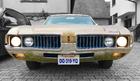
Got my 1969 Cutlass Supreme 350 Auto for one month now, but still don't know if it has originally the 2-Barrel or 4-Barrel carb...
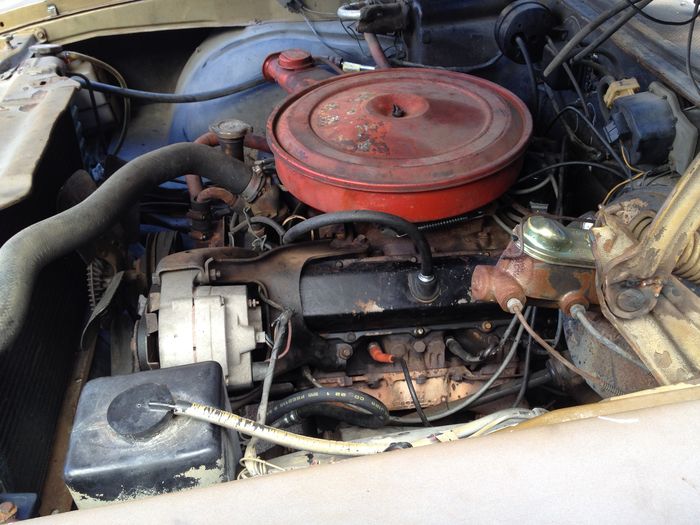
I actually have a 4-barrel carb, but know that it's not the original!
Seems to me that you can distinguish a 2-bl and a 4-bl engine by the air-cleaner, presence of exhaust heat tube and some other specifics parts...
What do think?
Thanks!!
Here are some pics of my engine:


Got my 1969 Cutlass Supreme 350 Auto for one month now, but still don't know if it has originally the 2-Barrel or 4-Barrel carb...
I actually have a 4-barrel carb, but know that it's not the original!
Seems to me that you can distinguish a 2-bl and a 4-bl engine by the air-cleaner, presence of exhaust heat tube and some other specifics parts...
What do think?
Thanks!!
Here are some pics of my engine:
Connoisseur d'Junque
Joined: Sep 2010
Posts: 21,183
From: The Hudson Valley
In 1969, all 2bbl 350s were low compression and all 4bbl 350s were high compression.
There are no other external characteristics or numbers on the engine or the car, so the only way to be reasonably certain of what kind of engine came in the car is to check the VIN-derivative number on the engine block to be sure it's the original engine, then inspect the piston crowns with a fiber optic camera and check the size of the dish and the markings (V-shaped for high compression, U-shaped for low compression).
That being said, if the intake manifold of your engine doesn't look like it's been replaced or removed, then whatever is on there is probably original, since 2- and 4-bbl carburetors require different intake manifolds.
- Eric
There are no other external characteristics or numbers on the engine or the car, so the only way to be reasonably certain of what kind of engine came in the car is to check the VIN-derivative number on the engine block to be sure it's the original engine, then inspect the piston crowns with a fiber optic camera and check the size of the dish and the markings (V-shaped for high compression, U-shaped for low compression).
That being said, if the intake manifold of your engine doesn't look like it's been replaced or removed, then whatever is on there is probably original, since 2- and 4-bbl carburetors require different intake manifolds.
- Eric

Registered User
Joined: Aug 2011
Posts: 4,109
Since the compression ratio is different does anyone know what the pressure would be on a stock low compression and a high compression engine? If compression test results all exceed the low compression value then it would be a high compression engine. I am guessing that the high compression version would be in the 150-160 PSI range...anyone?
Connoisseur d'Junque
Joined: Sep 2010
Posts: 21,183
From: The Hudson Valley
A high compression engine in good shape should be in the 175-185psi range in my experience (others may have had other experiences).
Low compression more in the 130-150psi range.
But wear and tear can reduce these plenty, and swapping cams can change it, too (a lot can happen in 45-50 years), so cranking compression is not a completely reliable indicator.
- Eric
Low compression more in the 130-150psi range.
But wear and tear can reduce these plenty, and swapping cams can change it, too (a lot can happen in 45-50 years), so cranking compression is not a completely reliable indicator.
- Eric

Registered User
Joined: Dec 2011
Posts: 7,286
Don't suppose you have a Protecto-Plate which might show the engine code?
Ck in the glovebox
What does it matter, anyhow?
How do you know the carb is not original?
An original '69 350 4-bbl intake would be 398663 I believe.
HELLA RARE according the recent ebay HURST OLDS MAYBE - STARING CONTROVERSY IN THE FACE guy... [not rare in real life]
Ck in the glovebox
What does it matter, anyhow?
How do you know the carb is not original?
An original '69 350 4-bbl intake would be 398663 I believe.
HELLA RARE according the recent ebay HURST OLDS MAYBE - STARING CONTROVERSY IN THE FACE guy... [not rare in real life]
Thread Starter
Registered User
Joined: Sep 2014
Posts: 208
From: France

Connoisseur d'Junque
Joined: Sep 2010
Posts: 21,183
From: The Hudson Valley
I also had a chance to drive her friend's Renault 4.
It's amazing how much fun it can be to drive a car with 30HP.
- Eric
Registered User
Joined: Jun 2014
Posts: 1,658
From: Ft. Wayne, IN
Connoisseur d'Junque
Joined: Sep 2010
Posts: 21,183
From: The Hudson Valley

Thread
Thread Starter
Forum
Replies
Last Post
Beau Dirt
Parts Wanted
6
Dec 27, 2021 03:02 PM


