


Front cover install trick


Thread Starter
Old(s) Fart
Joined: Mar 2007
Posts: 50,857
From: Northern VA
Front cover install trick
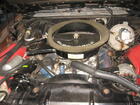
Anyone who's ever done the timing chain on an Olds motor with the engine in the car knows that the worst part of this job is getting the front cover back on with the oil pan in place. I changed the chain on my wife's 1985 D88 this weekend and I may have accidentally stumbled on THE easy way to do this.
The problem, of course, is squeezing the rubber seal at the bottom of the front cover into the front of the oil pan while fitting the cover over the two dowel pins in the front of the block. At the factory, the front cover was installed before the pan, so the oil pan bolts pull the pan down and compress the seal. Loosening the pan in the car supposedly helps, but frankly I've never been able to get at all the bolts due to obstructions. Plus, I'm worried about damaging the oil pan gasket.
This time when the front cover came off, the passenger side dowel pin came with it. I figured I'd take advantage of that. During the reinstall, I left the pin out temporarily. I glued the gasket to the back of the cover and installed the rubber bottom seal (ears trimmed, of course). I generously applied RTV on the front of the oil pan as usual. I then slipped the cover over the remaining driver's-side dowel pin and started the bottom bolt on that side. This allowed me to push the cover roughly into place and start both bolts on the passenger side. I tightened the bolts side-to-side, pulling the rubber seal into place in the oil pan. With the bolts still slightly loose, I was able to tap the passenger side dowel pin into place through the cover - the block end of the pin is chamfered. Once the pin was in place, I fully torqued all four bottom bolts. Total time, about two minutes. No cussing, no flying tools, no drama.
The problem, of course, is squeezing the rubber seal at the bottom of the front cover into the front of the oil pan while fitting the cover over the two dowel pins in the front of the block. At the factory, the front cover was installed before the pan, so the oil pan bolts pull the pan down and compress the seal. Loosening the pan in the car supposedly helps, but frankly I've never been able to get at all the bolts due to obstructions. Plus, I'm worried about damaging the oil pan gasket.
This time when the front cover came off, the passenger side dowel pin came with it. I figured I'd take advantage of that. During the reinstall, I left the pin out temporarily. I glued the gasket to the back of the cover and installed the rubber bottom seal (ears trimmed, of course). I generously applied RTV on the front of the oil pan as usual. I then slipped the cover over the remaining driver's-side dowel pin and started the bottom bolt on that side. This allowed me to push the cover roughly into place and start both bolts on the passenger side. I tightened the bolts side-to-side, pulling the rubber seal into place in the oil pan. With the bolts still slightly loose, I was able to tap the passenger side dowel pin into place through the cover - the block end of the pin is chamfered. Once the pin was in place, I fully torqued all four bottom bolts. Total time, about two minutes. No cussing, no flying tools, no drama.

Registered User
Joined: Oct 2012
Posts: 1,067
From: North Delta, BC
Is there some type of tips, hints and tricks section? Or can one be started? I find just reading through tips enjoyable as some people have some ingenious ideas on how to make life easier or make something perform better.

Registered User
Joined: Dec 2011
Posts: 7,286
The trick there would be to get that damn dowel out in the first place, lucky you. Usually if I attack them with say vice grips it gets me only a chewed dowel. As I recall they are some goofy non-std size so you cannot just use a common pin or roll pin in place of the OEM part.


Thread Starter
Old(s) Fart
Joined: Mar 2007
Posts: 50,857
From: Northern VA
The trick there would be to get that damn dowel out in the first place, lucky you. Usually if I attack them with say vice grips it gets me only a chewed dowel. As I recall they are some goofy non-std size so you cannot just use a common pin or roll pin in place of the OEM part.

Registered User
Joined: Feb 2014
Posts: 191
From: Indiana, USA
Joe, your post couldn't have come at a better time. I'm currently fretting over having to do this as soon as my fresh paint has fully cured. I'll have to see if I can get one of the dowel pins loose... I assume that it wouldn't matter much which dowel pin was removed.



Registered User
Joined: Dec 2011
Posts: 7,286
Rather than a slide hammer, I wonder if a small pulling thread type dowel puller exists already? Certainly one could be designed for the occasional use in a cramped space. Does anyone know if the slide hammer type use a standard collet such as R8 as used in milling?

Thread
Thread Starter
Forum
Replies
Last Post


