


72 Cutlass Supreme Running Hot in 114F AZ Heat!

Thread Starter
Registered User
Joined: Apr 2011
Posts: 20
From: Phoenix, AZ
72 Cutlass Supreme Running Hot in 114F AZ Heat!
Hello all:
Took my 72 Cutlass Supreme 350 2bbl out today. Was in stop and go traffic for about 45 min. As long as I was moving, the car ran around 190F. When stopped in traffic, the car crept up to about 220F.
Just replaced the water pump, radiator, hoses, fan clutch. Also put on an overflow tank. Points redone and dwell set at 30 degrees. Timing set at BTDC at 8 degrees. Put in a newly rebuilt Rochester 2 jet, which has been calibrated to factory specs.
In 100 degree heat, the car was running about 190. I have a 180 thermostat in the car, just replaced as well. Car does not leak any fluid. Also, new oil pump put in when I noticed a leak on the oil pan. New timing chain too!
Am I just asking too much out of my 39 year old car to run cool in 114 degree AZ heat? Any thoughts?
Thanks,
Joe
Took my 72 Cutlass Supreme 350 2bbl out today. Was in stop and go traffic for about 45 min. As long as I was moving, the car ran around 190F. When stopped in traffic, the car crept up to about 220F.
Just replaced the water pump, radiator, hoses, fan clutch. Also put on an overflow tank. Points redone and dwell set at 30 degrees. Timing set at BTDC at 8 degrees. Put in a newly rebuilt Rochester 2 jet, which has been calibrated to factory specs.
In 100 degree heat, the car was running about 190. I have a 180 thermostat in the car, just replaced as well. Car does not leak any fluid. Also, new oil pump put in when I noticed a leak on the oil pan. New timing chain too!
Am I just asking too much out of my 39 year old car to run cool in 114 degree AZ heat? Any thoughts?
Thanks,
Joe


Registered User
Joined: Jun 2009
Posts: 15,200
From: southeastern Michigan
220F is not an unreasonable temperature when sitting in that kind of heat in drive at idle. I doubt you're doing any damage to your engine. Probably doesn't matter what thermostat you have. In fact, the thermostat you have is correct because the 190F temperature you're getting when the car is moving is just what it should be.
Your problem is where you live. As I understand it, you southern Arizonans have three wonderful seasons, and they're called Fall, Winter, and Spring. Summer is the season that you stay indoors. Just like winter here in the north. Unless you have an unusually cool day, when the temperature might be "just" 100 or so, I'd keep your car off the road unless you know you won't be stuck in traffic.
Last edited by jaunty75; Jun 28, 2011 at 07:33 AM.
Thread Starter
Registered User
Joined: Apr 2011
Posts: 20
From: Phoenix, AZ
How about a 4 row radiator with the 180 degree thermostat? I now think my problem is that I have a 2 row in the car.
4 row will help with the three seasons of hot, hotter and freaking hot!
Winter is the only month it is cool around here!
Let me know your thoughts.....
4 row will help with the three seasons of hot, hotter and freaking hot!
Winter is the only month it is cool around here!
Let me know your thoughts.....
Registered User
Joined: Jun 2009
Posts: 15,200
From: southeastern Michigan
You're assuming you have a problem in the first place.
We've already established that the car running at 220F in 114F weather at idle while in drive (as opposed to park) is perfectly normal. Don't try to fix what ain't broken. Leave the car alone and just avoid driving it in situations where you're going to have to sit in traffic for any length of time at that kind of ambient temperature. It is a collector car, isn't it? It's not your daily driver?
Registered User
Joined: Jun 2009
Posts: 15,200
From: southeastern Michigan

Old(s) Fart
Joined: Mar 2007
Posts: 50,829
From: Northern VA
If the temp goes to 220 then levels off, nothing to worry about. If it continues to climb, then you have a problem. Keep two things in mind. First, with a good 15 psi pressure cap, the coolant won't boil until about 250 deg. Second, the heat rejection rate of the radiator is a function of the difference in temperature between the air and the radiator (among other things). As the air temp increases, the heat rejection rate decreases, so the coolant heats up, which increases the radiator temp relative to the air temp and starts to increase the heat rejection rate. At some point the radiator reaches equilibrium at a higher coolant temperature due to the higher air temp.
And as I noted above, other factors also play into this. Airflow through the radiator, radiator surface area (two row vs. three row vs. four row), and amount of sludge in the cooling jacket. Finally, if you're running ported vacuum to your vacuum advance, consider changing to manifold vacuum.
And as I noted above, other factors also play into this. Airflow through the radiator, radiator surface area (two row vs. three row vs. four row), and amount of sludge in the cooling jacket. Finally, if you're running ported vacuum to your vacuum advance, consider changing to manifold vacuum.
Thread Starter
Registered User
Joined: Apr 2011
Posts: 20
From: Phoenix, AZ
Thanks everyone for your input. Replacing the fan shroud due to it being warped and occasionally catching on the fan.
Second, going to a four core radiator. My current radiator is a 2 core and not adequate for AZ heat. Bought it for 110.00 at Checker. Lesson learned going cheap. Forgot to mention car has working AC, which will make the car run hotter to begin with. Decided to go to a four core due to reading various posts about overheating. A four core might be a little overkill, but I do want to be able to take the car out and not worry too much about the AZ heat killing my engine. One thing is for sure, no more stop and go traffic in 114 degree hear for my Cutty!
Yesterday was the first time I ever ran the car in that heat and it will be the last. Only had the car out d/t getting the rear diff fluid changed out. Had never been changed by the PO. Car is now safe and sound back in the garage!
I'll put in the new four core radiator and the fan shroud and report back with my findings. May be next week before all the parts arrive.
Thanks again!
Second, going to a four core radiator. My current radiator is a 2 core and not adequate for AZ heat. Bought it for 110.00 at Checker. Lesson learned going cheap. Forgot to mention car has working AC, which will make the car run hotter to begin with. Decided to go to a four core due to reading various posts about overheating. A four core might be a little overkill, but I do want to be able to take the car out and not worry too much about the AZ heat killing my engine. One thing is for sure, no more stop and go traffic in 114 degree hear for my Cutty!
Yesterday was the first time I ever ran the car in that heat and it will be the last. Only had the car out d/t getting the rear diff fluid changed out. Had never been changed by the PO. Car is now safe and sound back in the garage!
I'll put in the new four core radiator and the fan shroud and report back with my findings. May be next week before all the parts arrive.
Thanks again!

Registered User
Joined: Nov 2008
Posts: 670
From: Glendale, AZ
I went to the local cruise in at the Scottsdale Pavilions last weekend, and only 2 Oldsmobiles were there. Apparently the rest of the folks in the Olds club kept their cars home and out of the heat. (true story) So it looks like you might be on to a local trend in these parts.
Registered User
Joined: May 2011
Posts: 52
How can I tell if I have a two, three or four radiator? Is there identification? Is it measured for thickness? Can I tell by looking in with the cap off? I believe my radiator to be original but that is a guess. I live in Texas and it is in the hundreds here. I have a 180 thermostat and the car runs at 200 most of the time. It does get to 220 in stop & go traffic and will cool off back to 200 after that. I would like to go to a larger radiator if I knew what I have.
Dave 68 442
Dave 68 442
Registered User
Joined: Jun 2009
Posts: 15,200
From: southeastern Michigan
Old(s) Fart
Joined: Mar 2007
Posts: 50,829
From: Northern VA
Be aware that a four row uses thicker end tanks than the two row and three row radiators and will not fit your core support and top plate without modifications to the saddles that hold the radiator. An A/C car should have come from the factory with a three row. If your current radiator is really a two row, that's part of the problem.
Old(s) Fart
Joined: Mar 2007
Posts: 50,829
From: Northern VA
Yes. Remove the cap and if the coolant level is low enough, you'll be able to see and count the tubes in each row. Your car likely came stock with a three row.

Registered User
Joined: Feb 2008
Posts: 11,798
From: Plano, TX
When I bought my 72, someone put in a 2 row radiator. She ran hot kinda like always 200 or higher with a 180 stat. I hear 2 row is barely adequate fot a stock 350 with no AC.
I replaced it with a correct 3 row and she runs closer to 180-190. She hits 200 in extreme heat, but I consider it okay. The cooling systems in these cars (at least after 71 that I know of) were designed for 195* operating temps as that was the t-stat the factory used.
So 200 - no sweat. Of course the driver overheats much easier, enough to make me abandon attending car shows in the texas summer...
Look in the radiator neck to count the rows.
I replaced it with a correct 3 row and she runs closer to 180-190. She hits 200 in extreme heat, but I consider it okay. The cooling systems in these cars (at least after 71 that I know of) were designed for 195* operating temps as that was the t-stat the factory used.
So 200 - no sweat. Of course the driver overheats much easier, enough to make me abandon attending car shows in the texas summer...
Look in the radiator neck to count the rows.
Thread Starter
Registered User
Joined: Apr 2011
Posts: 20
From: Phoenix, AZ
Had the day off so I took the Cutty out this am while the temps here were still in the low 90s. The car ran cool at around 190. I double checked the radiator and it is a one long row aluminum type. I did go with the correct three row radiator vs. the four row which would have required mods. I will be installing early next week. The one row I have does run the length of the inner core, though. This being said, the three row should allow the coolant more time in the radiator, thereby cooling the fluid more appropriately. The one row radiators are plentiful, but finding a reasonably priced three row was a challenge. Got a Vista Rad Pro three row for around $320.00. This will give me better piece of mind if anything else.
Connoisseur d'Junque
Joined: Sep 2010
Posts: 21,183
From: The Hudson Valley
I think this may be an age thing.
If you're old enough to remember overheated cars pulled off the highway left and right on hot summer days, then watching the gauge climb a bit in traffic (especially with the A/C on!) is a non-event.
I'm constantly amazed when I'm in a modern car in heavy traffic with the A/C blasting, and the gauge stays pegged to the center line.
- Eric
If you're old enough to remember overheated cars pulled off the highway left and right on hot summer days, then watching the gauge climb a bit in traffic (especially with the A/C on!) is a non-event.
I'm constantly amazed when I'm in a modern car in heavy traffic with the A/C blasting, and the gauge stays pegged to the center line.
- Eric

Registered User
Joined: Aug 2006
Posts: 3,145
From: Far Northeast Philadelphia, PA
I would do an electric fan maybe with an override switch to flip on if you want to.
Here in Philly, it rarely gets in the 110+ range, it happens, but the hottest I remember was 112 about 10 years ago. Here's it the humidity that gets you. Yeah they have "heat index" on 115 sometimes, but I was in Las Vegas last july and it was 115, but at least you could breath.
Anyway, my point. I had a electric fan on my old 85 Delta with the 68 350 rocket. The fans would kick on at EXACTLY 196* and run until it dropped to 175*. It never dropped that low though. I also had a 180* thermostat in the car. In the winter, I would drive home from work at 4am and the fans NEVER kicked on
Here in Philly, it rarely gets in the 110+ range, it happens, but the hottest I remember was 112 about 10 years ago. Here's it the humidity that gets you. Yeah they have "heat index" on 115 sometimes, but I was in Las Vegas last july and it was 115, but at least you could breath.
Anyway, my point. I had a electric fan on my old 85 Delta with the 68 350 rocket. The fans would kick on at EXACTLY 196* and run until it dropped to 175*. It never dropped that low though. I also had a 180* thermostat in the car. In the winter, I would drive home from work at 4am and the fans NEVER kicked on

Registered User
Joined: Aug 2009
Posts: 114
You could dissconnect the heater hose to the heater core and engineer a nice secondary radiator.
Or turn on the heater when engine runs hot.
I've done that sacrifice many times.
Running heat full blast in 100 degree weather to save my engine from overheating. Been there done that.
I heard Nascars run radiator pressure at 50 lbs opposed to 4-7 pounds stock.
The pressure keeps fluid from boiling.
Also make sure fan clutch is good or try a better fan blade.
Etc etc etc..blabber blabber I don't know when to shut up.
Or turn on the heater when engine runs hot.
I've done that sacrifice many times.
Running heat full blast in 100 degree weather to save my engine from overheating. Been there done that.
I heard Nascars run radiator pressure at 50 lbs opposed to 4-7 pounds stock.
The pressure keeps fluid from boiling.
Also make sure fan clutch is good or try a better fan blade.
Etc etc etc..blabber blabber I don't know when to shut up.
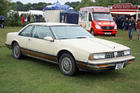
'87 Delta 88 Royale
Joined: Dec 2010
Posts: 2,514
From: Margate, England
I think from the posts so far your radiator has been identified as barely adequate, fine for a British summer no doubt, but struggling with Arizona heat.
Fit a radiator that is up to the job, and a trans cooler might be a good idea as well., remember the air passes through the A/C condensor before it gets to the radiator which doesn't help at all.
Roger.
Fit a radiator that is up to the job, and a trans cooler might be a good idea as well., remember the air passes through the A/C condensor before it gets to the radiator which doesn't help at all.
Roger.
Thread Starter
Registered User
Joined: Apr 2011
Posts: 20
From: Phoenix, AZ
Got the 3-core radiator and new fan shroud installed. Seems to have helped significantly. Car is running around 205 now in the 100+ heat. Thanks everyone for your input. Much appreciated!
Thread Starter
Registered User
Joined: Apr 2011
Posts: 20
From: Phoenix, AZ
...also put in a hi-flo Mr. Gasket 180 thermostat. Tested it in boiling water. It opened right up. When taking it out of the water, it closed nice and even. Put Mr. Gasket in and ran the car for 45 minutes in 100 degree heat. Temps ran steady around 200. Temp would climb a bit (to 205) when I was stopped at a light. When the car got on a nice stretch, the temps came back to around 195 to 200. I was contemplating putting in a 160 t-stat, but ultimately decided against it. As I understand, the 160 t-stat can also cause overheating due to the t-stat staying open and not allowing the radiator enough time to cool the fluid. Is this line of thinking correct?
Registered User
Joined: Jun 2009
Posts: 15,200
From: southeastern Michigan
Consider the extreme case, which would be a thermostat that's always open. Coolant begins to flow through the radiator immediately, and the engine never warms up at all unless you take an extended drive. A common symptom of a thermostat that has failed in the open position is that your car's heater never puts out air that's very warm.
Running too cool can be just as bad for your engine as running too warm. The temperatures you've mentioned that you are getting with your 180 thermostat sound just fine. 205F at a light while you're idling in 100 degree temperatures and then dropping back to the high 100s when you move off sounds perfectly normal. I would leave the 180 in there and stop worrying about this.
'87 Delta 88 Royale
Joined: Dec 2010
Posts: 2,514
From: Margate, England
Taking the thermostat right out might cause overheating because of unrestricted coolant flow, always use the correct thermostat so the engine runs at its designed operating temperature.
Roger.
Roger.

70 Cutlass SX
Joined: Apr 2011
Posts: 1,042
From: Bermuda
I drove through the midwest in 1980 in a Datsun in 100+ with the heater going full. Not fun.
How would an unrestricted coolant flow result in overheating? Maybe removing the thermostat causes the coolant to flow through the bypass rather than through the radiator?
How would an unrestricted coolant flow result in overheating? Maybe removing the thermostat causes the coolant to flow through the bypass rather than through the radiator?
'87 Delta 88 Royale
Joined: Dec 2010
Posts: 2,514
From: Margate, England
I'm guessing allowing coolant to flow too fast prevents it from absorbing heat from the head and cylinder walls, or doesn't allow proper flow over parts of the engine.
A mechanical design engineer might be able to throw some light on this phenomenon - are there any reading this thread?.
I remember my cousin running a car in Australia with the thermostat removed, after a while on a long trip it would gradually overheat, fitting a thermostat cured this problem.
Rally drivers used to remove the thermostats on their cars but put a restrictor in its place, it worked but nobody I asked could tell me exactly why.
Roger.
A mechanical design engineer might be able to throw some light on this phenomenon - are there any reading this thread?.
I remember my cousin running a car in Australia with the thermostat removed, after a while on a long trip it would gradually overheat, fitting a thermostat cured this problem.
Rally drivers used to remove the thermostats on their cars but put a restrictor in its place, it worked but nobody I asked could tell me exactly why.
Roger.
Administrator
Joined: Oct 2009
Posts: 42,514
From: Poteau, Ok
Lets consider that during the summer the engine reaches an operating temp of 200-205 as stated above. With a 160 degree thermostat, all that is accomplished is the thermostat opens earlier but the operating temp will be the same.
With a 180 degree thermostat, it opens later, guess what the operating temp is the same.
The thermostat is there to maintain a minimum operating temp of what ever the setting is. The cooling system, based on radiator size, fan or airflow thru radiator, and water flow is what determines cooling rate. Generally when the thermostat opens it really has no other effect on cooling when the temp is over the rated value.
With a 180 degree thermostat, it opens later, guess what the operating temp is the same.
The thermostat is there to maintain a minimum operating temp of what ever the setting is. The cooling system, based on radiator size, fan or airflow thru radiator, and water flow is what determines cooling rate. Generally when the thermostat opens it really has no other effect on cooling when the temp is over the rated value.
70 Cutlass SX
Joined: Apr 2011
Posts: 1,042
From: Bermuda
There may be some conflicting terms in the heat transfer equation - I am going to have to pull out my old thermodynamics texts and try to model this.
The underlying principle is: heat transfer between two media is more efficient the greater the temperature differnece betwen them. So, assuming that the engine block is all the same temperature, as the water begins its journey through the jacket it will pick up more heat per unit of time at the begining. As it heats up it will pick up less and less heat because it is hotter. The slower flow rate the hotter it will be at the end. In the limit, it will be at the same temperature as the block and so no heat transfer will take place. No cooling will take place.
The coolant then flows to the radiator where it meets air at a lower temperature. Here again the heat transfer will be most efficient at the beginning. At the limit the water wil cool to the same temperature as the air and there will be no heat transfer.
If the flow rate is at the high limit, there will be no cooling either because there will be no time to transfer the heat.
So there is going to be a curve with at least one place where the total amount of heat transfered is a maximium.
This is an ideal problem for freshman year physics students.
Practically, I do not think the water pump can push the water fast enough to come anywhere near the upper limit of flow, and I would wager that while having no thermostat will effect the time required to meet a maximum temperature, that maximum temperature will not be greater than if there was a thermostat in place.
The underlying principle is: heat transfer between two media is more efficient the greater the temperature differnece betwen them. So, assuming that the engine block is all the same temperature, as the water begins its journey through the jacket it will pick up more heat per unit of time at the begining. As it heats up it will pick up less and less heat because it is hotter. The slower flow rate the hotter it will be at the end. In the limit, it will be at the same temperature as the block and so no heat transfer will take place. No cooling will take place.
The coolant then flows to the radiator where it meets air at a lower temperature. Here again the heat transfer will be most efficient at the beginning. At the limit the water wil cool to the same temperature as the air and there will be no heat transfer.
If the flow rate is at the high limit, there will be no cooling either because there will be no time to transfer the heat.
So there is going to be a curve with at least one place where the total amount of heat transfered is a maximium.
This is an ideal problem for freshman year physics students.
Practically, I do not think the water pump can push the water fast enough to come anywhere near the upper limit of flow, and I would wager that while having no thermostat will effect the time required to meet a maximum temperature, that maximum temperature will not be greater than if there was a thermostat in place.
Registered User
Joined: Jun 2009
Posts: 15,200
From: southeastern Michigan
As long as there is a continuous supply of coolant coming in to the engine, heat is drawn out faster with a faster flowrate. Each individual molecule of coolant might not absorb as much heat, but at a high flowrate there are a lot of them passing by, each absorbing a bit of heat, and it adds up.
Registered User
Joined: Jun 2009
Posts: 15,200
From: southeastern Michigan
With the faster flowrate of coolant, coolant with the greatest temperature difference between it and the engine is being brought into the engine at a faster rate. Yes, the coolant exits at a lower temperature than it would if it spent more time in the engine, but as it exits it is still absorbing heat at a relatively fast rate because it is still relatively cool.
As I said earlier, each individual molecule is absorbing less total heat, but the heat it does absorb it absorbs faster because it is colder and because the heat transfer coefficient is higher. So each individual coolant molecule does less work, but more of them are doing the work, and the effect of each one adds up.
'87 Delta 88 Royale
Joined: Dec 2010
Posts: 2,514
From: Margate, England
No argument with the thermodynamics, maybe unrestricted flow stops coolant circulating properly all round the engine, (I refer to my Aussie cousins problem), sometimes real world and theory don't quite match up.
Possibly the coolant doesn't spend enough time in the radiator to dissipate enough heat?.
I'm not out to make trouble, the more arguments are put forward the more chance of finding the correct theory.
Roger.
Possibly the coolant doesn't spend enough time in the radiator to dissipate enough heat?.
I'm not out to make trouble, the more arguments are put forward the more chance of finding the correct theory.
Roger.

Registered User
Joined: Sep 2010
Posts: 3,057
From: Shorewood, Il.
I seem to remember an additive called 'Water Wetter' and 160 thermostats really helping the Turbo Grand National guys!
Can be added to anti-freeze, too.
As mentioned before, 195 thermostats are for smog motors on short trips- not necessary at all!
Check any Dyno Report - water temp is always around 180.
I've personally changed from 195 to 180, and saw a big difference in mileage, performance, and passed the pollution test with about 75% of the allowed pollutants!
But, when you go into any Auto Parts store, they automatically give you a 195 - unless you ask for a 160 - 180!
Can be added to anti-freeze, too.
As mentioned before, 195 thermostats are for smog motors on short trips- not necessary at all!
Check any Dyno Report - water temp is always around 180.
I've personally changed from 195 to 180, and saw a big difference in mileage, performance, and passed the pollution test with about 75% of the allowed pollutants!
But, when you go into any Auto Parts store, they automatically give you a 195 - unless you ask for a 160 - 180!

Thread
Thread Starter
Forum
Replies
Last Post


