When you click on links to various merchants on this site and make a purchase, this can result in this site earning a commission. Affiliate programs and affiliations include, but are not limited to, the eBay Partner Network.
Dyno results from the W43
This is from a Facebook post
So, what kind of power does this 32-valve V-8 produce? “We were prudent during testing to avoid blowing up our irreplaceable parts. Imposing a modest redline, we measured 560 hp at 6000 rpm and 540 lb-ft of torque at 3600 rpm,” James Kryta notes. “But eliminating the significant restrictions by adding multiple carbs and efficient exhaust headers would easily have improved those figures.”
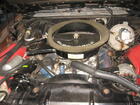
And of course they had to put an "X" on the valve cover...
I made a facebook post that it was the greatest engine but that X is triggering my OCD. I have been around these cars and the only place I have found the "hand drawn" X is 72 W-30 engines. Later it was proven that there was an X on "I think" 74 HO 455 engines.
Seriously this a big deal an "X" on the valve cover? He managed make the parts he was missing to build it, then to get it running and put it in a car we should be celebrating the fact that someone was willing to go to this extreme. Who cares about an "X" when he brought this engine to life.
Seriously this a big deal an "X" on the valve cover? He managed make the parts he was missing to build it, then to get it running and put it in a car we should be celebrating the fact that someone was willing to go to this extreme. Who cares about an "X" when he brought this engine to life.
Fred, no one is criticizing the workmanship or the effort involved in pulling this off. Clearly it's an amazing piece of work. The "X" on the valve cover has been a joke for years.
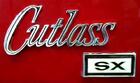
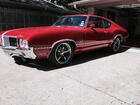
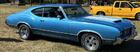
The quality of the car and putting together the of engine is something that only enormous resources and cash could pull off. Well done Kryta (sic?) brothers and the craftsman whom constructed it. I loved the W-43 emblems.
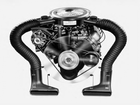
I never knew the W-43 was a four valve per cylinder. It's really interesting to see how the engineering team pulled it off. From the pictures it looks like they ran two valves per one pushrod with a very unique adjustable rocker arm set up. I still don't understand how the timing the valve train works.
The quality of the car and putting together the of engine is something that only enormous resources and cash could pull off. Well done Kryta (sic?) brothers and the craftsman whom constructed it. I loved the W-43 emblems.
I never knew the W-43 was a four valve per cylinder. It's really interesting to see how the engineering team pulled it off. From the pictures it looks like they ran two valves per one pushrod with a very unique adjustable rocker arm set up. I still don't understand how the timing the valve train works.
The shaft-mounted rocker arms were forked. One pushrod opened both valves. This was the fundamental problem that caused Olds to cast unique blocks with a raised cam carrier to improve pushrod angle. Valve timing is no different than in any other pushrod motor. One cam has intake and exhaust lobes on it. Both intake valves open and close together, as to both exhaust valves. Other than the much higher contact loads, that's no different than for a two-valve motor. Like a Chrysler Hemi, the intake pushrods run at a slightly different angle from the exhaust and the rockers are "backwards".
Question, With the cam being higher in the block, Would it need the left and right bank lobes farther apart than a standard 455 cam?
Eric, it depends on the angle of the lifters, but as you can imagine, raising the cam would also change the angle the lifters needed to be at to be inline with the cups on the rocker arms. You can get a sense of the lifter bank angle from this photo. I should add that the reason the lifter galleries had to be bolt-in was that the angle of the lifter bore was "below" 45 deg, so there was no way to machine the bores if they were integral to the block.
Eric, it depends on the angle of the lifters, but as you can imagine, raising the cam would also change the angle the lifters needed to be at to be inline with the cups on the rocker arms. You can get a sense of the lifter bank angle from this photo. I should add that the reason the lifter galleries had to be bolt-in was that the angle of the lifter bore was "below" 45 deg, so there was no way to machine the bores if they were integral to the block.
That makes since to be actually. Had to read it twice though.
That makes since to be actually. Had to read it twice though.
The other thing to keep in mind is that since the valve stems are at the top and bottom of the head, the pushrods actually have to come up between the rocker shafts, which makes them "flatter" in the block than on a two-valve engine where the pushrod holes are at the top side of the head. Think of the pushrods in a Chrysler hemi.
Author This from the Hagerty article about the car the engine and the Kryta twin brothers The plot thickens. “In the early 1970s,” John says, “shortly after the W-43 lost all hope of entering production, several Olds engineers and PR personnel flew out to California to tout their project for Petersen Publishing Company editors at Car Craft, Hot Rod, and Motor Trend magazines. At that time, this wasn’t a complete running engine but rather a hollow shell suitable for photography and a collection of internal parts highlighting the W-43’s attributes.” (Read our technical breakdown of the Oldsmobile W-43 V-8 here.) “The trip to California was to gain publicity, after the engineering project had been terminated by GM’s upper management. Given that, the Olds folks asked the writers to chuck these engine parts in a dumpster after their stories were completed. Lucky for us, that request was ignored. These priceless W-43 components went home with someone from Petersen in 1971, only to resurface decades later. Oldsmobile V-8 OHC_W-43 valves GM Oldsmobile V-8 OHC_W-43 bores GM GM Archives Oldsmobile V-8 OHC GM “Cajoling the vintage parts into a running engine was no small feat. The first problem was a parts shortage. One cylinder head was missing, so we had to reverse engineer it and a few other components. Extensive machining was required. All told, 20 people got involved, including one ex-Oldsmobile engineer who requested anonymity. Scott Tiemann, the CEO of Supercar Specialties in Portland, Michigan, quite capably handled final assembly.” Autorama Oldsmobile 4-4-2 valve cover detail Chris Stark So, what kind of power does this 32-valve V-8 produce? “We were prudent during testing to avoid blowing up our irreplaceable parts. Imposing a modest redline, we measured 560 hp at 6000 rpm and 540 lb-ft of torque at 3600 rpm,” James Kryta notes. “But eliminating the significant restrictions by adding multiple carbs and efficient exhaust headers would easily have improved those figures.”
Seriously this a big deal an "X" on the valve cover? He managed make the parts he was missing to build it, then to get it running and put it in a car we should be celebrating the fact that someone was willing to go to this extreme. Who cares about an "X" when he brought this engine to life.
They read the forums, I am sure they are fully aware of us poking fun at the X issue. I suspect it is motivation for them to keep doing it, lol. At least that is what I would do.
Okay excuse me why everyone was poking fun of the X on the covers! So what is the joke? I am always a day late and a dollar short. Sometimes absolutely clueless 😂😂
Okay excuse me why everyone was poking fun of the X on the covers! So what is the joke? I am always a day late and a dollar short. Sometimes absolutely clueless 😂😂
I made a facebook post that it was the greatest engine but that X is triggering my OCD. I have been around these cars and the only place I have found the "hand drawn" X is 72 W-30 engines. Later it was proven that there was an X on "I think" 74 HO 455 engines.
My 1970 W-30 had the hand applied "X" made by a yellow paint stick on the center of the drivers side valve cover. It was about 2 1/2" tall and 5-6" wide.
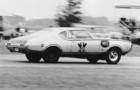
I reposting a picture of the Pikes peak Toronado from Oldsmobiles experimental engineering. If you look at the valve cover and spark plug locations. This looks a lot like it. But this is supposed to be a 425.
I reposting a picture of the Pikes peak Toronado from Oldsmobiles experimental engineering. If you look at the valve cover and spark plug locations. This looks a lot like it. But this is supposed to be a 425.
Pat
I recall seeing a disclaimer saying "Specially prepared" in the advertisements. That was a "clue" to me they didn't just drive it off a showroom floor. Looking at the valve covers doesn't tell me what displacement the engine has. What clue are you seeing ?
I reposting a picture of the Pikes peak Toronado from Oldsmobiles experimental engineering. If you look at the valve cover and spark plug locations. This looks a lot like it. But this is supposed to be a 425.
Pat
this is approximately 1 of supposed 3 first design engines built. All the others ( 4 I believe) had the raised cam tunnels Joe spoke of earlier in this thread. Where are the rest? Who knows