


1/4 mile E.T

Registered User
Joined: Jul 2012
Posts: 2,991
From: Vancouver BC
It went 13.3@107, but whatever. This was built with zero performance knowledge and a Mondildo ripoff. 0.030 over 400G, Comp XE268 cam, 1st gen Edelbrock heads with purple aluminum rockers, Performer intake, and Barry Grant mech secondary 750. It was built by JB Auto Machine in Rosedale, MD. I couldn't keep thrust bearings in it because of manual trans/auto crank issues. That's why it never got put back together.
Thanks for the reply.
Until Dave Smith and Kenne Bell there was little support for the Oldsmobile. We could not keep our 400 G from spinning rod bearings, that's why we went to the small block Oldsmobile. I remember talking to a class racer back in the early 80's, his term was Mondodollars as he spent $$$ and the car went no faster. There were always racers and engine builders that could make the Oldsmobile perform and live, it's just that that information was not readily available. Until Bill T published his book I still had no idea why we could not keep our 400 G from spinning rod bearings. Rotating mass was discussed prior and how important it was to reduce the rotating mass.
Last edited by Bernhard; Mar 30, 2024 at 12:12 PM.
Registered User
Joined: Sep 2017
Posts: 5,220
From: St. Paul Minnesota
Bernhard Wrote:
Thanks for the reply.
Until Dave Smith and Kenne Bell there was little support for the Oldsmobile. We could not keep our 400 G from spinning rod bearings, that's why we went to the small block Oldsmobile. I remember talking to a class racer back in the early 80's, his term was Mondodollars as he spent $$$ and the car went no faster. There were always racers and engine builders that could make the Oldsmobile perform and live, it's just that that information was not readily available. Until Bill T published his book I still had no idea why we could not keep our 400 G from spinning rod bearings. Rotating mass was discussed prior and how important it was to reduce the rotating mass.
Thanks for the reply.
Until Dave Smith and Kenne Bell there was little support for the Oldsmobile. We could not keep our 400 G from spinning rod bearings, that's why we went to the small block Oldsmobile. I remember talking to a class racer back in the early 80's, his term was Mondodollars as he spent $$$ and the car went no faster. There were always racers and engine builders that could make the Oldsmobile perform and live, it's just that that information was not readily available. Until Bill T published his book I still had no idea why we could not keep our 400 G from spinning rod bearings. Rotating mass was discussed prior and how important it was to reduce the rotating mass.
Joe Mondello's reputation was built on cylinder heads. Almost every NHRA Top Fuel dragster winner and runner up had Mondello heads. He began marketing his ported and polished small block Chebby heads to speed shops. That probably led to starting Mondello Performance....of which later 1/2 ownership was sold to Lynn something or other. It wasn't until I joined this site that I began hearing what an "Olds engine Guru" Joe Mondello was.
The 400 G seems like an afterthought. Oldsmobile might have been better off stroking the 350, or just continue with the 400 E.
Registered User
Joined: Dec 2014
Posts: 16,734
Registered User
Joined: Jul 2012
Posts: 2,991
From: Vancouver BC
There were companies with products for Oldsmobile, long before Kenne-Bell and Dave Smith showed up. Isky, Emgle, Howards, Lunati, Racing Head Service, Offenhouser, B&M, Art Carr, Hooker, Heddman are that pop into my mind. Maybe not as many choices as a Chebby, but they were there. There were some car dealers and engine builders who knew how to make an Olds run and live.
Joe Mondello's reputation was built on cylinder heads. Almost every NHRA Top Fuel dragster winner and runner up had o Lynn something or other. It wasn't until I joined this site that I began hearing what an "Olds engine Guru" Joe Mondello was.
The 400 G seems like an afterthought. Oldsmobile might have been better off stroking the 350, or just continue with the 400 E.
Joe Mondello's reputation was built on cylinder heads. Almost every NHRA Top Fuel dragster winner and runner up had o Lynn something or other. It wasn't until I joined this site that I began hearing what an "Olds engine Guru" Joe Mondello was.
The 400 G seems like an afterthought. Oldsmobile might have been better off stroking the 350, or just continue with the 400 E.
Bernhard wrote:
I was referring to Oldsmobile specific parts suppliers that addressed Oldsmobile specific issues. Yes the aftermarket support was always there, just not as large as the other brands. The 400 G has its limitations.
Last edited by Bernhard; Mar 30, 2024 at 05:32 PM.
New but Olds
Joined: May 2010
Posts: 91
From: Battle Ground, WA
Using an on line calculator that uses both ET and Speed that 1/8th time equals 12.95 in he 1/4. The cutoff on sanctioned tracks is 13.49 in the 1/4
New but Olds
Joined: May 2010
Posts: 91
From: Battle Ground, WA
My car is 530G (the times on the right.
Dial is the speed I was aiming for (bracket racing). I lost that race with a faster time because I "broke out" worse than the other car
R/T is my reaction time off the lights, not good. He was much faster
60' is my 60 foot time, it is lousy because the olds likes to twist the tires to much, even when spiking the convertor
330 is my time at 330 feet
1/8 is my time to the finish
MPH of course is the speed at the end trap.
The fastest ticket recorded was 7.58 with MT DOT drag tires and about 12 PSI in them but I carried it around until it was illegible.

Dial is the speed I was aiming for (bracket racing). I lost that race with a faster time because I "broke out" worse than the other car
R/T is my reaction time off the lights, not good. He was much faster
60' is my 60 foot time, it is lousy because the olds likes to twist the tires to much, even when spiking the convertor
330 is my time at 330 feet
1/8 is my time to the finish
MPH of course is the speed at the end trap.
The fastest ticket recorded was 7.58 with MT DOT drag tires and about 12 PSI in them but I carried it around until it was illegible.
New but Olds
Joined: May 2010
Posts: 91
From: Battle Ground, WA
My Olds is far from stock to be clear. 455, 11:1 compression, rollers, 40 overbore, custom grind cam, ported aluminum heads, a worked over Barry Grant mighty demon, full length headers into 3" exhaust to the mufflers, then 2.25" out the back, in-tank pump, -6AN delivery and return lines, Holley regulators, LineLocs, TCI stage 2 turbo 400 with 2500 stall, Hurst dual gate, 3;55 Olds Posi w/hardened steel axles after it "rag dolled" the OEM axles, QA1 dual adjustable shocks on all 4 corners for launch control, and M/T DOT drags with very little air pressure. It's the business. And I get 8 MPG on 92 octane for the effort.
That "rag dolled" axle nearly cost me the car. It wrapped the axle up till it pulled out of the carrier and sent the car immediately toward the jersey barrier. They never did break. Installed the hardened axles and it twisted the driveline the next week. Now it has a thick aluminum driveline I had built in Portland for it. "The weakest link" as they say.
So back to the OP's question. You can make a cutlass go 12's or lower, but it is going to cost you a lot of money. Probably the reason there are so many more Camaro drag cars. Drag racing will make you moderately wealthy...if you start out a millionaire.
That "rag dolled" axle nearly cost me the car. It wrapped the axle up till it pulled out of the carrier and sent the car immediately toward the jersey barrier. They never did break. Installed the hardened axles and it twisted the driveline the next week. Now it has a thick aluminum driveline I had built in Portland for it. "The weakest link" as they say.
So back to the OP's question. You can make a cutlass go 12's or lower, but it is going to cost you a lot of money. Probably the reason there are so many more Camaro drag cars. Drag racing will make you moderately wealthy...if you start out a millionaire.



Registered User
Joined: Aug 2018
Posts: 1,098
From: Utah
So what did the OP run at the track?
From my experience, most people are surprised (in a bad way, car is slower than they thought) when they get to the track and do a run for the first time. Tires/traction makes a huge difference.
1972 442 Convertible (4,000 lbs) with a 455 (around 500 crank HP), 4.10 Chevy 12-Bolt, billet 2004R trans, with Nitto Tires, full 3.00" exhaust with tailpipes, ran a quickest of 11.95 and consistent 12.00. The 4.10 gear helps a lot with getting a heavy car like that moving and takes stress off the engine.Although I wouldn't recommend a 4.10 gear without an overdrive trans as highway driving would be miserable and rev the poor Olds 455 into an early grave.
In today's world, a 12.00 car is no longer considered "fast" as there are street cars running in the 10's and 9's. Most of the time they are using power adders (turbos and superchargers). A brand new C8 Vette will run 11.20s without any issues and the C8 Corvette E-Ray will run 10.60s. Technology has sent modern cars into pretty insane territories from what they ran 50 years ago. Which makes complete sense. Not only are they fast in the 1/4 mile but they can stop on a dime, and handle like it's on rails, plus do it reliably, comfortably and safely.
From my experience, most people are surprised (in a bad way, car is slower than they thought) when they get to the track and do a run for the first time. Tires/traction makes a huge difference.
1972 442 Convertible (4,000 lbs) with a 455 (around 500 crank HP), 4.10 Chevy 12-Bolt, billet 2004R trans, with Nitto Tires, full 3.00" exhaust with tailpipes, ran a quickest of 11.95 and consistent 12.00. The 4.10 gear helps a lot with getting a heavy car like that moving and takes stress off the engine.Although I wouldn't recommend a 4.10 gear without an overdrive trans as highway driving would be miserable and rev the poor Olds 455 into an early grave.
In today's world, a 12.00 car is no longer considered "fast" as there are street cars running in the 10's and 9's. Most of the time they are using power adders (turbos and superchargers). A brand new C8 Vette will run 11.20s without any issues and the C8 Corvette E-Ray will run 10.60s. Technology has sent modern cars into pretty insane territories from what they ran 50 years ago. Which makes complete sense. Not only are they fast in the 1/4 mile but they can stop on a dime, and handle like it's on rails, plus do it reliably, comfortably and safely.
Last edited by pettrix; Nov 14, 2024 at 12:17 PM.
Registered User
Joined: Feb 2008
Posts: 2,669
From: Jacksonville, FL
It’s funny but with all the fast cars that are available, almost all the cars I catch at the stop light are still in the 12-13 second range.
Coyotes with an exhaust upgrade, 392 chargers, etc.
Not a lot of E-Rays or anything. The occasional Tesla will pop up but not the Model S Plaid or anything.
Coyotes with an exhaust upgrade, 392 chargers, etc.
Not a lot of E-Rays or anything. The occasional Tesla will pop up but not the Model S Plaid or anything.
Registered User
Joined: Jan 2008
Posts: 1,488
From: ENNIS TEXAS
gear and stall is perfect for a 455 , it should easily run 13s on drag radials with just a ballpark decent tune and driving considering drag radials with a full dialed in tune it really should leave hard and run a 12.8 with those parts
Registered User
Joined: Aug 2019
Posts: 2,092
Yes would be cool to know. But in general my observations are that most are content bench racing, even when their cars are overtly built for performance. The amount of people that actually test their cars officially is infinitesimal.
Absolutely. As I was. Proper perspective is very important in this department. Once I came across an original road test of a high compression 1969 Malibu 350cid 300hp TH350 with 3.36 posi that ran 16.1 @ 87.6 MPH i changed my opinion. Eventually my car ran a 15.9 @ 88.8 mph on a average track in 2018. With full factory setup, A/C, etc, just like the Malibu. Only advantages my car had was, 10 more factory horse and torque, 75 less lbs, dual exhaust, and a prepped track (which is probably back to even because I am an open 2.78) . But considering the Malibu was front disc only and new vs my all disc car at 50 years old. I'm pleased with the Cutlasses performance. If a newbie takes everything into consideration when their track time comes they may not be disappointed at all...
So true. Everyday driving is well represented in the avg hp for a new car. We have a 4 lane merge onto a semi highway in my neck of the woods. I almost never have an issue getting the lead even when pressed. Sure I see 9 second Plaids and 10 second Z06s but rarely do you encounter them in the daily grind routes. 15 seconder's are enough in my area. Especially when highways are 50mph and sidestreets 25mph (soon to be 20mph).
Registered User
Joined: Jan 2008
Posts: 1,488
From: ENNIS TEXAS
Once I came across an original road test of a high compression 1969 Malibu 350cid 300hp TH350 with 3.36 posi that ran 16.1 @ 87.6 MPH i changed my opinion. Eventually my car ran a 15.9 @ 88.8 mph on a average track in 2018. With full factory setup, A/C, etc, just like the Malibu.
Registered User
Joined: Aug 2019
Posts: 2,092
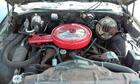
Great observation, I missed the fact that the Chevelles snorkel tapers to about 50% of the Olds snorkel. So at least one other advantage I had on my run.


"1969 LeMans coupe 350 87k ran a 15 w/ 2.56" Very nice, I just noticed this in your signature. The Chevelle I mentioned was in a 5 car shootout and one of the competitors was a 69 LeMans. Here, in case you want to browse, great article with plenty of pics, and highly detailed as usual for that publication. Car Life March 1969. https://over-drive-magazine.com/docu...life-magazine/
Registered User
Joined: Dec 2014
Posts: 16,734
Registered User
Joined: Jan 2008
Posts: 1,488
From: ENNIS TEXAS
68 GTO's only had single snorkel and it hurts it badly, I always run my stuff flipped unless its an open 14" 69-72 GTO's went to a dual snorkel after only one year of single snorkel, they knew it killed it
Out of Line, Everytime😉
Joined: Dec 2006
Posts: 10,135
From: Melville, Saskatchewan
It is crazy how choked some of those air cleaners were, must have been a noise thing. I easily made basically what Olds did for dual snorkel air cleaners in the 70's, combined the bigger snorkel off a 260 Dualjet air cleaner and put it on a 307 air cleaner with a smaller snorkel. How does that make sense? People on the Challenger site said cold air intakes were worth nothing on the 3.6 in my car. The tube was way necked down to eliminate noise, no doubt, killed some power. I also put as big a filter as possible 7" just about touches, ran a tube from beside the headlight to the filter, mudflaps to seal in better and cover the coolant overflow. I even ran a tube from the passenger side and zip tied it the outside of the tube. There was a seat of the pants improvement. Even better was the 2 to 3 mpg difference, seeing over 40 mpg on the highway in ideal conditions. Remember a 4000+ pound AWD awesome cruiser, that looks great, really rare these days, that runs high 14's factory, tows my boat getting mid 20's MPG. There are a couple of fast cars here but not many. Open highway cruising is where it is at, so big up here. I felt at the top of the world when my Olds finally dipped into equal to 14's in the 1/8 mile. There will always be something faster but our Olds can be so much fun.
Last edited by olds 307 and 403; Apr 17, 2025 at 06:23 AM.
Registered User
Joined: Jan 2009
Posts: 1,711
From: McCormick, SC
On one end of the scale I have my 1979 Blue Calais with a factory 260, but with a 200R4 mated to a 3:08 ltd slip rear, I doubt this car can break the 20 second barrier on the quarter mile. I would have found that out at the Nationals this year but I decided to try and shave at least 2 or 3 seconds off that time by taking my 79 H/O instead, no mods there. On the other end of the scale I have my 2009 Ford Mustang GT 4.6 which I'm told can do high 13's as it sits in the driveway with no engine mods. For suspension it has the full Eibach aftermarket suspension system which lowered it 1 1/4 inches but I doubt that would improve ET's much.
Registered User
Joined: Aug 2019
Posts: 2,092
Meanwhile Vettes had the same engines but had open air cleaners from the factory... No doubt Chevrolet insuring the Vettes dominance. Through somewhat false pretenses. Even though they already had a weight advantage...
Here is Corvette legend Zora Arkus Duntov looking over his masterwork in 1971.

Even the lowly 1969 300 gross HP ZQ3 350 Corvette came with an open air cleaner running a 16.12 @ 84.46 mph for Car Life.

Registered User
Joined: Aug 2019
Posts: 2,092
On one end of the scale I have my 1979 Blue Calais with a factory 260, but with a 200R4 mated to a 3:08 ltd slip rear, I doubt this car can break the 20 second barrier on the quarter mile. I would have found that out at the Nationals this year but I decided to try and shave at least 2 or 3 seconds off that time by taking my 79 H/O instead, no mods there. On the other end of the scale I have my 2009 Ford Mustang GT 4.6 which I'm told can do high 13's as it sits in the driveway with no engine mods. For suspension it has the full Eibach aftermarket suspension system which lowered it 1 1/4 inches but I doubt that would improve ET's much.
Believe it or not your 260 thanks to your mods is a helluva lot closer to a performance vehicle than you think. Just because of the drivetrain.
G-Body H/O and 442s were performers because of the transmission, converter, and rear ratio. The problem was the limited power output of the 307.
GNXs are perfection thanks to all the above, plus great power to go with it, and last but not least the panhard bar (factory ladder bar/torque arm setup). Allowing them to see 100% HP on a pass.

Motor Trend
Specs below from actual original road tests (Both, Car & Driver) run through a hp production calculator.
85 442 ran 16.6 = 162.5 of 180 peak horse (-9.5%)
87 GNX ran 13.5 = 300.07 of 300 peak horse (perfection)
Meanwhile regular cars such as mine are leaving 20% of the hp on the table due to lack of efficiency. So yeah, what Blue did to his Calais will work wonders on 2sp and 3speed A body's as well.
The code 9 drivetrain and its equivalents, tied to healthy 1960s powerplants and up, with modern tires, is the best of both worlds. Pre and post malaise, 1964-1988. It will take an enormous amount of work to prove it, but the GNX is likely the first time a production 300 net hp and up car saw every bit of hp on a 100% stock original road test. Traction limitations (non slick bias plys) alone made that an impossibility during original muscle era.

Registered User
Joined: Jun 2014
Posts: 1,666
From: Ft. Wayne, IN
Entertaining commentary here about the impacts of narrow snorkels on air cleaners. My dad (women's shoe salesman / business owner by trade..........save the Al Bundy jokes, please, LOL) was never a performance buff in any way shape or form, although I firmly believe he wanted to be an engineer. So increasing HP of his cars was never a priority for him. However, any trick to get a 1 MPG improvement caught his attention. I'm not sure where he got the idea (he had a subscription to Popular Science in those days, so that's a possibility), but on his '62 Sedan DeVille, he cut off that narrow snorkel to where it was much wider, then attached a dryer vent hose from there to a ~4" hole that he cut in the core support to pick up cooler air from in front of the radiator. a rudimentary OAI for his Caddy. This was in the mid-late '60s. I chuckle when I think about all the advancements that Olds engineering was achieving along those same lines in those days and how dad was leveraging that same "tech" in his own car.
70 442 W-30
Joined: May 2014
Posts: 341
From: Swanton, Ohio
It was done all the time. I did it on my 1st Olds Cutlass while I was in the service. If you do a search on YouTube for Bud Lindemann 1968 Hurst/Olds Road Test, you will see an actual road test back in the day where they were doing it.

Thread
Thread Starter
Forum
Replies
Last Post


