


Which Coolant w/Factory Aluminum Intake?


Thread Starter
Registered User
Joined: Aug 2011
Posts: 4,123
Which Coolant w/Factory Aluminum Intake?
Looking for coolant recommendations please. FWIW, Valvoline's site suggests Zerex Original Green.
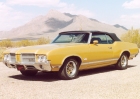
Non-Olds '69 iron block and heads with a factory aluminum intake. This intake is rare, the goal is to protect it as the car is completely original with 39k miles.
The radiator is out for a re-core, any thoughts on adding a sacrificial anode to the system in the radiator? Any other ideas?
Thanks in advance!
Non-Olds '69 iron block and heads with a factory aluminum intake. This intake is rare, the goal is to protect it as the car is completely original with 39k miles.
The radiator is out for a re-core, any thoughts on adding a sacrificial anode to the system in the radiator? Any other ideas?
Thanks in advance!


Running On Empty
Joined: Jul 2018
Posts: 26,258
From: Earth
If you're using Zerex Original Green it's doubtful you will gain much w/ the sacrificial anode. There's one nifty little ingredient in Zerex Original Green (and, most likely others of similar quality) and that's Disodium Tetraborate (think Borax) - that's right Twenty Mule Team Borax. Disodium Tetraborate is a unique borate acid which easily dissociates in solution to reduce corrosion by acting as a pH buffer; albeit, thereby reducing the metal etching and rendering salts (ions) into the coolant system - in a nutshell, Borax (in the correct titration i.e. amount) will reduce corrosion of the coolant system. Of course, the most important factor of any coolant system is to employ distilled water (preferably de-ionized water). The fewer the ions, the less corrosion. I use Zerex Orginal Green in my '71 CS.

Barely Registered
Joined: Feb 2014
Posts: 2,648
From: Gillespie County, Republic of Texas
Norm gave a good summary of the corrosion protection details for conventional, premium antifreeze. As he said, it gives great protection for all metals in the system.
Here's more of what you need to know:
Here's more of what you need to know:
- CO2 from the air dissolves in the anti-freeze and depletes the action of the borax. Therefore, effective antifreeze life is limited and you must replace it periodically.
- An anode will only start working when the anti-freeze is depleted. It's of no use unless you fail to maintain the antifreeze.
- You can extend the antifreeze life by switching to a closed system where there is no air space under the radiator cap.
- You can extend the antifreeze life indefinitely by adding a coolant filter with an anti-corrosion pellet. However, you must continue to change the filter on a schedule.
- In all cases, you can monitor the antifreeze condition with pH paper from the drug store. As long as pH is above about 7.5 there is some life left.

Running On Empty
Joined: Jul 2018
Posts: 26,258
From: Earth
Water distillation is the process of producing a distilled end-product which has evolved over a minimum of one, generally more, boiling>condensation processes. A true distillation begins with the boiling of the water, in which a water vapor is produced (some heavy contaminants remain) from boiling, the water vapor rises and is condensed (cooled) to reform more liquid water. After yet another (and more) boiling>condensation processes, more & more contaminants are left behind until a final (end resultant) distillation process produces the required distilled water.
What's important to understand is (1) Boiling of the liquid water achieves (2) Water vapor (gas phase) (3) Condensation (Cooling of the vapor phase) with a resultant less contaminated (distilled) liquid water. Each distillation phase will produce a better distilled end product of distilled water.
What's important to understand is (1) Boiling of the liquid water achieves (2) Water vapor (gas phase) (3) Condensation (Cooling of the vapor phase) with a resultant less contaminated (distilled) liquid water. Each distillation phase will produce a better distilled end product of distilled water.
Barely Registered
Joined: Feb 2014
Posts: 2,648
From: Gillespie County, Republic of Texas
Running On Empty
Joined: Jul 2018
Posts: 26,258
From: Earth
That isn't necessarily true. Distilled water contains ions, deionized water is depleted of ions. Deinoized water will not conduct electricity and must go through an ion exchange resin to yield deionized water. Distilled water contains ions - it will conduct electricity.
Running On Empty
Joined: Jul 2018
Posts: 26,258
From: Earth
Consider water to exist in the normal three phases: solid, liquid & gas. Each phase can contain ions (positively charged cations [+] & negatively charged anions [-]). The process of distillation removes impurities/contaminants - it's often the end-user who elects what level of impurities/contaminants remain to accept the distilled water end-product for its applicable use. The process of distillation CAN remove SOME ions but it will NOT remove most ions. Ions exist in water (in any phase) as things known as Sulfate, Sulfite, Phosphate, Sodium, Potassium, Manganese, Magnesium, Iron, Chlorine, - e.g. primarily Earthen salts. They exist in these phases as ions Fe++, Fe+++, K+, Mg++, Cl-, etc., etc. Ions dissolved in any solution conduct electricity - distillation does not remove ions from any phase during phase separation (e.g. liquid>gas>solid>liquid>gas, etc.). It renders the end product as distilled - having removed impurities which settle from the gas phase as impurities. An ion exchange resin is charged with ions of the opposite charge state to remove select ions from water. The beginning point of an ion exchange resin process is the employment of distilled water (water free from impurities/contaminants - we're not talking about sludge here, we're talking about impurities of the atomic weight scale - e.g. molarity/modality of water). So, we begin w/ distilled water (which is charged with ions (cations & anions). The ion exchange resin (several types are used) are charged with very heavily saturated cations and/or anions. As the distilled water passes through the ion exchange resin, the cations and anions contained w/in the distilled water are removed and remain stuck to the ion exchange resin - rendering a DI (deionized water) depleted of all ions and incapable of conducting electricity.
Last edited by Vintage Chief; Mar 12, 2022 at 04:13 PM.

Thread
Thread Starter
Forum
Replies
Last Post


