


Sick of LS engine swaps!


Registered User
Joined: Jan 2014
Posts: 350
From: Camdenton, MO
Well, gotta admit, the LS swap has kinda jumped the shark.
When I started my fist swap (6.0 LQ9 in a 68 vette) in 2006, about the only thing available was adapter plates. Half the fun was figuring out how to do it, what parts worked together. By the time I started the 72 442 (no, not numbers matching, not even an engine in it) in 2010, most 68-72 A bodies were worked out. There are pretty much cookie cutter kits available now for A bodies, Camaros, etc. That's the only reason you see Overhaulin, and other car shows doing it all the time now. Congrats to these hi end car builders.They can unbolt one part, buy LS adapter stuff, read the instructions, bolt on the LS part.
I must admit the snob in me does show through when they throw in a GMPP crate 350 instead of an LS motor.
When I started my fist swap (6.0 LQ9 in a 68 vette) in 2006, about the only thing available was adapter plates. Half the fun was figuring out how to do it, what parts worked together. By the time I started the 72 442 (no, not numbers matching, not even an engine in it) in 2010, most 68-72 A bodies were worked out. There are pretty much cookie cutter kits available now for A bodies, Camaros, etc. That's the only reason you see Overhaulin, and other car shows doing it all the time now. Congrats to these hi end car builders.They can unbolt one part, buy LS adapter stuff, read the instructions, bolt on the LS part.
I must admit the snob in me does show through when they throw in a GMPP crate 350 instead of an LS motor.

Thread Starter
Registered User
Joined: Jan 2014
Posts: 621
From: Barre,VT
Building an LS engine probably isn't much cheaper than an olds especially when you get into serious horsepower levels. My brother in law is redoing a sweet 78 Malibu built to take corners and is putting in a 6.0 truck block. I'm not denying the fact that they are great engines but I'm tired of seeing them in everything including fords! I've actually been thinking of buying a chevelle and dropping a Olds in just to see the reaction!
When The US stops sending Jobs to China and selling our steel and oil to them, I'm sure the Buicks won't be as popular. It may not be next year or even 10 years but I'm pretty confident Buick will see the same swan song sooner or later!
When The US stops sending Jobs to China and selling our steel and oil to them, I'm sure the Buicks won't be as popular. It may not be next year or even 10 years but I'm pretty confident Buick will see the same swan song sooner or later!
Connoisseur d'Junque
Joined: Sep 2010
Posts: 21,183
From: The Hudson Valley
- Eric
major noob
Joined: Sep 2013
Posts: 1,926
From: claremont, nc
I agree cause one day I'm putting a 455 in the mega but the only and I mean only way I'm putting a Chevy motor in my olds is if its a 572 and if its the only way to make it run because the olds motors were all destroyed so I don't see that happening so its olds all the way
Justin
Joined: Mar 2012
Posts: 3,456
From: utah
X2 when my dealership that I work at in 2010 decided to sell Buick because, they lost Pontiac. Most were shock that they kept Buick over Pontiac because we sold more Pontiacs here in the us ( at that time ) I remember our GM telling us it was because, Buick out sold Pontiac over seas !
Last edited by oldstata; Feb 7, 2015 at 02:02 PM.

the hot box
Joined: Jan 2015
Posts: 46
From: New Orleans
The subject seems to be anger over the lack of originality; or "crowd following", not so much the engine itself.
Personally i dont see anything wrong with brand mixing. Like the time i was watching pass time (about 8 years ago) and the guy was describing the car going up for a run: "Ford makes it, Chevy shakes it" Haha.. and that's coming from a guy who owns both a Chevy and a Ford. I've always felt that Chevy made a more solid vehicle, easier to work on, and a more comfortable ride. But Fords make a reliable workhorse. if someone likes a particular Ford model/body style, but trusts and believes in a specific motor from a different brand (Ie: CSB) , then what's wrong with putting a chevy engine in it? It's their car. I may anger some here but i see nothing wrong with putting a ford engine in a chevy. If it's not your car then you really shouldn't hate on something you dont have to drive.
May I add that, while i agree that there is a monotony in trends and following the crowd, I'd much rather see a job done right, especially when dealing with cars, than half-assed. It seems most people here are angry because they see it done a lot, not necessarily because of the engine itself. I put it like this: It's fun to experiment, test the waters, and fabricate stuff for custom jobs.. but you need a lot of time and resources to do things like that. If you know what you want, and it's out of the ordinary, then go for it! But there's nothing wrong with going with something that's been proven.
that's just my two copper [*plated] coins. Personally i won't be mixing any brands, but i don't really understand the hate for doing it. The hate should be directed to the sheep that do what every one else is doing, just because everyone else is doing it. It's like, every Jeep I see, and every F250 or Chevy 2500 i see, if modified, all have the same modifications. bullbar, Liftkit, LED spotlights on the roof or hood, generic black off roading rims, euro tails and HID lights. They all look like they all ordered from the same parts catalogues.
Personally i dont see anything wrong with brand mixing. Like the time i was watching pass time (about 8 years ago) and the guy was describing the car going up for a run: "Ford makes it, Chevy shakes it" Haha.. and that's coming from a guy who owns both a Chevy and a Ford. I've always felt that Chevy made a more solid vehicle, easier to work on, and a more comfortable ride. But Fords make a reliable workhorse. if someone likes a particular Ford model/body style, but trusts and believes in a specific motor from a different brand (Ie: CSB) , then what's wrong with putting a chevy engine in it? It's their car. I may anger some here but i see nothing wrong with putting a ford engine in a chevy. If it's not your car then you really shouldn't hate on something you dont have to drive.
May I add that, while i agree that there is a monotony in trends and following the crowd, I'd much rather see a job done right, especially when dealing with cars, than half-assed. It seems most people here are angry because they see it done a lot, not necessarily because of the engine itself. I put it like this: It's fun to experiment, test the waters, and fabricate stuff for custom jobs.. but you need a lot of time and resources to do things like that. If you know what you want, and it's out of the ordinary, then go for it! But there's nothing wrong with going with something that's been proven.
that's just my two copper [*plated] coins. Personally i won't be mixing any brands, but i don't really understand the hate for doing it. The hate should be directed to the sheep that do what every one else is doing, just because everyone else is doing it. It's like, every Jeep I see, and every F250 or Chevy 2500 i see, if modified, all have the same modifications. bullbar, Liftkit, LED spotlights on the roof or hood, generic black off roading rims, euro tails and HID lights. They all look like they all ordered from the same parts catalogues.
Last edited by dredluxx; Feb 7, 2015 at 03:00 PM. Reason: added technicality..


the hot box
Joined: Jan 2015
Posts: 46
From: New Orleans
i'm just a newb.. so no disrespect; but you can visit ANY internet forum or website and see that virtually every subjective discussion is something that's been beaten to death - because there's no right or wrong answer.
Registered User
Joined: Jan 2014
Posts: 350
From: Camdenton, MO
This frame of mind always confuses me.
There are a couple 1940s Olds for sale with Olds 350 or 455 in it. There's less in common between the original motor and the Olds V8 in them now than a chevy V8.
So would a 4.3 be acceptable since it was in an Olds? And if there was a current 442 with an LS motor, would that be acceptable like the GTOs?
If it's not original, but tries to duplicate it, it's a clone...is that better?
To me, once the original is gone, it could be an LS, turbo 4 banger, or turbine....doesn't matter.
And is this ok?
https://classicoldsmobile.com/forums...es-rocket.html
There are a couple 1940s Olds for sale with Olds 350 or 455 in it. There's less in common between the original motor and the Olds V8 in them now than a chevy V8.
So would a 4.3 be acceptable since it was in an Olds? And if there was a current 442 with an LS motor, would that be acceptable like the GTOs?
If it's not original, but tries to duplicate it, it's a clone...is that better?
To me, once the original is gone, it could be an LS, turbo 4 banger, or turbine....doesn't matter.
And is this ok?
https://classicoldsmobile.com/forums...es-rocket.html

Registered User
Joined: Jul 2009
Posts: 5,200
From: Birmingham,Alabama
What he said^^^^^^^^
If everybody was as concerned about current affairs as they are about LS conversions,the world would be a better place.
If everybody was as concerned about current affairs as they are about LS conversions,the world would be a better place.
Last edited by 66-3X2 442; Feb 9, 2015 at 05:46 AM.
car guy
Joined: Apr 2008
Posts: 5,675
From: Dallas TX
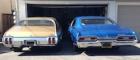
I don't believe in swapping brands or modification. I can prove it with 3 of the projects I have right now.
1. 54 Olds original Olds motor with custom fuel injection
2. 78 Suburban turbo 5.3 LS motor
3. 87 Chevy Dulley with 5.9 Cummins power
 uhh never mind
1. 54 Olds original Olds motor with custom fuel injection
2. 78 Suburban turbo 5.3 LS motor
3. 87 Chevy Dulley with 5.9 Cummins power
uhh never mind
Beer Connoisseur
Joined: Aug 2008
Posts: 2,092
From: Daly City, California
To each is his own. Who cares what everybody else thinks, do what makes you happy.
If putting an LS in a car will keep that car on the road and smile on owner's face, than that's all it matters.
If putting an LS in a car will keep that car on the road and smile on owner's face, than that's all it matters.

Senior Moment Member
Joined: Jan 2007
Posts: 3,240
IMO, the LSX small block has impacted the aftermarket car building concept like.........the small block chevy did. Just fast forward 45 years. it's the same all over again. Great motor. Easy power. I run an Olds in my Olds though.
Thread Starter
Registered User
Joined: Jan 2014
Posts: 621
From: Barre,VT
Sorry but I just believe in keeping the same brand engine in the same brands body be it newer or older! It's just me! I didn't say you couldn't swap( it's america still!) but it a pet peeve of mine!
Don't forget the Ford with it's Mod engines! They are definitely helping the LS change the aftermarket!
Don't forget the Ford with it's Mod engines! They are definitely helping the LS change the aftermarket!
Registered User
Joined: Jan 2014
Posts: 350
From: Camdenton, MO
Maybe I'll buy one of these LS engine covers. Rebadge it As "Oldsmobile". Problem solved ;-)
http://www.ebay.com/itm/New-GM-2010-...b00b4f&vxp=mtr
But then again my 72 has a rear wing on it, so there's that issue too.
http://www.ebay.com/itm/New-GM-2010-...b00b4f&vxp=mtr
But then again my 72 has a rear wing on it, so there's that issue too.

Registered User
Joined: Jul 2013
Posts: 1,815
From: Mo-Ray-Al, K-Bec.
You know what would be really sweet ... if someone took it on to start casting aluminium 455s. Take that block and give it all the updates of the LS and market that.
Last edited by Professur; Feb 19, 2015 at 10:54 AM.
Chevy budget Olds powered
Joined: Jul 2011
Posts: 8,638
From: Elgin, Illinois
The buick and pontiac guys have block but us olds guys are drooling over some crappy chinese aluminum heads. Oddly sad and ironic . I never much cared for chevy's . I alost bought a 78 malibu for me to drop a buick 350 I built back in high school. Sold the engine and bought the olds. Still regret not gettin the 78 malibu. Love those cars.


Registered User
Joined: Mar 2013
Posts: 124
From: Climax, NC
Shew! I'm glad you weren't talking about LT1's...lol....
I've got one in my 68 Nova and love the FI...so smooth and quick, but at least its all Chevy.
Planning on leaving my 71 442 all Olds 455 power, although,, I would love me some fuel injection if it wasn't so darn expensive...
I've got one in my 68 Nova and love the FI...so smooth and quick, but at least its all Chevy.
Planning on leaving my 71 442 all Olds 455 power, although,, I would love me some fuel injection if it wasn't so darn expensive...
Last edited by ioldsnut; Feb 12, 2015 at 12:44 PM.

Registered User
Joined: Mar 2010
Posts: 430
From: SE Wisconsin
The only reason Olds and Pontiac are gone is that they were becoming too much like a Chevy to support the separate name plates and all the costs involved with supporting them. I guess if you think about the whole picture, the blame goes all the way back to W.C. Durant.

Registered User
Joined: Jan 2012
Posts: 546
From: Boise, Idaho
The only reason Olds and Pontiac are gone is that they were becoming too much like a Chevy to support the separate name plates and all the costs involved with supporting them. I guess if you think about the whole picture, the blame goes all the way back to W.C. Durant.

Oldsdruid
Joined: Dec 2007
Posts: 10,635
From: Southside Vajenya
Durant and Sloan had the vision of a car for every price range, and as long as GM held to the "Sloan Hierarchy" they did very well indeed. You start 'em off in a Chevrolet and they move thru P-O-B to a Cadillac. That worked as long as the individual Divisions were enough unalike that it was worth the effort to move the next step up- to what was perceived as a better engineered, better trimmed and more luxurious car.
When GM's lineup became all rebadged Chevrolets with "corporate" engines, that's when the bottom dropped out. People saw thru GM's ploy of the same car wearing a different name on its nose. Which wouldn't have been completely bad except that the basic car was junky and unrefined no matter what name it wore.
When GM's lineup became all rebadged Chevrolets with "corporate" engines, that's when the bottom dropped out. People saw thru GM's ploy of the same car wearing a different name on its nose. Which wouldn't have been completely bad except that the basic car was junky and unrefined no matter what name it wore.

Old(s) Fart
Joined: Mar 2007
Posts: 50,840
From: Northern VA
Durant and Sloan had the vision of a car for every price range, and as long as GM held to the "Sloan Hierarchy" they did very well indeed. You start 'em off in a Chevrolet and they move thru P-O-B to a Cadillac. That worked as long as the individual Divisions were enough unalike that it was worth the effort to move the next step up- to what was perceived as a better engineered, better trimmed and more luxurious car.
When GM's lineup became all rebadged Chevrolets with "corporate" engines, that's when the bottom dropped out. People saw thru GM's ploy of the same car wearing a different name on its nose. Which wouldn't have been completely bad except that the basic car was junky and unrefined no matter what name it wore.
When GM's lineup became all rebadged Chevrolets with "corporate" engines, that's when the bottom dropped out. People saw thru GM's ploy of the same car wearing a different name on its nose. Which wouldn't have been completely bad except that the basic car was junky and unrefined no matter what name it wore.
The real problem was crappy quality. Poorly-engineered diesel installations, inadequately sized transmissions, poor NVH engineering and failure to spend money on things like balance shafts for the Quad4, poor drivability with the CCC system, undersized electrical connector terminals that burned out, even inadequate engineering on their premium drivetrains (like the Northstar) is what drove buyers away from GM cars in the 1980s and 90s.
Administrator
Joined: Oct 2009
Posts: 42,521
From: Poteau, Ok
Joe, I don't think it was only GM that suffered these problems, just look at the rise in sales for the imports. The things you describe in your post are the same complaints I hear of American made cars today.
Registered User
Joined: Jul 2013
Posts: 1,815
From: Mo-Ray-Al, K-Bec.
The simple fact is the energy crisis caught the US auto industry with it's pants around it's ankles (where the unions put them). The US didn't know how to build anything smaller than an inline 6, the japs couldn't build anything bigger than 2 litres. By the time the americans figured it out, the japs had come the other way and were producing better and better big cars. Now they've globalized so much that there's no such thing as a domestic car anymore.
GM only made it's problems worse in trying to buy it's competition worldwide. They'd have been better off in the long run to not try and save the money by consolidation platforms, but by running their companies independently but in discrete markets. But by that time, it was already far too late. Olds and Pontiac should have been spun off decades ago. You'll remember that the other american factories had to do the same market cutting .. loosing us the Merc and Plymouth brands forever.
GM only made it's problems worse in trying to buy it's competition worldwide. They'd have been better off in the long run to not try and save the money by consolidation platforms, but by running their companies independently but in discrete markets. But by that time, it was already far too late. Olds and Pontiac should have been spun off decades ago. You'll remember that the other american factories had to do the same market cutting .. loosing us the Merc and Plymouth brands forever.
Connoisseur d'Junque
Joined: Sep 2010
Posts: 21,183
From: The Hudson Valley
GM's failure (and it has utterly failed and gone bankrupt, and been brought back by Uncle Sam) was due to the shortsightedness of its management and their utter inability to see the obvious writing on the wall regarding fuel economy and quality. It had nothing to do with the unions, who built the cars exactly the way that GM told them to.
You may disagree, but I think most would agree that some of the best cars made these days come from Germany. All German plants are unionized.
When Management is oriented toward making a quality product (as was always the case in the former Axis countries), then their unions are strongly interested in helping them them do that.
When Management is oriented toward sucking up every possible penny (Ford's calculations on the long-term costs of their known-defective exploding Pinto gas tank design, for instance), and has no interest in hearing from the shop floor, the unions work as hard as they can to look out for their own.
- Eric
Registered User
Joined: Jul 2009
Posts: 5,200
From: Birmingham,Alabama
I'm sorry. I can't let this sit. I tried.
GM's failure (and it has utterly failed and gone bankrupt, and been brought back by Uncle Sam) was due to the shortsightedness of its management and their utter inability to see the obvious writing on the wall regarding fuel economy and quality. It had nothing to do with the unions, who built the cars exactly the way that GM told them to.
You may disagree, but I think most would agree that some of the best cars made these days come from Germany. All German plants are unionized.
When Management is oriented toward making a quality product (as was always the case in the former Axis countries), then their unions are strongly interested in helping them them do that.
When Management is oriented toward sucking up every possible penny (Ford's calculations on the long-term costs of their known-defective exploding Pinto gas tank design, for instance), and has no interest in hearing from the shop floor, the unions work as hard as they can to look out for their own.
- Eric
GM's failure (and it has utterly failed and gone bankrupt, and been brought back by Uncle Sam) was due to the shortsightedness of its management and their utter inability to see the obvious writing on the wall regarding fuel economy and quality. It had nothing to do with the unions, who built the cars exactly the way that GM told them to.
You may disagree, but I think most would agree that some of the best cars made these days come from Germany. All German plants are unionized.
When Management is oriented toward making a quality product (as was always the case in the former Axis countries), then their unions are strongly interested in helping them them do that.
When Management is oriented toward sucking up every possible penny (Ford's calculations on the long-term costs of their known-defective exploding Pinto gas tank design, for instance), and has no interest in hearing from the shop floor, the unions work as hard as they can to look out for their own.
- Eric
Connoisseur d'Junque
Joined: Sep 2010
Posts: 21,183
From: The Hudson Valley
Look at unions in Germany - they work with Management as much as possible, with the mutual goal of making as much money for the company as possible, partly by maintaining an excellent reputation, so that both parties can benefit.
US auto makers could have done this, but chose to be confrontational instead.
Look at how the new non-union US plants in the South are run: They try to get the workers on the side of the company, and give them a say in how things are done. This was done for decades in Germany and Japan, but is a recent development in the US, where in the past, the companies preferred to cooperate only when forced to.
- Eric

Photoshop God
Joined: Jun 2014
Posts: 421
From: Central IL
Quality.
When we got married we bought a new 87 dodge daytona. We looked around, we wanted to but an American car and something smaller with better mileage. That car turned out to be a total piece of ****. The exhaust stunk horribly, the air didn't cool. The service manager tried to tell me that the AC din't cool the car, it only removed humidity. Then the paint started fading off the hood. I had a local body shop with a good reputation state that the car wasn't painted properly from the factory. Dodge wouldn't stand behind their product at all. Since then I've bought a lot of cars, ford, pontiac, toyota, honda, chevy and others I can't think of. I said then I would never own another dodge, I haven't and I won't ever. My son said "the challenger is a really cool car, to bad it's made by dodge".
A few cars after that we bought an Accord wagon, used. I was completely floored at the quality, fit and finish of that car. It was put together like no other car I had ever owned. All of the seams were perfect and even, all of the screws in the interior were capped, it didn't rattle, leak and all of the controls were layed out great. We were out of town one day and a woman pulled out in front of us doing 55. Fortunately she just barely hit the front passenger fender, but the car needed new hood, fender, bumper,etc. State farm wouldn't pay for factory body parts (I'll never buy insurance from them). So the shop put on aftermarket body panels. When I went to pick it up the hood didn't fit well, it fit like an American car. I told the shop owner I wouldn't accept it, he said he was expecting it. State farm wasn't happy having to buy a Honda hood and paint and labor, lol.
In 97 we bought a new Civic, the car was great. Unfortunately shortly after the warranty ran out my wife was driving it and the crank pulley came loose and chewed up the end of the crank. They had no obligation to cover the cost, but after myself and she Honda service manager worked Honda over they covered nearly all of the cost. We never had any other issues with the car. When my son turned 16 we gave the car to him.
Compare this to Dodge. Dodge could have taken care of me and there would have been a pretty good chance we would buy more. Imagine how many cars a young person will buy in their lifetime, they hosed themselves.
For me and a lot of people I know buying japanese cars was almost solely about quality and longevity. I always laughed when people would brag about their chevy truck or whatever and say it's been super reliable I've only had to do normal stuff like replace the alternator, fuel pump, this and that, like that was supposed to be normal. Of all of the cars I've owned imports have been overall much better cars.
I bought an 03 in 04 grand prix, supposed to be pretty reliable cars. I've had to replace both front axles, one twice, both front hubs, alternator, ac condenser, power steering pump, and the intake (known to be a bad design) and I think a caliper. All that in only 150k miles. It still needs shocks, another intake and some other things. A couple years ago I took it to the dealer for something and they told me it needed more in repairs than the car was worth.
GM did do a great job with the LS tho.
end of rant.
When we got married we bought a new 87 dodge daytona. We looked around, we wanted to but an American car and something smaller with better mileage. That car turned out to be a total piece of ****. The exhaust stunk horribly, the air didn't cool. The service manager tried to tell me that the AC din't cool the car, it only removed humidity. Then the paint started fading off the hood. I had a local body shop with a good reputation state that the car wasn't painted properly from the factory. Dodge wouldn't stand behind their product at all. Since then I've bought a lot of cars, ford, pontiac, toyota, honda, chevy and others I can't think of. I said then I would never own another dodge, I haven't and I won't ever. My son said "the challenger is a really cool car, to bad it's made by dodge".
A few cars after that we bought an Accord wagon, used. I was completely floored at the quality, fit and finish of that car. It was put together like no other car I had ever owned. All of the seams were perfect and even, all of the screws in the interior were capped, it didn't rattle, leak and all of the controls were layed out great. We were out of town one day and a woman pulled out in front of us doing 55. Fortunately she just barely hit the front passenger fender, but the car needed new hood, fender, bumper,etc. State farm wouldn't pay for factory body parts (I'll never buy insurance from them). So the shop put on aftermarket body panels. When I went to pick it up the hood didn't fit well, it fit like an American car. I told the shop owner I wouldn't accept it, he said he was expecting it. State farm wasn't happy having to buy a Honda hood and paint and labor, lol.
In 97 we bought a new Civic, the car was great. Unfortunately shortly after the warranty ran out my wife was driving it and the crank pulley came loose and chewed up the end of the crank. They had no obligation to cover the cost, but after myself and she Honda service manager worked Honda over they covered nearly all of the cost. We never had any other issues with the car. When my son turned 16 we gave the car to him.
Compare this to Dodge. Dodge could have taken care of me and there would have been a pretty good chance we would buy more. Imagine how many cars a young person will buy in their lifetime, they hosed themselves.
For me and a lot of people I know buying japanese cars was almost solely about quality and longevity. I always laughed when people would brag about their chevy truck or whatever and say it's been super reliable I've only had to do normal stuff like replace the alternator, fuel pump, this and that, like that was supposed to be normal. Of all of the cars I've owned imports have been overall much better cars.
I bought an 03 in 04 grand prix, supposed to be pretty reliable cars. I've had to replace both front axles, one twice, both front hubs, alternator, ac condenser, power steering pump, and the intake (known to be a bad design) and I think a caliper. All that in only 150k miles. It still needs shocks, another intake and some other things. A couple years ago I took it to the dealer for something and they told me it needed more in repairs than the car was worth.
GM did do a great job with the LS tho.
end of rant.
Registered User
Joined: Jul 2009
Posts: 5,200
From: Birmingham,Alabama
Exactly. Because they felt they had a stake in the company, instead of being told that if they wanted anything, they had to fight for it.
Look at unions in Germany - they work with Management as much as possible, with the mutual goal of making as much money for the company as possible, partly by maintaining an excellent reputation, so that both parties can benefit.
US auto makers could have done this, but chose to be confrontational instead.
Look at how the new non-union US plants in the South are run: They try to get the workers on the side of the company, and give them a say in how things are done. This was done for decades in Germany and Japan, but is a recent development in the US, where in the past, the companies preferred to cooperate only when forced to.
- Eric
Look at unions in Germany - they work with Management as much as possible, with the mutual goal of making as much money for the company as possible, partly by maintaining an excellent reputation, so that both parties can benefit.
US auto makers could have done this, but chose to be confrontational instead.
Look at how the new non-union US plants in the South are run: They try to get the workers on the side of the company, and give them a say in how things are done. This was done for decades in Germany and Japan, but is a recent development in the US, where in the past, the companies preferred to cooperate only when forced to.
- Eric
Registered User
Joined: Jul 2009
Posts: 5,200
From: Birmingham,Alabama
Quality.
When we got married we bought a new 87 dodge daytona. We looked around, we wanted to but an American car and something smaller with better mileage. That car turned out to be a total piece of ****. The exhaust stunk horribly, the air didn't cool. The service manager tried to tell me that the AC din't cool the car, it only removed humidity. Then the paint started fading off the hood. I had a local body shop with a good reputation state that the car wasn't painted properly from the factory. Dodge wouldn't stand behind their product at all. Since then I've bought a lot of cars, ford, pontiac, toyota, honda, chevy and others I can't think of. I said then I would never own another dodge, I haven't and I won't ever. My son said "the challenger is a really cool car, to bad it's made by dodge".
A few cars after that we bought an Accord wagon, used. I was completely floored at the quality, fit and finish of that car. It was put together like no other car I had ever owned. All of the seams were perfect and even, all of the screws in the interior were capped, it didn't rattle, leak and all of the controls were layed out great. We were out of town one day and a woman pulled out in front of us doing 55. Fortunately she just barely hit the front passenger fender, but the car needed new hood, fender, bumper,etc. State farm wouldn't pay for factory body parts (I'll never buy insurance from them). So the shop put on aftermarket body panels. When I went to pick it up the hood didn't fit well, it fit like an American car. I told the shop owner I wouldn't accept it, he said he was expecting it. State farm wasn't happy having to buy a Honda hood and paint and labor, lol.
In 97 we bought a new Civic, the car was great. Unfortunately shortly after the warranty ran out my wife was driving it and the crank pulley came loose and chewed up the end of the crank. They had no obligation to cover the cost, but after myself and she Honda service manager worked Honda over they covered nearly all of the cost. We never had any other issues with the car. When my son turned 16 we gave the car to him.
Compare this to Dodge. Dodge could have taken care of me and there would have been a pretty good chance we would buy more. Imagine how many cars a young person will buy in their lifetime, they hosed themselves.
For me and a lot of people I know buying japanese cars was almost solely about quality and longevity. I always laughed when people would brag about their chevy truck or whatever and say it's been super reliable I've only had to do normal stuff like replace the alternator, fuel pump, this and that, like that was supposed to be normal. Of all of the cars I've owned imports have been overall much better cars.
I bought an 03 in 04 grand prix, supposed to be pretty reliable cars. I've had to replace both front axles, one twice, both front hubs, alternator, ac condenser, power steering pump, and the intake (known to be a bad design) and I think a caliper. All that in only 150k miles. It still needs shocks, another intake and some other things. A couple years ago I took it to the dealer for something and they told me it needed more in repairs than the car was worth.
GM did do a great job with the LS tho.
end of rant.
When we got married we bought a new 87 dodge daytona. We looked around, we wanted to but an American car and something smaller with better mileage. That car turned out to be a total piece of ****. The exhaust stunk horribly, the air didn't cool. The service manager tried to tell me that the AC din't cool the car, it only removed humidity. Then the paint started fading off the hood. I had a local body shop with a good reputation state that the car wasn't painted properly from the factory. Dodge wouldn't stand behind their product at all. Since then I've bought a lot of cars, ford, pontiac, toyota, honda, chevy and others I can't think of. I said then I would never own another dodge, I haven't and I won't ever. My son said "the challenger is a really cool car, to bad it's made by dodge".
A few cars after that we bought an Accord wagon, used. I was completely floored at the quality, fit and finish of that car. It was put together like no other car I had ever owned. All of the seams were perfect and even, all of the screws in the interior were capped, it didn't rattle, leak and all of the controls were layed out great. We were out of town one day and a woman pulled out in front of us doing 55. Fortunately she just barely hit the front passenger fender, but the car needed new hood, fender, bumper,etc. State farm wouldn't pay for factory body parts (I'll never buy insurance from them). So the shop put on aftermarket body panels. When I went to pick it up the hood didn't fit well, it fit like an American car. I told the shop owner I wouldn't accept it, he said he was expecting it. State farm wasn't happy having to buy a Honda hood and paint and labor, lol.
In 97 we bought a new Civic, the car was great. Unfortunately shortly after the warranty ran out my wife was driving it and the crank pulley came loose and chewed up the end of the crank. They had no obligation to cover the cost, but after myself and she Honda service manager worked Honda over they covered nearly all of the cost. We never had any other issues with the car. When my son turned 16 we gave the car to him.
Compare this to Dodge. Dodge could have taken care of me and there would have been a pretty good chance we would buy more. Imagine how many cars a young person will buy in their lifetime, they hosed themselves.
For me and a lot of people I know buying japanese cars was almost solely about quality and longevity. I always laughed when people would brag about their chevy truck or whatever and say it's been super reliable I've only had to do normal stuff like replace the alternator, fuel pump, this and that, like that was supposed to be normal. Of all of the cars I've owned imports have been overall much better cars.
I bought an 03 in 04 grand prix, supposed to be pretty reliable cars. I've had to replace both front axles, one twice, both front hubs, alternator, ac condenser, power steering pump, and the intake (known to be a bad design) and I think a caliper. All that in only 150k miles. It still needs shocks, another intake and some other things. A couple years ago I took it to the dealer for something and they told me it needed more in repairs than the car was worth.
GM did do a great job with the LS tho.
end of rant.
Connoisseur d'Junque
Joined: Sep 2010
Posts: 21,183
From: The Hudson Valley
Fair enough. It's always up to the workers whether they believe that they will get anything out of the union.
If the company is treating them well, or at least fairly, then a union won't get much traction.
In the 1920s and '30s, though, the car companies treated their workers like the Communist Manifesto was an instruction manual, and so the unions developed to protect the workers.
It is clear to anyone who's ever worked a real job that the boss who treats the workers fairly will get more, and better quality, work out of them than the boss who's a total jerk, and it seems that a lot of the car companies have finally gotten that message, but if anyone is going to point a finger at the cause of GM's problems in the seventies, the unions are not where it will point.
- Eric
If the company is treating them well, or at least fairly, then a union won't get much traction.
In the 1920s and '30s, though, the car companies treated their workers like the Communist Manifesto was an instruction manual, and so the unions developed to protect the workers.
It is clear to anyone who's ever worked a real job that the boss who treats the workers fairly will get more, and better quality, work out of them than the boss who's a total jerk, and it seems that a lot of the car companies have finally gotten that message, but if anyone is going to point a finger at the cause of GM's problems in the seventies, the unions are not where it will point.
- Eric

Registered User
Joined: Sep 2013
Posts: 3,645
The simple fact is the energy crisis caught the US auto industry with it's pants around it's ankles (where the unions put them). The US didn't know how to build anything smaller than an inline 6, the japs couldn't build anything bigger than 2 litres. By the time the americans figured it out, the japs had come the other way and were producing better and better big cars. Now they've globalized so much that there's no such thing as a domestic car anymore.
GM only made it's problems worse in trying to buy it's competition worldwide. They'd have been better off in the long run to not try and save the money by consolidation platforms, but by running their companies independently but in discrete markets. But by that time, it was already far too late. Olds and Pontiac should have been spun off decades ago. You'll remember that the other american factories had to do the same market cutting .. loosing us the Merc and Plymouth brands forever.
GM only made it's problems worse in trying to buy it's competition worldwide. They'd have been better off in the long run to not try and save the money by consolidation platforms, but by running their companies independently but in discrete markets. But by that time, it was already far too late. Olds and Pontiac should have been spun off decades ago. You'll remember that the other american factories had to do the same market cutting .. loosing us the Merc and Plymouth brands forever.


