When you click on links to various merchants on this site and make a purchase, this can result in this site earning a commission. Affiliate programs and affiliations include, but are not limited to, the eBay Partner Network.
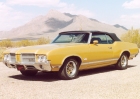
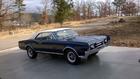
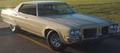
Based on my search, this isn't a very popular topic or idea. But dammit, we've matched the paint color of our 1966 Olds on a 1959 Shasta trailer. Look at this picture and tell me you wouldn't want to put a hitch on the Olds. Surely someone here has done it. One hitch shop turned me down, another seems interested but needs some time to consider how to do it. They'll be manufacturing it. They want to do a Class 3 (2-inch receiver), of course. They will NOT weld anything to the frame or mount anything to the bumper. One of the employees has done cars like this, but only back in the day.
Advice/feedback welcome. (Yes, I know those are Buick Wildcat rims )
Seems easy enough to fabricate a receiver on a crossbar that attaches to the frame. My Dad put a hitch on Mom’s’78 Delta to pull a 23’ Prowler camper but that hitch was welded to the frame. Dunno if you could fabricate one that bolts in.
This is a full frame car. Have a hitch fabricated that bolts to the frame and you've got more engine and bigger brakes than most half ton pickups. Do not use one of those Class 1 hitches that bolt to the bumper. Here's a page from the 1967 Olds Towing brochure. I'm afraid I don't have the 1966 version, but the cars are mechanically identical between those two years. Olds shows up to a 5,000 lb trailer and 500 lb tongue weight with a Ninety Eight.
Back in the day, before pickups were popular, the family car was used to tow trailers all the time. Bolton hitches were readily available and installed at UHaul.
The employee recommending a Class 3 (sized) hitch/receiver made a good recommendation. It is not a difficult process to secure the required metal plates, bars, equipment to fashion/make this hitch. If the employee has done it before and you have trust in his workmanship I think that's the way to go. Very nice 1966 Olds/1959 Shasta combination.
This isn't rocket science. There are a multitude of adjustable Class III hitches on the market. The end plates slide on the square tube to match the spacing of the frame rails. They come in bolt-on or weld-on versions. I've had a weld-on Class III hitch on a 1970 Cutlass. It's a problem if the gas tank ever has to come out.
I would also suggest using air bags that go inside the rear coil springs instead of air shocks. The bags put the load into the frame exactly where it is designed to carry it. The shock attaching points are not designed for it.
I would also suggest using air bags that go inside the rear coil springs instead of air shocks. The bags put the load into the frame exactly where it is designed to carry it. The shock attaching points are not designed for it.
x2 That is most certainly an excellent suggestion.
I still have the long dead bags in my Monte Carlo when my granddad would go visit us in FL and load the trunk full of loose citrus to take north. I have no idea how many oranges you can fit in an A body trunk, but I bet it's a lot.
That trailer will not be a problem, especially if you brake slowly, accelerate slowly, and turn slowly.
The feedback is much appreciated. Glad I'm not being dissuaded.
Joe, could you explain more about your air bag suggestion. Are you saying I should replace the current shocks with something else, or are the air bags an addition? As you can tell, I'm not familiar with it at all.
Another question about that Reese bolt-on setup in your post: Knowing how far back the Olds frame goes (or doesn't go), that square receiver will have to extend quite far out to clear the bumper by a reasonable amount. I understand you want a good amount of clearance to prevent contact between the car and the camper during sharp turns.
Air Lift bags go inside the coil springs. They simply provide additional spring rate. There is no change to your current shocks. You air up the bags to carry extra load and let the air out when you're done.
The amount the trailer ball sticks out past the bumper is a function of both the receiver and the ball mount. The tongue length on the trailer will determine how much clearance you need.
Do it! Lots of good metal for bolts back there. In the 70's a hitch was custom made for my 66 Delta, looked great. It was done by a hitch shop better than any aftermarket piece and not sure a bolt on was even available..
Another very useful photo, Joe, thank you. Never seen anything like it. Assume any shop would install, or is this a specialty job? And do I personally inflate them for camping trips or car shows and deflate them when I'm not towing? Using an air compressor? A hand pump? I don't have a hoist.
Another very useful photo, Joe, thank you. Never seen anything like it. Assume any shop would install, or is this a specialty job? And do I personally inflate them for camping trips or car shows and deflate them when I'm not towing? Using an air compressor? A hand pump? I don't have a hoist.
Get:
1. an air pressure gauge that reads low pressures (like for ATV's)
2. extension hoses (route them to a convenient place to add air)
You may like the feel with leaving 5 PSI in them when not towing.
Another very useful photo, Joe, thank you. Never seen anything like it. Assume any shop would install, or is this a specialty job? And do I personally inflate them for camping trips or car shows and deflate them when I'm not towing? Using an air compressor? A hand pump? I don't have a hoist.
The deflated bags can be fit through the gaps between the spring coils when the car is up on a hoist. A small diameter nylon hose is routed to the back bumper, where a fill valve (a Schrader valve, like a tire valve) is used to add air. There are also versions with an onboard air compressor and a small control panel that goes under the dash. Air shocks were a factory option in the 1960s and the back bumper has a location for the fill valve behind the license plate.
Yes, my wife's 1959 Cadillac (formerly her grandfather's) had air bags originally, although I'm told they were trouble and removed. There's still an "air lift" lever under the dash.
Back to my Olds: no holes behind the license plate on the '66. Photo included. You think the air bags are critical to pull the camper, Joe? It's around 1,800 pounds, no more than 200 tongue weight.
I added a Curt trailer hitch to my 96 98. Not to pull a trailer, but as a mounting point for a screwdriver ham radio antenna. I bought the hitch from the local U-Haul and installed it myself.
If the shop you visited about having a hitch custom fabricated has good reviews and friendly customer service then that's reassuring. x3 on going with airbags in the rear suspension, even chinesium shocks from Kanter's or the auto parts store would be better than the shocks currently in your car (unless they were replaced recently).
Back to my Olds: no holes behind the license plate on the '66. Photo included. You think the air bags are critical to pull the camper, Joe? It's around 1,800 pounds, no more than 200 tongue weight.
Interesting. The hole is supposed to be in that divot just to the right of the fuel filler. I can't tell if that's a reflection in the photo or if there's something going on. FYI, straighten out that tab on the license plate frame and you can use the gas cap to hold the spring loaded frame open when you fill the tank.
Good eye on the tab. I will do that. Always has been a bit of a pain. I've been putting the gas cap down flat, between the hinges, to hold it open.
There is definitely no hole in that divot or anywhere. Anything you see is reflection. Can't say I'm keen on drilling one. The rear shocks are 15 years old. Not a lot of miles, though.
Yes, my wife's 1959 Cadillac (formerly her grandfather's) had air bags originally, although I'm told they were trouble and removed. There's still an "air lift" lever under the dash.
Back to my Olds: no holes behind the license plate on the '66. Photo included. You think the air bags are critical to pull the camper, Joe? It's around 1,800 pounds, no more than 200 tongue weight.
I'll offer up my opinion. No, the air bags are not critical - they're a very nice "add". Based upon your trailer configuration parameters you fall w/in Class 1 trailer specs & you should have no issues pulling that trailer w/ the 98 without air bags. I think you should have a minimum Class 2 trailer hitch assembly - added safety margin is always a good thing. It's always nice to have heavy-duty tires when pulling a trailer - especially as it relates to tire sidewall but also heavy duty tires absorb and handle more weight - they're an excellent investment when pulling trailers.
I don't know what type brakes the Shasta has but the brake system should be evaluated so you know what to expect from your towing experience. If possible, I'd always prefer having brakes on a camper trailer - they provide immeasurable safety to your towing experience. So, my suggestion is to evaluate your comfortability/safety index. Consider adding brakes based upon your towing experience. Yes, many folks might forego brakes on that size trailer/camper but as I said - my preference would be to install brakes (if it doesn't have them) and add the appropriate brake module in your 98. Your towing experience will be far, far more enjoyable with a proportional brake controller. Safety should be your first priority. Nothing worse than biting your nails pulling a trailer.
Finally, your transmission is going to heat up pulling a trailer - even if it's on dead-pan flat dry roads - it's a simple fact of towing. If you're navigating even modest to slight grades your transmission is going to heat up and it will wear faster. I'm not privy to the transmission cooler on your Old 98, but consider adding an additional transmission cooler. Much will depend on your style of driving (heavy footed or otherwise), total weight of trailer, grades of hills you're navigating, etc. If you have the $$ & time, consider safety first - tires, brakes and transmission cooler. Have fun with that great combo unit.
Thanks for the thoughtful response, Norm. Yes, the Shasta trailer has electric brakes. Our restorer said they were hardly used, and they work like a charm connected to my truck. He installed a modern, seven-pin connector to the trailer, and I have every intention of having the hitch people install a proportional brake controller for the Olds as well. Hoping to go with something that's low-profile on the dash. I've seen some with just a small **** visible, forget the brand. I'm told the wiring is fairly straightforward. For people who do that sort of thing, anyway.
Even on my truck (2010 GMC Sierra) I've noticed the transmission works harder to pull the trailer, even though we are flat as a pancake here in Manitoba. I will look into a cooler upgrade. We don't plan on going cross-country or anything with this unit, but this is a long-term thing that I want to do properly. I've got good tires on the car, but I suppose the next set could be even better.
The past 15 years I've had the Tekonsha P3 Proportional Trailer Brake Controller (Part No 90195) on my truck 2003 F250 Diesel. I can't say enough great things about this controller - best controller I've ever owned.
My second try at loading some photos here. The deed is done. Today. Looks pretty neat and tidy to me. Haven't towed the camper yet, as I still need to get the car wired for the brake controller.
Agree. I don't like it. Review Joe's Post #9. They installed simple angle iron and not much of it in the correct manner. You essentially have ONE bolt on each side in the frame - ONE BOLT and a single piece of angle iron. I'd prefer to see a minimum of two bolts (best 3 bolts) and a minimum of 2" square tubular iron - not angle iron. Again, review Post #9. Not having a warm & fuzzy on that hitch.
You have basically a bumper hitch, IMO. You have two bolts in the bumper bracket and you have two bolts in the frame. You have VERY VERY limited lateral strength. You need far more support provided by the frame.
You can probably salvage what they already have installed with some modifications. I'd prefer to see one large flat piece of solid steel which spans the entire frame - from frame rail to frame rail with a minimum of three preferably four bolts mounted/running through both the solid piece of steel and each frame rail. They'll have to weld that piece of steel to the current assembly (remove, reassemble, weld, remount). In case they or you might have difficulty finding such a piece of quality steel, go to a ship yard &/or boat yard where they have numerous pieces of various sizes laying about. A ship yard &/or boat yard is constantly (daily) welding in new bulkheads, pieces of hull, doors, windows and the like. One quarter (1/4") thick would be sufficient, 3/8' thick would be optimal, 1/2" thick would be overkill. I recently had to raise a 5th-wheel hitch on an F-550, I used a piece of 1/2" thick steel 32" square mounted directly onto the bed and through the underlying frame rails and cross-members. Towing 16K lbs. Don't compromise.
Look, that angle iron is probably the lowest grade mild steel you can get. Angle is a crappy choice for bending loads, which is what this will see, both towards the ground for tongue loads and towards the back of the car for towing loads. There's a reason why real hitches use 2" square tube or better. The single bolt into the bottom flange of the frame is now in tension for tongue loads, and there is almost no edge distance from the hole to the edge of the angle iron. I wouldn't tow more that a Class trailer with this. The 2" receiver is a joke - don't attempt to use it with a real trailer. Sorry, this is a poorly designed hitch at best, and that angle iron under the gas tank is already distorted from the install. The "S" shape in this photo does not instill confidence. There are multiple critical welds in tension, which is really poor practice. They should be in shear for safety. Also, I suspect that black paint is hiding some less than stellar weld beads.
Dimensions: 10.25" x 32.5" x 6.9" (Shipping) Finish: Black Powder Coat Over E-Coat Weight: 52.3 lbs Weight Carrying (WC): Up to 500/5,000 lbs. (TW/GTW)
2 in. Square Receiver Tube Opening
Rated Up To 5,000 lbs. Gross Trailer Weight (GTW) And Up To 500 lbs. Tongue Weight (TW)
Suitable For Use With Weight Distribution Hitch Up To 6,000 lbs. Weight Distribution (WD) And 600 lbs. Weight Distribution Tongue Weight (WDTW)
All Hitches Are Designed For Customers With Trucks, Vans, And Sport Utility Vehicles
As disappointing as your feedback is, I appreciate it. I want to do this right.
I'll go back to one of the shops that turned me down, for advice if nothing else. They were potentially willing to do it in the middle of winter, at their down time, but given where I park the car for the winter that's next to impossible. (They were also going to manufacture something).
Just a reminder: the camper is just 1,800 lbs, with a tongue weight of around 180 lbs. I don't plan to ever tow anything else with this car. But I've had it for 20 years, and I'll be keeping the car and the camper for life. So I want to do this right.
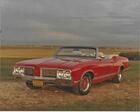
Best bet is to get the hitch Joe recommended. I used one similar on my 71 Cutlass to tow my 66 cross country. Worked great and I took it off when I was done. Just need a second set of hands to help you line it up and mark to drill the holes.


 )
)