


442 questions


Thread Starter
Registered User
Joined: Mar 2013
Posts: 29
442 questions
Hi, everyone. I just bought a 1972 442 auto with a 1974 455 in it. I've got a couple questions. First I've got 5 lines coming from the fuel tank. where do they all go carb and where else. The fuel pump has 3 lines ones suction and ones pressure. Do these have a return line?
Secondly all the vacuum lines have been removed, what are the basic ones needed to get it to run. I don't care about all that emission junk.
Thirdly my engine wiring is all screwed up. does anyone have an engine wiring diagram. Thanks
Secondly all the vacuum lines have been removed, what are the basic ones needed to get it to run. I don't care about all that emission junk.
Thirdly my engine wiring is all screwed up. does anyone have an engine wiring diagram. Thanks
Connoisseur d'Junque
Joined: Sep 2010
Posts: 21,183
From: The Hudson Valley
Welcome.
Your questions, though not difficult, can all be answered much better by the Chassis Service Manual than by a few words from the members here.
I would recommend buying a copy (there are always a number on eBay) and, until then, downloading a copy for free from WildAboutCars.
That way you'll have your answers in minutes straight from the source, and you can begin to ask us the sorts of questions that the manual can't answer.
- Eric
Your questions, though not difficult, can all be answered much better by the Chassis Service Manual than by a few words from the members here.
I would recommend buying a copy (there are always a number on eBay) and, until then, downloading a copy for free from WildAboutCars.
That way you'll have your answers in minutes straight from the source, and you can begin to ask us the sorts of questions that the manual can't answer.
- Eric
Thread Starter
Registered User
Joined: Mar 2013
Posts: 29

Registered User
Joined: May 2011
Posts: 3,688
From: Delta BC Canada
Fyi
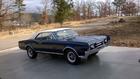
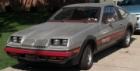
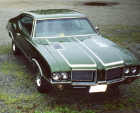
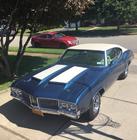
The car in the pictures has Cutlass grilles in it not 442 grilles. I do not see emblems on the fenders but that is likley due to the ongoing body work.
Good luck with your project regardless if it is a Cutlass or a 442.

Oldsdruid
Joined: Dec 2007
Posts: 10,634
From: Southside Vajenya
72 is a weird year for 442. It went back to an appearance and handling option that year. On a 72 the VIN doesn't ID the car as a 442. You'll need to check other things.
A good clue to 442 is the rear suspension. It should have boxed control arms and a sway bar.
Right now your car has Cutlass grilles but any car could have had a nose job in 40 years due to accident damage.
1972 cars could also have come with either a 350 or a 455. An original 455 car will have U (automatic) or V (4-speed) engine code in the VIN. An original W30 car will have X.
H, J, K or M indicates it was originally a 350 car. Engine code is the 5th character of the VIN.
Don't get hung up on 442 or not. You have a 455 A-body that can be loads of fun.
***
On the fuel lines question- look in the front of the trunk up against the back seat and you'll see a tank looking thing which is fuel vapor recovery tank. The three vent lines you see coming from the corners and middle of the gas tank go to this thing, and the vapor line from the charcoal canister underhood also routes back to it. All it does is contain fuel vapors so they don't vent to atmosphere. When the fuel vapors condense back to liquid, the liquid fuel returns to the tank thru the line that comes off the middle vent line. Kind of a clumsy thing, but it doesn't take any horsepower to operate and it recovers your high-priced gasoline. Unless the underhood canister's filter plugs up, there is no way this thing can affect performance.
If you don't want to fool with it, simply blank off two of the tank vent lines and route one up above tank level so the tank will have a vent to atmosphere. That's all the factory did until emissions controls came along.
On wildaboutcars, find the 1972 Olds chassis manual and look in Section 8, Fuel & Exhaust. Look at Figure 8-5 for cutaway of the recovery tank and 8-17 for how the lines at the fuel tank are routed to it.
If your car came with a 455 it will have a 1/4" fuel return pipe on the frame near the 3/8" pump suction pipe. 350 cars didn't have them.
Far as vacuum lines required to run, if the emission stuff isn't a concern all you need are the transmission modulator and distributor vacuum advance. Trans is manifold vacuum, distributor is ported vacuum from the carb. You'll also need a manifold vacuum source to operate the a/c controls if it has a/c. Heater only cars used cables.
A good clue to 442 is the rear suspension. It should have boxed control arms and a sway bar.
Right now your car has Cutlass grilles but any car could have had a nose job in 40 years due to accident damage.
1972 cars could also have come with either a 350 or a 455. An original 455 car will have U (automatic) or V (4-speed) engine code in the VIN. An original W30 car will have X.
H, J, K or M indicates it was originally a 350 car. Engine code is the 5th character of the VIN.
Don't get hung up on 442 or not. You have a 455 A-body that can be loads of fun.
***
On the fuel lines question- look in the front of the trunk up against the back seat and you'll see a tank looking thing which is fuel vapor recovery tank. The three vent lines you see coming from the corners and middle of the gas tank go to this thing, and the vapor line from the charcoal canister underhood also routes back to it. All it does is contain fuel vapors so they don't vent to atmosphere. When the fuel vapors condense back to liquid, the liquid fuel returns to the tank thru the line that comes off the middle vent line. Kind of a clumsy thing, but it doesn't take any horsepower to operate and it recovers your high-priced gasoline. Unless the underhood canister's filter plugs up, there is no way this thing can affect performance.
If you don't want to fool with it, simply blank off two of the tank vent lines and route one up above tank level so the tank will have a vent to atmosphere. That's all the factory did until emissions controls came along.
On wildaboutcars, find the 1972 Olds chassis manual and look in Section 8, Fuel & Exhaust. Look at Figure 8-5 for cutaway of the recovery tank and 8-17 for how the lines at the fuel tank are routed to it.
If your car came with a 455 it will have a 1/4" fuel return pipe on the frame near the 3/8" pump suction pipe. 350 cars didn't have them.
Far as vacuum lines required to run, if the emission stuff isn't a concern all you need are the transmission modulator and distributor vacuum advance. Trans is manifold vacuum, distributor is ported vacuum from the carb. You'll also need a manifold vacuum source to operate the a/c controls if it has a/c. Heater only cars used cables.
Connoisseur d'Junque
Joined: Sep 2010
Posts: 21,183
From: The Hudson Valley
You guys beat me to it, as far as the model designation goes, but I would add the clarification that because the 442 in 1972 was an appearance package option, and not a separate model, he may have an "Oldsmobile Cutlass 442" (subject to verification of what equipment the car has, and how original it appears), but he does not have an "Oldsmobile 442."
This would mean that the model designation on the title is incorrect (there was no Oldsmobile 442 in that year, and the "442" was not a model, but rather an option, like extra dashboard lights or power windows). This has no serious significance, and may actually add to its resale value, but it is good to be aware of.
- Eric
This would mean that the model designation on the title is incorrect (there was no Oldsmobile 442 in that year, and the "442" was not a model, but rather an option, like extra dashboard lights or power windows). This has no serious significance, and may actually add to its resale value, but it is good to be aware of.
- Eric
Thread Starter
Registered User
Joined: Mar 2013
Posts: 29
442
My vin is 3G87H2R132378. Since the 5th letter is an H i would assume that the original engine was a 350. I don't believe i have any 442 emblems that would go on the fender. The trunk says 442 but the glovebox door has cutlass written on it. I'm gonna have to confess ignorance on what boxed control arms are. I believe i've got a coil spring with adjustable air shocks. The car has factory air conditioning but manual windows. all help is appreciated. Thanks
Last edited by Austin Trevor White; Mar 26, 2013 at 02:27 PM. Reason: thought of something else
Oldsdruid
Joined: Dec 2007
Posts: 10,634
From: Southside Vajenya
3= Oldsmobile Division
G= Cutlass S 72 442 was available on Cutlass (F) and Cutlass S (G) coupes
87= 2-door hardtop coupe
H= 350, 2-barrel, single exhaust yes, there were 442 produced with this engine
2= 1972 model year
R= Arlington Texas assembly plant
132378= car's sequential VIN
Boxed control arms- regular lower control arms on the rear axle will be U-shaped. Boxed arms will have a metal plate welded on that effectively changes the U-shape to a "box" shape. The boxed arms are more resistant to flex than non-boxed.
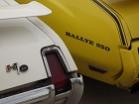
72 442 could have had Cutlass glove box emblems. Like I said, 72 is a weird year for 442 and about the only solid proof is a build sheet or X engine code in the VIN, since only 442 could have the W30 option. Even if it's not a 442, enjoy the car with that 455. A 74 455 is smogged down a lot but the torque will still be loads of fun.
I'm guessing you're 18-25 years old with limited experience with older cars. We'll help ya.
G= Cutlass S 72 442 was available on Cutlass (F) and Cutlass S (G) coupes
87= 2-door hardtop coupe
H= 350, 2-barrel, single exhaust yes, there were 442 produced with this engine
2= 1972 model year
R= Arlington Texas assembly plant
132378= car's sequential VIN
Boxed control arms- regular lower control arms on the rear axle will be U-shaped. Boxed arms will have a metal plate welded on that effectively changes the U-shape to a "box" shape. The boxed arms are more resistant to flex than non-boxed.
72 442 could have had Cutlass glove box emblems. Like I said, 72 is a weird year for 442 and about the only solid proof is a build sheet or X engine code in the VIN, since only 442 could have the W30 option. Even if it's not a 442, enjoy the car with that 455. A 74 455 is smogged down a lot but the torque will still be loads of fun.
I'm guessing you're 18-25 years old with limited experience with older cars. We'll help ya.
Oldsdruid
Joined: Dec 2007
Posts: 10,634
From: Southside Vajenya
They're lower compression for one thing, and their J heads don't flow as well as other Olds heads. A set of big-valve C heads will be your biggest bang for the buck and they're common enough they shouldn't break the bank.
Olds changes compression ratio with the pistons and some 70s smog engine pistons could pass for soup bowls. For a nice streetable engine that can live on today's gasoline, about 9:1 CR will be great.
Decide what you want the engine to do and folks here can guide you thru it.
Olds changes compression ratio with the pistons and some 70s smog engine pistons could pass for soup bowls. For a nice streetable engine that can live on today's gasoline, about 9:1 CR will be great.
Decide what you want the engine to do and folks here can guide you thru it.
NôôB
Joined: Jul 2010
Posts: 2,077
From: Las Vegas, NV
They're lower compression for one thing, and their J heads don't flow as well as other Olds heads. A set of big-valve C heads will be your biggest bang for the buck and they're common enough they shouldn't break the bank.
Olds changes compression ratio with the pistons and some 70s smog engine pistons could pass for soup bowls. For a nice streetable engine that can live on today's gasoline, about 9:1 CR will be great.
Decide what you want the engine to do and folks here can guide you thru it.
Olds changes compression ratio with the pistons and some 70s smog engine pistons could pass for soup bowls. For a nice streetable engine that can live on today's gasoline, about 9:1 CR will be great.
Decide what you want the engine to do and folks here can guide you thru it.
 .
.Oh and it still does low 15's in the quarter mile with those soup bowls.
Registered User
Joined: Aug 2010
Posts: 349
From: Hague, VA...1-1/2 hours from modern society
If you decide to go with new pistons, be certain to avoid these 40.3cc "soup bowls" (#L2390):
rev1-7.jpg
delete
Joined: Apr 2008
Posts: 2,810
From: Long Island, NY
This is a good pic of boxed lower arms, if not a good price
http://www.opgi.com/p/suspension/11423/28/KR0445P.html
They have an insert welded in so it is four sided. They were required for a rear sway bar. Without it, the control arms would crush from the side to side pressure.
http://www.opgi.com/p/suspension/11423/28/KR0445P.html
They have an insert welded in so it is four sided. They were required for a rear sway bar. Without it, the control arms would crush from the side to side pressure.

Thread
Thread Starter
Forum
Replies
Last Post


