When you click on links to various merchants on this site and make a purchase, this can result in this site earning a commission. Affiliate programs and affiliations include, but are not limited to, the eBay Partner Network.
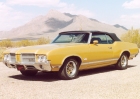
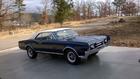
Hey everyone, picked this up about two weeks back in Tampa for a fair price.
It’s a 350/350 setup with some options and a new vintage air system that keeps things cool in the cab.
Runs and drives beautifully, driver side floor pan is getting replaced by me next week. Everything else is rust free.
Compression and oil/trans pressures all look perfect. Only complaint is someone stuck #8 heads on the engine at some point.
I’m very grateful for this forum, I’ve been in the background learning as much as I can about these beautiful cars.
I’ll be trying to add performance to the engine sooner rather than later, still don’t understand what heads work with what cams, etc. It’s my first classic and I don’t want to degrade the car so I’m open to any suggestion you guys may have.
Hope y’all are having a wonderful weekend, James G.
Since the engine has #8 heads, I suggest checking the VIN pad on the block to verify what year it is. It could be a 71 engine with #8 heads, or it could be a 73-76 engine with the 71 intake.
The blue engine paint makes me wonder.
I did check the engine vin and it spits out a 71 manf year for the block, so I'm pretty certain it's a 71 that was rebuilt at some point. Why they went to #8 heads I'll never know lol.
Edit: Also, it appears the engine was painted orange before the blue, and originally gold? Definitely doesn't look like colors for a primer.
Welcome. I echo what the others have said. One other thing is that the car is missing the trim on the leading edge of the hood above the grills. Repros are available. Note that 1971 and 72 trim pieces are different.
Welcome. I echo what the others have said. One other thing is that the car is missing the trim on the leading edge of the hood above the grills. Repros are available. Note that 1971 and 72 trim pieces are different.
Thank you for explaing the trim piece differences for the years, I've got a short list and these have been added
Appearance of engine bay (including missing front hood trim) suggests front-end may have been rebuilt w/ LH & RH 1970 fenders. Second week of January is late in model year to be using remnant 1970 fenders on assembly line? Front-end collision most likely? As you dig into the car you'll gain a better perspective.
Appearance of engine bay (including missing front hood trim) suggests front-end may have been rebuilt w/ LH & RH 1970 fenders. Second week of January is late in model year to be using remnant 1970 fenders on assembly line? Front-end collision most likely? As you dig into the car you'll gain a better perspective.
Since being made aware I'm starting to scratch my head a bit too...but I do love a good mystery. Paint on fenders match the condition of the rest of the car though, pointing back to original...
I did check the engine vin and it spits out a 71 manf year for the block, so I'm pretty certain it's a 71 that was rebuilt at some point. Why they went to #8 heads I'll never know lol.
Edit: Also, it appears the engine was painted orange before the blue, and originally gold? Definitely doesn't look like colors for a primer.
Does the block VIN derivative match the VIN tag? If not, it will at least tell you the block was a transplant. Just good detective intel as you build historical perspective of the car. Nice car, BTW.
You could examine the transmission VIN derivative if you're so inclined to get more nosy.
I agree, I have one just like it (owned since new) but it's a convert. . 350s are GOLD - #7 heads, 455 are generally blue.
entire radiator fan Shroud are different.
Yep, that shroud is “different” to say the least. I suspect it was added along with the AC to ensure the engine stayed cool. The orange under blue engine paint suggests a “rebuild”, and those shoulder belts are a “modern upgrade” over the original clunky 3 belt system.
Neither the fan shroud nor the radiator top plate are from an Oldsmobile, at least not from a 1971 Olds. The four square threaded "nuts" imbedded in the core support upper bar in front of the radiator are where the original top plate attaches. The seat belts are aftermarket. I have no idea where the spare tire and wheel came from. And where is the alternator?
By the way, the original radiator top plate and shroud look like this.
Edit: do you know how difficult it is to find a photo of a 1971 Supreme with the engine compartment correct? Even the one above, despite the obvious stuff like the air cleaner, has issues.
This BBO engine compartment is closer to correct.
Last edited by joe_padavano; Aug 11, 2024 at 01:40 PM.
The previous owner didn't know much about the car but did mention the radiator not being factory, I've tried searching the part numbers printed on the shroud but haven't been able to pinpoint what it came out of other than a GM 4.1 engine.
The alternator was moved under the V/A AC System.
As for the air cleaner I was completely clueless until just now!
Seriously, thank you guys for sharing your knowledge with me about the car. The more I know the better I can take care of and appreciate it.
I'm currently setting something up to purchase the correct #7 heads to bring compression back to factory, along with a decent intake and headers/exhaust to help the car breath better.
Does the block VIN derivative match the VIN tag? If not, it will at least tell you the block was a transplant. Just good detective intel as you build historical perspective of the car. Nice car, BTW.
You could examine the transmission VIN derivative if you're so inclined to get more nosy.
I'm currently setting something up to purchase the correct #7 heads to bring compression back to factory, along with a decent intake and headers/exhaust to help the car breath better.
Be careful with that. The #8 heads have larger 79-ish cc combustion chambers whereas the 7 heads have smaller 68-ish cc combustion chambers. The engine builder may have used those 8 heads to achieve a desired compression ratio with aftermarket pistons, and installing smaller chamber heads may increase the compression to a greater than optimal level. I’d say more investigation is needed before actually changing anything.
Be careful with that. The #8 heads have larger 79-ish cc combustion chambers whereas the 7 heads have smaller 68-ish cc combustion chambers. The engine builder may have used those 8 heads to achieve a desired compression ratio with aftermarket pistons, and installing smaller chamber heads may increase the compression to a greater than optimal level. I’d say more investigation is needed before actually changing anything.
Thanks Fun71, I'll read up here on the forum and see what info I can find. when it comes to identifying pistons I'm pretty much clueless. I have read about the factory pistons being "dished" to further reduce compression wheras aftermarket "flat tops" can be used to increase compression. Along with "decking" the block and certain head gaskets.
How to present this information. For 350 engines, from 1968-1970 Olds used the same size heads and varied the compression by using different size piston dishes. In 1971-1972 the heads were the same size as the earlier years, and the piston dish was larger. Then from 1973-1976 the head got larger and the piston dish got smaller. This creates a lot of potential mis-match when rebuilding an engine with aftermarket pistons as there are many different piston dishes available, along with pistons that are shorter than factory spec which results in lower compression.
So to determine the actual compression ratio, you have to measure the piston dish, the combustion chamber volume, the block head-to-piston clearance, and the head gasket bore and thickness. Whew, that’s a lotta information.
How to present this information. For 350 engines, from 1968-1970 Olds used the same size heads and varied the compression by using different size piston dishes. In 1971-1972 the heads were the same size as the earlier years, and the piston dish was larger. Then from 1973-1976 the head got larger and the piston dish got smaller. This creates a lot of potential mis-match when rebuilding an engine with aftermarket pistons as there are many different piston dishes available, along with pistons that are shorter than factory spec which results in lower compression.
So to determine the actual compression ratio, you have to measure the piston dish, the combustion chamber volume, the block head-to-piston clearance, and the head gasket bore and thickness. Whew, that’s a lotta information.
Wow thank you for all the great info, saved me a whole night of researching! I'll read up as much as I can about what you've mentioned. (I'd like to be better educated).
I did have a great convo earlier today with a much more experienced member of this forum who's an engine builder in FL.
If the weeds get too thick I'll leave it to him moving forward.
If you ever want to put the alternator back up on top the photos Joe shared show the factory brackets. Common parts that many member here have. But there is one member in Florida who has a large collection of parts you might get in touch with. That would be Bob who goes by ROCKETMAN269V. He may even live in Tampa, I'm not sure exactly where in Central Florida he's at. If he happens to be within driving distance he may be an excellent source for any parts you may need. Good guy who's helped many members here with parts. John
If you ever want to put the alternator back up on top the photos Joe shared show the factory brackets. Common parts that many member here have. But there is one member in Florida who has a large collection of parts you might get in touch with. That would be Bob who goes by ROCKETMAN269V. He may even live in Tampa, I'm not sure exactly where in Central Florida he's at. If he happens to be within driving distance he may be an excellent source for any parts you may need. Good guy who's helped many members here with parts. John
Thank you for the great info John, I may reach out to him and see what’s available.
I did have a great convo earlier today with a much more experienced member of this forum who's an engine builder in FL.
If the weeds get too thick I'll leave it to him moving forward.
Listen to what Mark tells you -- he has a lot of experience with and insight into Olds powerplants. And if you decide to do any engine work aside from simple bolt-ons, he's your guy, especially since it sounds like he's pretty close.
Hey everyone, just to give an update on my 71 Frankenmobile.
The powertrain all matches to the body vin on the car.
It appears the front fenders were replaced with 70’ style fenders. Some investigating underneath the car and I located some newer beads of weld. Most likely an accident of some sort.
I spoke with mark and he’s working a set of heads, cam and roller rockers for the car. All around, great experience to learn from and do business with so far.
I’ve ordered some Hedman headers, last on the list would be an intake. I was thinking of Edelbrocks 2711 paired with my (looks new) period correct quadrajet.
Q-Jet is probably your best choice. I wouldn't worry about "period correct" as the 2711 will kind of tip onlookers off to the fact that things aren't exactly original. However, the Performer sounds bang-on for your application.
Got the new fan in and replaced the oil pan gasket. Unfortunately I found a small leak towards front near timing cover. When idling car to test new fan setup I noticed a wobble on my crank pulley at idle so now I’m thinking the balancer will need to be pulled and replaced. Any input for a good replacement? Or am I barking up the wrong tree.
As far as the new floor goes I started pulling interior and cutting the old stuff out. Thankfully found good metal just before seat brackets so I’m not removing too much material.
I’m entering the can of worms phase and trying not to stress out.
Unfortunately I can’t seem to add any videos to the post so I’ll just throw up some photos of the fan and floor 🤷♂️
I'd ASSume with the history of engine colors that it's been out and rebuilt at some point, to include replacement of the original nylon-tooth timing set. If not, you MAW address that while you're in there. Those nylon teeth are notorious for breaking off and ending up in the crankcase.
Last edited by BangScreech4-4-2; Sep 13, 2024 at 05:26 PM.
Small update, got the new floor in. Wasn’t too bad.
As for the pulley wobble I was able to get my phone up in there and noticed two bolts missing from the crank pulley. Does anyone have any idea what the correct hardware is? Thanks!
After some digging I think was able to find out that part # ACME OL 9258 is some sort of crank pulley extension?
No luck finding any website with a new/reman one for sale.
Maybe just ditch the whole thing and buy a 3v pulley is what I'm thinking now, what do you guys all think?
I think your biggest problem is that cast iron pulley that was part of the aftermarket A/C kit that was installed on the car. If it were my car I'd get factory A/C accessory brackets and pulleys and do it all right. The alternator is mounted above the PS pump on factory A/C cars, as we discussed back in Post #15. This would also eliminate that torch-cut idler bracket.