When you click on links to various merchants on this site and make a purchase, this can result in this site earning a commission. Affiliate programs and affiliations include, but are not limited to, the eBay Partner Network.
The plan is to debut this car in Nashville for the National this summer. With that show, and MCACN in the fall, I’m going to scale back on the detailed photos moving forward. I'm happy to provide anyone insight or guidance along the way.
If all goes well, I will have my Jetfire at MCACN this year. I will not have it done on time for the nationals. Looking forward to seeing your car.
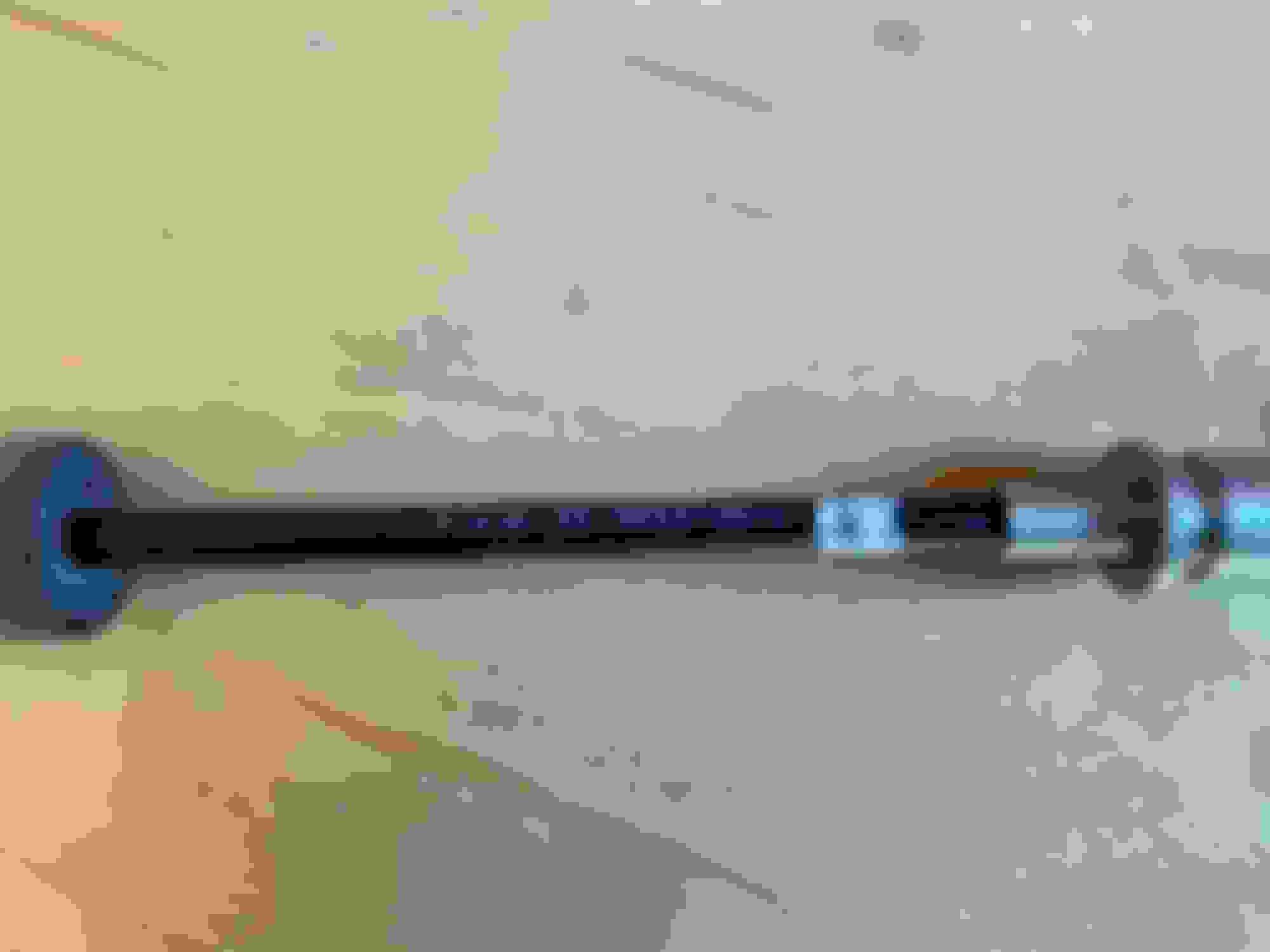
If I understand your question, the vacuum hose on both ends of the steel vacuum tube is about 3”-31/2” at each end. If I remember correctly modulator tubes had a crimp to hold the hose tightly and a taper that butted up to the nipple at each end. When the steel tube is correctly installed the taper literally fits right on the nipple of the manifold fitting and the nipple of the modulator.
The vacuum hose was never used to make up for any distance from the steel tube to the nipple. If the tube doesn’t fit as I described it is damaged (bent) or the wrong one for the application.
I hope this helps. I have been reading your thread from the beginning and have leaned a lot about the fine points of Cutlass restoration. I’m also pulling for you to complete the car and do well to the shows.
Last week the front and rear glass were installed. The twilight blue looks stunning in photos, and I can't wait to see the body and paint in person on Monday.
If I understand your question, the vacuum hose on both ends of the steel vacuum tube is about 3”-31/2” at each end. If I remember correctly modulator tubes had a crimp to hold the hose tightly and a taper that butted up to the nipple at each end. When the steel tube is correctly installed the taper literally fits right on the nipple of the manifold fitting and the nipple of the modulator.
The vacuum hose was never used to make up for any distance from the steel tube to the nipple. If the tube doesn’t fit as I described it is damaged (bent) or the wrong one for the application.
I hope this helps. I have been reading your thread from the beginning and have leaned a lot about the fine points of Cutlass restoration. I’m also pulling for you to complete the car and do well to the shows.
Thanks for the reply, @Dynoking. I think I'm following you on this. Do you have a photo by chance?
Unfortunately my car is in New Jersey. I don’t know the next time I’ll see it.
I was going to ask you for a photo of what you have so I can help you better.
What exactly is your concern? Is the modulator tube not fitting correctly? From your OP on this topic My thoughts are the modulator tube is far away from the modulator nipple. Or you want to see an original assembly line installation?
I'm enjoying viewing all the high quality work and the impressive amount of NOS items you've located. I have a question on the brake rotors however, I have never seen original ones without casting numbers, date, min thickness number on the center hub. What are the part numbers on the boxes?
I'm enjoying viewing all the high quality work and the impressive amount of NOS items you've located. I have a question on the brake rotors however, I have never seen original ones without casting numbers, date, min thickness number on the center hub. What are the part numbers on the boxes?
I’ll grab a picture of the box. There’s literally no difference between these and the originals off the car. I have a spare NOS rotor if anyone is interested.
There’s a number on the inside of the rotor (if memory serves me correct) that matched, too.
This is a great learning experience for me. Apparently the original front one-piece rotors are not consistent across the GM A-bodies of the era while the earlier 2-piece rotors are. If I could locate a mate, I'd be interested in your extra rotor.
Do you have a photo shot that more fully shows the center dust cap?
This is a great learning experience for me. Apparently the original front one-piece rotors are not consistent across the GM A-bodies of the era while the earlier 2-piece rotors are. If I could locate a mate, I'd be interested in your extra rotor.
Do you have a photo shot that more fully shows the center dust cap?
This is a great learning experience for me. Apparently the original front one-piece rotors are not consistent across the GM A-bodies of the era while the earlier 2-piece rotors are. If I could locate a mate, I'd be interested in your extra rotor.
Do you have a photo shot that more fully shows the center dust cap?
The dust caps that I’ve seen available from the vendors have a nipple. My originals did not. I also picked up this set of NOS dust caps, however, I cleaned my originals and had them replated for the car.
My original arm rests are pretty rough on the car. The RH side cleaned up with a bit of elbow grease. Unfortunately, the LH side has that “brittle plastic” issue going on. I came across this piece that was too cheap to pass up. What’s cool is that it isn’t a specific color and appears ready for a dye job. What is interesting to me is that some plastic pieces had a specific part number per color. For example, the colored sport wheel horn buttons had a unique part number by color. From my review of the parts book, it appears the arm rest base was a single part number for ‘70 which is indicated on the back side.
These will be going to Bob next week so he can match the interior panels and work his magic.
Thanks to Gene and Chris for the spec in the modulator line to the modulator. Undoubtedly, the line I have from a certain vendor is of poor quality. Who makes a modulator line that fits correctly?
Installed a few hoses on the engine this evening. The water pump to the heater box is the only non NOS hose I’m using. I put some liquid down on the exterior of the hose so that I could slide the foam up to the alternator. I also installed the rear hose to the heater box. Pretty cool to see the original part tag attached to the hose.
Gathering up parts to take to the shop for body panel installation. These are NOS hood pins and guide plates for the hood.
This car will have all GM rubber bumpers on the fenders / hood, doors, and deck lid.
Spent Thursday pulling the trans back out. I didn’t like the fitment of the torque converter. I used the hoist with straps and wish I had done this the first time! The silver lining is that this allowed me the opportunity to pull the crossmember and paint the areas I scratched during the trans install.
Tomorrow is the big day (or today I guess depending on the time zone) where the chassis goes back up to Michigan. My friend is coming down with his trailer in the morning to help my Dad and I haul the thing back up north.
Today was a big day in the sense that a lot of little things finally came together. I lucked out and found what I think is a super rare NOS detent cable for a 69-72 Olds. My original cable had frayed a bit, and I didn’t want any issues in the future. What’s cool with the cables is that the detent cable, throttle cable, and shifter cable all appeared to have similar stampings on them. After I hooked up the detent cable, we moved on to the NOS dual gate shifter cable as well as the throttle cable. For those that don’t know, the dual gate cable is different than the standard console cable and has its own unique part number.
The rear springs went in today, along with the rear arms to the rear end, and lastly the sway bar. I had the shims as well as the hardware replated so that I could keep the original sway bar bolts and nuts. I didn’t install the rear shocks as I’m not sure what I want to install there yet.
Lastly, I started in on cleaning / degreasing the original tie rods and center link. 50 years of grease and grime kept these in great shape. The problem is getting all the grease off of them! I scrubbed them a bit after soaking them in a degreaser. It didn’t help much so I made another batch of degreaser and tossed them back in. The bottom line is that the car won’t be going to the shop with tie rods. Oh well. I could have thrown the Moog set in, but they were a royal pain in the *** to remove! I’ll take my time and restore the original arms.
I ran the vacuum lines and adjusted the modulator line. Thanks to Ray for the clip that holds the line to the trans dipstick. The vacuum lines and carb hoses just feel really “congested” at the front of the carb, but I followed the diagrams and matched documented original M38 cars.
The last piece of vacuum routing comes down to the OAI adapter.
What is the lengths of the hose from the snorkel to the base therm sensor?
What is the length of the hose from the OAI motor to the tee?
Was the factory vacuum tee white or black? I removed a white tee from the car when I disassembled it but have no idea on whether it’s the original.
NOS dual gate shifter cable and bracket to the trans.
Original shifter cable. I pulled the clip that holds the bracket to the cable and it’s identical to the clip that keeps the brake hoses secure.
Can’t explain why but this NOS detent cable is one of my favorite parts that I’ve found. It could be that the original cable put up such a good fight when I removed it!
Cool production paint markings on the shifter cable.
NOS throttle cable. Thanks to my friend Al for helping me with this part.
Very nice! I believe the tie rod ends were phosphate, not bare metal? many of the sleeves in the middle were bare metal
Thanks, Eric. Just trying to follow in the foot steps of your great W-car build!
Hard to tell the original finish of the tie rods. I haven’t seen any traces of phosphate, but it’s really hard to tell with all the grease and road grime.
The steering linkage is one thing I did not do that great on. I never reused my original parts. I have all new TRW stuff from the 80's that I used. If I was to do it over I would have redone my originals.
Left the house around 4:30 AM Chicago time for the 3.5 hour drive up to see Bob and Carlos at their shop. The car was displayed perfectly as I walked in and WOW! Literally, my jaw hit the floor. The transformation from an original car with rusted quarters to the stage it’s at now is just incredible. The body has been wet sanded and buffed while the fenders still need to go through that process. I couldn’t be happier with the quality of the body work and paint. This blue has a metallic to it and it looks deep! A day later and I’m still giddy about how this thing looks.
We unloaded the trailer to get the chassis in to the shop. Hindsight, probably wasn’t my smartest of moves to transport the roller without the tie rods. Luckily, we were able to move it in to the shop so it can be reunited with the body.
Since the firewall is easy to access with the body like it is, I brought a ton of parts that can go back on relatively easy before it goes on the frame. I also brought a set of outer NOS fuzzies I pieces together for the fronts as well as a few smaller items like the door handles, polished locks, etc.
The interior panels all made the trip so they can be sprayed the correct light blue metallic. I also brought the dash so Bob can work his magic on spraying it the correct color and saving the original woodgrain. Personally, I think the reproduction woodgrain is a far cry from the original in terms of appearance so keeping the original burlwood is a must.
Now it’s on the knocking out smaller projects like the steering column, tie rods, seat hardware, etc.
Thanks to everyone that helped get the frame ready to rock and roll. The last few weeks have been a grind, and I’m thankful for a patient wife that put up with me spending late nights in the garage wrenching. This list includes my Dad, Casey, Gene, Al, Steve, Bob, Carlos, David, Patrick, Luke, Chris, Patton, Joe M., Rohan, Ray, Fred, Matt, and Ross. We truly have a great Olds community.
Front door outer window fuzzies.
NOS 1119515 regulator with a January 1970 date code.
Whether this thing will work after spending 50 years in a box is another story...
Twilight blue and beautiful!
It was critical for us to leave the "gunk" on the firewall. Too many restored cars blast / sand this off, and while their firewalls looks nice and smooth, it's technically incorrect.
The fenders look great and that's without even wet sanding or polishing.
Correct blue finish on the upper dash. Like Eric's W-30, the blue on blue is a wicked sharp color combo.
Casey, my Dad, and Bob catching up. If I had to guess, I'd put money down that Bob is sharing another incredible story about his history with Olds / Lansing.
You can see all the finished metal trim in this picture. The plan is to put the trim on the car at the shop.
Last edited by WTHIRTY1; Mar 12, 2020 at 06:11 AM.
"WOW" That Blue is just Gorgeous
Been following this thread since the beginning and couldn't be more impressed with the quality of work
Shows what can be accomplished with Time, Ability and quite a few $$$$
The body went back on the chassis last week. Sounds like stripes might be painted this week or next. I have what I’ll call a few “unique” requests regarding the stripes and Bob will take care of the rest. Ultimately, I wanted to get this as close to “original” as possibly when means no clear over the stripes along with a bit of overspray in a few critical areas.
Since Illinois is locked down thanks to the virus for the next few weeks, I am going to hopefully knock out the tie rods, blower motor, and maybe the grey jack parts.
Shout out to my friend Randy for hooking me up with a couple key parts. This is the 90* plastic for the wiper motor. My plastic turned yellow after 50 years.
The clip was a tough one to find. This clip holds the kick down cable to the transmission dipstick tube.
Two years ago I had my radiator pressure tested, and it was fine. Since then, the “goal posts” changed significantly on what direction I wanted to take the car. With the money put in to the engine, it seemed foolish not to recore the original radiator. I had the shop separate the tanks. I’m going to lean on the advice from a friend and have the tanks “dipped” to clean up the brass before I pound out a few dents.
Last edited by WTHIRTY1; Mar 24, 2020 at 03:39 PM.
Looks Fantastic!!! When Thornton did my buddy Brians' W30 back in '13 he also had them paint the stripes on top of the paint, like factory, not under the clear. I hope your "unique requests" for the stripes don't include them on the trunk lid! LOL!!!
After some scrubbing of the tie rods, sleeves, and intermediate rod assembly, it appears the intermediate rod assembly is painted in a grey / blue color. It’s definitely not phosphated. The tie rods and sleeves appear to be bare metal. I see a lot of sleeves painted black at the shows, and I’m not sure how correct that is. See below.
Date code. Not entirely sure how to read it but my interpretation would be the 58th day with B equating to February and 70 is 1970. Correct me if I’m reading that incorrectly.
More paint.
Hope to get the sleeves off today and in to the blasting cabinet.
Hi Jim
Could the center link have been dipped in black paint ? After 50 years black would take on a bluish tint.
What do you think?
Alain
Definitely possible. I’d think more parts would have the blue tint if that were the case, though. Hard to say. NOS center links appear to be painted black.
Last edited by WTHIRTY1; Mar 24, 2020 at 11:40 AM.
Me again
Since we are dealing with various suppliers it could be possible?
Tie rods could be black phosphate or natural ? Made by saginaw I think?
Alain
Me again
Since we are dealing with various suppliers it could be possible?
Tie rods could be black phosphate or natural ? Made by saginaw I think?
Alain
The tie rods and the center link were made by Saginaw.
If you have not started on them I would have the radiator tanks good and warm before pecking at the dents. It will help keep them from cracking. Looks great!
If you have not started on them I would have the radiator tanks good and warm before pecking at the dents. It will help keep them from cracking. Looks great!
Good advice, thanks. I haven't started yet, but I'll be sure to heat the tanks up now before I pound out the dents.
Last edited by WTHIRTY1; Mar 24, 2020 at 03:36 PM.
I've seen center links with the bluish tint also. I used one from a 69 with 62K miles when I did my steering linkage because of that. I just cleaned it and sprayed with boeshield
fwiw, I noticed some missing body mounts. hopefully that was just a timing with the picture.
I've seen center links with the bluish tint also. I used one from a 69 with 62K miles when I did my steering linkage because of that. I just cleaned it and sprayed with boeshield
fwiw, I noticed some missing body mounts. hopefully that was just a timing with the picture.
Just timing. The "kit' from a certain vendor lacks the correct number of spacers. A '70 W-car will require 6 spacers and uses only 6 bolts to hold the body to the frame. The 4 other spacers were / are being painted.
I'm very aware of their kits not being inline with what is really on the car. When I went through this, I priced out the bushings by themselves and it was cheaper than their "one size fits all" kit.
I built mine from a shell to done in one year. No engine or trans but the 3.42 posi was there. No interior no gages and I haf most parts needed. It was Galleon Gold white strips I painted it Gold with black interior and new black top.
I know how much work goes into a resto. Great work and mine is a driver. Mine did have dated spark plug wires.
Just timing. The "kit' from a certain vendor lacks the correct number of spacers. A '70 W-car will require 6 spacers and uses only 6 bolts to hold the body to the frame. The 4 other spacers were / are being painted.
As noted the body bushing “kits” are not accurate, So my interpretation of the PIM is that for 1970 a body coupe that the only bolts to the body are the two front ones by the cowl and the 4 in the back by the trunk. Correct?