When you click on links to various merchants on this site and make a purchase, this can result in this site earning a commission. Affiliate programs and affiliations include, but are not limited to, the eBay Partner Network.
Troubleshooting your '60's era Trico Vacuum Trunk Release
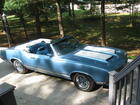
From the late 50's to the late 60's the big 3 US can manufacturers offered a vacuum powered remote trunk release across many makes & models. I've got a couple of '66 big Oldsmobiles with this option. My Dad ordered it with my '66 98 convertible, so "pop the trunk" is something I've been saying for 50+ years.
The system GM & the others used was built by Trico (famous for vacuum controlled windshield wipers & eventually wiper blades). Eventually vacuum systems were superseded by electric solenoid systems which are in use to this day. My guess is an electrical approach was cheaper & more reliable than vacuum. However, my '66 big Oldsmobiles have the vacuum system which are very reliable.
56 years later, I can't complain, but over time the rubber components can leak vacuum. The main effect of leaks is that the system works when the engine is running, but leaks down (loses vacuum) a few minutes after shutting off the engine. Usually when you want to open the trunk, you've parked and want to get your stuff from the trunk. So, ideally, it should work for a few minutes/hours after engine shutdown.
Vacuum trunk releases are a simple system. There are just 3 parts: a dash switch, vacuum line to the trunk, and the trunk actuator. Your engine provides the vacuum source to a dash (or glove box mounted) switch. When you want to open the trunk, a button push provides vacuum suction to the trunk mounted actuator and the "trunk pops".
One great thing about vacuum accessories is you can use a hand vacuum pump to test the parts and find the leaky ones. Switch, hose or actuator as the case may be.
In my cars, the button is in the glove box and is an all plastic switch. Earlier Cadillacs and other makes used a similar design. Some were cast metal which seems better quality than my '66 Olds big cars.
Here are a couple of views of a typical Mid-60's Oldsmobile Trico remote trunk release. Left is what you see in the glovebox of a Trico trunk release equipped '66 Big Olds. Right is a side view.
When servicing these things, well there's not much to service, but you need to observe the vacuum port connections or you'll have a vacuum "hiss" from incorrectly connecting the ports & lines. Here's the correct connection pinout: Typical Mid-60's Trico vacuum trunk release. Observe port assignments or be prepared for a vacuum hiss. Ports are not interchangeable.
Testing & Servicing the Vacuum Trunk Release switch
To test the switch, connect a hand vacuum pump to the switch inbound line (the top port). Pump it up to 15-18" of mercury. If it holds permanently or for at least 5-8 minutes, the switch is good. If it leaks down (loses vacuum) immediately or quickly, it's time for a replacement. Or time for the service hack I show with below.
Disclaimer: With these plastic switches, _Every_One_ I took apart broke a button retention tang on disassembly. You have an upleasant choice - malfunctioning switch that loses vacuum or one that holds vacuum but has a broken retention tang. If your system works and you don't mind the leak down, leave it be. If you're a stickler or want it to work after engine shutdown, read on.
Disassembling the Switch: Pop out the button
These switches weren't really meant to be taken apart 50 years after manufacture. The plastic gets brittle & breaks on disassembly. But it can be made to work. To disassemble, you squeeze the button tang ends together on the rear of the switch with pliers or maybe a small screwdriver and pop the button assemble out. It's spring loaded so do this where you can find parts that fly across the room.
This switch is a parts sandwich. The important part is the slotted rubber diaphragm (vacuum seal) that's normally closed. It opens when you push the button, providing vacuum to the trunk actuator. If you look at the switch from the side, the sandwich layers are as follows: 1 (top) Slotted rubber diaphragm (vacuum seal) installed slot up; 2) What I call the "flattening plate" installed number side up; 3) Tensioning spring installed arch side up (consider rebending to restore tension); 4) Not Factory - folded heavy paper shim.
The paper shim is my hack, not factory. It's making up for lack of pressure from the aging/old tensioning spring to force the diaphragm to seal. Trico vacuum trunk release sandwich with paper shim hack to increase vacuum seal tension against switch housing.
I had to experiment with the right thickness of paper. I settled on a cut-to-fit folded over piece to press the vacuum seal tighter against the switch housing and recreate the seal as it was intended to be. The paper sits beneath the tensioning spring, which sits beneath the flattening plate,which sits beneath the vacuum seal.
Along the way I greased up the buttons & switches with lubricant so it would slide easier. I "restored" or resealed 4 or 5 of these plastic things, but couldn't get any of them apart without breaking one tang. What's good is I didn't break both tangs in any of the leaky ones. Where I wound up was 4 or 5 switches that hold vacuum, but are missing a retention tang.
Final disclaimer: I wound up using a tested-good switch with both retention tangs intact, so I can't vouch for the long term viability of the 1 tang solution. If I didn't have a spare, I'd use the hacked ones, but I had a spare, so no reason to go with "restored" over known-good original.
In my collection I had a few Non-Olds Trico switches which seem better quality than the plastic ones we got. What's cool is the button sizes and hose ports are the same, so I'll probably try a known good cast metal switch in my other car.
Vacuum Line from Dash to Trunk
Olds in '66 used a heavy rubber 5/32" line. You can test yours, but I've never had a problem with my lines. Latter day 5/32" vacuum hose is about half the thickness, so if I were replacing, I'd consider a hardline in the cabin if the interior were out, just to be sure nothing got kinked or cut. This is one of those "they just don't make it like they used to" deals. Insofar as I know you can't but extra-thick 5/32" vacuum hose in 2022.
Trunk Actuator Cylinder
I've been staring at these for decades & wondered what's inside. Credit my curious inner 8 year old. I had a leaky spare, so I took it apart. If I break it, well, it didn't work anyway...
The vacuum pot is "swaged" or basically hammered onto the mehanical part that rotates the latching mechanism. The vacuum port is on the opposite end. Push the button & vacuum sucks the latch open. Then when vacuum is released, a spring inside returns the cylinder to its starting position for next time.
What fails in these things is a rubber vacuum seal that sits just above the spring return cup. In the photo below it's just to the left of the spring cup. Here are 2 Trico vacuum trunk release actuators: assembled on top; disassembled below. OK in my garage means it holds vacuum just fine. Here's what's inside your Trico vacuum trunk release.
The seal is a specific outer diameter, SAE (not metric) to be sure. It's a L shaped seal, but I'm wondering if the right O ring might work. Off to the hardware store to see if I can hack something up to make it work correctly for the next 50 years...