


'72 H/O Computer?

Thread Starter
Registered User
Joined: Feb 2012
Posts: 29
From: Texas
'72 H/O Computer?
Greetings. I've heard about the computer option on some '72 H/O's but have never seen any pictures. Also heard they were pretty accurate for their time. Anyone have any more info or pics on these?
Registered User
Joined: Apr 2013
Posts: 55
'72 Hurst Digital Performance Computer
They are a very rare option to have. Also were available in the Pontiac Hurst SSJ Grand Prix, just had a different logo on face.
Here's a pic from the '72 H/O brouchure. Notice beside the dash emblem being wrong, this tach shows the Harmon logo vise the H/O logo. Ones optional in the H/O had the same logo as used on the '73-'75 Hurst digital tachs. Second pic is of the one I have in my showcase of collectibles.
Here's a pic from the '72 H/O brouchure. Notice beside the dash emblem being wrong, this tach shows the Harmon logo vise the H/O logo. Ones optional in the H/O had the same logo as used on the '73-'75 Hurst digital tachs. Second pic is of the one I have in my showcase of collectibles.


Registered User
Joined: Apr 2013
Posts: 55
Wish I could explain how it works completely, but never seen a working example or instruction/wiring booklet to describe it accurately.
But as explained in the '72 H/O Press Kit info and brochure, it provided quarter-mile performance in speed and elapsed time. Digital read-out said to be accurate within two percent.
It has six buttons on front faceplate- OFF, SP, TS, ET, CL, RES. Again these were built by Harmon Electronics Inc (same company who later did the digital tachs in the '73-'75 H/Os) and the MOD/PT listed on back of this tach is RACE III.
But as explained in the '72 H/O Press Kit info and brochure, it provided quarter-mile performance in speed and elapsed time. Digital read-out said to be accurate within two percent.
It has six buttons on front faceplate- OFF, SP, TS, ET, CL, RES. Again these were built by Harmon Electronics Inc (same company who later did the digital tachs in the '73-'75 H/Os) and the MOD/PT listed on back of this tach is RACE III.
Registered User
Joined: Jan 2014
Posts: 1
From: Arizona
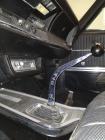
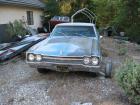
72 Hurst Olds Interior with a Hurst Computer
I took this picture at the 99 nationals in Irving, Texas. This car was a sunroof equipped Hurst Olds.
Last edited by Olds Mob; Jan 14, 2014 at 08:00 PM. Reason: I was wrong about the car being a W-30.

Registered User
Joined: Apr 2013
Posts: 979
From: Grass Valley Ca

Registered User
Joined: Feb 2009
Posts: 2,057
From: Poconos, Pennsylvania
I recall the computer being available on the '73 Hurst/Olds, but not the '72 H/O. Does anyone know how much the computer option cost for the '72 model? Still wondering how the quarter mile elapse time and speed was calculated.
Registered User
Joined: Apr 2013
Posts: 55
As for price, the H/O order form lists it for $369. Never seen original paperwork documented this option so actual price could vary somewhat. Just like the order forms for the '73 & '74 H/Os, they were early and actual prices for the Hurst options did change.
Last edited by jwsolds; Jan 24, 2014 at 08:02 AM.
Registered User
Joined: Oct 2009
Posts: 247
The original Hurst parts order form I have lists the computer/tach @ $99.95, also has the alarm system @ $66.95. Hood stripes @ $23.34 each and Deck stripes @ $20.61 each. This price list is in a NOS box containing a full set of original Hurst reflective decals for a 72.

Registered User
Joined: Aug 2014
Posts: 8
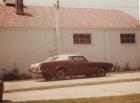
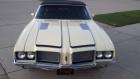
Racetronic III in my 72 SSJ GP
The SSJ I recently acquired with some really neat goodies...
That's the Harmon Racetronic III computer and the car still has the original wheel sensor on it with it's white wire taped to the tie rod from Hurst...
That's the Harmon Racetronic III computer and the car still has the original wheel sensor on it with it's white wire taped to the tie rod from Hurst...
Last edited by morrisangelo; Aug 27, 2014 at 05:11 AM.
Registered User
Joined: Aug 2014
Posts: 8
Thanks, Jon. It's a very unusual Hurst SSJ considering it also received what's called the "El Clasico" package from a company called WISCO (Webasto Sunroof for those in the know).
The neat thing is, Webasto had the same exact address as Hurst Performance back then. They were both under the same roof at 27670 Groesbeck Highway in Roseville. That leads me to believe that Hurst hired Webasto to do most of the conversion work for the SSJ program, and probably the H/O program of that time.
WISCO was effectively a custom conversion shop that modified everything from Cadillacs and Lincolns to everything in between.
The neat thing is, Webasto had the same exact address as Hurst Performance back then. They were both under the same roof at 27670 Groesbeck Highway in Roseville. That leads me to believe that Hurst hired Webasto to do most of the conversion work for the SSJ program, and probably the H/O program of that time.
WISCO was effectively a custom conversion shop that modified everything from Cadillacs and Lincolns to everything in between.

Registered User
Joined: Aug 2014
Posts: 8
Jon,
Yes, on this SSJ, they modified the top to simulate a limousine "look", added the chrome sidebars, added a chrome nose, added very plush gold carpeting, and added a minibar and refrigerator through an opening in the rear seat (the mini-fridge is serviceable through the trunk). These are all options listed in the Wisco El Clasico brochure I bought off of Ebay and those items were usually reserved for Cadillacs and Lincolns, but they somehow agreed to add those items to this GP. I guess if you were able to throw enough money their way, they'd agreed to do whatever you wanted...
I'll try to add some more pictures tonight.
Yes, on this SSJ, they modified the top to simulate a limousine "look", added the chrome sidebars, added a chrome nose, added very plush gold carpeting, and added a minibar and refrigerator through an opening in the rear seat (the mini-fridge is serviceable through the trunk). These are all options listed in the Wisco El Clasico brochure I bought off of Ebay and those items were usually reserved for Cadillacs and Lincolns, but they somehow agreed to add those items to this GP. I guess if you were able to throw enough money their way, they'd agreed to do whatever you wanted...
I'll try to add some more pictures tonight.
Registered User
Joined: Jun 2014
Posts: 1,664
From: Ft. Wayne, IN
Yes, on this SSJ, they modified the top to simulate a limousine "look", added the chrome sidebars, added a chrome nose, added very plush gold carpeting, and added a minibar and refrigerator through an opening in the rear seat (the mini-fridge is serviceable through the trunk).
Registered User
Joined: Aug 2014
Posts: 8
Original Owner Update
Just wanted to post an update (it’s been a while) since I just received a letter from the original owner of my El Clasico SSJ. He revealed a few tidbits that really surprised me:
1) The original owner, a doctor from Kentucky, was flying back from Las Vegas when he saw an ad for the Hurst SSJs in the flight magazine during that trip. During the flight, he decided he was going to buy one.
2) After he got back home, he headed down to his local Pontiac dealership, Parkway Motors in Prestonsburg, KY and coordinated with his friend who happened to be the owner.
3) The dealership owner made arrangements and got the ball rolling by placing the order for the SSJ. The car went straight from the assembly line to the Hurst/WISCO facility in Roseville, MI.
4) About the same time, the doctor flew up to the Hurst/WISCO facility and had a very long meeting with the folks there to determine what options he wanted, and at the same time elected to get the WISCO El Clasico conversion, adding another set of options from that package.
5) About 4 or 5 weeks later, the doctor flew to Roseville a 2nd time to check on the progress of his custom car. Upon arriving at the plant, he was startled to see the car up on blocks, the interior completely stripped out, an unfinished hole torched on the roof, and the mid-section of the header cut out. Hurst told him it was a work in progress and assured him that he would be happy with the results.
6) A few more weeks passed and the doctor got a call from his dealer-owner friend who told him the car had arrived at the dealership. He went straight down to see it and was blown away by how beautiful it was.
7) Unknown to me, this car also came with a battery-powered radar detector installed by Hurst, as well as a “flying goddess” hood ornament installed as part of the El Clasico package. It was styled after the 1938 Cadillac.
8) The car was used only for a short time (1972-1975) and put in 20+ year storage where it was lightly vandalized. The hood ornament and radar detector were swiped, but not much else was taken from the car (the vandals left the mobile phone, the digital computer, and other impossible to replace items). The short usage explains the low 61,000 miles.
9) The doctor’s sons expressed no interest in the car, so it was sold to the 2nd owner somewhere in the mid 90’s. The second owner did a restoration after the car had been neglected in storage.
10) According to the original owner, he paid a total of $16,000 for the dual-conversion Grand Prix back in 1972. Google a conversion for inflation between 1972 and 2014 and you’ll really see how expensive this car was.
11) The car is a PHS-documented model SJ that came straight off the assembly line directly to Hurst. This is unusual because the SSJ ordering process required that the car be a model J due to pin striping issues, and the SJ emblems in the front fender (which left holes when removed). This car still has its original fenders and the holes are present. It looks like Hurst used their emblems to cover the holes after the “model SJ” emblems were removed.
12) Somewhere during the 1972 run, Hurst relaxed requirements and let this SJ through, as well as a blue SSJ, a silver SSJ, and a green & gold SSJ, all of which are documented.
1) The original owner, a doctor from Kentucky, was flying back from Las Vegas when he saw an ad for the Hurst SSJs in the flight magazine during that trip. During the flight, he decided he was going to buy one.
2) After he got back home, he headed down to his local Pontiac dealership, Parkway Motors in Prestonsburg, KY and coordinated with his friend who happened to be the owner.
3) The dealership owner made arrangements and got the ball rolling by placing the order for the SSJ. The car went straight from the assembly line to the Hurst/WISCO facility in Roseville, MI.
4) About the same time, the doctor flew up to the Hurst/WISCO facility and had a very long meeting with the folks there to determine what options he wanted, and at the same time elected to get the WISCO El Clasico conversion, adding another set of options from that package.
5) About 4 or 5 weeks later, the doctor flew to Roseville a 2nd time to check on the progress of his custom car. Upon arriving at the plant, he was startled to see the car up on blocks, the interior completely stripped out, an unfinished hole torched on the roof, and the mid-section of the header cut out. Hurst told him it was a work in progress and assured him that he would be happy with the results.
6) A few more weeks passed and the doctor got a call from his dealer-owner friend who told him the car had arrived at the dealership. He went straight down to see it and was blown away by how beautiful it was.
7) Unknown to me, this car also came with a battery-powered radar detector installed by Hurst, as well as a “flying goddess” hood ornament installed as part of the El Clasico package. It was styled after the 1938 Cadillac.
8) The car was used only for a short time (1972-1975) and put in 20+ year storage where it was lightly vandalized. The hood ornament and radar detector were swiped, but not much else was taken from the car (the vandals left the mobile phone, the digital computer, and other impossible to replace items). The short usage explains the low 61,000 miles.
9) The doctor’s sons expressed no interest in the car, so it was sold to the 2nd owner somewhere in the mid 90’s. The second owner did a restoration after the car had been neglected in storage.
10) According to the original owner, he paid a total of $16,000 for the dual-conversion Grand Prix back in 1972. Google a conversion for inflation between 1972 and 2014 and you’ll really see how expensive this car was.
11) The car is a PHS-documented model SJ that came straight off the assembly line directly to Hurst. This is unusual because the SSJ ordering process required that the car be a model J due to pin striping issues, and the SJ emblems in the front fender (which left holes when removed). This car still has its original fenders and the holes are present. It looks like Hurst used their emblems to cover the holes after the “model SJ” emblems were removed.
12) Somewhere during the 1972 run, Hurst relaxed requirements and let this SJ through, as well as a blue SSJ, a silver SSJ, and a green & gold SSJ, all of which are documented.
Registered User
Joined: Apr 2013
Posts: 55
Thanks for the update & pics! I recognize those two other cars from Florida. There's also a black one down south here.
Cool that you are able to get owner history of it, any vintage pics? Definitely rare & unique, expensive for the time!!
Cool that you are able to get owner history of it, any vintage pics? Definitely rare & unique, expensive for the time!!
pimp ghetto sled lover
Joined: Aug 2010
Posts: 232
From: warwick,ri
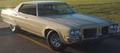
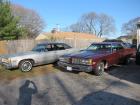
wow that is one badass gp!!! love the superfly pimp package, I have never seen an ssj with an additional package on it, it may be the only one with dual conversions, it is surely a keeper. besides the olds that I have I also have this. 76 golden anniversary model converted by hurst. not technically a hurst car but figured I would share. dave
Registered User
Joined: Aug 2014
Posts: 8
JW, I'm working on getting more info from the original owner, but I'm not holding my breath. One letter from him after a year and dozens of attempt to contact him doesn't bode well for him getting back to me with any vintage picture or additional info.
DJ, that is an absolutely beautiful Anniversary GP. One of the best I've seen and one I'd love to put in my garage. I've always had a fondness of those in particular.
I would venture to say that this is probably the only SSJ that got the 2nd conversion while at Hurst/WISCO. It is a keeper and I'm lucky to have it!
DJ, that is an absolutely beautiful Anniversary GP. One of the best I've seen and one I'd love to put in my garage. I've always had a fondness of those in particular.
I would venture to say that this is probably the only SSJ that got the 2nd conversion while at Hurst/WISCO. It is a keeper and I'm lucky to have it!
Last edited by morrisangelo; Mar 28, 2015 at 09:04 AM.

Registered User
Joined: Jan 2025
Posts: 2
Hurst Digital computer
Wish I could explain how it works completely, but never seen a working example or instruction/wiring booklet to describe it accurately.
But as explained in the '72 H/O Press Kit info and brochure, it provided quarter-mile performance in speed and elapsed time. Digital read-out said to be accurate within two percent.
It has six buttons on front faceplate- OFF, SP, TS, ET, CL, RES. Again these were built by Harmon Electronics Inc (same company who later did the digital tachs in the '73-'75 H/Os) and the MOD/PT listed on back of this tach is RACE III.
But as explained in the '72 H/O Press Kit info and brochure, it provided quarter-mile performance in speed and elapsed time. Digital read-out said to be accurate within two percent.
It has six buttons on front faceplate- OFF, SP, TS, ET, CL, RES. Again these were built by Harmon Electronics Inc (same company who later did the digital tachs in the '73-'75 H/Os) and the MOD/PT listed on back of this tach is RACE III.
Registered User
Joined: Aug 2014
Posts: 8
Paperwork and manuals on these Hurst digital computers is like finding a sliver of that needle in the haystack.
Been digging deep since 2014 and have literally come up with only one brochure from these forums. That's it!
I've even chatted with a guy named Forrest who was the chief engineer/designer of them back in the early 70's and he saved virtually nothing. He's the one who convinced Gene(?) Harmon to market them, and sadly, they were a financial failure.
Been digging deep since 2014 and have literally come up with only one brochure from these forums. That's it!
I've even chatted with a guy named Forrest who was the chief engineer/designer of them back in the early 70's and he saved virtually nothing. He's the one who convinced Gene(?) Harmon to market them, and sadly, they were a financial failure.
Registered User
Joined: Jan 2025
Posts: 2
Morrisangelo
Thank you for your response . I have tried and failed to get info in the past and not even the Hurst / Olds club , which I am a member of , has any info . Not too surprised after almost 30 years of ownership and only seeing a handful of H/Os with the digital computer . Even less cars with the Hurst security system . Thanks again

Thread
Thread Starter
Forum
Replies
Last Post


