When you click on links to various merchants on this site and make a purchase, this can result in this site earning a commission. Affiliate programs and affiliations include, but are not limited to, the eBay Partner Network.
Looking ahead and planning for the correct material and placement of undercoating. Obviously the wheel houses get undercoating but wanted to know other areas that got factory undercoating? Its hard to resist undercoating for protection the whole car underneath but dont want to make it look like Im hiding something. Sometimes less is more. I dont plan on driving in snow or rain or lousy surface but want to protect all my hard work from rocks and chips that may occur?
Also what type of undercoating do you guys recommend? Ive used body shutz (I think thats the name) in the past with the gun that draws right out of container but dont know if this is the way to go?
The undercoating I removed from the car was in more places than the rear wheel wells. Its quite possible the car had undercoating applied after but not sure?
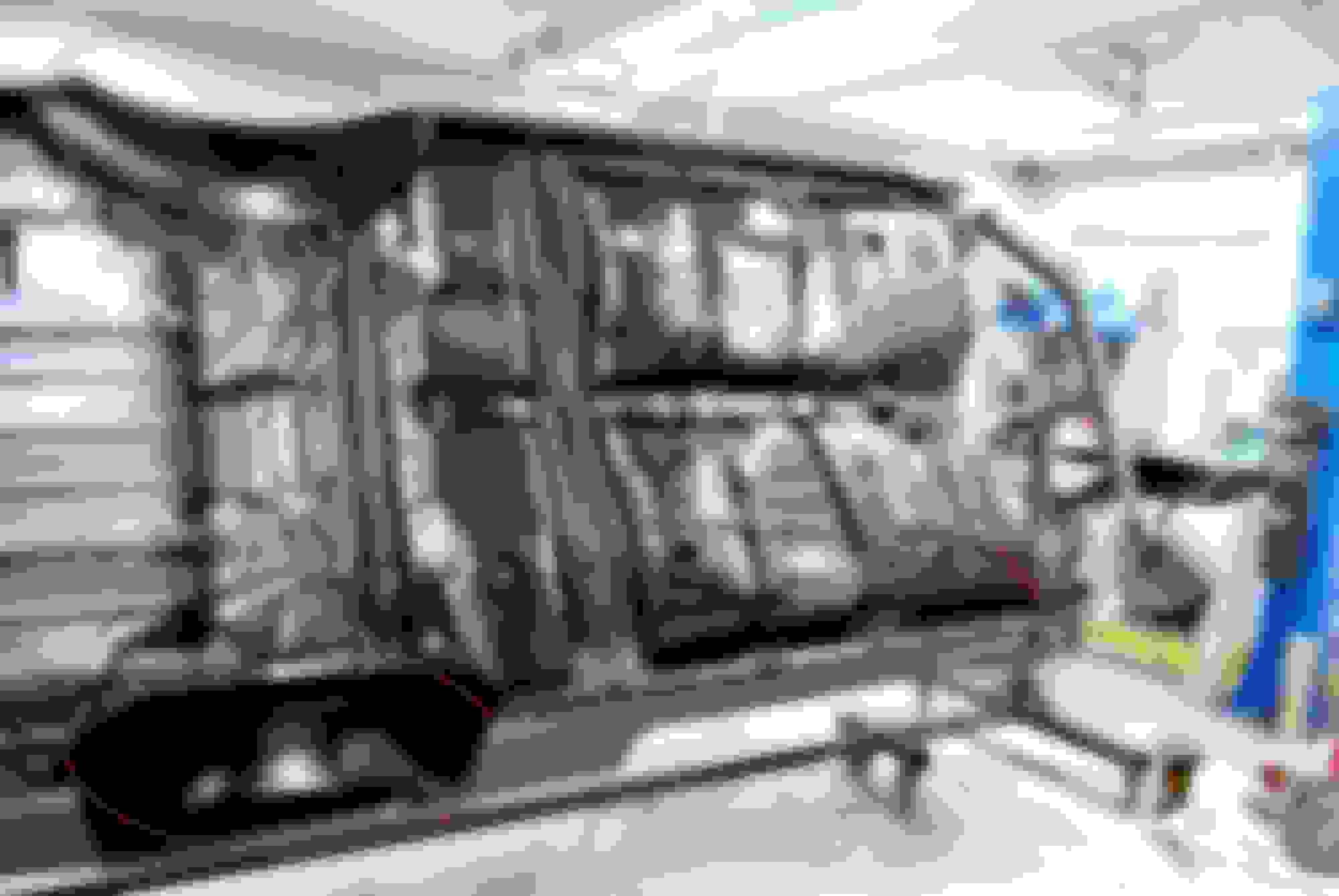
I plan on at minimum to undercoat the highlighted areas. Any thoughts on areas to undercoat and material used? Thx
I believe the W cars used very little undercoat from the factory. They were advertised that way in the dealer specs. The rear wheel wells that I've seen on original cars just had a little sealer/undercoat sprayed in at the parting seam, maybe just a couple of inches wide & that was it. I'm not sure what they did up front.
I don't know if my '68 Lansing 4-4-2 came from the factory or dealer with undercoating, but the entire bottom surface was coated: from the lower edge of the firewall to the rear rear wheel housings, fuel tank, under-side of floor in it's entirety, including trunk where not covered by tank, overspray on portions of the frame, including at the mount points for the rear upper and lower control arms (but not the CA's), and a bit of overspray at the rear of the front inner fender wells. The engine, trans, axle and cross members did not have any on them. Rear shocks had been replaced, so don't know about those.
Scrappie, my 70 W30 was under coated at the dealer when sold new. Sam White Olds in Houston. They sprayed the underbody areas from behind the front fenders and back to the rear bumper. They did not intentionally spray the frame or suspension components but they got a lot of overspray on some of the areas. The fuel tank was fully sprayed and the areas by the back near the fuel filler neck. The middle of the floor pan where the driveshaft tunnel is did not get much undercoat. It looked like they just sprayed around the perimeter of the car. The front of the car did not have any on it. It was a PITA to remove the stuff but it saved the metal from pitting as a lot of the stuff was very pit free after blasting.
Thx I can relate to what a PIA it was to remove. I removed a good amount from my car but forget just how much and where. It seems cars got little if any from factory and was mostly dealer applied if its there.
Did you apply to your car? Id hate to see chips and such on all the work.
Thx I can relate to what a PIA it was to remove. I removed a good amount from my car but forget just how much and where. It seems cars got little if any from factory and was mostly dealer applied if its there.
Did you apply to your car? Id hate to see chips and such on all the work.
No I did not apply undercoating. I did apply Rapter lining under the body while it was on the rotisserie. It goes on super thin compared to undercoat and leaves a slight texture but still shows all the seams and welds so it looks real clean and not heavy like a bed liner. Seals all the gaps nicely from water. Sprays on like paint. It is super hard but can be repaired if needed. I know it’s not factory but I plan on driving the car and did not want chipped paint. This will not chip nearly as easy as paint. Suspension components are painted like factory finishes but they can be removed and repainted easy if needed.
I worked at a Chevy , Pontiac , and Buick dealer from 1966 thru 1968 .
I can tell you that the cars , as they came from the factory off the transporter , were never undercoated .
The body panels were all EDP primer . The chassis was painted with a cheap black paint .
Some parts , such as the driveshaft , some axles , brake drums , etc . were bare steel and starting to rust .
Our dealership sold undercoating jobs to new car buyers .
Although it was sometimes " thrown in " to make a sale .
One of my jobs there was to undercoat new cars .
I was taught to cover the body panels , particularly the wheel wells . But not so much the frame .
Any undercoat on the driveshaft was a no-no , as it could upset the balance .
The undercoating was sold as a rust protection . It was the opposite .
The asphalt based undercoat would start to harden after 5 to 10 years and actually separate from the metal .
This left a pocket that would trap salt - laden water,
I've actually peeled thick undercoat from the bottom of an old car and seen nothing but rusty " cornflakes " underneath .
No I did not apply undercoating. I did apply Rapter lining under the body while it was on the rotisserie. It goes on super thin compared to undercoat and leaves a slight texture but still shows all the seams and welds so it looks real clean and not heavy like a bed liner. Seals all the gaps nicely from water. Sprays on like paint. It is super hard but can be repaired if needed. I know it’s not factory but I plan on driving the car and did not want chipped paint. This will not chip nearly as easy as paint. Suspension components are painted like factory finishes but they can be removed and repainted easy if needed.
Thx for the info
I see the raptor liner is a truck bed liner is this what you used?
I worked at a Chevy , Pontiac , and Buick dealer from 1966 thru 1968 .
I can tell you that the cars , as they came from the factory off the transporter , were never undercoated .
The body panels were all EDP primer . The chassis was painted with a cheap black paint .
Some parts , such as the driveshaft , some axles , brake drums , etc . were bare steel and starting to rust .
Our dealership sold undercoating jobs to new car buyers .
Although it was sometimes " thrown in " to make a sale .
One of my jobs there was to undercoat new cars .
I was taught to cover the body panels , particularly the wheel wells . But not so much the frame .
Any undercoat on the driveshaft was a no-no , as it could upset the balance .
The undercoating was sold as a rust protection . It was the opposite .
The asphalt based undercoat would start to harden after 5 to 10 years and actually separate from the metal .
This left a pocket that would trap salt - laden water,
I've actually peeled thick undercoat from the bottom of an old car and seen nothing but rusty " cornflakes " underneath .
Thx for the info
I see the raptor liner is a truck bed liner is this what you used?
yep, bed liner is one of the uses. But it is also used as an undercoating like I used. It’s not as thick like your typical bed liner you may see in a truck. It sprays on as thin as you want and leaves a slight texture. It’s all how you spray it. Advantage over paint is it is real hard and won’t chip. I have seen it under other restored cars that are driven and it looked new even in the wheel wells many miles later. Disadvantage is because it’s a hard coating it will not dampen out the noise of debris kicked up in the wheel wells like the soft thick original undercoating will. I can PM you a few pics if you want.
I worked at a Chevy , Pontiac , and Buick dealer from 1966 thru 1968 .
I can tell you that the cars , as they came from the factory off the transporter , were never undercoated .
The body panels were all EDP primer . The chassis was painted with a cheap black paint .
Some parts , such as the driveshaft , some axles , brake drums , etc . were bare steel and starting to rust .
Our dealership sold undercoating jobs to new car buyers .
Although it was sometimes " thrown in " to make a sale .
One of my jobs there was to undercoat new cars .
I was taught to cover the body panels , particularly the wheel wells . But not so much the frame .
Any undercoat on the driveshaft was a no-no , as it could upset the balance .
The undercoating was sold as a rust protection . It was the opposite .
The asphalt based undercoat would start to harden after 5 to 10 years and actually separate from the metal .
This left a pocket that would trap salt - laden water,
I've actually peeled thick undercoat from the bottom of an old car and seen nothing but rusty " cornflakes " underneath .
I know this is an old thread, but I am removing `1/4" of thick crumbly, tar like undercoating from my 1969 ninety-eight. The rear lower panels and wheel wells are exceptionally thick. Knowing my Grandfather, he probably took it back for touch ups every couple of years and they just added more. I am removing all of this and I am going with black epoxy primer and some kind of black chassis paint.
The undercoating was sold as a rust protection . It was the opposite .
The asphalt based undercoat would start to harden after 5 to 10 years and actually separate from the metal .
This left a pocket that would trap salt - laden water,
I've actually peeled thick undercoat from the bottom of an old car and seen nothing but rusty " cornflakes " underneath .
100% correct. Resist applying tar to anything but your driveway. Steer clear of the undercoating vendor that starts with a "Z"
That said the rear wheel well should have a seam seal on the inner to outer seam and sound deadener/tar in the whole well. I've seen light applications above the tailpipes and on the floorboards partially up the firewall, Likely dealer applied or deadener. My 68 Fremont car has this but it's very light. Looks more like a deadener.
Fluid film, LPS, Krown, Corrosion Free etc should be applied to all inner seams and inner frame areas. Or douse with zinc chromate primer and a top coat. Eastwood sells an inner frame sealer kit.
This is a 2011 F250 driven in the NE salt belt treated annually with Krown. The Krown is fresh in the pics. Granted you don't want to sauce a fresh resto like this. But the hidden areas would surely benefit.
Why anyone in damp or salty areas would not do this to preserve a new bizillion-dollar new car is just uninformed. Fords start rusting 30 sec after assembly and will rot in 5 years unless this precaution is exercised.
This is my middle finger at the salt gods and tin worms!