


Points to HEI Distributor problem


Thread Starter
Registered User
Joined: Oct 2007
Posts: 97
From: Staten Island, NY
Points to HEI Distributor problem
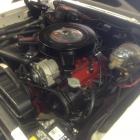
I just installed an HEI distributor into my 70 442 this weekend.
As per a members experience I installed a relay under the hood to power up the distributor.
I used the positive coil wire to activate the relay coil. The car started and ran great but when I turned the key off the car kept running and the alternator light remained on in the dash.
I could shut the car off by either removing the alternator plug or disconnecting the relay.
So I removed the positive wire from the firewall connector and ran a straight wire from the firewall connector to the relay and the same thing happened.
Anyone experience this?
Joe
As per a members experience I installed a relay under the hood to power up the distributor.
I used the positive coil wire to activate the relay coil. The car started and ran great but when I turned the key off the car kept running and the alternator light remained on in the dash.
I could shut the car off by either removing the alternator plug or disconnecting the relay.
So I removed the positive wire from the firewall connector and ran a straight wire from the firewall connector to the relay and the same thing happened.
Anyone experience this?
Joe
Thread Starter
Registered User
Joined: Oct 2007
Posts: 97
From: Staten Island, NY
I used a Bosch style relay.
#30 to Batt +
#87 to dist 'Batt' term.
#86 to ground
#87 is connected to ignition. I removed the resistance wire from the engine side firewall connector and installed a wire with the proper connector into that slot.
I will double check all my wiring tonight and let you know if I had a senior moment.
Joe

Registered User
Joined: Feb 2009
Posts: 11,878
From: Brazil Indiana
Here is what I did.
I used a Bosch style relay.
#30 to Batt +
#87 to dist 'Batt' term.
#86 to ground
#87 is connected to ignition. I removed the resistance wire from the engine side firewall connector and installed a wire with the proper connector into that slot.
I will double check all my wiring tonight and let you know if I had a senior moment.
Joe
I used a Bosch style relay.
#30 to Batt +
#87 to dist 'Batt' term.
#86 to ground
#87 is connected to ignition. I removed the resistance wire from the engine side firewall connector and installed a wire with the proper connector into that slot.
I will double check all my wiring tonight and let you know if I had a senior moment.
Joe
You will have an 87 and 87a. 87a will not be used. with 86 to ground you need the the 85 to the ignition wire. Still use 30 with the batt + and 87 to the batt terminal of the distributor.
Connoisseur d'Junque
Joined: Sep 2010
Posts: 21,183
From: The Hudson Valley
85 and 86 are your pull-in coil terminals.
One needs to go to the hot wire from the ignition switch, the other to ground.
30 and 87 are your switched leads.
One needs to go to the battery (+), the other to the BAT terminal on the HEI.
Either you got one of those relays with two #87 output terminals, or you have just written the wrong digit when typing this post.
Your ignition wire should be connected to the #85 wire.
Recheck all of your connections, and check them with a test light, then get back to us.
The point of the relay is to be able to operate the ignition off of the resistance wire.
If you've removed the resistance wire, just hook the new wire right up to the HEI.
- Eirc

Old(s) Fart
Joined: Mar 2007
Posts: 50,768
From: Northern VA
If you've already gone through the problem of replacing the resistance wire with copper, why are you even screwing around with the relay in the first place? The only reason to use the relay is to avoid replacing the wire - the 9v will hold the relay in. In your case, ditch the relay and run the two wires (one from the START terminal, and this one you've replaced from the RUN terminal) directly to the BATT terminal on the HEI. You're done.

Registered User
Joined: Dec 2013
Posts: 37
From: pensacola, fla, kyzercd71@yahoo.com
it just needs a # 10 wire from switch, don't need a relay, have changed 50 or so over my 40 years as a mech my e mail kyzercd71@yahoo.com, e mail me, ill call you. It must have the # 10 wire for right voltage to dist
Old(s) Fart
Joined: Mar 2007
Posts: 50,768
From: Northern VA
it just needs a # 10 wire from switch, don't need a relay, have changed 50 or so over my 40 years as a mech my e mail kyzercd71@yahoo.com, e mail me, ill call you. It must have the # 10 wire for right voltage to dist
Connoisseur d'Junque
Joined: Sep 2010
Posts: 21,183
From: The Hudson Valley
- Eric
Registered User
Joined: Apr 2012
Posts: 2,972
From: New Mexico
On a car that has been converted from points you must have TWO wires - one that provides +12V in the START position on the ignition switch and one that provides +12V in the RUN position. The former is already in the harness (the yellow wire to the coil). The other is the resistor wire that the O.P. has apparently already replaced, so it's also already there. The relay has been suggested as a way to avoid replacing the resistor wire only, for someone who doesn't want to hack the stock harness. Personally, I see it as an added complexity, but it does work.
Old(s) Fart
Joined: Mar 2007
Posts: 50,768
From: Northern VA
If the ignition switch is wired in a way that ensures that wire is hot in both START and RUN positions, you only need the one wire. That's not always the case.
Connoisseur d'Junque
Joined: Sep 2010
Posts: 21,183
From: The Hudson Valley
To elaborate on what Joe said:
Earlier ignition switches (something like '67 and earlier) would turn power to the IGN circuit off when you rotated the key to the START position, so that there was no power to the coil when cranking. This was overcome by the "R" terminal circuit in the starter solenoid, which provides power to the coil while the starter is engaged.
If you have one of these ignition switches, you have to use the yellow wire from the "R" terminal to the coil (+) terminal, or the car will start erratically.
Aside from that, cars that use a ballast resistor (which remains in use with the Crane trigger, the MSD trigger, and some others) will start much more easily when hot if that wire is left connected.
- Eric
Earlier ignition switches (something like '67 and earlier) would turn power to the IGN circuit off when you rotated the key to the START position, so that there was no power to the coil when cranking. This was overcome by the "R" terminal circuit in the starter solenoid, which provides power to the coil while the starter is engaged.
If you have one of these ignition switches, you have to use the yellow wire from the "R" terminal to the coil (+) terminal, or the car will start erratically.
Aside from that, cars that use a ballast resistor (which remains in use with the Crane trigger, the MSD trigger, and some others) will start much more easily when hot if that wire is left connected.
- Eric
azure blue 442
Joined: Sep 2013
Posts: 103
From: Mount Forest,Ontario, Canada
If you pull the regulator plug at the alternator when the car is running with the ignition off and it quits, you have voltage backfeeding to the relay.
If this is the case you can buy a zener diode rated higher than the backfed voltage read at the relay coil. The relay only requires a small voltage to hold in, so this type of thing does happen. They are very cheap. Install the zener diode in positive line to the relay coil.
If this is the case you can buy a zener diode rated higher than the backfed voltage read at the relay coil. The relay only requires a small voltage to hold in, so this type of thing does happen. They are very cheap. Install the zener diode in positive line to the relay coil.
Last edited by dmullin; Jun 10, 2014 at 05:58 PM.

Old(s) Fart
Joined: Mar 2007
Posts: 50,768
From: Northern VA
A zener diode has properties that allow it to limit or "clip" voltage when wired across the legs of a circuit. Think of it as a sort of voltage regulator, or, more correctly, voltage limiter.
Unlike a normal diode used as a "one way valve" and wired in series, a zener gets wired like this.


Old(s) Fart
Joined: Mar 2007
Posts: 50,768
From: Northern VA
LucasReplacementSmokeKit1.jpg
Registered User
Joined: May 2009
Posts: 1,009
From: Woodland WA
Very funny Joe and Eric. A friend who helped me wire my first hot rod started by holding up a piece of wire and said "do you know what this is?" Unsuspecting, I said "a wire." "No" he says, "its a smoke machine and our job is to keep the smoke from coming out."
re. the Lucas Smoke Jar: Many are the BSA and Triumph motorcycles whose electrics confounded me. I didn't know motorcycles could run for extended periods of time free of electrical hobgoblins until I bought my first Honda 750.
Jerry
re. the Lucas Smoke Jar: Many are the BSA and Triumph motorcycles whose electrics confounded me. I didn't know motorcycles could run for extended periods of time free of electrical hobgoblins until I bought my first Honda 750.
Jerry
Registered User
Joined: Apr 2012
Posts: 2,972
From: New Mexico
Registered User
Joined: Apr 2012
Posts: 2,972
From: New Mexico
azure blue 442
Joined: Sep 2013
Posts: 103
From: Mount Forest,Ontario, Canada
The OP could have wired his ignition correctly and have this problem. The ignition switch when turned off only opens the circuits to main battery supplies. Keeping in mind that the internal regulator only grounds out the line to the gen light when alternator output is low, that leaves an electrical path to the run terminal of the ignition switch. Potentially (no pun intended) this line could have enough voltage to hold in the relay that is also connected to the run terminal. At lower voltage levels this current can pass through the gen light without too much voltage drop. Also keep in mind that most relays/contactors will hold in at a fraction of proper pull in voltage.
Administrator
Joined: Oct 2009
Posts: 42,475
From: Poteau, Ok
If the car turned off before the new install, it should turn off after. The relay should be triggered by the old coil wire. Then close or open the normally open contacts to supply full battery voltage to the distributor. It's either on or off.

azure blue 442
Joined: Sep 2013
Posts: 103
From: Mount Forest,Ontario, Canada
Upon rereading the OP post it is clear where the power is coming from to power the relay coil. The positive potential from regulator term 1 is causing current flow through the gen bulb and then through the relay coil to ground.
You could put a standard diode in the path between alt term 1 and its currently connected wire if you don't mind cutting your harness. The zener diode was to avoid that.
You could put a standard diode in the path between alt term 1 and its currently connected wire if you don't mind cutting your harness. The zener diode was to avoid that.

Thread
Thread Starter
Forum
Replies
Last Post
joepenoso
General Questions
28
Jun 4, 2014 01:56 PM


