When you click on links to various merchants on this site and make a purchase, this can result in this site earning a commission. Affiliate programs and affiliations include, but are not limited to, the eBay Partner Network.
I have a thread called something like Winter Project, on my phone at the moment, the paddle was awful in my hands. Would not recommend use on frontend of an A-Body.
I tried using a spring compressor on my Cutlass front springs and determined it was much easier to NOT use a spring compressor. It’s easier to jack the front end up way high, put a floor jack under the lower control arm, separate the ball joint, and lower the control arm until the spring falls out.
Now on my newer vehicle with front struts the spring compressor was mandatory.
I tried using a spring compressor on my Cutlass front springs and determined it was much easier to NOT use a spring compressor. It’s easier to jack the front end up way high, put a floor jack under the lower control arm, separate the ball joint, and lower the control arm until the spring falls out.
I considered that a very viable option. I have excellent floor jacks & stands. I know others have confidence in that method. My luck....I thought...well...let's not test the waters.
I considered that a very viable option. I have excellent floor jacks & stands. I know others have confidence in that method. My luck....I thought...well...let's not test the waters.
I’m with you chief! The pucker factor would be nearing redline lol that can crush walnuts lol although guys do it mater of factly , I used the double hook compressor
I have used a similar one, but I think It had a plate on both ends. I was doing the coils on a caprice and the regular old hook style would not fit. I think I got mine at oreilly, and I think I kept it I like it so much
I tried using a spring compressor on my Cutlass front springs and determined it was much easier to NOT use a spring compressor. It’s easier to jack the front end up way high, put a floor jack under the lower control arm, separate the ball joint, and lower the control arm until the spring falls out.
Kenneth,
My problem with that is, there's not currently an engine or even front sheet metal on it at this point. I imagine a bound spring would lift an empty chassis up a LOT quicker than I'd like.
Vintage Chief... I've never seen this style. I like the idea of the design, but how wide are the discs? Looks like they could slide out?
Rallye469... that is what I have. It comes with two sets of different diameter plates. For what I needed it was good.
I had a caprice chassis only that I was stripping to rebuild, it had no weight on it at all so I had to try this compressor. I have personally had good luck removing them with a floor jack. when there is an engine and car body supplying some weight
This is kind of interesting... I like the idea of using the top of the frame to retain the spring...although I've never seen anyone drop the lower control arm to change a spring.
That worked great. He mentions using the same method to re-assemble everything. I would worry about the threads on the nut when applying that kind of force. I'm not saying I would not try it, but I would at least lubricate everything a lot. Im not an engineer but I think that the square threads on most of the commercial tools are much better at handling these forces.
Kenneth,
My problem with that is, there's not currently an engine or even front sheet metal on it at this point. I imagine a bound spring would lift an empty chassis up a LOT quicker than I'd like.
Vintage Chief... I've never seen this style. I like the idea of the design, but how wide are the discs? Looks like they could slide out?
Peter, I have one like that (OTC)..
It works really slick.
I bought it after one I borrowed from O'Reilly's nearly killed me.
[QUOTE=Rallye469;1545830]I’ve just started seeing these new paddle style spring compressors. Has anyone used one?
or is it better to stay with the old tried and true?
/QUOTE]
I have a snap-on spring compressor like the one shown above. It is all I have ever used in the last 20 years on A-body and F-body springs.
If there is no engine or weight of the front of the car, you can still use a floor jack with a little MagGyverism.
Figure a way to secure a chain or a substantial strap (I used the straps to tie down my car to the trailer) to one side of the jack, wrap it up and over the frame, then secure it to the other side of the jack. Now the car won’t lift away from the jack as your compressing the coil.
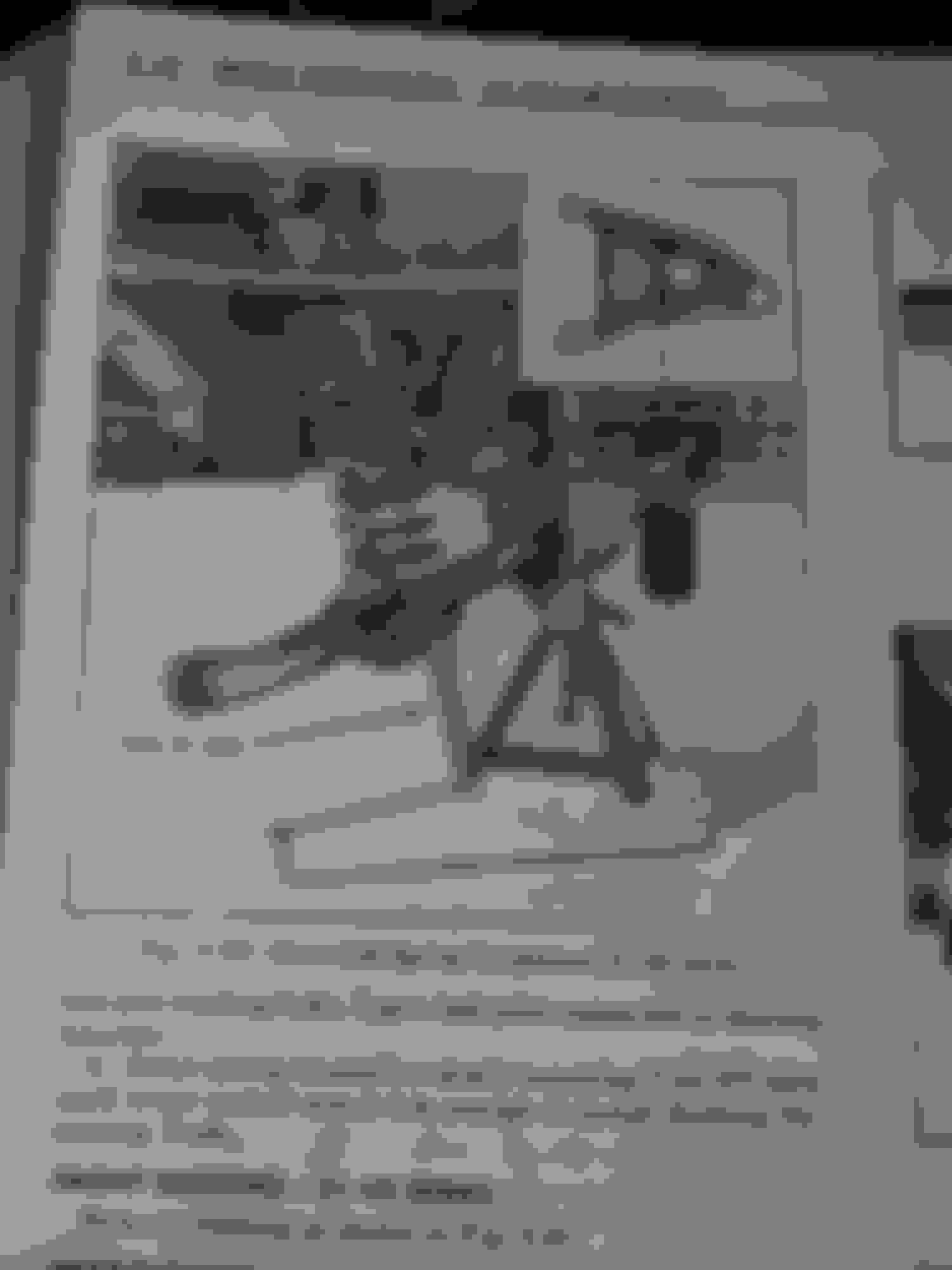
The coil spring compressor that uses the upper shock mounting hole in the frame is apparently based on the factory Burroughs Tool BT-6505. I found one of these on ebay a few years ago. It is MUCH easier to install front springs this way. Note, by the way, that the factory recommended method is to attach the ball joint first, then use the tool to compress the spring and fit the bushings into the frame pockets. I was unsure about this method before I tried it, but once again, the factory recommended way and tools is the right one. The advantage of pivoting on the ball joint is that the spring stays straight during the compression. If you install the bushings first, the spring must bend to fit into the upper and lower pockets, which is very difficult to do even with a center compressor tool. This is why the upper end of the spring frequently gets out of place in the spring pocket. The other advantage of the factory tool is that the crank arm on the lower end keeps your arm out from under the compressed spring during this operation.
Damn that’s pretty cool Joe. Always wondered how the factory assembled them as well.
Thanks for sharing that.
Actually that's not how the suspension was put together on the assembly line, this is for the dealership service department. On the assembly line, the frame was mounted upside down. Hydraulic/pneumatic fixtures compressed the springs as the suspension was installed. Once that was done, the frame was flipped right side up. I witnessed this during a tour of the Framingham plant with the Boy Scouts in the 1970s. This photo is the Impala assembly line, but you get the idea.
On the assembly line, the frame was mounted upside down. Hydraulic/pneumatic fixtures compressed the springs as the suspension was installed. Once that was done, the frame was flipped right side up.
Did you ever wonder what those thin tinnerman nuts on the wheel studs between the brake drum and wheel are for?
They are there to insure that the brake drum doesn't fall off when the chassis is flipped over.
Did you ever wonder what those thin tinnerman nuts on the wheel studs between the brake drum and wheel are for?
They are there to insure that the brake drum doesn't fall off when the chassis is flipped over.
Interesting...that's cool. Another interesting piece of insider knowledge. I don't have a vociferous appetite for understanding development of assembly line engineering; yet, I find their historical evolution quite interesting.
Did you ever wonder what those thin tinnerman nuts on the wheel studs between the brake drum and wheel are for?
They are there to insure that the brake drum doesn't fall off when the chassis is flipped over.
Exactly. The light blue 1985 Delta 88 that I bought a few years ago had 5,100 original miles on it and those tinnerman nuts were still on the rear brake drums. That's how original the car was.
I have used this style to install Moroso drag springs with out the engine in the car. The tool was USA made not the Amazon ebay grade you find today. The reason I bring this up is because it wasa little sus as the spring did not compress strait. The job is so much easier with a full weight front end as you do not need to compress the spring as much. I have done six cylinder springs, 442 springs and Moroso springs with this compressor with the engine in the car with out any drama.
I just can’t see how you get that long shaft out once the spring is in place.
edit: the dual hook style - your first image.
I have one of those also. I've always resorted to completely unscrewing the threaded shaft so it drops out through the shock absorber hole, then you have to reach through the coils of the spring to manipulate the two hook parts to maneuver them through the shock hole. It's a PITA.
Thank you Loaded68W34…
I liked the idea of collapsing the spring into the control arm (or the spring pocket).
This was the easiest removal (and at least felt the safest) that I’ve ever done.
Vintage, did you put the fork through the spring or on the bottom of the arm?
I swear this way was very easy.
I will note one problem, the block with the swing arms was just a tad too big to go up through the lower A-arm.
So I slightly rounded off the corners… very little material was removed.
Just an update. I pulled the coils out of a g body this morning. After removing the driver side with a jack the coil was still too long and was in a bind with the lower control arm swung loose.
i actually remembered this thread and remembered I had a compressor in my file cabinet.
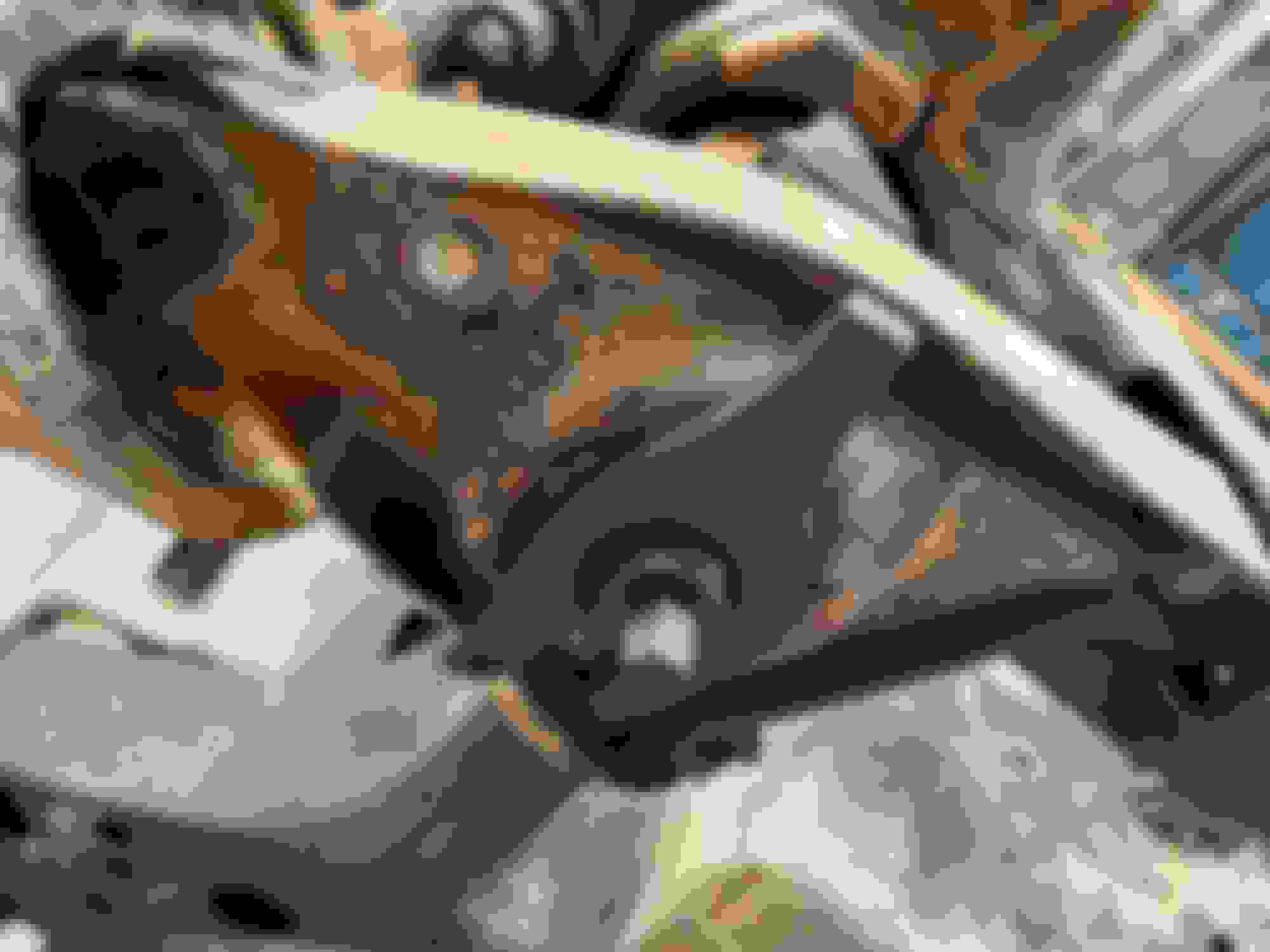
So the top plate slips in and the you “thread” it up into to coil spring pocket. The bottom does the same and threads down. Insert the tool. Twist it into place to lock and tighten up.
I was able to pull the spindle drop the lower control arm and just pull the spring and tool out as one
It’s a tad different than the one we were talking about earlier.
it is EWK brand for the Mercedes w123 and w114 chassis
works great on b body and g body so far.
Last edited by mattking; Mar 16, 2024 at 08:32 AM.