When you click on links to various merchants on this site and make a purchase, this can result in this site earning a commission. Affiliate programs and affiliations include, but are not limited to, the eBay Partner Network.
I live in Texas where 100 degrees or more is common for 9 months out of the year. This winter, I pulled the 330 and put in a freshly rebuilt Oldmobile 455.
I also in stalled the largest Vintage Air Under the Dash.
I started off by installing a brand new 3 core aluminum radiator with fan clutch. It worked pretty well as long as the ac was off and the car moving. Turn on the ac and pull up to red light with ac on and watch the temp. needle move like it's the speedometer. Turned off engine at 230 and let cool.
I replaced the 3 core with a 4 core aluminum. Almost no change. What was clear, as long as the car was above 50 miles an hour, there was no issue running the ac.
That told me airflow was my problem. I then installed two 8 inch pusher electric fans along with a flex fan. There was no change.
Yesterday, I removed the flex fan, installed a Flex A Lite Dual 13.5 puller (4600 cfms) with two 8 inch pusher fans on the condesor all four fans come on at 185 degrees and instantly if the the ac is activated. I made sure that all edges between radiator shroud are tight. The shroud in this case covers 98 percent of the radiator.
Yesterday, it was about 70 degrees. The cooling performed at designed. Even still in not so hot enviorment, the ac pushed the temp to about 210. I built this car in lieu of a trailer queen. It is a daily driver, minus rain days and I'm trying to get it right.
If I remove the four core aluminum radiator for a four core brass radiator, will the brass radiator disipate substantially more heat. It is expensive as hell and I would really appreciate any responses and or pointers. Thank you
Ok, so you are firing the parts cannon and doing the wrong things. The radiators are fine. What is your thermostat? Use a super flow 185. Is your gauge accurate? Have you confirmed that? If you can go down the road and hold the the thermostat temp, then the radiator is fine. No need to replace it.
Get rid of all the electric pusher fan junk. Put on an oem clutch fan. Make sure the air dams and masticated rubber strips are there.
City Motors Supply, Dallas, Texas did the rebuild. The pistons were sleeved.
I am running the car with no thermostat.
I did set the car up with an oem fan clutch and made sure the shroud had no leakage. In this scenario, with a four core aluminum radiator, it would run cool as long as the ac was not. At a red light with ac, 230 degrees before shutting it off, ambient temp 85 degrees. No thermostate installed.
I then added pusher fans, no results.
My timing was set by the shop and they seem to know what their doing but I will look into getting the timeing double checked but I will tell you the car sounds like it should and drivability, is quick. Also the car seems a lot lighter with no pulley fan.
I then removed the oem for puller and pusher fans. made sure there are no cfm leaks around the edges of the air dam. The car is running much cooler. With AC on at a dead stop at idel is will run 200 to 210. but that is in 70 degree amdient. I have yet to see a day when ambient temp reaches 90 degrees plus.
Ok, so you are firing the parts cannon and doing the wrong things. The radiators are fine. What is your thermostat? Use a super flow 185. Is your gauge accurate? Have you confirmed that? If you can go down the road and hold the the thermostat temp, then the radiator is fine. No need to replace it.
Get rid of all the electric pusher fan junk. Put on an oem clutch fan. Make sure the air dams and masticated rubber strips are there.
Running an engine without a thermostat is not recommended as it disrupts the designed cooling cycle, often leading to overheating.
A 185–195°F thermostat acts as a necessary flow restrictor, allowing coolant to remain in the radiator long enough to dissipate heat effectively.
Operating without one can cause the coolant to circulate too quickly, reducing radiator efficiency and causing the engine to run too cool or overheat
Try installing a T-stat and report back.
10x dump the electric fans in favor of a high quality OEM style clutch fan with a factory shroud.
The fan blade depth into said shroud is critical too.
Did I read your comment correctly that you're running BOTH pusher and puller electric fans? Do you really have 4 electric fans installed? If so, you're likely restricting airflow through the radiator (surface area). You should be fine with 2 quality electric fans on the engine side of the radiator to pull air through at the set temp of the sensor. Other comments above from the group are all valid.
Fan blades should be half way into the shroud. Mechanical ignition advance is set with the vacuum advance line disconnected, and should be around 35 degrees total at high rpm. The vacuum advance should then be connected and is one of the keys to keeping the engine cool on the street. Make sure it is working using the timing light and adding up to 10 or so degrees when manifold vacuum is high.
Last edited by Run to Rund; Apr 9, 2026 at 03:20 PM.
X 2 on any masticated rubber strips. In ‘67 there should one per side keeping air from going around the radiator, one on the bottom keeping it from going under the core and maybe one on top stopping it from going over the radiator. Fusick used to sell the material by the roll so you could (ahem) roll your own. Not sure if they still do.
In effect, these radiator curtains as Olds called them, act like a front shroud forcing incoming air across the radiator core instead of letting cooling air go around, on top, or under it.
So that’s the front side of the radiator. I found a full set of curtains really helped.
I have a more mild version of your problem with my ‘66’s. And there’s the rear-side shroud to consider too. First, your shroud should cover then entirety of the rear side of the core. Olds chaeped out in ‘66 and big cars had only partial coverage. Your Cutlass shouldn’t have that problem. I went maybe a little overboard and lined the leading edge of my factory shroud with some rubber seals from Trimlok to be sure the factory 7 blade fan (Hayden fan-clutch operated) pulled all the air through the fan. I.e. no air leaking out around the rear outer,lower or upper edged of the rear of the core either.
Chemically, your coolant mix may matter too. My system calls for 17.4 quarts which is more or less 4 gallons. I put in 1 gallon of green antifreeze, 2 bottles of “Water Wetter” secret sauce, fill to the top (and my recovery tank) with distilled water. This leaves me somewhere around 70/30 distilled water to coolant. I must confess the puke tank is not factory, but GM used them on most models in the 70’s so I conclude the cooling system design got better. I use ‘74-75 Eldorado or Caddy puke tanks mounted on the passenger side of the top rail of my radiator cross bar.
That’s where I’m at today in SF, CA, but admittedly my cars run a bit warmer in traffic or low speed than I’d like, but I’m o.k. for now.
Many years ago (1980’s) I had a TH-400 that was going wrong and made the engine work so hard that it overheated. While you’re checking, have someone look at the trans too if you run out of ideas or suspect it’s not working right.
Hope these ideas give you some stuff to try.
Chris
You were and are correct. I was running four fans, two pushers and two pullers. I have dual 13.5 inch ( flex a lite, advertised 4600 cfm) puller fans with shroud that covers the entire core and is sealed against the radiator. Installing the puller fans and removing the pusher fans made a hughe difference.
I will reinstall the thermostat.
The issue is no longer city/low speed cooling. I can sit at a red light and the engine runs about 190 degrees. The issue is city driving and turning on the ac. The space between the vintage air condeser and the radiator is 1.5 inches all methodically air sealed on the sides.
80 degree ambient and it will run close but not quit 220 degrees. All this sounds great but here in Texas in the next few weeks, 100 degrees for more than half the year is common. My goal is to try and lower the engine temp by about 15 to 20 degrees. My next step is to pull the four core aluminum raditor and install a new (cooper/brass radiator). Does anyone have experience or opinions on the oem four core copper brass radiator verses the a four core aluminum? And does anyone know if it is worth the extra mone to buy a triple flow cooper/brass radiator compared to the oem?
All opions greatly apprecia
I'm not sure if you have seen the top of this thread. I have attempted to solve this issue pragmatically, and I mean no disrespect and I am grateful for your advise. The engine was rebuilt. Someone asked about the cylinder walls possibly being too thin, however the shop used a sleave kit. So I don't think the cylinder walls are too thin but I conceed, I could be wrong. We installed a 7 blade fan with oem fan clutch and factory shroud with the fan half in and half out. Timing was checked and then rechecked. Anti-Freeze is green 50/50. There are no vaccum leaks. This configuration worked for early spring in Texas. Once the weather reached 80 degrees, highway driving was 200 ish until city driving reached 220 degrees. At a red light, with the ac on, the needle would go up to 230 before turning the engine off. You are advising me to go back to the oem configuration that I just un-installed because it was not pulling enough cfms accross the four core radiator. My first correction attempt was to remove the 165 degree thermostat. I'm going to install a 180 degree thermostat in a week or two and see if I get a small drop in temp.
My next step was to put two pusher fans and a flex fan with and without a thermostate which failed miserably.
My next step has been awesome! I removed the pusher fans off the condeser, pulled the $130 flex fan and installed a flex a lite dual 13.5 puller fans that comes with a shroud that covers the entire core. CFM, as advertised 4,600 cfm, true or not I don't know, but they are clearly pulling a pretty large amount of cfms.
Whether on the highway or city, 80 ambient degrees, the temp is 190 sometimes, 200 degrees which is perfect. Now turn on the ac and it takes awhile but it will go to 220 in 80 degrees plus envoirnment. This configuration is working but I'm concerned about June when outside temp will be 25 hotter on 105 degree days and then caught in bumper to bump traffic. Also, Vintage Air condeser is has a gap of 1.25 inches from the radiator and all edges have been sealed.
My thought pattern here, is that I have read that the old brass/copper radiators work better than the aluminum radiators. I've also read about triflow brass radiators which are insanely expensive, $1300. The Triflow Radiator is saying I could see as much as a 20 degree drop. I'm trying to figure out is this hype or is there some truth to a 4 core, triflow radiator, $1300 on my teaching salary verses $700 for an oem brass and then hoping I get a 10 to 20 degree drop or not.
Again, the puller fans are working very well. I am simply considering, would a brass radiator help a little more and is a Triflow radiator a gimmick or the real deal.
I don't think my opinions are greatly appreciated. I think you are here for validation.
Flex fans suck. They're noisy, don't move much air, and can horrifically disassemble at speed. I know you aren't paying attention to what you're reading here because you told me that I haven't seen the top of the thread....to which I already replied.
Ok, so you are firing the parts cannon and doing the wrong things. The radiators are fine. What is your thermostat? Use a super flow 185. Is your gauge accurate? Have you confirmed that? If you can go down the road and hold the the thermostat temp, then the radiator is fine. No need to replace it.
Get rid of all the electric pusher fan junk. Put on an oem clutch fan. Make sure the air dams and masticated rubber strips are there.
You are only listening to what you want to hear. That's fine. It's your car.
Here is what you are not doing:
1. You are not confirming if your gauge is accurate.
2. You are not confirming if your fan clutch is good.
3. You are not installing the factory air shrouding around the radiator.
4. You are not listening when told that idle cooling problems is air, not radiator.
5. You are trying to solve a problem pragmatically (as in, you have no idea what you are doing and trying everything one by one, instead of learning from others).
6. You aren't keeping us in the facts, probably because we're not telling you what you want to hear.
So, what is the problem? First you said it was at idle. Now you say it's not at idle. Which is it? If you overheat going down the road, it's radiator. If you overheat going down the road with just AC on, then it could be radiator, or it could be condenser or its mounting. If you're always fine going down the road, but it's idle, then it's airflow, which means fans and shrouding. Since, if I read your latest post correctly, it seems to be BOTH with AC on, I am thinking that your shrouding is no good, and your masticated rubber blocking strips are gone. You need those. You need the air dam below your radiator support. I know those aren't sexy or new.
But, STEP ONE, what is your gauge, and have you confirmed it is working via running another gauge to check?
I do not have a rubber air dam under the radiator. I did a google search and cannot find one. If it is a thick rubber strip under the radiator, I could fabricate that. How wide is the is the air dam 3, 4, 5 inches wide?
I would love to buy an air dam that is specific to a 1967 Cutlass but Doctor Google is not showing anyone selling one.
I'm sorry if I wasn't clear. My only problem occurs in city driving with the ac on. Turn the ac on, on the highway, and everything is normal. Come to a red light with ac off, the temp is perfect. Come to a red light for more than five minutes and watch the temp go up.
I couldn't find an air dam but a quick search for spoiler popped up immediately. Will install it this weekend. Thank you
As a teacher, you may benefit from more complete explanations of what our brethren are talking about. That way you can gather the right parts and measurements up front so we can help you solve your problem without your needing to spend for more shiny parts that may not help you.
Originally Posted by oldcutlass
There are other things that cause higher temps, lean fuel mixture, retarded timing and not enough timing advance.
Originally Posted by Run to Rund
The vacuum advance...is one of the keys to keeping the engine cool on the street. Make sure it is working using the timing light and adding up to 10 or so degrees when manifold vacuum is high.
Originally Posted by roy34
City Motors Supply, Dallas, Texas did the rebuild. My timing was set by the shop and they seem to know what (they're) doing.
Timing is the sum of two settings. One setting is the mechanical advance which increases timing as engine speed increases. It is set at idle speed with the vacuum advance disconnected. Setting two is the vacuum advance which increases timing when the engine load is light (as at idle); it's proportional to depth of vacuum over a fixed range.
You may not have the instruments to check these settings. So, ask City Motors for these readouts that you can bring back here for evaluation. All should be taken with air conditioning on and temp about 200°:
1) What is the mechanical advance at idle and at 4000 rpm? This reading is taken with the vacuum advance disconnected (which they should already know).
2) What is the vacuum advance plus mechanical advance at idle?
3) What is the engine vacuum at idle?
4) What is the fuel/air ratio at idle?
5) What is idle rpm?
Originally Posted by Koda
Try another (temperature) gauge.
Ask City Motors to use an infra-red thermometer to read the metal temperature of a black portion on the radiator inlet tank. And have them tell you what the car's temperature gauge reads at the time of the infra-red reading. If there is no black portion, have them put a spot of black paint where they want to take a reading.
Originally Posted by cfair
Chemically, your coolant mix may matter too. (I have) somewhere around 70/30 distilled water to coolant.
Just for your future information, a 70/30 water to anti-freeze coolant ratio will transfer more heat than a 50/50 mixture. It will also prevent freeze damage at Texas winter temperatures and prevent microbial growth in the summer. Make that change at your next anti-freeze change as it only matters by c. 5°.
Originally Posted by roy34
I do not have a rubber air dam under the radiator. I did a google search and cannot find one.
The basic principle here is to ensure all the air entering the front end all goes through the radiator. An easy way is to think like air. Air will always exit the easy way, rather than go through the radiator. Inspect to see if there is any way air could escape without going through the radiator.
The reference to having an air dam under the radiator actually means to ensure the gap between the bottom of the bumper and the bottom of the radiator is blocked. If that path exists in your car, you can improvise a dam using thick, masticated rubber material.
Blocking this path will have little effect on idle temperature, but it is important at highway speed.
Originally Posted by droldsmorland
Operating without (a thermostat) can cause the coolant to circulate too quickly, reducing radiator efficiency and causing the engine to run too cool or overheat.
This touches on an important point. The temperature with a less-restrictive thermostat may decrease (the Superflow 185° that Koda referenced is among those lower-restrictive varieties).
The reason the temperature may rise in the absence of a thermostat is not that the flow increases (increased flow ALWAYS resuts in better heat transfer). It's that the water pump can cavitate when it lacks the restriction of a thermostat and cavitation reduces the flow rate. The temperature can rise because of this reduced flow rate.
Good luck and be in touch!
Last edited by VC455; Apr 16, 2026 at 08:11 AM.
Reason: Added information about what City Motors needs to measure
I do not have a rubber air dam under the radiator. I did a google search and cannot find one. If it is a thick rubber strip under the radiator, I could fabricate that. How wide is the is the air dam 3, 4, 5 inches wide?
I would love to buy an air dam that is specific to a 1967 Cutlass but Doctor Google is not showing anyone selling one.
I'm sorry if I wasn't clear. My only problem occurs in city driving with the ac on. Turn the ac on, on the highway, and everything is normal. Come to a red light with ac off, the temp is perfect. Come to a red light for more than five minutes and watch the temp go up.
I couldn't find an air dam but a quick search for spoiler popped up immediately. Will install it this weekend. Thank you
I have one off the car I can photo. IIRC, it's the width of the bottom bracket, bolts on by 4 holes, and there's a flat strip for those holes. It bends at a 45 to the rear. 2 inches long would get you close.
Roy, I added another helpful measurement for City Motors to take. I thought of it when waking up today. I updated my post from yesterday with this information.
My school for some unknown reason has blocked me from accessing this forum at work. I am typig this reply before, I drop dead asleep. I would like ya'll to know that I am humbled by the years of experience and really awesome advice.
It may take a week or two but I will get my mechanic to check the timing and report back here the numbers, per the suggestion about the timing. I did order an air dam which will be coming next week. I will buy and external thermostat this weekend and compare the sending unit to the temp on my Dakota Digitals. I will experiment with a 185 degree and 195 degree thermostat.
I love to watch a youtube channel called, pilot debrief. The thing I learned is that when a plane crashes, it is usually not one thing but multiple points of failure. The term swiss cheese applies to holes/missing steps. I finally get it, my problem is not one thing. I've learned there are vertical air dams on both the left and right hand side of the radiator and I don't have them. I did not know about the air dam under the radiator but one is on the way. I do not know the radiator cap pressure because it came with the radiator. I will replace it with a 13 pound cap.
Thank you and I will report back when each of these items have been completed.
Dude,
You're doing fine. We all learn as we go. I started learning because I was a poor college kid who want to keep his 25 year old car running. That led me into this hobby. Now I've got 2 fun '66 big cars which I like driving, working on, and all of it.
Be assured we here at C/O are super happy you're learning from us. I'm an old guy (62) and I pick up stuff from this site most days, The depth here is remarkable.
Growing up no one taught me anything about cars except gassing them up. Cars just weren't a thing in my town. Well, not Oldsmobiles anyway...
LA junkyards in the '80's helped me a ton. Here's how: you see a car like yours, you take apart some parts you're interested in. Along the way you learn how it comes apart. Or, oh sh*t you broke it. No problem, the junkyard will crush it anyway. Move on to another part or system and see how it comes apart. This way when you start working on your car, you know what not to break. And what you broke, if anything, will never matter because it will be melted and recycled into a toaster by next month.
Just remember the assembly/disassembly lessons and learn for next time what _not_ to do.
The great thing about junkyards is they are a more or less mechanical training grounds where the cost of failure is d*mn near zero. Very different from your car where those rare parts are expensive to replace.
Junkyards are also great for learning across brands to see how each company's engineers fit things together, what kinds of fasteners there are, how hoses are retained. And on & on. Endless learning if you want to learn all the ways stuff fits together for ease of manufacturing, reliability or ideally, both. When you can take it apart without breaking stuff, you're well past half way about putting it back together. If you break it, well, you know what _not_ to do next time.
Learn from your mechanic.
For cooling, the main point about the air dams in front of the radiator is that they act as a kind of "front shroud" as a group. Get the 4 front dimensions covered (top, bottom, left, right) and see if that improves your situation.
If not, well, move on to the next solution knowing at least that part is solved. We'll be here to help as a group.
...
Growing up no one taught me anything about cars except gassing them up. Cars just weren't a thing in my town. Well, not Oldsmobiles anyway...
LA junkyards in the '80's helped me a ton. Here's how: you see a car like yours, you take apart some parts you're interested in. Along the way you learn how it comes apart. Or, oh sh*t you broke it. No problem, the junkyard will crush it anyway. Move on to another part or system and see how it comes apart. This way when you start working on your car, you know what not to break. And what you broke, if anything, will never matter because it will be melted and recycled into a toaster by next month.
Just remember the assembly/disassembly lessons and learn for next time what _not_ to do.
The great thing about junkyards is they are a more or less mechanical training grounds where the cost of failure is d*mn near zero. Very different from your car where those rare parts are expensive to replace.
Junkyards are also great for learning across brands to see how each company's engineers fit things together, what kinds of fasteners there are, how hoses are retained. And on & on. Endless learning if you want to learn all the ways stuff fits together for ease of manufacturing, reliability or ideally, both. When you can take it apart without breaking stuff, you're well past half way about putting it back together. If you break it, well, you know what _not_ to do next time.
Learn from your mechanic.
For cooling, the main point about the air dams in front of the radiator is that they act as a kind of "front shroud" as a group. Get the 4 front dimensions covered (top, bottom, left, right) and see if that improves your situation.
If not, well, move on to the next solution knowing at least that part is solved. We'll be here to help as a group.
Cheers
Chris
People destroying the part that they are after and/or the surrounding parts in a junk yard are the reason a lot of them went to banning the general public from pulling their own parts off of cars in the 80's. Most of us pimply faced kids did not have the means to buy new parts for our cars and mainly lived in junk yards as a means to keep our cars running as daily transportation. It was not much of a hobby back then it was more of a necessity. I for one didn't buy many new parts until the late 80's because I couldn't afford it. Remember most of the cars we play with today weren't or were barely 20 years old at the time.
Today people have the advantage of the internet and sites like this to help learn or troubleshoot, back then it was car manuals, Hot Rod magazines, the shared wealth of information of failures from friends, and the sheer determination of keeping a car on the road to get to work and play.
Last edited by oldcutlass; Apr 17, 2026 at 04:37 AM.
I will experiment with a 185 degree and 195 degree thermostat.
Roy, the temperature rating of a thermostat only puts a floor on coolant temperature. It can't change overheating because once it is open, it can do nothing more.
For an engine that overheats, the only thing about a open thermostat that can affect temperature is the restriction it presents to flow. A low-restriction thermostat allows more flow, which will reduce overheating.
Experimenting with opening temperature will not show you anything. Experimenting with restriction will only confirm that a lower-restriction thermostat reduces overheating.
Just buy a low-restriction thermostat with an opening temperature of 195° or less and don't look back.
If you don't like the Superflow variety that Koda recommended, buy another brand of low-restriction thermostat.
Originally Posted by roy34
I do not know the radiator cap pressure because it came with the radiator. I will replace it with a 13 pound cap.
Here's the science behind radiator pressure caps...
You know that a pressure cooker cooks food faster. It's faster because higher pressure raises the boiling point of water, and the higher temperature cooks food faster.
Similarly, a radiator pressure cap also raises the boiling point of engine coolant.
Assuming you have a 50/50 coolant/water ratio...
- if you have no cap, the coolant will boil at 225°
- with a 15-pound cap, boiling will occur about 255°
The main reasons you would suspect your radiator cap is due to physical damage or because your radiator boils over below 255°. If that's not the case, save your money and your time by doing nothing.
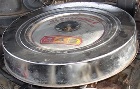
BTW your car came from the factory with a 15-pound cap that looked similar to this one.
Last edited by VC455; Apr 17, 2026 at 09:46 AM.
Reason: spelling