


Overheating problaem!!!


Thread Starter
Registered User
Joined: Aug 2019
Posts: 4
Overheating problaem!!!
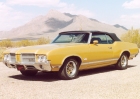
Hello all! My 71’ 442 455 has always had an issue
with overheating. Like boiling over if I let it. Always had this
problem even when it was new. My father bought the car new in 1971.
I’m thinking of getting a new radiator with dual electric fans!
Comments? Experiences? Thanks in advance!!!!
sftrashman
with overheating. Like boiling over if I let it. Always had this
problem even when it was new. My father bought the car new in 1971.
I’m thinking of getting a new radiator with dual electric fans!
Comments? Experiences? Thanks in advance!!!!
sftrashman


Registered User
Joined: Oct 2015
Posts: 677
Moderator
Joined: Jul 2007
Posts: 18,227
From: Edmond, OK
If you want to go to electric fans get one from a salvage yard. I have an electric fan from a mid 90s Ford Taurus with a 3.8l v6 in my 71 98. It's a 2 speed fan. I have LO wired to a temperature sender and HI wired to manually ON. I also got a dual electric fan off of a late 90s Ford Windstar for my 86 f250. I have it wired similarly to my Oldsmobile and it cools my truck just fine (and my truck is a diesel). If you buy an aftermarket fan you have to spend BIG bucks to get one that is as good as one you can find in a salvage yard. Another good fan is the one from an early 2000s Ford Contour with the 2.5l v6, it's just a bit harder to get since it's jammed in there.

Running On Empty
Joined: Jul 2018
Posts: 26,066
From: Earth
And, to add to the parade. When's the last time you checked on the condition of your radiator cap. They're designed to operate under pressure. You lose the ability to maintain pressure and you'll be losing radiator fluid out of the overfill hose. Refill radiator, lose more fluid, refill radiator, lose more fluid...a never ending cycle. Check the condition of the radiator cap.
CH3NO2 LEARN IT BURN IT
Joined: Jul 2010
Posts: 5,638
From: Land of Taxes
Its all about basic proper root cause troubleshooting vs tossing parts at it until you're broke frustrated or both.
OP said it's been doing it since new. There's no reason why a stock cooling system shouldn't work as engineered if everything is up to par, from the factory
I'd look at the flow... air and liquid. Core flow, Pump impeller flow, Head gaskets(not aligned from the factory somehow?), collapsed lower hose, bad t-stat...etc.
How many miles on this rig? Has anything ever been serviced or has it been sitting since 73.
Again, lets start with basics. Cap, Stat, Hoses and PSI test the system. Full flush to include the heater core, Install a new HD 190ish degree stat with a 50 50 mix. Verify timing and carb A/F ratio at idle.
A 50-year-old radiator has sediment build up and needs a rod job or re-core. A factory problem/defect from 71 now has had 50 years to brew. Did your father ever bring it in for warranty on the puking problem???
OP said it's been doing it since new. There's no reason why a stock cooling system shouldn't work as engineered if everything is up to par, from the factory
I'd look at the flow... air and liquid. Core flow, Pump impeller flow, Head gaskets(not aligned from the factory somehow?), collapsed lower hose, bad t-stat...etc.
How many miles on this rig? Has anything ever been serviced or has it been sitting since 73.
Again, lets start with basics. Cap, Stat, Hoses and PSI test the system. Full flush to include the heater core, Install a new HD 190ish degree stat with a 50 50 mix. Verify timing and carb A/F ratio at idle.
A 50-year-old radiator has sediment build up and needs a rod job or re-core. A factory problem/defect from 71 now has had 50 years to brew. Did your father ever bring it in for warranty on the puking problem???
Registered User
Joined: Jun 2013
Posts: 1,402
From: Maryland
I agree with the above stated. Always look at the inexpensive fixes before you go spending hundreds in replacing radiators and installing electric fans. Unless you live in someplace like Arizona, you should not be having this constant overheating problem. A $4 thermostat and a new cap (along with replacing your antifreeze) should take care of your problem unless your radiator is completely gunked up.
Don't buy trouble. Look at the little stuff first.
Don't buy trouble. Look at the little stuff first.

Registered User
Joined: Jan 2010
Posts: 6,105
From: central Indiana
Good Lord, check the simple things first!! Is the engine tuned correctly? What are the symptoms of overheating ( warning light/gauge, boiling over, etc) is the coolant light or gauge reading accurately? Is it using coolant? Is it leaking? And if so, where? Is all the factory shrouding/tar paper ductwork in place? Does it overheat at idle or low speeds? On the highway? Are the belts tight? Is the spring in the lower hose in place? Does the fan clutch engage as it should? How long does it take for the engine to overheat?
If the radiator or fan isn’t the problem, replacing them won’t solve anything. A little diagnostic time is free, and may keep a lot of money in your pocket.
If the radiator or fan isn’t the problem, replacing them won’t solve anything. A little diagnostic time is free, and may keep a lot of money in your pocket.
Registered User
Joined: Feb 2013
Posts: 15,411
From: Phoenix, AZ
So if my car with its factory setup can run OK with the AC on in 115+ summer temps, then a vehicle that is running hot someplace that has "high temps" in the 80s-90s or whatever has something way out of whack and it should be fairly straightforward to determine what's wrong and correct the issue.
Registered User
Joined: Jun 2013
Posts: 1,402
From: Maryland

Hey now. I should point out that none of my vehicles have ever had overheating issues here in Phoenix.
So if my car with its factory setup can run OK with the AC on in 115+ summer temps, then a vehicle that is running hot someplace that has "high temps" in the 80s-90s or whatever has something way out of whack and it should be fairly straightforward to determine what's wrong and correct the issue.
So if my car with its factory setup can run OK with the AC on in 115+ summer temps, then a vehicle that is running hot someplace that has "high temps" in the 80s-90s or whatever has something way out of whack and it should be fairly straightforward to determine what's wrong and correct the issue.
I knew that if I mentioned Arizona, you would jump into this thread. Thanks for the info.

Registered User
Joined: Aug 2013
Posts: 12,810
From: Evansville, IN
The gentlemen from Arizona is correct, as, even a 115 day is a heat differential of 75 degrees from the coolant in the system.
Is the coolant new? Is the radiator flowing well? Is the air flowing well? Is the system under the correct pressure? Old coolant, a funked up radiator, lack of air shrouding and bad clutch, and an out of spec cap all address these. Water pumps tend to fail in a spectacular manner, and leak first, so that may not be the problem there.
Is the coolant new? Is the radiator flowing well? Is the air flowing well? Is the system under the correct pressure? Old coolant, a funked up radiator, lack of air shrouding and bad clutch, and an out of spec cap all address these. Water pumps tend to fail in a spectacular manner, and leak first, so that may not be the problem there.
'87 Delta 88 Royale
Joined: Dec 2010
Posts: 2,514
From: Margate, England
If the OP's father had taken the car back to the dealer to get it fixed (why didn't he?), I am certain they wouldn't have installed an electric fan.
I think we need a lot more information about the symptoms before any meaningful diagnoses can be made.
Roger.
I think we need a lot more information about the symptoms before any meaningful diagnoses can be made.
Roger.
Running On Empty
Joined: Jul 2018
Posts: 26,066
From: Earth
So, let me address a first step.
(1) Remove the radiator cap.
(2) Start the engine and bring the vehicle up to operating temperature (~10 minutes). Observe the fluid in the radiator. Can you visualize fluid circulating through the radiator?
(3) Fill the radiator w/ fluid up to the fill mark which should be ~3/4" below the radiator overfill hose. Keep the vehicle running.
(4) Grasp the UPPER radiator hose w/ your hand. The UPPER hose should/would normally be able to be collapsed with modest pressure from squeezing the hose. No radiator fluid would be running through the engine.
(5) Replace the radiator cap and ensure the radiator cap is firmly turned & locked. Allow the vehicle to continue running for ~10'.
(6) During this period you should/would normally expect the radiator fluid to begin circulating through the engine - the engine thermostat should/would normally OPEN - allowing coolant to traverse the engine and the radiator. You might take the vehicle for a quick short run of about 3-4 miles.
(7) With the engine running, place your hand on the UPPER radiator hose. By now the vehicle should/would have reached normal operating temperature and radiator fluid should be circulating through the engine under pressure - the thermostat should now be open and the UPPER radiator hose should now be FIRM in your hand - the system should be operating under pressure (~16 psi).
If the UPPER radiator hose is not FIRM and is easily collapsed from squeezing it.
(a) The engine has not yet reached optimal operating temperature - allow the engine to idle another 5'-10' until enough time passes where the thermostat should open and the UPPER radiator hose should be firm;
(b) If after the additional 5'-10' of running at idle, the UPPER radiator hose is not firm:
(i) You can suspect the system is not operating under pressure - which it must operate under pressure; and,
(ii) The thermostat should now have opened allowing coolant to circulate.
If the UPPER radiator hose is not firm after reaching optimal operating temperature, I would first suggest a good examination of the radiator cap and/or replacement of the radiator cap and perform the same test w/ a new radiator cap.
The above is a simple general test to see if the system is operating under pressure and circulating fluid.
(1) Remove the radiator cap.
(2) Start the engine and bring the vehicle up to operating temperature (~10 minutes). Observe the fluid in the radiator. Can you visualize fluid circulating through the radiator?
(3) Fill the radiator w/ fluid up to the fill mark which should be ~3/4" below the radiator overfill hose. Keep the vehicle running.
(4) Grasp the UPPER radiator hose w/ your hand. The UPPER hose should/would normally be able to be collapsed with modest pressure from squeezing the hose. No radiator fluid would be running through the engine.
(5) Replace the radiator cap and ensure the radiator cap is firmly turned & locked. Allow the vehicle to continue running for ~10'.
(6) During this period you should/would normally expect the radiator fluid to begin circulating through the engine - the engine thermostat should/would normally OPEN - allowing coolant to traverse the engine and the radiator. You might take the vehicle for a quick short run of about 3-4 miles.
(7) With the engine running, place your hand on the UPPER radiator hose. By now the vehicle should/would have reached normal operating temperature and radiator fluid should be circulating through the engine under pressure - the thermostat should now be open and the UPPER radiator hose should now be FIRM in your hand - the system should be operating under pressure (~16 psi).
If the UPPER radiator hose is not FIRM and is easily collapsed from squeezing it.
(a) The engine has not yet reached optimal operating temperature - allow the engine to idle another 5'-10' until enough time passes where the thermostat should open and the UPPER radiator hose should be firm;
(b) If after the additional 5'-10' of running at idle, the UPPER radiator hose is not firm:
(i) You can suspect the system is not operating under pressure - which it must operate under pressure; and,
(ii) The thermostat should now have opened allowing coolant to circulate.
If the UPPER radiator hose is not firm after reaching optimal operating temperature, I would first suggest a good examination of the radiator cap and/or replacement of the radiator cap and perform the same test w/ a new radiator cap.
The above is a simple general test to see if the system is operating under pressure and circulating fluid.
Last edited by Vintage Chief; Aug 18, 2019 at 03:22 PM.

W30
Joined: Feb 2016
Posts: 529
From: Cape Cod Ma
This was my issue, thought when cold fill to top ridge of the top of radiator....mines perfect at top ridge below the outlet.
Or thermostat or wrong psi rated radiator cap....or bigger issue
But since day one....I'd say fill radiator while cold till circulation is good, cap on, if boils over, check it, check again.
If it overheats there is an other issue

Thread
Thread Starter
Forum
Replies
Last Post


