When you click on links to various merchants on this site and make a purchase, this can result in this site earning a commission. Affiliate programs and affiliations include, but are not limited to, the eBay Partner Network.
w31 options and Vin derivitive/serial number discussion
I read through this whole fight.
this first paragraph makes no sense to me.. can someone explain? to me it says a replacement warranty block gets restamped with the VIN. Or am I reading it wrong?
I’ve never seen a warranty block this way..they are left blank of have LIST xxxx stamped on them, not the VIN
w31 options and Vin derivitive/serial number discussion
Originally Posted by B@ddgt
W-31 did not have power brakes, engine does not make enough vacuum to operate power brakes. Your pictures show power brakes
Totally agree, I purchased a 1969 W-31 with a rare automatic, and Power brakes weren't available, engine with the 308 degree duration cam didn't make enough vacuum for the power brakes.
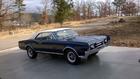
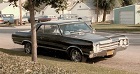
I will be selling my 1966 442 this coming spring. Bought it new in October 1965. 58,950 miles, Black on Black All original. see Pictures
Last edited by oldcutlass; Dec 10, 2024 at 02:41 PM.
Maybe we can stop/refrain from making this worse & instead offer suggestions in helping you understand how to better word your statements which could help you deliver the same basic story of the car? There remain possibilities so remain open to suggestions.
Here is the statement I find inaccurate - NOTE: I am not stating you are lying, being deceptive, or otherwise attempting to or creating a false narrative:
The statement itself is false - it is NOT correct. Relax and take notice.
There was absolutely no OEM GM Oldsmobile block in which any certified GM Oldsmobile mechanic in a GM Oldsmobile dealership service facility would have been directed to sand &/or grind off ANY block derivative. That's a simple fact. You are interjecting your own supposed notions in an attempt to justify why there is no block VIN derivative (again, it is NOT a serial number). Allow that point to digest.
It might be possible (highly unlikely and highly unusual) an OEM GM Oldsmobile block was installed without a block VIN derivative as a warranty replacement block - extraordinarily unlikely and EXTREMELY unlikely on ANY W-31 vehicle. The VIN derivative (which is NOT a serial number) demonstrates documented authenticity the original engine installed at the factory on the assembly line matches the original VIN plate located on the dashboard of the vehicle. It also demonstrates to GM Oldsmobile a manner to track any/all TSB (Technical Service Bulletin) work applicable to this car and as it relates to all GM Oldsmobile vehicle engine blocks since it provides insight regarding engine manufacturing date by the GM Oldsmobile engine shop when they built the engine and cars they were installed into.
Instead, consider changing the "wording" of your your statements (above). Don't imply and make suggestions it was "typical of a factory warranty job of the era" - IT WAS NOT. You're providing false statements. Sanding/Grinding off an original OEM VIN derivative was not performed by ANY authorized GM Oldsmobile dealership certified mechanic at ANY GM Oldsmobile facility ANYWHERE.
Instead, consider statements such as:
You cannot document authenticity of the engine block as it contains no VIN derivative; or, you have been unable to validate originality of the engine block as it contains no block VIN derivative. Further enlighten/enhance your statement(s) by making suggestions as to why you might suspect this to be the case i.e. is it possible the engine block is a replacement of the original engine block and someone forgot to stamp the engine block? Is it possible engine block was installed from any/some other GM Oldsmobile vehicle, marine or agricultural service entity? You cannot say but you're being truthful - you don't know and you can't validate the authenticity of the engine block because it contains no engine block VIN derivative. IMO, those type statements speak far more to honesty and trustworthiness than to suggest a GM Oldsmobile engine block VIN derivative was sanded off or ground off as is "typical of a factory warranty job of the era". Be truthful (yeah there's no engine block VIN derivative) but state you honestly have no idea why there is no block VIN derivative stamped onto this engine block but you're being up front.
Bottom line it was NOT "typical of a factory warranty job of the era". So, instead, glean some advice from member statements when they say it's false, incorrect & not true because it is false, incorrect & not true - but, you can still learn from this and you can still make accommodations to your wording which demonstrates more knowledge you've learned.
I’ve heard it a million times on here that it’s not called a serial number. here’s some facts,, this guy is from Canada and as far back as I can remember, here we have called the number a serial number or the VIN.
I have never heard the word “derivative” used in my life except here. I was at the license office last week and the lady also asked me to put the serial number on the written bill of sale.
the governments own website calls it a VIN or a serial number…not a derivative. I know you guys love to be the word police on here….you know and everyone else knows what someone is talking about when they say serial number.
here’s proof that we use Serial number..it’s way more common here to say serial number. you’re just being a picky old fart when you attack someone for using a different word that means the same
here’s the government website and a safety certificate from a garage using government paper work. . even the bill of sale from 1970 says “serial number” not even VIN or Vehicle Identification Number.
Last edited by CANADIANOLDS; Dec 9, 2024 at 11:52 AM.
"Derivative" as used on CO refers to the numerical sequence in the last six places of the VIN. Starting in 1968 this VIN derivative was stamped on engines and transmissions along with other locations on the vehicle as a means of tying specific parts to a specific vehicle in aid of theft prevention/mitigation.
I have never heard the word “derivative” used in my life except here. I was at the license office last week and the lady also asked me to put the serial number on the written bill of sale.
And yet you still don't know what it is, even thought it has been explained time and time again.
I have no horse in this race, but what is stamped on the engine block, transmission and other such places like the frame are NOT a VIN / serial no., but rather a "derivative" OF the VIN / SN that duplicates a portion of the VIN / SN (typically build # sequence portion of the VIN / SN) so that those specific parts are tied to that specific body (thus the use of the term "derivative", i.e.: it is derived from........). The only place a complete VIN or SN is located is on that plate on the dash seen through the windshield. Nobody in this thread has claimed that the number on that plate on the dash under the windshield and duplicated on titles and sales paperwork is a "derivative". As far as the state / province is concerned, they only want the complete VIN / SN. They don't give a hoot what engine or transmission is in the car, which is probably why the state / province has never used the term "VIN derivative".
See, you couldn’t explain it without saying serial number.😂
So, what's your point? I'm perfectly willing to admit that "serial number" is not the same thing as "derivative". Nobody's saying it is. You can, however, have a number that is derived from the serial number, thereby making it a derivative.
I’m on a few automotive forums..this is the only one where the unique serial number stamped on the driveline parts is referred to as a derivative…and you you’ll get called a liar if you say the serial number is what’s on engines etc…even though it’s the serial number that’s on the engines.
I’ve posted pics of VIN’s and how to decipher the VIN from beginning to end..the last few digits are ALWAYS the serial number… on the Olds, it’s the unique SERIAL number that’s stamped on the engine/trans at factory …. That’s why it’s called a serial number
So, what's your point? I'm perfectly willing to admit that "serial number" is not the same thing as "derivative". Nobody's saying it is. You can, however, have a number that is derived from the serial number, thereby making it a derivative.
Get it?
my point is saying the number on block and trans etc is NOT a serial number , is bs. It IS a serial number and that’s all it is.
did you see how the whole VIN is broken down? the last 6 digits are ALWAYS called the serial number. It’s the serial number that’s stamped on engines and trans…the last 6 digits are never called a VIN derivative, anywhere. manufacturers, search engines , licensing authorities always call the last digits of the the VIN, the serial number
call it what it is…the serial number of that specific vehicle
don’t complicate it with word salad
Last edited by CANADIANOLDS; Dec 10, 2024 at 09:18 AM.
This is GM authorized and licensed information…straight from GM original parts archives identification sources and reprints of factory manuals.
no where in the hundreds and hundreds of places to find the identifier on engines, trans , diffs or other pieces will you find the word derivative or VIN derivative. it’s ALWAYS referred to as SERIAL number going back to 1960. in later years they changed the wording to unit sequence number…but that’s way after any of our junk.
Thanks mods, this will be my last snack for the trolls, promise.
Originally Posted by CANADIANOLDS
Remember now this all started because I said the professors on here freak out when the number stamped of engines is called a serial number.
they say ITS NOT the serial number and attack the person who calls it a serial number.
GM says otherwise
GM says the number stamped on the engine block pad near CYL1 is MORE than just a "serial number". It actually carries characters from the VIN OTHER than just the "serial number", thus is derived from the VIN.
FYI, the term "derivative" is also used in every high-school calculus text book. You must not have those in Canada if your claim that the only place you've seen it is here on CO is true, eh?
A serial number is, in its purest form, an incrementing numerical string intended to show order of creation. 00001 is a serial number. Some identifying numbers that are called serial numbers have alphanumerics in front of the numerical serial portion. HK00001 is considered, by many manufacturers, to be a serial. So, if you accept that the classifier part of the VIN (the part before the literal serial section) is part of a serial number, then the whole thing is a serial number. If you don't, then a portion of the VIN is the serial number, the rest is a classifier, and this applies to the vin derivative, too.
The issue here is that mathematical terms have acquired legal definition. The VIN is legally called the vehicle identification number. The vin derivative is called that. The convin is called that. So, mathematically, the VIN isn't a serial, it contains one. Historically and production-wise, serials often contain classifiers like the VIN does, so, it is a serial. Legally, it's called a VIN. Which definition do you want?
Just because you can't understand it doesn't
make it word salad. Nobody else here seems to be having any problem with the concept.
oh, that’s not true. Many here have a freak out if you call what’s stamped on drivetrain parts, a serial number. they go nuts…and says ITS NOT A SeRIaL NuMbeR!!!!!!! GRRR!!!😉
but the fact and the truth is , GM calls it that. I posted that fact by the original GM documentation. those drivetrain stampings were NEVER called VIN derivatives or derivatives. you don’t see that wording in any old GM docs…you only see them described as serial numbers
im not playing some word game invented on the net by some uptight wordsmith who’s doing the gotcha thing to prove they are better than you
Thanks mods, this will be my last snack for the trolls, promise.
GM says the number stamped on the engine block pad near CYL1 is MORE than just a "serial number". It actually carries characters from the VIN OTHER than just the "serial number", thus is derived from the VIN.
FYI, the term "derivative" is also used in every high-school calculus text book. You must not have those in Canada if your claim that the only place you've seen it is here on CO is true, eh?
I was a teacher for the last ten years before retirement. I’ve posted the dictionary description of derivative which obviously didn’t look at or understand.
go back and read it..then show me the parts of the meaning that explain how it’s a derivative
the dictionary meaning of serial number is self explanatory and is why GM called it serial number.. It’s a unique identifier to or for an item.
A serial number is, in its purest form, an incrementing numerical string intended to show order of creation. 00001 is a serial number. Some identifying numbers that are called serial numbers have alphanumerics in front of the numerical serial portion. HK00001 is considered, by many manufacturers, to be a serial. So, if you accept that the classifier part of the VIN (the part before the literal serial section) is part of a serial number, then the whole thing is a serial number. If you don't, then a portion of the VIN is the serial number, the rest is a classifier, and this applies to the vin derivative, too.
The issue here is that mathematical terms have acquired legal definition. The VIN is legally called the vehicle identification number. The vin derivative is called that. The convin is called that. So, mathematically, the VIN isn't a serial, it contains one. Historically and production-wise, serials often contain classifiers like the VIN does, so, it is a serial. Legally, it's called a VIN. Which definition do you want?
you better let GM know they were WRONG back when they made our junk.
fact…it’s a serial number because it’s unique to the part and the vehicle. what do you think when you see it referred to as a serial number in ALL old GM docs?
or have you even bothered to do a little looking at what I posted?
you better let GM know they were WRONG back when they made our junk.
fact…it’s a serial number because it’s unique to the part and the vehicle. what do you think when you see it referred to as a serial number in ALL old GM docs?
or have you even bothered to do a little looking at what I posted?
My point is independent of yours. I'm not taking a stance on what it is. I read all of your posts, if you read mine, it seems like you misunderstood it.
This is GM authorized and licensed information…straight from GM original parts archives identification sources and reprints of factory manuals.
no where in the hundreds and hundreds of places to find the identifier on engines, trans , diffs or other pieces will you find the word derivative or VIN derivative. it’s ALWAYS referred to as SERIAL number going back to 1960. in later years they changed the wording to unit sequence number…but that’s way after any of our junk.
well, have you looked at the GM licensed archives to see where it is ALWAYS called the serial number?.
let me know if you find the word derivative or VIN derivative anywhere in those GM docs
Found it (see below)
Originally Posted by CANADIANOLDS
oh, that’s not true. Many here have a freak out if you call what’s stamped on drivetrain parts, a serial number. they go nuts…and says ITS NOT A SeRIaL NuMbeR!!!!!!! GRRR!!!😉
but the fact and the truth is , GM calls it that. I posted that fact by the original GM documentation. those drivetrain stampings were NEVER called VIN derivatives or derivatives. you don’t see that wording in any old GM docs…you only see them described as serial numbers
im not playing some word game invented on the net by some uptight wordsmith who’s doing the gotcha thing to prove they are better than you
Yes it is called the "VIN Derivative" see image below.
so lets put this one to bed.
Just for clarification
VIN = Vehicle Identification Number.
Serial Number is the last 6 numbers of the VIN.
VIN derivative is the First number of the VIN and the last 8 numbers of the VIN.
This image is out of the 1972 Cutlass Assembly Manual.
Yes it is called the "VIN Derivative" see image below.
so lets put this one to bed.
Just for clarification
VIN = Vehicle Identification Number.
Serial Number is the last 6 numbers of the VIN.
VIN derivative is the First number of the VIN and the last 8 numbers of the VIN.
This image is out of the 1972 Cutlass Assembly Manual.
It says it’s a “derivative of the VIN”, not the VIN derivative.
there is a difference. that means it’s part of, that’s all. and what part of the VIN is it? it’s the serial number …because the serial number is the unique identifier,, if the unique identifier wasn’t used…then it’s not called a serial number..a derivative of the VIN can mean any part of the VIN. Which means the stamped numbers should not be called derivative…which is why they are referred to in referencing the places to find them as “serial numbers” and not derivatives of the VIN…the place you found the word derivative is not meant to be used by anyone for where the find or locate the numbers <<<<this is the key reason
my proof it’s called a serial number are material specifically used for “finding” the serial number on the vehicle parts to connect them to each other as they originally left the factory
so when someone calls it the serial number, exactly like GM clearly calls it, they are not wrong
to put it as simply as possible..if any was wondering where to find the stampings on these parts, and what they mean and why they are used , you would first find the docs put out by GM for that purpose..which is what I showed….in ALL of that material, it is ALWAYS referred to as the serial number…never the VIN derivative, or derivative of the VIN.
example, 336 is a derivative of the VIN, but cannot specifically identify any single car because it’s not a unique number, neither is 344, M, or X etc
Last edited by CANADIANOLDS; Dec 15, 2024 at 02:41 AM.