When you click on links to various merchants on this site and make a purchase, this can result in this site earning a commission. Affiliate programs and affiliations include, but are not limited to, the eBay Partner Network.
First off, after confirming the correct 4-4-2 VIN, make sure that VIN matches the VIN derivative on the engine. If that isn't the case then something else has been swapped in, which is certainly possible after 54 years.
First off, after confirming the correct 4-4-2 VIN, make sure that VIN matches the VIN derivative on the engine. If that isn't the case then something else has been swapped in, which is certainly possible after 54 years.
Just to clarify, only the VIN can prove the car is a real 442. The engine may have been swapped, but the car is still a 442. And yeah, this assumes the VIN tag hasn't been swapped, which is a much bigger issue.
Just to clarify, only the VIN can prove the car is a real 442. The engine may have been swapped, but the car is still a 442. And yeah, this assumes the VIN tag hasn't been swapped, which is a much bigger issue.
I was addressing OP's query with regard to the engine being "original to the car". The potential for tag-swapping is a whole other issue, one I hope isn't too prevalent on a garden-variety 4-4-2.
GM Oldsmobile Division has a leading edge "3". Therefore, the VIN must begin with the number "3". Next, follows the Series/Engine identifier followed by the body type then the model year. As Joe has already stated, a real Oldsmobile 4-4-2 must have the first three numbers 344 in sequence (Oldsmobile 4-4-2 V-8 Engine). That is definitive with no wavy gravy. "If" the vehicle was a convertible the first six sequence numbers would be 344671 - the number 67 identifies the vehicle as a convertible followed by the number "1" identifying the model year. 344671MXXXXXX would indicate the vehicle was assembled at the Oldsmobile Lansing Plant (M). The remaining six numbers (XXXXXX) is the Plant Sequential Number as the vehicle migrated down the assembly line. NOTE: This information is contained in the 1971 Product Information Manual (PIM) aka the Factory Assembly Manual (FAM) & the 1971 Chassis Service Manual. You should own at a minimum a used paperback original OEM 1971 CSM. Questions? Ask.
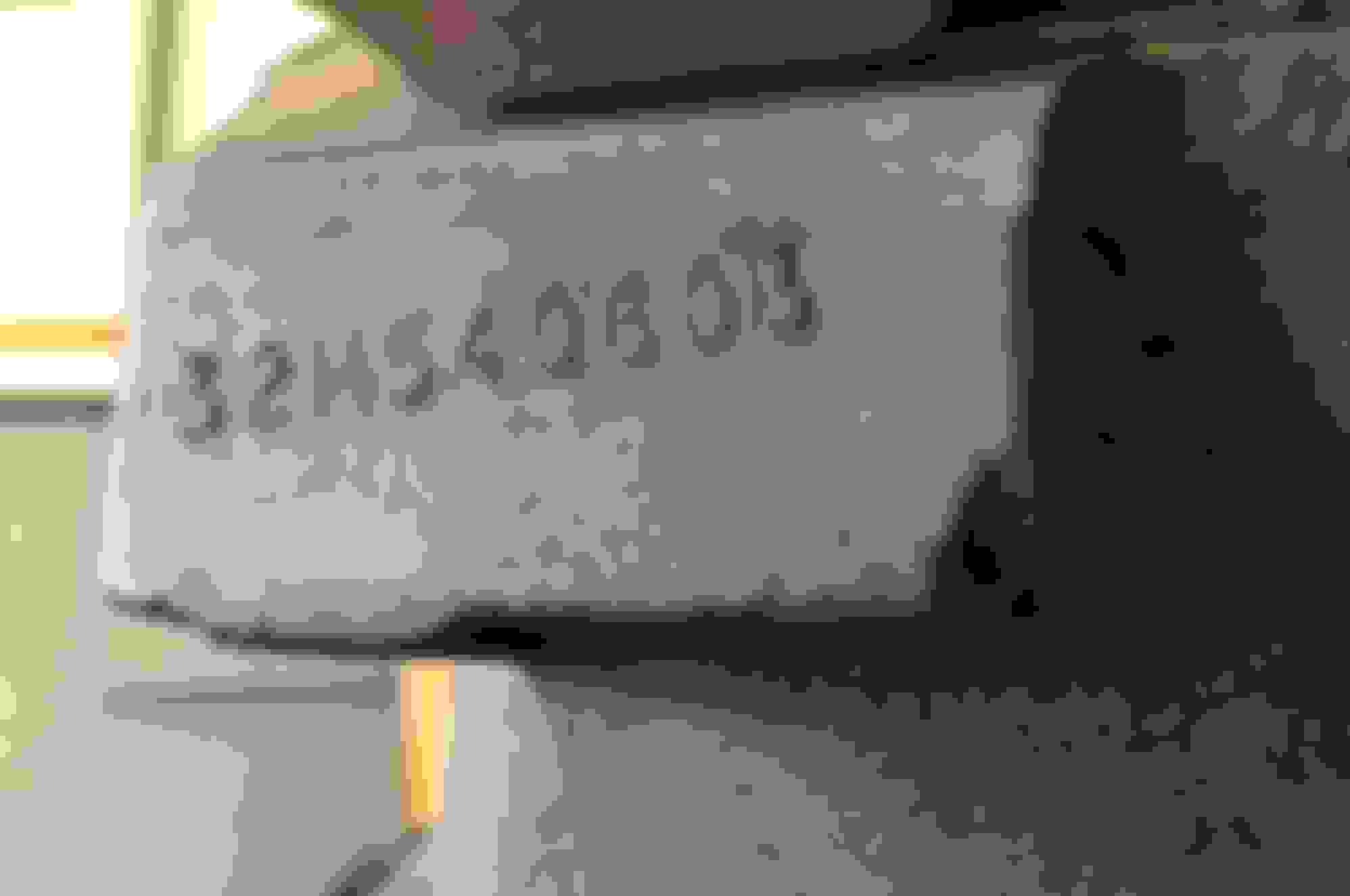
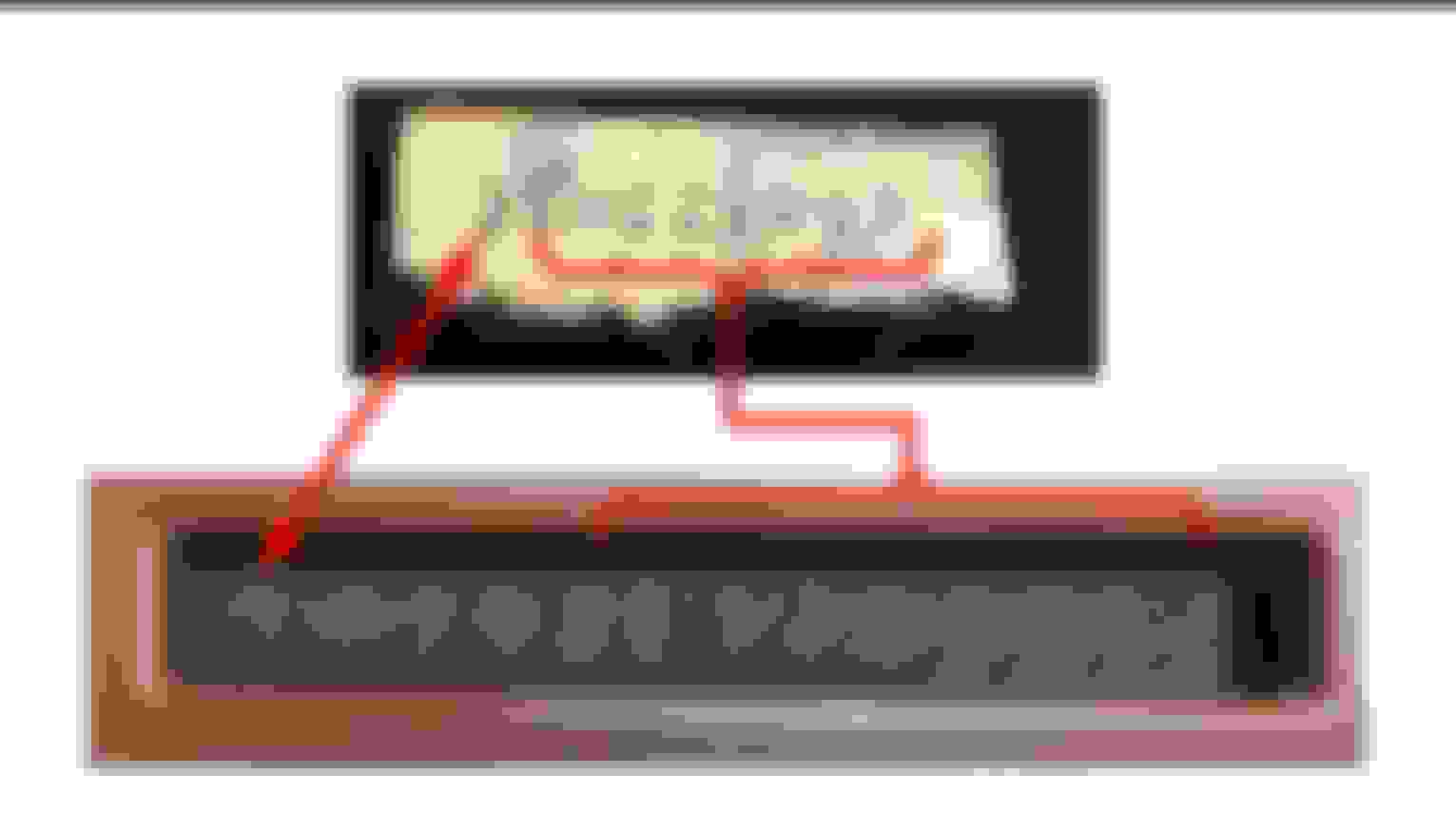
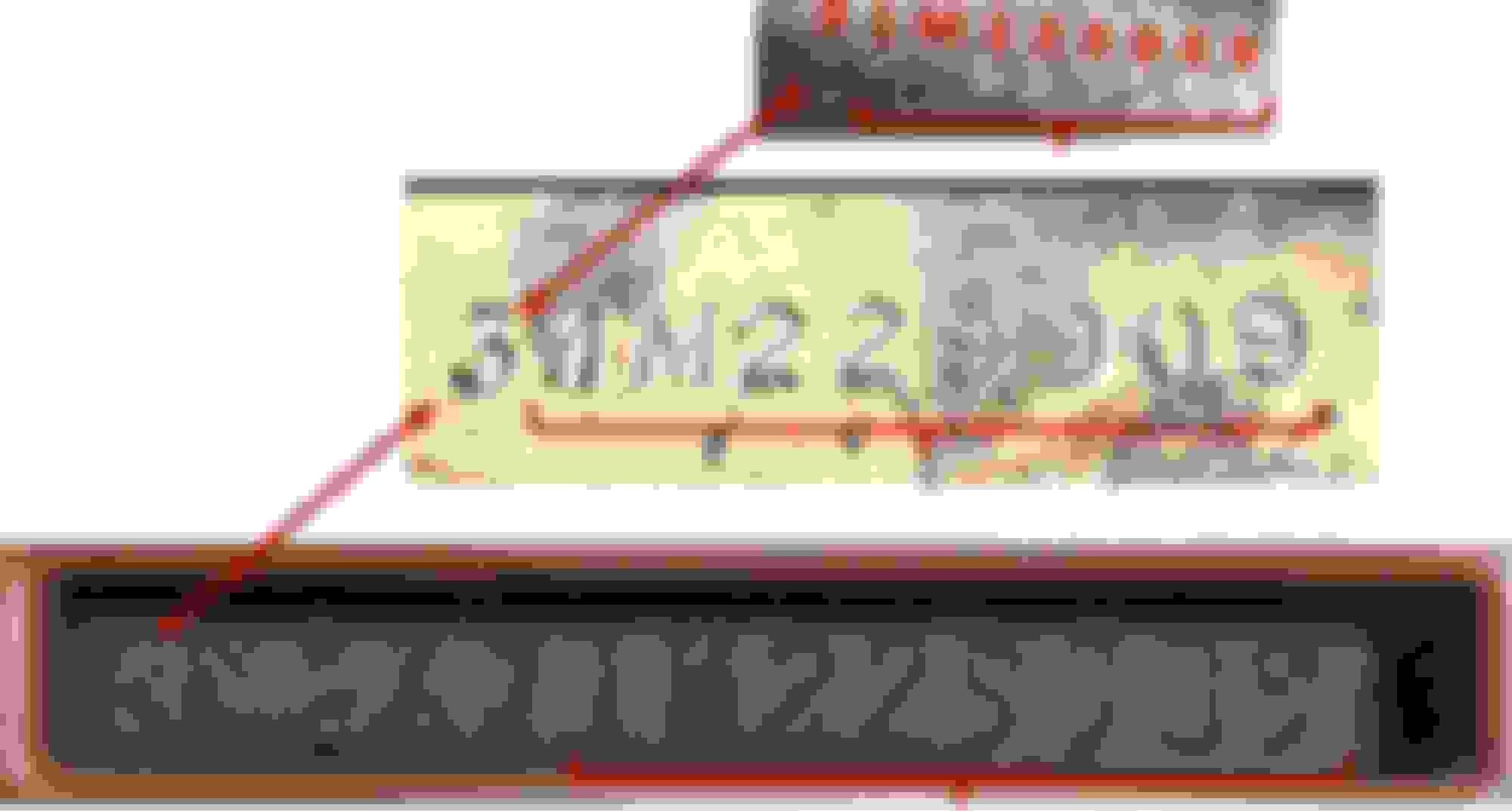
To validate whether the engine &/or the transmission are original to the vehicle you will need to evaluate the engine block VIN derivative &/or the transmission VIN derivative. The engine VIN derivative is stamped into the engine block pad on the front left-hand side of the engine located just forward & below the number one cylinder. Most likely directly below the alternator bracket which makes it modestly difficult to visualize, look at it from an angle (maybe a mirror). The transmission VIN derivative is located on the left hand side of the transmission just above the transmission rail. You will most likely need a mirror to visualize this VIN derivative number unless you are on a lift. The following are examples of the location and type stamping for the VIN derivative (both the engine block pad & the transmission). NOTE: Each VIN derivative must follow the sequence identified below (as an example).
VIN derivative - Engine Block Pad VIN derivative - Engine Block Pad VIN derivative - Engine Block Pad VIN derivative - Engine Block Pad VIN derivative must match VIN VIN derivative must match VIN VIN Transmission VIN derivative, Engine block VIN derivative & VIN Transmission VIN derivative
Ok. How would I tell if Vin Tag has been swapped? There's only one location for the Vin Tag that I'm aware of on most Oldsmobile's of this age, driver's side dashboard. Are there any other tell tail signs to look for? What numbers do I look for on the engine that would match VIN and where would they be located? Thank you
We can assume the chances of someone completely rebodying a non-W 442 is practically nil. The money is not there. W-30? Sure.
If you STILL must know, you need to check the frame hidden vin. This is hard, but no one on the planet would rebody a 442 from rust and not replace the frame because it would be rusty too. Thus, if you have a nice frame, and it matches the vin derivative on the engine and the trans and the real vin on the cowl, then you have a numbers 442.
Again, this is HARD to see.
Olds Expert daveh said
Speaking for Lansing cars where I worked, and frame/VIN stamping was one of my responsible areas from 11968 to 1973, we roll stamped the 8 digits in the VIN on the drivers side on top of the frame in two places. One was just behind the torque box area of the frame on the side rail under the drivers area, and the other was on the top of the frame behind the rear kick up area of the rear axle. Neither are visible without removing the body from the frame or using a dentist type mirror with a light. Reqmt's were that the full 8 digits had to be legible on one of the two, so we hit it twice just to be sure. Only other VIN stamps were on the engine and trans and of course, the embossed plate on topp of the dash that's rivetted in. The stampings on the outside of the frame at the rear are frame vendor stamps denoting part number, supplier (AO Smith or Parrish), which line at their plant, and date/shift. It varied from year to year. The BOP plants did things a little different since they build multiple makes in the same plant.
To confirm if a 1971 Oldsmobile 442 is authentic, check the VIN: the fifth character should be a “3,” indicating it’s a true 442 model. For the 455 engine, look at the casting number on the cylinder heads (often found under the valve covers) and the engine block for authenticity. Ensure the engine code matches the 1971 specs; a period-correct 455 engine code for Oldsmobile is usually “V.” These steps should help verify if the engine and model are original.
To confirm if a 1971 Oldsmobile 442 is authentic, check the VIN: the fifth character should be a “3,” indicating it’s a true 442 model. For the 455 engine, look at the casting number on the cylinder heads (often found under the valve covers) and the engine block for authenticity. Ensure the engine code matches the 1971 specs; a period-correct 455 engine code for Oldsmobile is usually “V.” These steps should help verify if the engine and model are original.
^^^^this guy will soon be a certified expert here^^^^
To confirm if a 1971 Oldsmobile 442 is authentic, check the VIN: the fifth character should be a “3,” indicating it’s a true 442 model. For the 455 engine, look at the casting number on the cylinder heads (often found under the valve covers) and the engine block for authenticity. Ensure the engine code matches the 1971 specs; a period-correct 455 engine code for Oldsmobile is usually “V.” These steps should help verify if the engine and model are original.
You are terribly wrong about what you posted. Perhaps you can read Post #7 to gain some true facts.
GM Oldsmobile Division has a leading edge "3". Therefore, the VIN must begin with the number "3". Next, follows the Series/Engine identifier followed by the body type then the model year. As Joe has already stated, a real Oldsmobile 4-4-2 must have the first three numbers 344 in sequence (Oldsmobile 4-4-2 V-8 Engine). That is definitive with no wavy gravy. "If" the vehicle was a convertible the first six sequence numbers would be 344671 - the number 67 identifies the vehicle as a convertible followed by the number "1" identifying the model year. 344671MXXXXXX would indicate the vehicle was assembled at the Oldsmobile Lansing Plant (M). The remaining six numbers (XXXXXX) is the Plant Sequential Number as the vehicle migrated down the assembly line. NOTE: This information is contained in the 1971 Product Information Manual (PIM) aka the Factory Assembly Manual (FAM) & the 1971 Chassis Service Manual. You should own at a minimum a used paperback original OEM 1971 CSM. Questions? Ask.
To validate whether the engine &/or the transmission are original to the vehicle you will need to evaluate the engine block VIN derivative &/or the transmission VIN derivative. The engine VIN derivative is stamped into the engine block pad on the front left-hand side of the engine located just forward & below the number one cylinder. Most likely directly below the alternator bracket which makes it modestly difficult to visualize, look at it from an angle (maybe a mirror). The transmission VIN derivative is located on the left hand side of the transmission just above the transmission rail. You will most likely need a mirror to visualize this VIN derivative number unless you are on a lift. The following are examples of the location and type stamping for the VIN derivative (both the engine block pad & the transmission). NOTE: Each VIN derivative must follow the sequence identified below (as an example).
VIN derivative - Engine Block Pad VIN derivative - Engine Block Pad VIN derivative - Engine Block Pad VIN derivative - Engine Block Pad VIN derivative must match VIN VIN derivative must match VIN VIN Transmission VIN derivative, Engine block VIN derivative & VIN Transmission VIN derivative
that’s a lot of word salad..you call the Vehicle Identification Number ,VIN, the VIN derivative and later you call it the sequential number.
You and the experts on here should stop adding your special words that only confuse people. And, the block VIN isn’t under the Alternator…. you’re on the wrong side of the engine 😂😂
How do I know for sure that a 1971 Oldsmobile 442 is a Real 442? Also, what do I look for on 455 engine to be sure it is a 455 with correct heads and original to the car? Thanks in advance
The above responses are correct regarding the 344 VIN. Further more, if the car you are looking at is a convertible 71 442, PM with the last 6 digits of the VIN. I may have older history on it. We've owned over a dozen '71 442 convertibles, and at one time, I kept a private registry on 71 442 convertibles only. If it is a hardtop, I can not help you.
To confirm if a 1971 Oldsmobile 442 is authentic, check the VIN: the fifth character should be a “3,” indicating it’s a true 442 model. For the 455 engine, look at the casting number on the cylinder heads (often found under the valve covers) and the engine block for authenticity. Ensure the engine code matches the 1971 specs; a period-correct 455 engine code for Oldsmobile is usually “V.” These steps should help verify if the engine and model are original.
Given that this is a one-post-wonder, it strikes me as something generated by an AI (or maybe Artificial non-Intelligence) bot.
A BOT is a Crawler. A Crawler collects data. Google Spider regularly Crawls this website (often times every hour). Now, enter the world of Generative AI. Generative AI learns (is trained) from various (many) sources. Data sourcing is vital to Generative AI. A ‘Guest’ account can be BOT (Crawler). Any member account could be a BOT (Crawler). A BOT (Crawler) is one type of data sourcing. Generative AI learns (is trained) from data sourcing. To develop constructive/informative AI tests must take place to validate value. It is HIGHLY likely this site is routinely Crawled via a number of BOT accounts (not only Google Spider). Dollars-to-Donuts even the Google Spider is now used by Google as a data source to create Generative AI. Why wouldn’t it (and anyone else for that matter)?
that’s a lot of word salad..you call the Vehicle Identification Number ,VIN, the VIN derivative and later you call it the sequential number.
You and the experts on here should stop adding your special words that only confuse people. And, the block VIN isn’t under the Alternator…. you’re on the wrong side of the engine 😂😂
It really depends on if you have AC or not.
My 455 has AC so the Alternator is right above the VIN block with the Power steering next to it.
Now he didn’t say that , did he? did he assume the op was asking about an a/c car, and that every 71 442 has a/c?
of course not…you’re making excuses for him giving out bad info, like he always does. he pukes out long winded never ending garbage all the time.
The only garbage eschewing from anyone's mouth is the childish trolling antagonistic behavior you continually display. Has your medication changed? Perhaps another trip to the ward for an evaluation might help you gain some common decency. GFY
The only garbage eschewing from anyone's mouth is the childish trolling antagonistic behavior you continually display. Has your medication changed? Perhaps another trip to the ward for an evaluation might help you gain some common decency. GFY
your word salad BS is easy to poke holes in because it’s total garbage…you know it.
you’re a complete and utter moron…you should keep from giving any advice whatsoever on any technical issues. you got your sorry *** handed to you many times over and over.
dumb as can be with your vacuum gauge crap and everything else…notice I don’t need to swear of say GFY yourself because it’s not needed..it’s you who needs to freak out with that.
you’re technically illiterate..that’s the truth
Last edited by CANADIANOLDS; Oct 30, 2024 at 04:51 PM.
your word salad BS is easy to poke holes in because it’s total garbage…you know it.
you’re a complete and utter moron…you should keep from giving any advice whatsoever on any technical issues. you got your sorry *** handed to you many times over and over.
dumb as can be with your vacuum gauge crap and everything else…notice I don’t need to swear of say GFY yourself because it’s not needed..it’s you who needs to freak out with that.
you’re technically illiterate..that’s the truth
It doesn't take much for anyone to understand your pathetic existence. If I had hemorrhoids I'd grab the Preparation H and be rid of you.
If you go through life with your head in the sand.....all people will see is an ****!
Treat every day as your last.....One day you'll be right!
Now he didn’t say that , did he? did he assume the op was asking about an a/c car, and that every 71 442 has a/c?
of course not…you’re making excuses for him giving out bad info, like he always does. he pukes out long winded never ending garbage all the time.
I was not making excuses for him. I was merely adding to the information to better clarify where the VIN derivative is located on the engine block.
Also he did say "Most likely directly below the alternator bracket" and "The engine VIN derivative is stamped into the engine block pad on the front left-hand side of the engine located just forward & below the number one cylinder."
so i don't see any bad information in his post only your post where you said "And, the block VIN isn’t under the Alternator…. you’re on the wrong side of the engine"
It doesn't take much for anyone to understand your pathetic existence. If I had hemorrhoids I'd grab the Preparation H and be rid of you.
If you go through life with your head in the sand.....all people will see is an ****!
Treat every day as your last.....One day you'll be right!
you can’t defend your awful crap advice you give because it’s awful and.crap…you’re a halfwit word salad clown. you and your vacuum gauge crap and everything is you spew here so proudly is pure garbage
I thought you would have learned your lesson in the thread about the guy having engine problems with his 69 442, but nope, you didn’t even stop think to yourself “hey, maybe I am an idiot”😂😂😂
What's your problem? If you don't have any pertinent information to offer to my post then get off it.
Originally Posted by 442b
You too, get off my post.
Originally Posted by 442b
You can get off my post as well. Go find something to do with your extra time
What are you? 100 years old? Get off my lawn?
I got news for you. You don't own the website. People can post anywhere they want. If the post is off topic, the moderators will deal with it. It's not your job to go around shooing people away.
3 = GM Oldsmobile Division 44 = Series & Engine No. (4-4-2 V-8 Engine) 87 = Body Type (Hardtop Coupe) 1 = Model Year (1971) M = Plant (Lansing) 214991 = Plant Sequential Number
I believe there are very specific circumstances a new VIN plate can be installed on a vehicle - i.e. destruction of original VIN plate via certain factors e.g. body wreckage, etc. These circumstances likely vary by State authorities.
A picture of the number stamped into the engine block pad would help demonstrate additional authenticity for the 1971 model year. As described in Post #7 (above) this number is referred to as a VIN derivative number since the number is derived from the original VIN plate number.
If the car contains the original engine w/ VIN plate number 344871M214991 the VIN Derivative number stamped into the engine block pad would demonstrate this number: 31M214991. It's a partially derived VIN which needs to match a portion of the original VIN plate number. Leading "3" = GM Oldsmobile Division; "1" = Model Year; "M" = Assembly Plant; 214991 = the Plant Sequential Number.
71 = Model Year (1971) 3 = GM Oldsmobile Division 44 = Series & Engine No. (4-4-2 V-8 Engine) 87 = Body Type (Hardtop Coupe) LAN = Lansing, MI (Assembly Plant) 441318 = Fisher Body Sequence NOTE: This is a "Fisher" Body Sequence Number 26 = Viking Blue ( Lower Body Color) 26 = Viking Blue (Upper Body Color) 06C = Assembly Plant Date (3rd Week of June; 06 = Month; C = Week)
There are no Interior Options listed on the cowl tag. Therefore, the standard interior for this vehicle would be Black Vinyl Bucket seats.
There are no ACC (Accessory Codes) listed.
Thank you Norm - Does the VIN Tag look Brand New to you? I haven't asked the seller about it yet as I wanted to run the question here first so I'd have correct information. Thanks
I don't have enough 1st hand experience deciphering differences between an older original VIN plate & newer VIN plate installed into any 1971 model 4-4-2 - it isn't something I'd consider to be either an expert or authority, for sure.
A couple noteworthy thoughts:
(1) Physical storage location of the vehicle - has it been stored in a climate controlled facility? Any history of states where it has previously been titled? Does the vehicle body, frame, interior appear to represent what you'd expect to witness w/ an original VIN plate?
(2) Does the car have the original MFD. BY GENERAL MOTORS CORP. blue sticker attached to the driver's side door jam panel? These can easily be printed by various 3rd-party sources; yet, it can provide a clue.
(3) A picture of the VIN derivative number stamped into engine block pad would speak miles to authenticity.
I can't speak directly to "type/style" of VIN plate on a 1971 model 4-4-2. Were there slight variances in the type/style VIN plate on a 1971 4-4-2 versus other 1971 models? Could be, I don't know. Here are some known facts from my 1971 Oldsmobile Cutlass Supreme convertible. Noteworthy perhaps is the type/style of my VIN plate - it doesn't match yours exactly; yet, you displayed a supposed 1971 model 4-4-2 and my images demonstrate type/style of my 1971 Cutlass Supreme convertible. Most likely there are differences in the type/style of the dash panel &/or the VIN plate itself. I can't say.
From an armchair's length viewing a VIN plate image anything I venture is suspect (other than the factual images displayed below).
Last edited by Vintage Chief; Oct 31, 2024 at 08:28 AM.
Thank you again Norm. Expert or not, the information you've provided has helped immensely. I compared your VIN Tags numbers/letters to VIN Tag photo. I do notice differences in both letters and numbers. I have contacted the seller and asked that he provide a nice, clear picture of the VIN Stamp from the engine pad. He said he would. Once I have that information, I will then ask him why the VIN Tag appears to be brand new, shiny and clean. I mean, every car I've owned at
Keep in mind too that different assembly facilities may have had different means of embossing/stamping/securing their tags and VIN derivatives, so just because anomalies are noted doesn't necessarily mean there's skullduggery afoot.
It "appears" from a purely visual/physical reference the right side of the VIN tag/plate is not a factory installed "rivet". I'm no expert on this, but the many VIN tags/plates I've witnessed have all been riveted. I'm not 100% if my assumption is correct for all vehicles for all years and all assembly plants. It appears the right side of the VIN tag/plate is fastened w/ a cross-tipped or hex screw fastener. There's a slight indication you can see the circular outlined dimension of a rivet behind that fastener? Not sure. There can be instances where even an original VIN tag/plate has required some "assistance" to get it to fasten securely - someone knocked it off, it broke off at that position, who knows? I certainly don't know. I note from your last post if there are some serious red flags about the car & the story just does not add up - most likely it's a Faux-Four-Two. Good for you researching and doing some due diligence.
The VIN tag has been installed with standard rivets, not the factory rosette style. it’s also been repainted with a heavy coat making the numbers seem burry.
the data plate also looks like it’s been pulled off at one point because the left empty hole is oval.
there may be a partial VIN stamp under the heater core box. In this area. it is possible to see from outside or inside at the top of the carpet / underpad area ..pulling it back could show it.
looking for that firewall stamping is best done in the dark with a bright led light
Correct factory rosette rivet
Last edited by CANADIANOLDS; Oct 31, 2024 at 02:08 PM.
Have him take some thin paper (not too thin or it'll tear) and a soft pencil and do a rubbing. I've done this several times, usually with pretty good results.