When you click on links to various merchants on this site and make a purchase, this can result in this site earning a commission. Affiliate programs and affiliations include, but are not limited to, the eBay Partner Network.
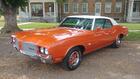
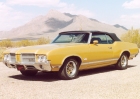
I am currently upgrading my '71 Cutlass Supreme with a 350 from a 2-barrel carb to a 4-barrel and had a question about the mild-steel fuel lines. So, last night when I was bolting on the carb and hooking up lines, I found that the fuel line that I had bought from a fella on this forum does not fit up to my carb and is off multiple inches as well as not clearing the vacuum switch on the front end of the manifold toward the radiator. Are these lines meant to be bent to fit? Are they specific to certain years/carbs? The fella I bought the line from claims that it came with the carb and fits a 350, I doubt this due to it not fitting and also it seems that it has smudges of old blue paint on it. Could it be that I have a line for a 455 since they were blue although I've never ran into painted fuel lines?
Is your fuel line for a 4-barrel?
Can you post a picture showing how far off.
In most cases you will have to tweak it to make them fit. Beings it could be from 455 it could very well be off that much. If the tubing is long enough but needs some bending to make it work here are some tips to make it easier.
Do not bolt down your carb, LEAVE IT LOOSE.
Take your time bending and forming your fuel line, you may have to take it in and out a few times. If you have bender this helps but not necessary you can bend with your hands just make sure they are smooth flowing bends no kinks.
After you get it to fit using only finger tight on your fittings then you can snug up your carb. DO NOT tighten it to much you can warp the top plate all you need is it to be good and snug.
Then tighten your fuel line nuts with a tubing wrench.
Is your fuel line for a 4-barrel?
Can you post a picture showing how far off.
In most cases you will have to tweak it to make them fit. Beings it could be from 455 it could very well be off that much. If the tubing is long enough but needs some bending to make it work here are some tips to make it easier.
Do not bolt down your carb, LEAVE IT LOOSE.
Take your time bending and forming your fuel line, you may have to take it in and out a few times. If you have bender this helps but not necessary you can bend with your hands just make sure they are smooth flowing bends no kinks.
After you get it to fit using only finger tight on your fittings then you can snug up your carb. DO NOT tighten it to much you can warp the top plate all you need is it to be good and snug.
Then tighten your fuel line nuts with a tubing wrench.
As far as I was told by the seller, yes, it is for a four-barrel. I will take pictures this evening to better explain the situation.
The lines are different for each application. Even the correct application will/could need slight (stress on slight) tweaking. The line should fit almost effortlessly into the carb and pump. Gently tweak it to obtain that fit. You may need to "spring" the line w/o bending it to get it home.
AJ, I kindly disagree with leaving the carb loose and making the carb draw the fuel line into alignment. Not totally wrong just not a favorable practice from a mechanical or safety prospective
Depending on the skill level of the mechanic...this will/could spell disaster and stress the float bowl depending on how much the line if off and how big the meat-hooks are. And you cant "feel" if the carb is centered nicely on the bolts with the line attached when tightening down the carb. This could make future filter changes difficult as the flare nut can bind and gull on the threads or the OD of the tube when it needs servicing.
The correct line should require very little tweaking. Have the carb and pump torqued in place. Put the line in and pull the flare nuts out and look to see how well the female flares mate with the males on both ends. They should look fairly parallel. Then try to thread the nuts. You should have near-zero resistance on both nuts if the line is properly tweaked. Always go counterclockwise with the nuts until you feel the starter thread "click in" then tighten. If you got it right you should feel little resistance until the flares draw up.
Once you are confident its properly aligned unfasten the nuts and add a small amount of anti-seize to the OD of the tube under the flare nuts and a little on the threads. Then snug to a no-leak fit with a line wrench and an open-end wrench supporting the filter housing and the pump housing. Don't let the filter housing spin beyond its original torq when tightening the flare nut.
Same conservative application of anti-seize for the filter housing to float bowel threads. DO NOT overtighten anything. Use a new nylon gasket on the filter housing.
As for the carb, torque it to spec then re-check it after 20-30 heat cycles. Check all of the above for leaks both hot and cold a few times.
Dont want fuel leaking.
The lines are different for each application. Even the correct application will/could need slight (stress on slight) tweaking. The line should fit almost effortlessly into the carb and pump. Gently tweak it to obtain that fit. You may need to "spring" the line w/o bending it to get it home.
AJ, I kindly disagree with leaving the carb loose and making the carb draw the fuel line into alignment. Not totally wrong just not a favorable practice from a mechanical or safety prospective
Depending on the skill level of the mechanic...this will/could spell disaster and stress the float bowl depending on how much the line if off and how big the meat-hooks are. And you cant "feel" if the carb is centered nicely on the bolts with the line attached when tightening down the carb. This could make future filter changes difficult as the flare nut can bind and gull on the threads or the OD of the tube when it needs servicing.
The correct line should require very little tweaking. Have the carb and pump torqued in place. Put the line in and pull the flare nuts out and look to see how well the female flares mate with the males on both ends. They should look fairly parallel. Then try to thread the nuts. You should have near-zero resistance on both nuts if the line is properly tweaked. Always go counterclockwise with the nuts until you feel the starter thread "click in" then tighten. If you got it right you should feel little resistance until the flares draw up.
Once you are confident its properly aligned unfasten the nuts and add a small amount of anti-seize to the OD of the tube under the flare nuts and a little on the threads. Then snug to a no-leak fit with a line wrench and an open-end wrench supporting the filter housing and the pump housing. Don't let the filter housing spin beyond its original torq when tightening the flare nut.
Same conservative application of anti-seize for the filter housing to float bowel threads. DO NOT overtighten anything. Use a new nylon gasket on the filter housing.
As for the carb, torque it to spec then re-check it after 20-30 heat cycles. Check all of the above for leaks both hot and cold a few times.
Dont want fuel leaking.
Thank you for kindly disagreeing on the loose carb. not that mine are rattling loose on the bolts but to help with alignment of the fuel line and threading during fit up. I do however snug down the carb after fit up and do a remove and replace and finger tight to make sure the line is properly fitting, Then doing the torques.
Never being one that knows it all.........your use of anti-seize is a good point ......I'll will be putting that in my mental tool box.......Thank You!
I will take pictures this evening to better explain the situation.
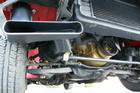
Below are some pictures I took of the two fuel lines: one that I purchased, and one that came off of the vehicle w/ the dualjet 2-barrel. Also, the correct one from Fusick's site that droldsmorland recommended.
Below are some pictures I took of the two fuel lines: one that I purchased, and one that came off of the vehicle w/ the dualjet 2-barrel. Also, the correct one from Fusick's site that droldsmorland recommended.
I would purchase the correct one from Fusick's site that droldsmorland recommended and save yourself the frustration.
I thought mine was going to fit "perfect" as I purchased the correct fuel line from ILT. Well, not such a "perfect" fit. None-the-less, I cut the ILT brand new metal fuel line directly in half & employed a piece of rubber fuel line from my local automotive store to join the two halves.
I thought mine was going to fit "perfect" as I purchased the correct fuel line from ILT. Well, not such a "perfect" fit. None-the-less, I cut the ILT brand new metal fuel line directly in half & employed a piece of rubber fuel line from my local automotive store to join the two halves.
I like the way you think. I have the one from Fusick on order, if that doesn't work, I now have a backup plan.
one that came off of the vehicle w/ the dualjet 2-barrel.
Dualjet???
A Dualjet is the front half of a Q-Jet. Enormously different from a 2G style two-barrel.
Originally Posted by Vintage Chief
I thought mine was going to fit "perfect" as I purchased the correct fuel line from ILT. Well, not such a "perfect" fit. None-the-less, I cut the ILT brand new metal fuel line directly in half & employed a piece of rubber fuel line from my local automotive store to join the two halves.
Yeah, that "can" work. You end up creating two additional leak points, and include a section of fuel hose that can burst or otherwise deteriorate. MOST guys won't fabricate a bead on the ends of the tubes to hold the clamp/hose in place. And then MOST guys install worm-gear hose clamps that further stress the hose.
GM installed a one-piece, all-metal fuel tube on the pressure side of the pump to get rid of all these problems. With a few exceptions, of course. GM usually used double-flares, tube-nuts and brass inverted-flare tees on any splices on the pressure side of the pump, rather than hose and clamps.
YES, folks get away with hose on the pressure side of the engine-driven pump...but it's not good practice.
Why not just buy some tubing and bend your own fuel tube that fits properly? A Toronado buddy of mine needed a fuel tube from engine-mounted pump to Q-jet, we yanked off the old one, fabricated and installed the new one in under an hour. ('70 Toro GT)
Last edited by Schurkey; Aug 13, 2019 at 10:59 AM.