


Some Observations On Judging Undercarriages At Nationals

Thread Starter
Registered User
Joined: Jun 2011
Posts: 2,866
From: Carrolllton Texas
Some Observations On Judging Undercarriages At Nationals
Hopefully everyone got back home safe and sound. A great time was had by all.
I was on the judging team that did the Junior 70-72 Performance Class. I was assigned the undercarriages. Our team captain instructed us to write our notes on paper for each car we were to assess (18 registered to the class with two no shows), and then we would fill out the judging form in a team setting. Overall the system worked well.
My overall thoughts/observations on what I saw - keeping in mind I was following the one knee rule (got up and down 64 times) and using the standard of how the vehicle would have appeared new on the showroom floor for correctness/authenticity:
Exhaust Systems - Easily the most varied in condition and accuracy of all the items I looked at. Many welded systems with incorrect muffler lengths, clamps not used at all or facing the wrong direction, incorrect hangers or hardware, some trumpets sticking way too far out. My suggestion to all is to get a Gardner or Waldron/ILT system and install it as directed. This is a very visible component of the undercarriage, and a safety item. If you decide to use a welded system, install clamps over the welds in the righ5 location facing the righ5 direction to minimize deductions.
Front Wheel Well Hardware - I only saw one car have all the correct installed attaching hardware of the well to the fender and frame. Man6 cars were missing the large washers, or missing bolts altogether. The well adds a lot of rigidity to the front end reducing squeaks and rattles if all the hardware is present.
Gas Caps, LP/Filler Door Frame - I only saw two 70’s have the correct gas cap. Some frames were missing one or more bumpers, the frame painted black, etc…
Bumper Hardware - Saw some incorrect solid (not capped) bumper bolts, but a lot of incorrect bumper bracket hardware. All of it except except the “thin” nuts should be phosphate (dark gray) colored
Gas Tanks - They should be a natural steel color. Saw many painted black or a dull gray color. Also, some stretched out spaghetti looking gas tank straps.
Frame rails - Spray bombed black without any prep of the surface. Sand them smooth before painting - it will make a much improved first impression.
Front Suspension/Steering - some could have benefitted from a good general cleaning. Front backing plates especially.
I was on the judging team that did the Junior 70-72 Performance Class. I was assigned the undercarriages. Our team captain instructed us to write our notes on paper for each car we were to assess (18 registered to the class with two no shows), and then we would fill out the judging form in a team setting. Overall the system worked well.
My overall thoughts/observations on what I saw - keeping in mind I was following the one knee rule (got up and down 64 times) and using the standard of how the vehicle would have appeared new on the showroom floor for correctness/authenticity:
Exhaust Systems - Easily the most varied in condition and accuracy of all the items I looked at. Many welded systems with incorrect muffler lengths, clamps not used at all or facing the wrong direction, incorrect hangers or hardware, some trumpets sticking way too far out. My suggestion to all is to get a Gardner or Waldron/ILT system and install it as directed. This is a very visible component of the undercarriage, and a safety item. If you decide to use a welded system, install clamps over the welds in the righ5 location facing the righ5 direction to minimize deductions.
Front Wheel Well Hardware - I only saw one car have all the correct installed attaching hardware of the well to the fender and frame. Man6 cars were missing the large washers, or missing bolts altogether. The well adds a lot of rigidity to the front end reducing squeaks and rattles if all the hardware is present.
Gas Caps, LP/Filler Door Frame - I only saw two 70’s have the correct gas cap. Some frames were missing one or more bumpers, the frame painted black, etc…
Bumper Hardware - Saw some incorrect solid (not capped) bumper bolts, but a lot of incorrect bumper bracket hardware. All of it except except the “thin” nuts should be phosphate (dark gray) colored
Gas Tanks - They should be a natural steel color. Saw many painted black or a dull gray color. Also, some stretched out spaghetti looking gas tank straps.
Frame rails - Spray bombed black without any prep of the surface. Sand them smooth before painting - it will make a much improved first impression.
Front Suspension/Steering - some could have benefitted from a good general cleaning. Front backing plates especially.

Registered User
Joined: Mar 2010
Posts: 3,868
From: Mt.Ary, MD
You can't see enough to judge on one knee. Unless it's going on a lift, it shouldn't even be judged. Not every judge can see the same thing. Femur length and ability to bend are major factors.
Oh, and I'm sure the line workers building the cars took great care to make sure all the clamps were facing the same, "correct" direction.... GTFOH
GTFOH
I guess none of you guys have ever heard the term "over-restored"? It sounds exactly like what you're judging.
Oh, and I'm sure the line workers building the cars took great care to make sure all the clamps were facing the same, "correct" direction....
GTFOHI guess none of you guys have ever heard the term "over-restored"? It sounds exactly like what you're judging.
Last edited by fleming442; Aug 12, 2021 at 03:07 AM.

Registered User
Joined: Feb 2009
Posts: 11,902
From: Brazil Indiana
You can't see enough to judge on one knee. Unless it's going on a lift, it shouldn't even be judged. Not every judge can see the same thing. Femur length and ability to bend are major factors.
Oh, and I'm sure the line workers building the cars took great care to make sure all the clamps were facing the same, "correct" direction.... GTFOH
I guess none of you guys have ever heard the term "over-restored"? It sounds exactly like what you're judging.
Oh, and I'm sure the line workers building the cars took great care to make sure all the clamps were facing the same, "correct" direction....
GTFOHI guess none of you guys have ever heard the term "over-restored"? It sounds exactly like what you're judging.
What Joe is doing is pointing out to people that do like the judging and this style competition what he seen and how to make their car better. This is a very good thing to look at when it is coming directly from a judge and a very knowledgeable one at that.
This is also why many, including myself, can't be a judge. I could not take it when someone is bent over some detail judged in their eyes wrong. Also why I will never complain if I feel someone judged something on my car wrong.
Registered User
Joined: Mar 2010
Posts: 3,868
From: Mt.Ary, MD
My point was more to the fact that the judges aren't seeing the complete undercarriage. The guy that goes hyper-nutso doing what the judges can't see is getting shorted by the guys that only do what the judges can see on one knee.
Registered User
Joined: Mar 2010
Posts: 3,868
From: Mt.Ary, MD
I've seen the phrase "as it rolled off the showroom floor" or "assembly line" used a lot in reference to OCA judging.
The assembly line is just that. Now, when you involve the assembly books or diagrams and specifications, you cross the line between mass production and handcrafted coach building. It seems as though the rules lean towards coach building, not authentic restoration. Example: a low mile, unmolested by no one other than mother nature, faithful down to the production flaw restoration doesn't stand a chance against the 1000 point over-restored, coach built car.
The assembly line is just that. Now, when you involve the assembly books or diagrams and specifications, you cross the line between mass production and handcrafted coach building. It seems as though the rules lean towards coach building, not authentic restoration. Example: a low mile, unmolested by no one other than mother nature, faithful down to the production flaw restoration doesn't stand a chance against the 1000 point over-restored, coach built car.

Registered User
Joined: Oct 2019
Posts: 113
I've seen the phrase "as it rolled off the showroom floor" or "assembly line" used a lot in reference to OCA judging.
The assembly line is just that. Now, when you involve the assembly books or diagrams and specifications, you cross the line between mass production and handcrafted coach building. It seems as though the rules lean towards coach building, not authentic restoration. Example: a low mile, unmolested by no one other than mother nature, faithful down to the production flaw restoration doesn't stand a chance against the 1000 point over-restored, coach built car.
The assembly line is just that. Now, when you involve the assembly books or diagrams and specifications, you cross the line between mass production and handcrafted coach building. It seems as though the rules lean towards coach building, not authentic restoration. Example: a low mile, unmolested by no one other than mother nature, faithful down to the production flaw restoration doesn't stand a chance against the 1000 point over-restored, coach built car.
While I've never been a "nut and bolt" resto guy, I can respect those who are.

Registered User
Joined: Nov 2009
Posts: 3,009
From: Red Oak, Texas
Some one that gets their panties in a wad over losing points at judging because their car is not by the book should get out of the hobby. It is just that, a hobby and if it makes a difference to the appearance of the car, find something else to worry over. Car restoration should be fun not a money grab. Joe's comments are just for your information when having your car judged. He is very sharp on the book restoration guide.
Last edited by edzolz; Aug 12, 2021 at 06:01 AM.
Registered User
Joined: Feb 2009
Posts: 11,902
From: Brazil Indiana
Thread Starter
Registered User
Joined: Jun 2011
Posts: 2,866
From: Carrolllton Texas
I think pretty much everyone here is well aware of the mass production variations to cars coming off the line. My ‘70 W-30 had a original unused voltage regulator on the firewall when I got it! This is precisely why we should have a standard - the PIM or Assembly Manual so everyone has a standard for authenticity or correctness, or else anything is OK because “it was a Friday in Framingham and John was drunk that afternoon and the normal supplier was out of a part” etc, etc..

 Make money on a restoration ? never happened to me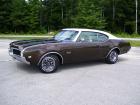
Registered User
Joined: Jul 2010
Posts: 1,907
From: Toytown, MA
I have a question, Joe. I noticed in the pics posted here that one of the cars had mirrors on all 4 sides. I used to display my car like that many years ago. Then the last time I judged (2010?) at the mtg they said to tell people to get rid of all the props. It was a crazy time when people like Thornton were putting cars up on ramps and chrome stands, etc. Inline was removing wheels to show detail, like World of Wheels stuff. What was that car doing with mirrors? Did they change that rule again?
Registered User
Joined: Mar 2012
Posts: 787
From: Merrill, WI
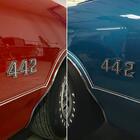
For me "over restoring my cars was a big part of the fun. I went to great lengths to make certain, to the beat of my ability to make certain that my car met the standards laid down in the Assembly Manual and from observation of the cars that were done before mine. Eric's and Cospenn's cars were perfect examples of that. Over-restored? I suppose but it was great fun doing it and I would do it that way again if the opportunity came up.
Registered User
Joined: Feb 2013
Posts: 15,409
From: Phoenix, AZ
Thanks for sharing your observations and thoughts from a judge’s perspective.
I am curious about this statement regarding exhaust systems, though. I’m not following what you were meaning about safety.
I am curious about this statement regarding exhaust systems, though. I’m not following what you were meaning about safety.




Thread Starter
Registered User
Joined: Jun 2011
Posts: 2,866
From: Carrolllton Texas
Thread Starter
Registered User
Joined: Jun 2011
Posts: 2,866
From: Carrolllton Texas
[QUOTE=Fun71;1362352]Thanks for sharing your observations and thoughts from a judge’s perspective.
I am curious about this statement regarding exhaust systems, though. I’m not following what you were meaning about safety.[/QUOTE
A damaged leaky exhaust system could potentially fill the car with noxious fumes.
I am curious about this statement regarding exhaust systems, though. I’m not following what you were meaning about safety.[/QUOTE
A damaged leaky exhaust system could potentially fill the car with noxious fumes.
Thread Starter
Registered User
Joined: Jun 2011
Posts: 2,866
From: Carrolllton Texas
I have a question, Joe. I noticed in the pics posted here that one of the cars had mirrors on all 4 sides. I used to display my car like that many years ago. Then the last time I judged (2010?) at the mtg they said to tell people to get rid of all the props. It was a crazy time when people like Thornton were putting cars up on ramps and chrome stands, etc. Inline was removing wheels to show detail, like World of Wheels stuff. What was that car doing with mirrors? Did they change that rule again?


Registered User
Joined: Aug 2013
Posts: 12,804
From: Evansville, IN
[QUOTE=costpenn;1362392]
I do try to watch what I eat before a long drive.
Thanks for sharing your observations and thoughts from a judge’s perspective.
I am curious about this statement regarding exhaust systems, though. I’m not following what you were meaning about safety.[/QUOTE
A damaged leaky exhaust system could potentially fill the car with noxious fumes.
I am curious about this statement regarding exhaust systems, though. I’m not following what you were meaning about safety.[/QUOTE
A damaged leaky exhaust system could potentially fill the car with noxious fumes.


Registered User
Joined: Feb 2009
Posts: 2,257
Having worked in a GM plan building B-O-P cars in 1972, I can say that the variability was large.
At that time, it was all done by people, and they had 60 seconds to get the jobs done.
The area that had the most variability was the painting process. Some cars got a lot of paint, others less.
And, they was always deviations from prints depending on the situation.
The line did not stop, 60 cars per hour for 2 shifts.
At that time, it was all done by people, and they had 60 seconds to get the jobs done.
The area that had the most variability was the painting process. Some cars got a lot of paint, others less.
And, they was always deviations from prints depending on the situation.
The line did not stop, 60 cars per hour for 2 shifts.
Registered User
Joined: Aug 2013
Posts: 12,804
From: Evansville, IN
Having worked in a GM plan building B-O-P cars in 1972, I can say that the variability was large.
At that time, it was all done by people, and they had 60 seconds to get the jobs done.
The area that had the most variability was the painting process. Some cars got a lot of paint, others less.
And, they was always deviations from prints depending on the situation.
The line did not stop, 60 cars per hour for 2 shifts.
At that time, it was all done by people, and they had 60 seconds to get the jobs done.
The area that had the most variability was the painting process. Some cars got a lot of paint, others less.
And, they was always deviations from prints depending on the situation.
The line did not stop, 60 cars per hour for 2 shifts.

Registered User
Joined: Jan 2010
Posts: 6,105
From: central Indiana
I have never worked in a vehicle assembly plant, so I have no clue how the handle line stop problems.
The transmission assembly plant I work in rarely stops. If there is a minor production problem, there is a button the operator pushes to direct that particular unit to a repair bay. If it’s a machine problem that can’t be fixed fairly quickly, they might stop the line and have the workers tear down units with scrap cases, sent to other lines, things like that. Very rarely will you see people sitting around.
One of the few times I can recall being sent home was probably 10 years ago. There was a new operator running a portion of the line that machined the transmission cases. I don’t know all the details, from what I understand they guy reset a fault snd started the line again. He did this a couple times, it wrecked the machine with the fault, snd then several machines after that wrecked because the previous operation wasn’t completed.
it took the maintenance snd tool engineers a few days to repair the damage and bring the machines back into tolerance. In the meantime, the assembly Dept built pumps, clutch assemblies, valve bodies etc, for service (parts that go to the dealerships for repairs in the field) that continued until they had no more room in the shipping Dept. Only then did they give us the option to go home, without pay. If you wanted to stay and work, you got loaned out to other Dept, cleaned machines, whatever they needed you to do.
In my experience, they don’t shut off those lines unless it’s a major catastrophe. The UAW has a bad reputation, and maybe in the past it was deserved. You don’t see people napping or doing crossword puzzles today!!
The transmission assembly plant I work in rarely stops. If there is a minor production problem, there is a button the operator pushes to direct that particular unit to a repair bay. If it’s a machine problem that can’t be fixed fairly quickly, they might stop the line and have the workers tear down units with scrap cases, sent to other lines, things like that. Very rarely will you see people sitting around.
One of the few times I can recall being sent home was probably 10 years ago. There was a new operator running a portion of the line that machined the transmission cases. I don’t know all the details, from what I understand they guy reset a fault snd started the line again. He did this a couple times, it wrecked the machine with the fault, snd then several machines after that wrecked because the previous operation wasn’t completed.
it took the maintenance snd tool engineers a few days to repair the damage and bring the machines back into tolerance. In the meantime, the assembly Dept built pumps, clutch assemblies, valve bodies etc, for service (parts that go to the dealerships for repairs in the field) that continued until they had no more room in the shipping Dept. Only then did they give us the option to go home, without pay. If you wanted to stay and work, you got loaned out to other Dept, cleaned machines, whatever they needed you to do.
In my experience, they don’t shut off those lines unless it’s a major catastrophe. The UAW has a bad reputation, and maybe in the past it was deserved. You don’t see people napping or doing crossword puzzles today!!

Registered User
Joined: Aug 2013
Posts: 12,804
From: Evansville, IN
This discussion reminded me of the movie "Gung Ho"....
Particularly this scene....think about when our cars were built...
https://youtu.be/jXDISooGGhE
Particularly this scene....think about when our cars were built...
https://youtu.be/jXDISooGGhE
Registered User
Joined: Aug 2013
Posts: 12,804
From: Evansville, IN
I have never worked in a vehicle assembly plant, so I have no clue how the handle line stop problems.
The transmission assembly plant I work in rarely stops. If there is a minor production problem, there is a button the operator pushes to direct that particular unit to a repair bay. If it’s a machine problem that can’t be fixed fairly quickly, they might stop the line and have the workers tear down units with scrap cases, sent to other lines, things like that. Very rarely will you see people sitting around.
One of the few times I can recall being sent home was probably 10 years ago. There was a new operator running a portion of the line that machined the transmission cases. I don’t know all the details, from what I understand they guy reset a fault snd started the line again. He did this a couple times, it wrecked the machine with the fault, snd then several machines after that wrecked because the previous operation wasn’t completed.
it took the maintenance snd tool engineers a few days to repair the damage and bring the machines back into tolerance. In the meantime, the assembly Dept built pumps, clutch assemblies, valve bodies etc, for service (parts that go to the dealerships for repairs in the field) that continued until they had no more room in the shipping Dept. Only then did they give us the option to go home, without pay. If you wanted to stay and work, you got loaned out to other Dept, cleaned machines, whatever they needed you to do.
In my experience, they don’t shut off those lines unless it’s a major catastrophe. The UAW has a bad reputation, and maybe in the past it was deserved. You don’t see people napping or doing crossword puzzles today!!
The transmission assembly plant I work in rarely stops. If there is a minor production problem, there is a button the operator pushes to direct that particular unit to a repair bay. If it’s a machine problem that can’t be fixed fairly quickly, they might stop the line and have the workers tear down units with scrap cases, sent to other lines, things like that. Very rarely will you see people sitting around.
One of the few times I can recall being sent home was probably 10 years ago. There was a new operator running a portion of the line that machined the transmission cases. I don’t know all the details, from what I understand they guy reset a fault snd started the line again. He did this a couple times, it wrecked the machine with the fault, snd then several machines after that wrecked because the previous operation wasn’t completed.
it took the maintenance snd tool engineers a few days to repair the damage and bring the machines back into tolerance. In the meantime, the assembly Dept built pumps, clutch assemblies, valve bodies etc, for service (parts that go to the dealerships for repairs in the field) that continued until they had no more room in the shipping Dept. Only then did they give us the option to go home, without pay. If you wanted to stay and work, you got loaned out to other Dept, cleaned machines, whatever they needed you to do.
In my experience, they don’t shut off those lines unless it’s a major catastrophe. The UAW has a bad reputation, and maybe in the past it was deserved. You don’t see people napping or doing crossword puzzles today!!

Always room for one more
Joined: Oct 2011
Posts: 8,961
From: Georgia
I saw that movie Gung Ho, about the only thing I remember, was someone was complaining about the poor work on the assembly line, pointed to something and the worker said, that's for the dealer to worry about.

Registered User
Joined: Apr 2011
Posts: 1,962
From: Nor Cal
I drove my 70 Cutlass SX to Reno Nats. in 2011 and they found wrinkles on my bucket seats and missed my 8-track which was converted to a CD and never saw it. Got me for a 69 master cyl. and 72 rad. over flow which was Dealer installed not bye me. I was the second owner. Orig. carpet and lighter never used. They put my car in the 442 class where I didn't stand a chance with those 442 W-30. I sold the car because of that show and got out of OCA Judging and I'm a Master Judge. My NORCALOLDS Club gave the Judges a towel to kneel on for under car Judging.
Gerald
Gerald
Registered User
Joined: Feb 2013
Posts: 15,409
From: Phoenix, AZ
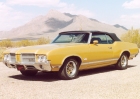
I have the ‘71 convertible as a replacement for my first car ever, a ‘70 Supreme that I drove through high school, college, and first real job. . Never thought about a points restoration and car shows, just wanted another Cutlass to drive to work and around town. Now 40 years later I’m in a collectible classic car category and I ain’t a collectible car or car show type person, just a gearhead who is still driving the same old car because I like it and I’m a cheap SOB.

Registered User
Joined: Jan 2009
Posts: 1,703
From: McCormick, SC
Once one of my cars win a 1st Junior I retire them from Judging, be it the OCA or AACA, they become show only, I have no interest in taking them up to a Senior level. I drive them, ALL of them, so I know I don't stand a chance against the trailered show cars. So why bother. In fact, years back I had a 72 Cutlass S which was completely restored and I turned that car from a show car to a driver. Oh well. I enjoyed the ride.

Registered User
Joined: Jan 2010
Posts: 2,551
From the OCA website:
Judging Class Structure
For judging, Oldsmobiles have been organized into classes to facilitate judging. Those classes are organized into three groups - Junior, Senior, and Senior Preservation.
Cars in the Junior Class that have been awarded "Best of Class" with scores of 975 or more or have exceeded 990 points in the Junior Class are moved into the Senior Class.
Cars that have earned "Best of Class" in the Senior Class are moved into Senior Preservation Class.
Senior Preservation Cars are recognized each year they score 900 points or more.
Withing those three basic groups, the cars in the stock classes are organized in model year and model groups that include similar vehicles. Additional classes have been established for Oldsmobiles that are modified, street stock, and racing vehicles.
The judging class structure is used to organize the Oldsmobiles on the showfield and helps ensure that each judging team is comparing comparable vehicles.

Thread
Thread Starter
Forum
Replies
Last Post
Jungle Cat
General Discussion
10
Mar 1, 2021 09:50 AM


