


Phase out of ethanol fuels


Thread Starter
Registered User
Joined: Mar 2012
Posts: 2,163
From: Sistersville, WV
Phase out of ethanol fuels
Bills are being proposed to phase out ethanol blended fuels. H.R.5212, S.2519.
Even the conservation groups are realizing the harm of it.
https://www.nwf.org/Home/Latest-News...iofuel-Mandate
Even the conservation groups are realizing the harm of it.
https://www.nwf.org/Home/Latest-News...iofuel-Mandate

Registered User
Joined: Jun 2009
Posts: 15,194
From: southeastern Michigan
I think it would be a very good thing, but I'm not holding my breath. The corn lobby is very strong, and much of it is in states that supported Trump in the last election. Trump or his EPA will be hard-pressed to go along with eliminating or reducing the amount of ethanol in gasoline. But, as I said, I couldn't agree more. We have plenty of oil to make gasoline. We should be using corn to feed people.

Proud Viet Nam Veteran
Joined: Dec 2006
Posts: 10,817
From: Rowlett, TX
I stopped at a station a couple weeks ago and they had the normal 10% ethanol regular and they had a 15% ethanol that was 15% ethanol and 1 octane point higher (88 octane) and 7 cents a gallon cheaper. I did not buy it but that is not speaking very well for the elimination of ethanol. We can hope.

Old(s) Fart
Joined: Mar 2007
Posts: 50,803
From: Northern VA
Wow, this is an amazing display of common sense for Congress. 
The whole "oxygenated fuel" push from the mid-70s was an ill-fated attempt to fool carburetors into running more lean than they should during winter months when the choke was closed more frequently. Naturally no one in Congress was smart enough to realize that once EFI became commonplace, the minimal emissions benefit of that went away. Of course, the ag lobby pushed to keep this gravy train in place and even expand it.
I'm all for domestically produced renewable energy sources, but nothing good comes from E10 or E15. Now, if E85 were commonly available, we could all retune our cars to take advantage of the improved performance.
The whole "oxygenated fuel" push from the mid-70s was an ill-fated attempt to fool carburetors into running more lean than they should during winter months when the choke was closed more frequently. Naturally no one in Congress was smart enough to realize that once EFI became commonplace, the minimal emissions benefit of that went away. Of course, the ag lobby pushed to keep this gravy train in place and even expand it.
I'm all for domestically produced renewable energy sources, but nothing good comes from E10 or E15. Now, if E85 were commonly available, we could all retune our cars to take advantage of the improved performance.

Registered User
Joined: Feb 2015
Posts: 1,260
From: Medina, Ohio
Wow, this is an amazing display of common sense for Congress.
The whole "oxygenated fuel" push from the mid-70s was an ill-fated attempt to fool carburetors into running more lean than they should during winter months when the choke was closed more frequently. Naturally no one in Congress was smart enough to realize that once EFI became commonplace, the minimal emissions benefit of that went away. Of course, the ag lobby pushed to keep this gravy train in place and even expand it.
I'm all for domestically produced renewable energy sources, but nothing good comes from E10 or E15. Now, if E85 were commonly available, we could all retune our cars to take advantage of the improved performance.
The whole "oxygenated fuel" push from the mid-70s was an ill-fated attempt to fool carburetors into running more lean than they should during winter months when the choke was closed more frequently. Naturally no one in Congress was smart enough to realize that once EFI became commonplace, the minimal emissions benefit of that went away. Of course, the ag lobby pushed to keep this gravy train in place and even expand it.
I'm all for domestically produced renewable energy sources, but nothing good comes from E10 or E15. Now, if E85 were commonly available, we could all retune our cars to take advantage of the improved performance.
Old(s) Fart
Joined: Mar 2007
Posts: 50,803
From: Northern VA
Unless you have a newer vehicle designed for FlexFuel, you must modify the car to use (and take advantage of) E85. Since ethanol has higher octane rating, you can run higher compression and more timing. You need to ensure that all parts of the fuel system are ethanol compatible. The biggest change is the fuel metering in the carb. Stoichiometric A/F for gasoline is 14.7:1. for E85 it's 9.8:1. This isn't just a jet change - you typically need a carb with larger passageways in the fuel circuits. You can buy E85 carbs today.

Barely Registered
Joined: Feb 2014
Posts: 2,629
From: Gillespie County, Republic of Texas
True.
And there are other aspects that don't get much attention. Ethanol has one-third less energy per gallon. If you use ethanol-free gasoline versus a 90% mix, you gain about 3% horsepower and 3% fuel economy.
I know some of you are already making but-faces. So, read on...
Yes, E85 engines make more power than gas engines.
And there are other aspects that don't get much attention. Ethanol has one-third less energy per gallon. If you use ethanol-free gasoline versus a 90% mix, you gain about 3% horsepower and 3% fuel economy.
I know some of you are already making but-faces. So, read on...
Yes, E85 engines make more power than gas engines.
- as Joe said, E85s higher octane rating allows purpose-built engines to have higher compression ratio to gain efficiency
- ethanol cools the intake charge more than gasoline, which means more mass of air and fuel for each stroke
- cooler intake charge also allows higher boost pressure on supercharged and turbocharged engines
Old(s) Fart
Joined: Mar 2007
Posts: 50,803
From: Northern VA
As I noted above, if you have EFI or even a CCC 307 with an O2 sensor, the ECU automatically compensates for the A/F difference of E10 and there is no HP difference. If you rejet your carb, same thing. Yes, you still have the mileage loss, but what matters is the cost per mile. If E10 cost per gallon is lower than for straight gasoline, the mileage difference is irrelevant.
Registered User
Joined: Feb 2013
Posts: 15,411
From: Phoenix, AZ
Phoenix is an area that is mandated to use oxygenated fuel, and I don't see the federal EPA, state AZDEQ, or any other gub'mint entity changing that any time soon (as in not in my lifetime) - way too many regulations and studies would be needed. Heck, it took a LOT of time and work just to get rid of emissions testing for older cars. The law used to be anything built in 1967 or later had to be emission tested annually; now if your 1967 or newer car has classic insurance it doesn't have to be tested.
The E-10 we have now is a lot better than the MTBE poison that was used previously.
The E-10 we have now is a lot better than the MTBE poison that was used previously.
Last edited by Fun71; Apr 7, 2018 at 10:30 AM.

Out of Line, Everytime😉
Joined: Dec 2006
Posts: 10,109
From: Melville, Saskatchewan
My boss who runs our fuel department claims there needs to be a 18 cents per liter difference in price or 72 cents a gallon difference to not buy the non ethanol 91 premium gas, we have a 10 to 14 cents per liter difference vs 10% ethanol 87 regular fuel. Of course most his data is on modern cars, their ECM's are probably advancing the timing, allowing a better burn.
Barely Registered
Joined: Feb 2014
Posts: 2,629
From: Gillespie County, Republic of Texas

Registered User
Joined: Dec 2012
Posts: 1,605
From: Fuquay Varina NC
Bills are being proposed to phase out ethanol blended fuels. H.R.5212, S.2519.
Even the conservation groups are realizing the harm of it.
https://www.nwf.org/Home/Latest-News...iofuel-Mandate
Even the conservation groups are realizing the harm of it.
https://www.nwf.org/Home/Latest-News...iofuel-Mandate
Registered User
Joined: Aug 2013
Posts: 12,810
From: Evansville, IN
When I buy gas cans, I buy plastic ones, and a "water can repair kit" that has a old fashioned nozzle, cap, and vent button. Swap caps, drill hole, push in button, new "old style" can. I'm such a rebel, but I have no excuse, my name is Lee.

Registered User
Joined: Dec 2012
Posts: 1,605
From: Fuquay Varina NC
I have to wonder how much gas is spilled with the non vented versions vs how much would be vented into atmosphere through a negligently left open vent cap?
I also wonder if anyone in congress has to pour his own gas?
I also wonder if anyone in congress has to pour his own gas?
Registered User
Joined: Feb 2015
Posts: 1,260
From: Medina, Ohio
Unless you have a newer vehicle designed for FlexFuel, you must modify the car to use (and take advantage of) E85. Since ethanol has higher octane rating, you can run higher compression and more timing. You need to ensure that all parts of the fuel system are ethanol compatible. The biggest change is the fuel metering in the carb. Stoichiometric A/F for gasoline is 14.7:1. for E85 it's 9.8:1. This isn't just a jet change - you typically need a carb with larger passageways in the fuel circuits. You can buy E85 carbs today.
Wayne

Registered User
Joined: Jun 2008
Posts: 1,434
From: Chicago
This is a good read, various fuels dyno tested in a SCCA-racer Miata... includes 93 E10 vs 93 E0.
https://grassrootsmotorsports.com/articles/fuel-truth/
https://grassrootsmotorsports.com/articles/fuel-truth/

Moderator
Joined: Jul 2007
Posts: 18,227
From: Edmond, OK
Luke, that's a cool link. Thanks for sharing.
It's interesting to see the difference in HP and torque rurnning different fuels. I wonder how much of a difference there would be in emissions (HC, CO, NoX, etc.)?
FWIW, I run E10 in my dailly drivers all the time. The price difference is so great and I don't gain that much extra mileage. Luckily, I can still get 100% gasoline for my Olds.
It's interesting to see the difference in HP and torque rurnning different fuels. I wonder how much of a difference there would be in emissions (HC, CO, NoX, etc.)?
FWIW, I run E10 in my dailly drivers all the time. The price difference is so great and I don't gain that much extra mileage. Luckily, I can still get 100% gasoline for my Olds.


Registered User
Joined: Jun 2009
Posts: 15,194
From: southeastern Michigan
This was all over the news last summer when we were busy pulling down statues of historic figures all over the country.
Here's the story.
https://www.nytimes.com/2017/08/23/b...ttesville.html
Our poor country surely has gone off the deep end.
Here's the story.
https://www.nytimes.com/2017/08/23/b...ttesville.html
Our poor country surely has gone off the deep end.

Registered User
Joined: Jun 2016
Posts: 472
From: Stockbridge, Georgia
Henry Ford's Model T carburetor could be tuned to run on gasoline or alcohol because in "the good ole days" the farmers took some of their corn and made fuel out of it. That's before gasoline was so widely distributed and all the farm equipment ran on alcohol.
Dennis
Dennis
Registered User
Joined: Feb 2013
Posts: 15,411
From: Phoenix, AZ

Last edited by Fun71; Apr 9, 2018 at 06:06 PM.
Moderator
Joined: Jul 2007
Posts: 18,227
From: Edmond, OK
Kenneth those are drastically different numbers!
Was this your Cutlass that achieved those numbers? If so, I would like to know the difference for a modern car.
BTW Dennis, you are correct. I've heard too that Model Ts and other early cars were designed to run on ethanol.
Was this your Cutlass that achieved those numbers? If so, I would like to know the difference for a modern car.
BTW Dennis, you are correct. I've heard too that Model Ts and other early cars were designed to run on ethanol.

Registered User
Joined: Nov 2009
Posts: 3,009
From: Red Oak, Texas
My first car was a 1929 Model A. We lived out in the country and there was a natural gas well on my dads property. For those who don't know, on a cold night a gas well will condense liquid gasoline called "drip gas". It is actually a very high octane fuel without any lead or other additives. It is illegal to run it in cars because taxes are not paid to the county or state for road use. My model a would run exceptionally well on drip gas. Just had to mix it about 50/50 with low octane regular.
Registered User
Joined: Dec 2016
Posts: 1,060
I’m from Vancouver, Canada and while we do have ethanol blended fuel we have 94 premium through Chevron that has no ethanol whatsoever. Been running this gas in all my high compression motors for as long as I can remember. In fact we also have 93 no ethanol gas from Petro Can. I stick with the Chevron.
Registered User
Joined: Feb 2013
Posts: 15,411
From: Phoenix, AZ
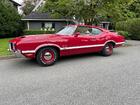
Yes, those are the readings for my '71 Cutlass. I don't have access to any info for a modern vehicle, but I suspect the difference wouldn't be as drastic for an engine with EFI, computer controls, and catalytic converter.

Registered User
Joined: Mar 2018
Posts: 410
I’m from Vancouver, Canada and while we do have ethanol blended fuel we have 94 premium through Chevron that has no ethanol whatsoever. Been running this gas in all my high compression motors for as long as I can remember. In fact we also have 93 no ethanol gas from Petro Can. I stick with the Chevron.

Thread
Thread Starter
Forum
Replies
Last Post
Bluemeanie
Major Builds & Projects
6
Feb 2, 2013 10:02 PM


