


This Old Cutlass Died Hard...

Thread Starter
Tastefully Hooped
Joined: Sep 2013
Posts: 131
From: SoCal
This Old Cutlass Died Hard...
spotted this at the local p&p recently. not sure of the year or what it hit. appears to be a "head on". whatever it was it must of been one hell of an impact. i can only imagine what might of hit the steering wheel to make it bend like that....  i wonder if p&p could of made those white "BIOHAZARD" stickers any smaller. i was bummed cause this was a front disc car but it was missing the entire passenger side rotor & caliper.
had other pics that showed the whole car but for some reason they wouldn't load... RIP
Tommy
i wonder if p&p could of made those white "BIOHAZARD" stickers any smaller. i was bummed cause this was a front disc car but it was missing the entire passenger side rotor & caliper. had other pics that showed the whole car but for some reason they wouldn't load... RIP
Tommy


Registered User
Joined: May 2013
Posts: 305
That looks exactly like the carnage of a jeep Cherokee I saw in LKQ pick your part one time. Still had police tape and biohazard stickers all over it AND the interior was all red and sticky. The steering wheel was bent like that one too!

Registered User
Joined: Dec 2010
Posts: 116
People have this misconception that big old cars are safe. We all know from the impala vs impala footage that they are absolute death traps in an accident. Drive carefully and never forget, even a smart car will provide more protection into a wall!

car guy
Joined: Apr 2008
Posts: 5,675
From: Dallas TX
Just means there was blood but in that case I would agree death.
My dad used to tow for a salvage pool auction back before Co-part took over everything. He told me several stories of nasty stuff he has seen in cars.
The worst story he told was about a dirt track race in the 70's he was at. Guy had a really bad roll over wreck his helment came out of the car. Someone went to pick up the helment and it was not empty.

Connoisseur d'Junque
Joined: Sep 2010
Posts: 21,183
From: The Hudson Valley
Classic head-on collision pattern.
Two cars going opposite directions strike mostly with their left sides, with impact force toward the rear, but also toward the center. As the impact occurs, the inertia of the rear halves of both vehicles pushes them into each other, but also causes them to rotate counter-clockwise, when viewed from above.
The driver likely instinctively shifted toward the center of the seat as he saw the other car coming at him, then was thrown forward and toward the left side with the impact, striking the right lower side of the steering wheel with his chest, as the steering wheel came in towards him, while also moving upward and to the right.
Note that the driver's door is off, indicating that the driver was probably extricated using heavy equipment. The panel behind the door is moved outward, which could have been from the accident, or from a hard pull with a machine to get the door open.
The high position of the steering wheel could have been the result of the accident, in which case the amount of room between the seat and the wheel may indicate that the driver survived with some pretty painful broken ribs. The steering wheel's position may also indicate that a machine was used to move the entire column and dashboard upward in order to get the driver's legs out.
Note also that the collapsible steering column did not break the four copper screws that hold it to the bottom of the dash and collapse, as it was designed to, probably because it caught the driver more sideways than head-on. The fact that the column did not strike the driver squarely probably also indicates that he was not wearing a seatbelt.
- Eric
Two cars going opposite directions strike mostly with their left sides, with impact force toward the rear, but also toward the center. As the impact occurs, the inertia of the rear halves of both vehicles pushes them into each other, but also causes them to rotate counter-clockwise, when viewed from above.
The driver likely instinctively shifted toward the center of the seat as he saw the other car coming at him, then was thrown forward and toward the left side with the impact, striking the right lower side of the steering wheel with his chest, as the steering wheel came in towards him, while also moving upward and to the right.
Note that the driver's door is off, indicating that the driver was probably extricated using heavy equipment. The panel behind the door is moved outward, which could have been from the accident, or from a hard pull with a machine to get the door open.
The high position of the steering wheel could have been the result of the accident, in which case the amount of room between the seat and the wheel may indicate that the driver survived with some pretty painful broken ribs. The steering wheel's position may also indicate that a machine was used to move the entire column and dashboard upward in order to get the driver's legs out.
Note also that the collapsible steering column did not break the four copper screws that hold it to the bottom of the dash and collapse, as it was designed to, probably because it caught the driver more sideways than head-on. The fact that the column did not strike the driver squarely probably also indicates that he was not wearing a seatbelt.
- Eric
Registered User
Joined: Oct 2009
Posts: 1,226
From: Central IN
Hardly an impartial test of old vs. new. More like an ad against '59 Impalas. A loaded '74 Custom Cruiser vs. the Malibu would be interesting......
That said, modern cars are much safer in impacts. 40+ years of impact dynamic studies along with engineering and metalurgical advances will do that.
Back to the OP...
Yeah, that's a killer.
I got a whole '68 'vert shell from the firewall back for the quarters. Guy who supplied it said it had hit a train and front clip was 45 degrees up and similarly over to the side. Floor & firewall had some buckling, but oddly the doors still opened/closed OK.
While cutting it up we found hair clumps in the upper windshield frame area....ewww.
Connoisseur d'Junque
Joined: Sep 2010
Posts: 21,183
From: The Hudson Valley
This was a low-mileage original car, in in good condition.
I challenge you or anyone else here to open up your frame and show that there is no dust or rust inside.
Chevys did have X-frames at that time, and that car did have a straight-six, but why is that in any way wrong? That was a standard configuration at that time, and the point of the experiment was to show a standard car against a standard car.
There was no plot or conspiracy. The organization was 50 years old in 2009, and used a 50 year old car for the illustration, which limited them to 1959 cars. They wanted to go with the most "regular" cars they could get, so they crashed Chevy into Chevy.
There was a post that I read around that time (I don't recall where now - it was four years ago), in which a guy who had looked at the '59 when it was for sale said that it had been a very solid original, with no rust (he was PO'd that they had wrecked it).
Of course that post could have been a plant, and a part of the conspiracy.
The fact is that that this was a very representative illustration of what would happen in any collision between an older car and a newer one.
The commonality is lack of passenger compartment integrity: notice how the passenger compartment crumpled in in both cases. See where the vent controls are in the Olds?
- Eric
Registered User
Joined: Aug 2013
Posts: 12,804
From: Evansville, IN
I am going to disagree with Eric. While I have no qualms with a 59 4 door biting it, even IF it was a condition 1 car, that metal is 50 years old. Yes, it is in better condition than my two old cars, I do stipulate that, but, a 50 year old test body, even perfect, is not the same as one new.
Second, as pointed out, that was the beginning of the modern frame era, and the X frame was subbed out for the modern frame in ~64, 5 years later. While one can go, oh, we need 50 years exactly, engineering says look at the design change times, and pick something appropriate.
Now, yes, modern cars are safer. I work for a car company, and modern tests drive a lot of our improvements. A current project of mine actually features some of that right now. A new car will destroy itself to protect you from any injury. People wonder why the car is so damaged, but they don't wonder why they don't have any whiplash at all. I do think some older cars had more strength against crushing, but that would only really apply against a semi, and all cars die to semis.
Big new cars are the safest. Frame vehicles. Crown Vics, and the big SUVs like the Expedition and Sequoia. Plus, your old car will absolutely not stop like the new ones, so always be extra careful with the old ones on top of that.
Second, as pointed out, that was the beginning of the modern frame era, and the X frame was subbed out for the modern frame in ~64, 5 years later. While one can go, oh, we need 50 years exactly, engineering says look at the design change times, and pick something appropriate.
Now, yes, modern cars are safer. I work for a car company, and modern tests drive a lot of our improvements. A current project of mine actually features some of that right now. A new car will destroy itself to protect you from any injury. People wonder why the car is so damaged, but they don't wonder why they don't have any whiplash at all. I do think some older cars had more strength against crushing, but that would only really apply against a semi, and all cars die to semis.
Big new cars are the safest. Frame vehicles. Crown Vics, and the big SUVs like the Expedition and Sequoia. Plus, your old car will absolutely not stop like the new ones, so always be extra careful with the old ones on top of that.
Connoisseur d'Junque
Joined: Sep 2010
Posts: 21,183
From: The Hudson Valley
In jet aircraft, yes, this has been extensively studied and is known to happen, but I do not believe that it occurs in cars.
I believe that the X-Frame design is a major cause of the observed weakness, and I agree that, in that respect, the contest was not "fair," but I would suggest that,
1. A perimeter frame would not have done very much better. In defense of this, I submit that the damage to the perimeter-frame Olds originally posted is substantially the same as the damage to the '59 Bel Air (see the linked video, which is more complete than the one posted earlier), and
2. The IHHS's point was that it was founded in 1959 in order to improve the safety of cars exactly like this one, that, in fact, they did so, and that the abandonment of the X-frame a few years later was partly the result of their earliest efforts.
Remember, the point of the video was for the IHHS to toot their own horn, not to whip up the emotions of old car owners.
- Eric
Last edited by MDchanic; Oct 9, 2013 at 09:23 AM.

Registered User
Joined: Dec 2010
Posts: 116
The change of frame design would not help much. The understanding of crash survival was flawed. Engineers attempted to strengthen cars with greater rigidity and more steel. There was no crumple zone for energy absorption and the stiffer stronger cars only increased the forces unloaded on the occupants. The lack of a reinforced passenger compartment coupled with poorly understood restraints and seat design was an unfortunate combination to anyone in a serious accident.
The only thing worse then crashing an old behemoth would be crashing an old compact i.e. beetle!
The only thing worse then crashing an old behemoth would be crashing an old compact i.e. beetle!
Registered User
Joined: Aug 2013
Posts: 12,804
From: Evansville, IN
I am neither a metallurgist nor a structural engineer, but I will withhold agreement unless I see specific data that metal fatigue over the course of 50 years would cause significant structural weakness in automotive applications.
In jet aircraft, yes, this has been extensively studied and is known to happen, but I do not believe that it occurs in cars.
I believe that the X-Frame design is a major cause of the observed weakness, and I agree that, in that respect, the contest was not "fair," but I would suggest that,
1. A perimeter frame would not have done very much better. In defense of this, I submit that the damage to the perimeter-frame Olds originally posted is substantially the same as the damage to the '59 Bel Air (see the linked video, which is more complete than the one posted earlier), and
2. The IHHS's point was that it was founded in 1959 in order to improve the safety of cars exactly like this one, that, in fact, they did so, and that the abandonment of the X-frame a few years later was partly the result of their earliest efforts.
Remember, the point of the video was for the IHHS to toot their own horn, not to whip up the emotions of old car owners.
- Eric
In jet aircraft, yes, this has been extensively studied and is known to happen, but I do not believe that it occurs in cars.
I believe that the X-Frame design is a major cause of the observed weakness, and I agree that, in that respect, the contest was not "fair," but I would suggest that,
1. A perimeter frame would not have done very much better. In defense of this, I submit that the damage to the perimeter-frame Olds originally posted is substantially the same as the damage to the '59 Bel Air (see the linked video, which is more complete than the one posted earlier), and
2. The IHHS's point was that it was founded in 1959 in order to improve the safety of cars exactly like this one, that, in fact, they did so, and that the abandonment of the X-frame a few years later was partly the result of their earliest efforts.
Remember, the point of the video was for the IHHS to toot their own horn, not to whip up the emotions of old car owners.
- Eric
Mechanical strengths of structural components are primarily based on the material of the component and the size of the component. As something rusts, the percent steel lessens, and one can then assume the strength of the component is then the size of the percentage that is still steel, as no one counts rust for structural strength. Then, there's cyclic loading, thermal loading, and other things that weaken the metal itself, and I suppose we could even consider entropic loss, but I forget how to do that.
Suffice for the sake of this conversation, I will hold to the argument that the strength is "lesser," but without examination and some time, I can't so how much, so I'll stipulate that there is no appreciable loss.
I will still argue in favor of the perimeter frame, as it is somewhat truss-like and would prevent the side overlap failures to a greater extent than the X frame. However, I do also very much agree that it was a promotional video, the point of which being to show the good progress of the IIHS, as opposed to anything scientific. This is entertainment, a la Mythbusters, rather than science.
That test is the moderate overlap front test, and it is standard. If you want to see some crazy stuff, the Small Overlap front test is the new one, and it will be required soon. Think left headlight to left headlight. That test wrecks even new cars, and a lot of companies are scrambling to make the new models pass.
Connoisseur d'Junque
Joined: Sep 2010
Posts: 21,183
From: The Hudson Valley
I can't argue engineering with a mechanical engineer, as I haven't a leg to stand on, but I will say that I personally believe that "acquired" structural deficiencies, such as rust and fatigue, played a minimal role in the results of that test, while design deficiencies played a major role.
I am interested in hearing the opinions of anyone else with direct knowledge of this field of design, whether pro or con, as I find the discussion interesting, but I won't push my opinion as though it were fact (I will assert, though, that the car was not a rust-bucket, as has been claimed in a number of other places over the years).
- Eric
ps: I searched around to try to find a definitive statement by the IIHS that the '59 was not rusty, but, in spite of the years of invective flying through the interwebs regarding this subject, I could find none.
I am interested in hearing the opinions of anyone else with direct knowledge of this field of design, whether pro or con, as I find the discussion interesting, but I won't push my opinion as though it were fact (I will assert, though, that the car was not a rust-bucket, as has been claimed in a number of other places over the years).
- Eric
ps: I searched around to try to find a definitive statement by the IIHS that the '59 was not rusty, but, in spite of the years of invective flying through the interwebs regarding this subject, I could find none.
Registered User
Joined: Aug 2013
Posts: 12,804
From: Evansville, IN
I can't argue engineering with a mechanical engineer, as I haven't a leg to stand on, but I will say that I personally believe that "acquired" structural deficiencies, such as rust and fatigue, played a minimal role in the results of that test, while design deficiencies played a major role.
I am interested in hearing the opinions of anyone else with direct knowledge of this field of design, whether pro or con, as I find the discussion interesting, but I won't push my opinion as though it were fact (I will assert, though, that the car was not a rust-bucket, as has been claimed in a number of other places over the years).
- Eric
ps: I searched around to try to find a definitive statement by the IIHS that the '59 was not rusty, but, in spite of the years of invective flying through the interwebs regarding this subject, I could find none.
I am interested in hearing the opinions of anyone else with direct knowledge of this field of design, whether pro or con, as I find the discussion interesting, but I won't push my opinion as though it were fact (I will assert, though, that the car was not a rust-bucket, as has been claimed in a number of other places over the years).
- Eric
ps: I searched around to try to find a definitive statement by the IIHS that the '59 was not rusty, but, in spite of the years of invective flying through the interwebs regarding this subject, I could find none.
 I agree with your comment on the acquired deficiencies; we don't have the data to assume one way or the other. The frame and fasteners would have had to be examined prior to the test, and compared to similar condition items in load testing vs new condition items.
'87 Delta 88 Royale
Joined: Dec 2010
Posts: 2,514
From: Margate, England
Car safety can be divided into two categories, an over simplification but broadly accurate;
#1, Primary safety, that is the ability of a car to avoid a collision in the first place, brakes, roadholding and handling and more recently smart cruise control being the main factors, good vision and comfort for the driver, a car that is easily seen - a garish color scheme as opposed to a drab finish are other perhaps less obvious factors.
#2, Secondary safety, that is how a car protects its occupants in the event of a collision. Seat belts, air bags and passenger cell integrity being principal factors here. Collapsible steering columns, safety glass, projections inside and seat mountings also come into play.
To address the point of frame vs unitary construction;
Larger vehicles all else being equal will come out better than smaller ones in a collision. But to minimise injury risks the car needs to absorb as much impact inertia as possible before the passenger space is affected. I think that is much easier to achieve with a unitary design than with a separate frame. To match the best unitaries a frame car would need the frame constructed in such a way that it would deform and absorb energy on impact without distorting the passenger cell.
Is there any crash test footage out there showing how a Crown Vic compares with say an S class Mercedes or similar vehicle?. My money would be on the unitary car.
Roger.
'87 Delta 88 Royale
Joined: Dec 2010
Posts: 2,514
From: Margate, England
Biohazard stickers, I'm guessing that means there are human tissues present, does that mean you can't remove parts from the car?. If so what is it doing in a pick'n'pull?, shouldn't it be in a separate area?.
Roger.
Roger.
Connoisseur d'Junque
Joined: Sep 2010
Posts: 21,183
From: The Hudson Valley
Yes, presumably the previous driver had to be hosed out of it, but that doesn't mean that there's any reason to avoid taking parts from it, aside from squeamishness.
There is nothing that you could catch from human bits that had been sitting dry for months or years, other than possibly Jakob Creutzfeldt or Mad Cow disease, which are extremely rare, and which are probably only transmittable if you eat the bits.
- Eric
There is nothing that you could catch from human bits that had been sitting dry for months or years, other than possibly Jakob Creutzfeldt or Mad Cow disease, which are extremely rare, and which are probably only transmittable if you eat the bits.
- Eric

Registered User
Joined: Aug 2013
Posts: 12,804
From: Evansville, IN
It seems you are implying frame vehicles are safer than unibodies. Apologies if I have misunderstood your post.
Car safety can be divided into two categories, an over simplification but broadly accurate;
#1, Primary safety, that is the ability of a car to avoid a collision in the first place, brakes, roadholding and handling and more recently smart cruise control being the main factors, good vision and comfort for the driver, a car that is easily seen - a garish color scheme as opposed to a drab finish are other perhaps less obvious factors.
#2, Secondary safety, that is how a car protects its occupants in the event of a collision. Seat belts, air bags and passenger cell integrity being principal factors here. Collapsible steering columns, safety glass, projections inside and seat mountings also come into play.
To address the point of frame vs unitary construction;
Larger vehicles all else being equal will come out better than smaller ones in a collision. But to minimise injury risks the car needs to absorb as much impact inertia as possible before the passenger space is affected. I think that is much easier to achieve with a unitary design than with a separate frame. To match the best unitaries a frame car would need the frame constructed in such a way that it would deform and absorb energy on impact without distorting the passenger cell.
Is there any crash test footage out there showing how a Crown Vic compares with say an S class Mercedes or similar vehicle?. My money would be on the unitary car.
Roger.
Car safety can be divided into two categories, an over simplification but broadly accurate;
#1, Primary safety, that is the ability of a car to avoid a collision in the first place, brakes, roadholding and handling and more recently smart cruise control being the main factors, good vision and comfort for the driver, a car that is easily seen - a garish color scheme as opposed to a drab finish are other perhaps less obvious factors.
#2, Secondary safety, that is how a car protects its occupants in the event of a collision. Seat belts, air bags and passenger cell integrity being principal factors here. Collapsible steering columns, safety glass, projections inside and seat mountings also come into play.
To address the point of frame vs unitary construction;
Larger vehicles all else being equal will come out better than smaller ones in a collision. But to minimise injury risks the car needs to absorb as much impact inertia as possible before the passenger space is affected. I think that is much easier to achieve with a unitary design than with a separate frame. To match the best unitaries a frame car would need the frame constructed in such a way that it would deform and absorb energy on impact without distorting the passenger cell.
Is there any crash test footage out there showing how a Crown Vic compares with say an S class Mercedes or similar vehicle?. My money would be on the unitary car.
Roger.
I would think that a framed vehicle, with a deforming shell that slowly shears away from the body mounts, while keeping the front of the frame and suspension there as a buffer, would be preferable.
Registered User
Joined: Feb 2010
Posts: 1,587
From: West Michigan
A couple things to consider in the collision between an old car and new car:
A crumple zone, no matter which car it's in, benefits both drivers. Energy is absorbed and slows the rate at which each driver decelerates. The damage to the driver of the 50s car is due more to the hard interior surfaces and lack of shoulder belt or airbag than due to the lack of a crumple zone.
The car with the larger mass comes to a stop slower and thus exerts less force on that driver's body and organs. The car with the less mass actually reverses direction. (Note that this is not necessarily a benefit for the older car, as many modern cars weigh more than those of the 50s and 60s.)
A crumple zone, no matter which car it's in, benefits both drivers. Energy is absorbed and slows the rate at which each driver decelerates. The damage to the driver of the 50s car is due more to the hard interior surfaces and lack of shoulder belt or airbag than due to the lack of a crumple zone.
The car with the larger mass comes to a stop slower and thus exerts less force on that driver's body and organs. The car with the less mass actually reverses direction. (Note that this is not necessarily a benefit for the older car, as many modern cars weigh more than those of the 50s and 60s.)
Registered User
Joined: Aug 2012
Posts: 413
From: Adelaide south Australia
Not to be a smart alec but you can probably understand my interest in all this ( driving a 59 an all).
Olds Engineers was not happy with the X frame from the onset because it made the cars too flexible in the middle and the rattles and squeaks that followed. They re engineered it and called it a Perimeter frame and subtly advertised it so as to not offend the top and bottom of the food chain ( ie Cad, Chev etc).
But not withstanding this any car on a frame is going to transmit the energy of a collision from one end to the other and absorb very little. This means the passengers are in for a bad time.
The other issue is the panels are not very strong and offer little resistance or cohesion, so if what ever you hit ends up un top of the rails it will just rub the body off the chassis.
Modern cars are amazing pieces of engineering technology, developed in the 50 yrs since the hapless Impala was built, and is clearly shown by the death rate on the roads.
The high point in Australia for road deaths was in the late 70's when laws had to be passed to make cars and driver attitudes safer.
There was a saying when someone was killed on the road and that saying was ' It must have been their time', but we know that you can make not only cars safer but the roads and the roadside furniture aswell.
The last car on a frame was built in the early 80's ( large GM of course)but the sedans finished in 79.
To choose to drive an old car is done knowing their short comings and adjusting our driving accordingly.
Olds Engineers was not happy with the X frame from the onset because it made the cars too flexible in the middle and the rattles and squeaks that followed. They re engineered it and called it a Perimeter frame and subtly advertised it so as to not offend the top and bottom of the food chain ( ie Cad, Chev etc).
But not withstanding this any car on a frame is going to transmit the energy of a collision from one end to the other and absorb very little. This means the passengers are in for a bad time.
The other issue is the panels are not very strong and offer little resistance or cohesion, so if what ever you hit ends up un top of the rails it will just rub the body off the chassis.
Modern cars are amazing pieces of engineering technology, developed in the 50 yrs since the hapless Impala was built, and is clearly shown by the death rate on the roads.
The high point in Australia for road deaths was in the late 70's when laws had to be passed to make cars and driver attitudes safer.
There was a saying when someone was killed on the road and that saying was ' It must have been their time', but we know that you can make not only cars safer but the roads and the roadside furniture aswell.
The last car on a frame was built in the early 80's ( large GM of course)but the sedans finished in 79.
To choose to drive an old car is done knowing their short comings and adjusting our driving accordingly.
Registered Luser
Joined: Aug 2006
Posts: 3,785
From: LI,NY
Not to be a smart alec but you can probably understand my interest in all this ( driving a 59 an all).
Olds Engineers was not happy with the X frame from the onset because it made the cars too flexible in the middle and the rattles and squeaks that followed. They re engineered it and called it a Perimeter frame and subtly advertised it so as to not offend the top and bottom of the food chain ( ie Cad, Chev etc).
But not withstanding this any car on a frame is going to transmit the energy of a collision from one end to the other and absorb very little. This means the passengers are in for a bad time.
The other issue is the panels are not very strong and offer little resistance or cohesion, so if what ever you hit ends up un top of the rails it will just rub the body off the chassis.
Modern cars are amazing pieces of engineering technology, developed in the 50 yrs since the hapless Impala was built, and is clearly shown by the death rate on the roads.
The high point in Australia for road deaths was in the late 70's when laws had to be passed to make cars and driver attitudes safer.
There was a saying when someone was killed on the road and that saying was ' It must have been their time', but we know that you can make not only cars safer but the roads and the roadside furniture aswell.
The last car on a frame was built in the early 80's ( large GM of course)but the sedans finished in 79.
To choose to drive an old car is done knowing their short comings and adjusting our driving accordingly.
Olds Engineers was not happy with the X frame from the onset because it made the cars too flexible in the middle and the rattles and squeaks that followed. They re engineered it and called it a Perimeter frame and subtly advertised it so as to not offend the top and bottom of the food chain ( ie Cad, Chev etc).
But not withstanding this any car on a frame is going to transmit the energy of a collision from one end to the other and absorb very little. This means the passengers are in for a bad time.
The other issue is the panels are not very strong and offer little resistance or cohesion, so if what ever you hit ends up un top of the rails it will just rub the body off the chassis.
Modern cars are amazing pieces of engineering technology, developed in the 50 yrs since the hapless Impala was built, and is clearly shown by the death rate on the roads.
The high point in Australia for road deaths was in the late 70's when laws had to be passed to make cars and driver attitudes safer.
There was a saying when someone was killed on the road and that saying was ' It must have been their time', but we know that you can make not only cars safer but the roads and the roadside furniture aswell.
The last car on a frame was built in the early 80's ( large GM of course)but the sedans finished in 79.
To choose to drive an old car is done knowing their short comings and adjusting our driving accordingly.
Registered User
Joined: Aug 2012
Posts: 413
From: Adelaide south Australia
I read somewhere the Crown Vic was canned because of its emissions and crash worthiness or lack there of.
Struck me as ironic as it mainly sold to law protection!
'87 Delta 88 Royale
Joined: Dec 2010
Posts: 2,514
From: Margate, England
Framed vehicles have a lot of crumple zones themselves. I think a lot of peoples' perception of car crashes is that the most deformation and energy dispersion is the best. Maybe so, but, if it deforms so much you get squashed, then it's no good. A framed vehicle will put the front horn right into the other car, slowing it down and keeping the crushing at a lesser amount.
How well a frame or unitary design can be constructed to reduce passenger cell deformation is beyond my knowledge. It takes many hours of expensive testing and real life accident investigation to make any proper conclusions.
However, I would put my money on a unitary construction being generally better.
Of course you can construct a situation where one design will be better than another - even one where the occupants are thrown out of the car and so avoid drowning or burning alive.
Safety design has to cater for the most likely situations, corner to corner and side impacts are I think the most probable.
Roger.
Seasoned beater pilot.
Joined: Jan 2007
Posts: 5,468
From: Chicago
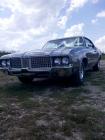
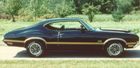
Cutlass was a 1970. It's written on the hood in grease pencil.
Also, the 59 impala vs a 2009 impala was a fun video to watch. Those X frames were lame and they knew it.
It's a good "Chevy.....look how we've progressed" video, but it really is an apples to oranges match. They could have used a unibody vs. unibody comparison instead.
Had it been a 75 Impala, The results would have been VERY different in my opinion.
A blanket statement like: "Old cars aren't safer." is not entirely unfair because Most of them aren't as safe, BUT there are some stout ones out there that I'd pit against that 09' any day.
ANY Cutlass wouldn't be one of them however.
Also, the 59 impala vs a 2009 impala was a fun video to watch. Those X frames were lame and they knew it.
It's a good "Chevy.....look how we've progressed" video, but it really is an apples to oranges match. They could have used a unibody vs. unibody comparison instead.
Had it been a 75 Impala, The results would have been VERY different in my opinion.
A blanket statement like: "Old cars aren't safer." is not entirely unfair because Most of them aren't as safe, BUT there are some stout ones out there that I'd pit against that 09' any day.
ANY Cutlass wouldn't be one of them however.

Thread
Thread Starter
Forum
Replies
Last Post
cjprm
Interior/Upholstery
1
May 19, 2011 09:17 AM


