


NOS, NORS, Repro, and Day Two

Thread Starter
Registered User
Joined: Aug 2013
Posts: 12,804
From: Evansville, IN
NOS, NORS, Repro, and Day Two
NOS, new old stock, is a term much abused by vendors and private sellers. It means an unused, never installed part from the original production run of the OEM. It can also mean a service replacement part, again unused, and again from the OEM that was made later to go on the car if needed by a dealership or mechanic. We can run into problems with this with part commonization, where parts are combined to work "ok" as the vehicle ages, even though they weren't the right part originally. We see this with radiators and others.
NORS, new old replacement stock, is time-period wear parts. Spark plugs, rotors, oil filters, air filters. As GM wasn't in the business of the wear parts, the specific brand and part number that came on the car would be NOS, but, otherwise, it's NORS.
Reproduction parts are not NOS or NORS. They were not there originally, and are simply reproduction, even if they are old and unused.
Day two is a term for period correct aftermarket stuff. A common example is a Sun Tach.
These are my thoughts and are not meant to be law, but, rather, just how I understand it. Feel free to add/correct. I wrote this because I noticed someone selling something NOS reproduction here, and maybe I'm being too picky.
NORS, new old replacement stock, is time-period wear parts. Spark plugs, rotors, oil filters, air filters. As GM wasn't in the business of the wear parts, the specific brand and part number that came on the car would be NOS, but, otherwise, it's NORS.
Reproduction parts are not NOS or NORS. They were not there originally, and are simply reproduction, even if they are old and unused.
Day two is a term for period correct aftermarket stuff. A common example is a Sun Tach.
These are my thoughts and are not meant to be law, but, rather, just how I understand it. Feel free to add/correct. I wrote this because I noticed someone selling something NOS reproduction here, and maybe I'm being too picky.


'72 Cutlass ragtop
Joined: Jun 2016
Posts: 1,321
From: Tampa, FL
I dunno - a reproduction part is still a reproduction part whether a newly made part, somewhat newer production or manufactured long enough ago to be considered 'old stock' - Still arguably a 'new' old reproduction part if never out of package or installed, but not (to me anyway) an NOS-designation item as in new old genuine factory part stock.
Shoveling Snow
Joined: Aug 2008
Posts: 2,732
From: Yoder-Hey-Land
Service replacement was used to denote a part from the dealer which ever brand it is as a direct replacement for an assembly line part.
That term was the only term for a part in my many years in dealer parts department.
NOS is just a concocked term used at swapmeets by vendors.
Pretty much as assembly manual was and is used for a Product Information Manual.
That term was the only term for a part in my many years in dealer parts department.
NOS is just a concocked term used at swapmeets by vendors.
Pretty much as assembly manual was and is used for a Product Information Manual.

Old(s) Fart
Joined: Mar 2007
Posts: 50,803
From: Northern VA
NOS, new old stock, is a term much abused by vendors and private sellers. It means an unused, never installed part from the original production run of the OEM. It can also mean a service replacement part, again unused, and again from the OEM that was made later to go on the car if needed by a dealership or mechanic. We can run into problems with this with part commonization, where parts are combined to work "ok" as the vehicle ages, even though they weren't the right part originally. We see this with radiators and others.
NORS, new old replacement stock, is time-period wear parts. Spark plugs, rotors, oil filters, air filters. As GM wasn't in the business of the wear parts, the specific brand and part number that came on the car would be NOS, but, otherwise, it's NORS.
Reproduction parts are not NOS or NORS. They were not there originally, and are simply reproduction, even if they are old and unused.
Day two is a term for period correct aftermarket stuff. A common example is a Sun Tach.
These are my thoughts and are not meant to be law, but, rather, just how I understand it. Feel free to add/correct. I wrote this because I noticed someone selling something NOS reproduction here, and maybe I'm being too picky.
NORS, new old replacement stock, is time-period wear parts. Spark plugs, rotors, oil filters, air filters. As GM wasn't in the business of the wear parts, the specific brand and part number that came on the car would be NOS, but, otherwise, it's NORS.
Reproduction parts are not NOS or NORS. They were not there originally, and are simply reproduction, even if they are old and unused.
Day two is a term for period correct aftermarket stuff. A common example is a Sun Tach.
These are my thoughts and are not meant to be law, but, rather, just how I understand it. Feel free to add/correct. I wrote this because I noticed someone selling something NOS reproduction here, and maybe I'm being too picky.


Registered User
Joined: Jan 2012
Posts: 127
My 2 cents
NOS - any part manufactured by the OEM that originally would have came on a car when new. So part #123 is NOS as long as the part # is the same from the OEM.
NORS - any OEM part manufactured to supersede an original part. Usually a new and improved design. So part #456 is the newer version of part #123 if from the OEM. Can also be the same part # with a modified design.
Repro - any part made by a non-OEM to mimic the original part. Part # can be the same as OEM part number. Must be identical to the Original, NOS, or NORS.
Replacement - any non-OEM part. Can be a Repro, but generally just a part that works but isn't necessarily identical to OEM.
Day Two - surprisingly, first time I have encountered this term, so I'll agree with OP's definition.
NOS - any part manufactured by the OEM that originally would have came on a car when new. So part #123 is NOS as long as the part # is the same from the OEM.
NORS - any OEM part manufactured to supersede an original part. Usually a new and improved design. So part #456 is the newer version of part #123 if from the OEM. Can also be the same part # with a modified design.
Repro - any part made by a non-OEM to mimic the original part. Part # can be the same as OEM part number. Must be identical to the Original, NOS, or NORS.
Replacement - any non-OEM part. Can be a Repro, but generally just a part that works but isn't necessarily identical to OEM.
Day Two - surprisingly, first time I have encountered this term, so I'll agree with OP's definition.

Registered User
Joined: Dec 2014
Posts: 16,710
"Day Two" is a term coined by the muscle car restoration media. It is meant to denote a car equipped with period correct (another questionable term) aftermarket parts much as an enthusiastic new owner might have done shortly after purchasing the vehicle back in the day. As Joe points out, it has since become a bullshit dump for cars equipped with incorrect or inappropriate parts.
Old(s) Fart
Joined: Mar 2007
Posts: 50,803
From: Northern VA
My 2 cents
NOS - any part manufactured by the OEM that originally would have came on a car when new. So part #123 is NOS as long as the part # is the same from the OEM.
NORS - any OEM part manufactured to supersede an original part. Usually a new and improved design. So part #456 is the newer version of part #123 if from the OEM. Can also be the same part # with a modified design.
NOS - any part manufactured by the OEM that originally would have came on a car when new. So part #123 is NOS as long as the part # is the same from the OEM.
NORS - any OEM part manufactured to supersede an original part. Usually a new and improved design. So part #456 is the newer version of part #123 if from the OEM. Can also be the same part # with a modified design.
NOS refers to parts from the OEM, and that includes replacements. For example, the 1971-72 style A-body fenders with the crumple zone dimples replaced the 1970 fenders in the parts network. I have a pair still in the boxes and they are referred to as NOS, not NORS.

Registered User
Joined: Jan 2010
Posts: 2,551
Repo can be used as a short for Repop, aka Reproduction.
I have no problem with the term NOS when used properly. Keep in mind that NOS doesn't mean perfect, or useable. It only means it's an unused part that was sanctioned by GM for that application but it is no longer in production and kept in regular stock for GM. I've seen several NOS items like gear sets and spindles with rust caked all over them. NOS? Sure. Useable? Maybe, but only after you restore it. Sometimes you may not want to trust an NOS part. Like, if someone just found an NOS set of tires for their application. 50 year-old tires probably isn't a good thing to buy to use on your car. Neat that you found them, but there are some limitations. Unfortunately, NOS usually means "expensive", depending on the rarity and other factors of such a part.
Although, Service Parts is another definition, but they could be considered NOS as well, depending- while all GM replacement parts OTC that fit on your vehicle can be viewed loosely as a service part, GMSPO had a GM part number, and also a catalog number. This could differ than the GM production number. Not like they loved to add to confusion. GM part numbers could match the PIM, or maybe not. Some parts had a production number and what they called a "service number", which is just another name for catalog number. Regardless, the catalog number is what was used to order such a part. This is what was used to pick the part from the warehouse. The part number originally used may or may not still be on the part, but the number on the package or ID tag, whatever was used, would be the catalog number. And sometimes, the catalog number would change and be listed as supersession numbers to previous catalog numbers. It could get to be rather taxing to find all the part number cross-references.
Service number example: 85 442 factory carb was production number 17085554. The replacement "new" carburetor had a GM/Delco "Service Number" of 17111239. And the new carb itself has a 17085554 stamped into it. You had to order a new one by the service number as 17085554 was not a good part number in the GM system.
The worst things to find in the GMSPO catalog system is the dreaded N.S., or "Part of #1", etc. N.S. means not serviced by GM, so you're on your own. Not many things are like this, but they do show up from time to time. "Part of #1" or similar means that part isn't available separately, and you must buy the entire assembly to get that particular part. Not always a bad thing, but makes things more expensive than they need to be.
Using the generally accepted definitions, NORS can also be NOS in some cases. For example, a 1985 Y/9 307 engine used a certain thermistor for the ECM coolant temperature. They upgraded that in 1986, so factory cars got the new part and then it was "retrofitted" to the earlier models when people went to get a replacement. So when you needed to replace the temp sensor, you got a new kit to swap out your old sensor with the new one and the new plug you needed to splice into your harness was included in the box. So while one of those kits new in the box today is NORS for 85 and earlier, it's considered NOS for 86-90 307.
It can get messy in a hurry with trying to remember everything about the GM part numbering system. Most of the time, though, somehow it worked. Sometimes, it didn't. I bought a Cutlass fender one time and when it arrived at the dealership, it was a Camaro front fender. Had the Cutlass part number sticker on it, though. I'd have kept it if the Camaro fender was more expensive, but it wasn't, so back it went for the correct replacement. Stranger things have happened.
I have no problem with the term NOS when used properly. Keep in mind that NOS doesn't mean perfect, or useable. It only means it's an unused part that was sanctioned by GM for that application but it is no longer in production and kept in regular stock for GM. I've seen several NOS items like gear sets and spindles with rust caked all over them. NOS? Sure. Useable? Maybe, but only after you restore it. Sometimes you may not want to trust an NOS part. Like, if someone just found an NOS set of tires for their application. 50 year-old tires probably isn't a good thing to buy to use on your car. Neat that you found them, but there are some limitations. Unfortunately, NOS usually means "expensive", depending on the rarity and other factors of such a part.
Although, Service Parts is another definition, but they could be considered NOS as well, depending- while all GM replacement parts OTC that fit on your vehicle can be viewed loosely as a service part, GMSPO had a GM part number, and also a catalog number. This could differ than the GM production number. Not like they loved to add to confusion. GM part numbers could match the PIM, or maybe not. Some parts had a production number and what they called a "service number", which is just another name for catalog number. Regardless, the catalog number is what was used to order such a part. This is what was used to pick the part from the warehouse. The part number originally used may or may not still be on the part, but the number on the package or ID tag, whatever was used, would be the catalog number. And sometimes, the catalog number would change and be listed as supersession numbers to previous catalog numbers. It could get to be rather taxing to find all the part number cross-references.
Service number example: 85 442 factory carb was production number 17085554. The replacement "new" carburetor had a GM/Delco "Service Number" of 17111239. And the new carb itself has a 17085554 stamped into it. You had to order a new one by the service number as 17085554 was not a good part number in the GM system.
The worst things to find in the GMSPO catalog system is the dreaded N.S., or "Part of #1", etc. N.S. means not serviced by GM, so you're on your own. Not many things are like this, but they do show up from time to time. "Part of #1" or similar means that part isn't available separately, and you must buy the entire assembly to get that particular part. Not always a bad thing, but makes things more expensive than they need to be.
Using the generally accepted definitions, NORS can also be NOS in some cases. For example, a 1985 Y/9 307 engine used a certain thermistor for the ECM coolant temperature. They upgraded that in 1986, so factory cars got the new part and then it was "retrofitted" to the earlier models when people went to get a replacement. So when you needed to replace the temp sensor, you got a new kit to swap out your old sensor with the new one and the new plug you needed to splice into your harness was included in the box. So while one of those kits new in the box today is NORS for 85 and earlier, it's considered NOS for 86-90 307.
It can get messy in a hurry with trying to remember everything about the GM part numbering system. Most of the time, though, somehow it worked. Sometimes, it didn't. I bought a Cutlass fender one time and when it arrived at the dealership, it was a Camaro front fender. Had the Cutlass part number sticker on it, though. I'd have kept it if the Camaro fender was more expensive, but it wasn't, so back it went for the correct replacement. Stranger things have happened.
Old(s) Fart
Joined: Mar 2007
Posts: 50,803
From: Northern VA
Using the generally accepted definitions, NORS can also be NOS in some cases. For example, a 1985 Y/9 307 engine used a certain thermistor for the ECM coolant temperature. They upgraded that in 1986, so factory cars got the new part and then it was "retrofitted" to the earlier models when people went to get a replacement. So when you needed to replace the temp sensor, you got a new kit to swap out your old sensor with the new one and the new plug you needed to splice into your harness was included in the box. So while one of those kits new in the box today is NORS for 85 and earlier, it's considered NOS for 86-90 307.
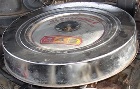
This is considered to be NOS (note that it has a GM part number):

If it is a new old part equivalent to an OEM part but manufactured by an outside supplier (Moog, McQuay-Norris, TRW, Clevite, Standard Motor Products), that is generally considered to be NORS.
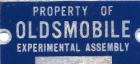
This is considered to be NORS:


Thread
Thread Starter
Forum
Replies
Last Post


