


"Clunk" when downshifting

Thread Starter
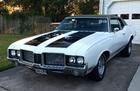
1972 U code Supreme
Joined: Jul 2018
Posts: 4,100
From: Chesapeake, VA
"Clunk" when downshifting
When I'm out driving my '72 Supreme, I hear a "clunk" when it downshifts from 3-2 and 2-1. It's a TH400 and I first noticed it about a year and a half ago. It only happens when I've driven for about 20-30 minutes and the car is up to normal operating temp. I've checked the U joints and when I try to turn the drive shaft there's no play. Trans fluid level is good and no abnormal noises when driving. Upshifts are smooth and normal. Also since I first noticed it, it hasn't gotten any worse, and as I said, the car drives fine.
I was wondering if anyone has experienced this or is there anything else I should look at?
I was wondering if anyone has experienced this or is there anything else I should look at?

Thread Starter
1972 U code Supreme
Joined: Jul 2018
Posts: 4,100
From: Chesapeake, VA

Running On Empty
Joined: Jul 2018
Posts: 26,056
From: Earth
The firmness of shift points is soooooo....user specific.....some like hard & firm others slow & easy. Have you ever replaced the modulator? They do go bad both the innards can go bad & the O-Ring which holds it into place. I have no idea why it would shift harder in a down-shift mode than an up-shift mode. There's many videos on the TH400. This guy does a decent simple job of explaining....nothing evident regarding downshifting being harder than upshifting though. Maybe trial & error, maybe faulting modulator valve?
Thread Starter
1972 U code Supreme
Joined: Jul 2018
Posts: 4,100
From: Chesapeake, VA
The firmness of shift points is soooooo....user specific.....some like hard & firm others slow & easy. Have you ever replaced the modulator? They do go bad both the innards can go bad & the O-Ring which holds it into place. I have no idea why it would shift harder in a down-shift mode than an up-shift mode. There's many videos on the TH400. This guy does a decent simple job of explaining....nothing evident regarding downshifting being harder than upshifting though. Maybe trial & error, maybe faulting modulator valve?
Running On Empty
Joined: Jul 2018
Posts: 26,056
From: Earth
Basically - you got it. The valve body is contained w/in a supporting bracket and basically resides in the supporting bracket (which holds the modulator itself in place). There's videos on it, it's really, really simple to replace. If I recall correctly (?) you remove the bracket, the modulator and bracket are now in your hand, then remove the modulator body - you have to remove the vacuum hose first (obviously). Easy peasy.

Registered User
Joined: Feb 2013
Posts: 15,409
From: Phoenix, AZ
Basically - you got it. The valve body is contained w/in a supporting bracket and basically resides in the supporting bracket (which holds the modulator itself in place). There's videos on it, it's really, really simple to replace. If I recall correctly (?) you remove the bracket, the modulator and bracket are now in your hand, then remove the modulator body - you have to remove the vacuum hose first (obviously). Easy peasy.
the modulator valve is a single piece that is held in by a metal retainer (what you referred to as the bracket). Remove the bolt and slide the valve out of the bore in the transmission housing.
And I suspect your mention of the valve body was in error as that is the transmission’s mechanical hydraulic control mechanism. The pan has to be removed to even see it.
Last edited by Fun71; Jun 25, 2023 at 04:54 PM.
Running On Empty
Joined: Jul 2018
Posts: 26,056
From: Earth
Norm,
the modulator valve is a single piece that is held in by a metal retainer (what you referred to as the bracket). Remove the bolt and slide the valve out of the bore in the transmission housing.
And I suspect your mention of the valve body was in error as that is the transmission’s mechanical hydraulic control mechanism. The pan has to be removed to even see it.
the modulator valve is a single piece that is held in by a metal retainer (what you referred to as the bracket). Remove the bolt and slide the valve out of the bore in the transmission housing.
And I suspect your mention of the valve body was in error as that is the transmission’s mechanical hydraulic control mechanism. The pan has to be removed to even see it.
Thread Starter
1972 U code Supreme
Joined: Jul 2018
Posts: 4,100
From: Chesapeake, VA
Thread Starter
1972 U code Supreme
Joined: Jul 2018
Posts: 4,100
From: Chesapeake, VA
If the transmission mount were bad, then wouldn't I also notice the issue on upshifts especially under hard acceleration? Also, wouldn't it be all the time instead of only after driving it for a while?
Thread Starter
1972 U code Supreme
Joined: Jul 2018
Posts: 4,100
From: Chesapeake, VA
Running On Empty
Joined: Jul 2018
Posts: 26,056
From: Earth
So…it only happens during downshifts and only after having driven awhile. I reckon one delta might be difference in load. Load is being applied to the engine transmission and power train during acceleration - certainly not the same type load you’d expect in decelerating. I don’t know but perhaps you might disconnect the modulator from the intake manifold then take it for a spin just to see if the same clunk is or is not heard during deceleration at downshift points. I’d try it with the end of the modulator hose left open and the same with it plugged. Obviously you’ll need to cap the intake manifold orifice where the modulator was connected. Thought anyways.

Registered User
Joined: Mar 2013
Posts: 1,914
From: St. Clair, MI
Have you tried moving the driveshaft forward and back to eliminate any possibility of it being axle related.
And check over your exhaust for any points of contact with the body or frame during the downshift.
When I workwd as a Tech in the 90s on GMC trucks, we started getting a good number of reports of a clunk on accel downshift, and the first thing they tried was adjusting the TV cable and rebuilding the transmissions, with no success..Eventually it was narrowed down to a deffective front yoke that was contacting the back of the output shaft of .the trans on downshift accel. A little bit of investigation would have solved the problem quicker, but dealer Techs got paid to fix things, not diagnois, so they were all rushing to a possible fix without really finding the cause.Eliminate all the possibilities, and youre left with the answer, without throwing money at a bunch of maybes


Thread
Thread Starter
Forum
Replies
Last Post
SirVelociraptor
Transmission
14
Dec 12, 2022 03:10 PM


