


body tag "build week" what does it represent?


Thread Starter
Registered User
Joined: Dec 2010
Posts: 1,580
From: Las Vegas, NV
body tag "build week" what does it represent?
a few comments were made in a For Sale thread that lead to this thread, what does the Fisher Body "build week" date actually translate to?
Is it the date the body was "started"?
Is it the date the body was "completed"?
Is it the date the body was "scheduled"?
Are they considered "written in stone" or are there known/documented early or late cars?
Is it the date the body was "started"?
Is it the date the body was "completed"?
Is it the date the body was "scheduled"?
Are they considered "written in stone" or are there known/documented early or late cars?
Thread Starter
Registered User
Joined: Dec 2010
Posts: 1,580
From: Las Vegas, NV
The comments/discussion about the “production date” ofthis 1968 W30 442 differ from my understanding of what the build date info stampedon a body tag represents.
11A, 11B, 11C, 11D, 11E – what week/days of November ’67 doeach of these represent?
Sunday thru Saturday calendar week (changing every month):
November 1967
A = 1st – 4th
B = 5th – 11th
C = 12th – 18th
D = 19th – 25th
E = 26th – end of month
or
a 7 day week (consistent every month):
A = 1st – 7th
B = 8th – 14th
C = 15th – 21st
D = 22nd – 28th
E = 29th – end of month
I believe it is the latter, or is it something different?
If the dates represented Sunday thru Saturday calendarweeks starting on the first of each month,
1968 model year:
09A, 12A, 03A –would be one day “weeks” (Friday)
06A – would be a zero day “week” (Saturday only) thereare plenty of 06A Oldsmobiles including a number of H/Os
The reason “E” week cars are so few & far between –so few possible work days fall on those days in a given work month/year (29th/30th/31stonly).
This particular 442 could’ve easily been built during 11B(8th – 14th), delivered to Milwaukee, WI (320 miles fromLansing, MI) and the customer taking delivery on Thursday the 16th (2day minimum/8 day maximum).What wasOldsmobile’s policy regarding owner pick-up/drive-away at the plant, circa November1967?
My former “provincial white” 1968 W-30 442 was also an11B car – its VIN sequence is ~1,100 units before this “scarlet” car, but itsbody sequence number is ~1,500 units after. By my calculations: Lansing averaged assemblyof ~1,000 Oldsmobile a-bodies per day.Ballpark:“scarlet” car built first by 2 calendar days.
It is also my understanding that the build at Fisher Body Lansing was closelyfollowed by final build at LansingAssembly (or what their proper names were?).Since the a-bodies had little “shipping”between the two, the final build began hours not days after the body’s completion.
How many shifts,built/assembled cars at Lansing?
How many shiftsdid it take to complete a car, from its start at Fisher Body to a running carready for delivery?
1968 model year at Lansing accounted for 380,000+cars.A normal full production week’sworth of builds at Lansing would consist of ~7,500 cars, and occupy 33 acres ofreal estate if parked door to door with no aisles, 3 week’s 100 acres.The place was massive, but I don’t believethere was room for that number of cars in process on-site.
11A, 11B, 11C, 11D, 11E – what week/days of November ’67 doeach of these represent?
Sunday thru Saturday calendar week (changing every month):
November 1967
A = 1st – 4th
B = 5th – 11th
C = 12th – 18th
D = 19th – 25th
E = 26th – end of month
or
a 7 day week (consistent every month):
A = 1st – 7th
B = 8th – 14th
C = 15th – 21st
D = 22nd – 28th
E = 29th – end of month
I believe it is the latter, or is it something different?
If the dates represented Sunday thru Saturday calendarweeks starting on the first of each month,
1968 model year:
09A, 12A, 03A –would be one day “weeks” (Friday)
06A – would be a zero day “week” (Saturday only) thereare plenty of 06A Oldsmobiles including a number of H/Os
The reason “E” week cars are so few & far between –so few possible work days fall on those days in a given work month/year (29th/30th/31stonly).
This particular 442 could’ve easily been built during 11B(8th – 14th), delivered to Milwaukee, WI (320 miles fromLansing, MI) and the customer taking delivery on Thursday the 16th (2day minimum/8 day maximum).What wasOldsmobile’s policy regarding owner pick-up/drive-away at the plant, circa November1967?
My former “provincial white” 1968 W-30 442 was also an11B car – its VIN sequence is ~1,100 units before this “scarlet” car, but itsbody sequence number is ~1,500 units after. By my calculations: Lansing averaged assemblyof ~1,000 Oldsmobile a-bodies per day.Ballpark:“scarlet” car built first by 2 calendar days.
It is also my understanding that the build at Fisher Body Lansing was closelyfollowed by final build at LansingAssembly (or what their proper names were?).Since the a-bodies had little “shipping”between the two, the final build began hours not days after the body’s completion.
How many shifts,built/assembled cars at Lansing?
How many shiftsdid it take to complete a car, from its start at Fisher Body to a running carready for delivery?
1968 model year at Lansing accounted for 380,000+cars.A normal full production week’sworth of builds at Lansing would consist of ~7,500 cars, and occupy 33 acres ofreal estate if parked door to door with no aisles, 3 week’s 100 acres.The place was massive, but I don’t believethere was room for that number of cars in process on-site.
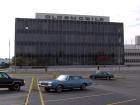
Lansing built
Joined: Nov 2011
Posts: 3,330
From: Grand Ledge, MI
I have been trying to find anyone here in Lansing. Fisher body people that were responsible for cowl tags stamping or install. So far I have been asking with no results.
I can't tell you how the cycle lays out but I will give you mine (non conclusive) 06B
June 2nd week. Fisher broadcast card found has 6-10-1970(Wednesday) which is spot on for the calendar for June of 70. FYI 1970 Lansing Cutlass supreme coupe. My car was delivered to it's first owner 6-18-70 according to the POP card. Car was delivered to Indianapolis.
Yes, the bodies were shipped from Fisher by truck to plant one or the main for final assembly!
Shifts could range from 2 to 3 shifts with some where around 70 cars per hour.
This does not account for line problems or break downs. 5-7 days a week.
Talking to people at plant #1 during that era, they all said once it hit the line there it was completed that same shift. That does not account for when the car hit the line i.e. near or to the end of shift change and days off, holidays.
Pat
I can't tell you how the cycle lays out but I will give you mine (non conclusive) 06B
June 2nd week. Fisher broadcast card found has 6-10-1970(Wednesday) which is spot on for the calendar for June of 70. FYI 1970 Lansing Cutlass supreme coupe. My car was delivered to it's first owner 6-18-70 according to the POP card. Car was delivered to Indianapolis.
Yes, the bodies were shipped from Fisher by truck to plant one or the main for final assembly!
Shifts could range from 2 to 3 shifts with some where around 70 cars per hour.
This does not account for line problems or break downs. 5-7 days a week.
Talking to people at plant #1 during that era, they all said once it hit the line there it was completed that same shift. That does not account for when the car hit the line i.e. near or to the end of shift change and days off, holidays.
Pat
Registered User
Joined: Aug 2013
Posts: 12,810
From: Evansville, IN
This really is unimportant. The build week on the cowl tag simply represents what week it was when that tag was stamped and then riveted onto the cowl. Considering that the tag is painted, that means it was put on prior to the Fisher paint shop, which means weld.
The cowl is either part of the firewall stamping, or is separate. I would reason that it would be put on at the process where the employee picks the cowl and adds it to the jig to have it welded together ( and is where some car companies today stamp a body sequence number which tracks options).
If you use a modern car company to benchmark performance from that point, I think you would clear Fisher assembly 3 shifts later (one for weld, one for paint, one for body assembly), then go across the street to Final Assembly in another shift, then another shift to get out the door.
All that being said, my semi-professional call on this is that the car should roll out the plant under its own power on the build week said on the cowl, or the next week, excepting winter shutdown oddities.
The cowl is either part of the firewall stamping, or is separate. I would reason that it would be put on at the process where the employee picks the cowl and adds it to the jig to have it welded together ( and is where some car companies today stamp a body sequence number which tracks options).
If you use a modern car company to benchmark performance from that point, I think you would clear Fisher assembly 3 shifts later (one for weld, one for paint, one for body assembly), then go across the street to Final Assembly in another shift, then another shift to get out the door.
All that being said, my semi-professional call on this is that the car should roll out the plant under its own power on the build week said on the cowl, or the next week, excepting winter shutdown oddities.
Registered User
Joined: Feb 2010
Posts: 1,587
From: West Michigan
Unless you have evidence to the contrary, I think it's wrong to assume that the first week of a month started on the first day of the month.
For example, I'm currently staring at my employer's production calendar, and Week 44 of 2015 starts on Monday, October 26 and ends on Sunday, November 1. In other words, a production week always starts on a Monday. For my company. Other companies may differ, especially if we're talking 50 years ago.
From this same calendar I see that Week 44 is considered the last week of October, not the first week of November. In fact, looking at the entire year, I can see that the first week of any month is the first week which contains seven days of that month. For example, the first week of May, 2015, starts on May 4.
For my company, in 2015, the months of January, March, June, August, and November all have five weeks.
Again, Fisher Body may differ ........
For example, I'm currently staring at my employer's production calendar, and Week 44 of 2015 starts on Monday, October 26 and ends on Sunday, November 1. In other words, a production week always starts on a Monday. For my company. Other companies may differ, especially if we're talking 50 years ago.
From this same calendar I see that Week 44 is considered the last week of October, not the first week of November. In fact, looking at the entire year, I can see that the first week of any month is the first week which contains seven days of that month. For example, the first week of May, 2015, starts on May 4.
For my company, in 2015, the months of January, March, June, August, and November all have five weeks.
Again, Fisher Body may differ ........
Registered User
Joined: Feb 2010
Posts: 1,587
From: West Michigan
For example, looking at my employers production calendar again, last month, November of 2015, could be viewed as having 6 weeks. The first week only includes November 1, a Sunday. The sixth week only includes November 30, a Monday. Weeks two through five are 7-day weeks, starting on Mondays.
If this is how Fisher did it, I would expect very few body tags to have a "F-week" date code. While my company's calendar has five months in 2015 with five production weeks (by our definition), using what I proposed above for Fisher only 3 of those months would have six weeks. Two of those F-weeks have only one day, the third has only two days (Monday and Tuesday). So that means only the bodies built on those four days of the year (approx. 1% of production) would have an F-week date code.
Again, this is all conjecture on my part, not fact. We need someone who worked at Fisher Body to enlighten us.
Thread Starter
Registered User
Joined: Dec 2010
Posts: 1,580
From: Las Vegas, NV
Here's a calendar I worked up for 1967 model year at Lansing. There are a significant number of cars for week XXA - XXD with few found for XXE, so I believe "E" was the short week to finish a month.
Also, using '67 as the sample week #1 for the year starts Sunday 1/1/67, which should also be start of "01A".
with 365 days any calendar is going to end up with an extra day(s):
52 x 7 = 364 - where does the extra day end up this year on your company's 52 week calendar?
great comments - keep them coming!
I believe the "05F" is indeed a "typo" - I wish I had significant Framingham data. There are a number of '67 Lansing "00A" which fall into the "10A" VIN & body # sequences.
Also, using '67 as the sample week #1 for the year starts Sunday 1/1/67, which should also be start of "01A".
with 365 days any calendar is going to end up with an extra day(s):
52 x 7 = 364 - where does the extra day end up this year on your company's 52 week calendar?
great comments - keep them coming!
I believe the "05F" is indeed a "typo" - I wish I had significant Framingham data. There are a number of '67 Lansing "00A" which fall into the "10A" VIN & body # sequences.
Thread Starter
Registered User
Joined: Dec 2010
Posts: 1,580
From: Las Vegas, NV
also, the 1966 & 1967 calendars are identical to 2005-2006 if anyone has 10 year old production calendars to reference.
In the late '90s I did a bunch of work for Delphi & remember the UAW calendars hanging on the walls of the office for reference of plant closures, would be interesting to see '60s-'70s UAW calendars or contracts to see the number of "holidays" written into the contracts.
In the late '90s I did a bunch of work for Delphi & remember the UAW calendars hanging on the walls of the office for reference of plant closures, would be interesting to see '60s-'70s UAW calendars or contracts to see the number of "holidays" written into the contracts.

Registered User
Joined: Oct 2005
Posts: 7,320
From: NJ
Just came across another 67 with the F stamp on the trim tag. It is also a Framingham car. I doubt the stamp is a mistake unless there was someone there who was making multiple ones with the trim tag. This one is the 3rd month, my car is the 5th month.

Thread
Thread Starter
Forum
Replies
Last Post
81 regency
Parts For Sale
0
Apr 21, 2011 06:18 PM


