


330 engine help


Thread Starter
Registered User
Joined: May 2015
Posts: 50
Lets get a dry and a wet compression test on all 8 cylinders. I do find it hard to believe that an engine thats stuck doesn't have cylinder wall damage. Thats likely what your dealing with too...thus low to no compression... Google how to do a dry and wet compression test. If the dwell is off it will produce spark but it wont run if its off far enough. Bring the distributor points cam up on a high spot so the points are open as far as the cam allows...any one of the high spots will do. Now check the gap. It should be about .016-018". I like to have the distributor in a certain spot so I can grab the rotor and move the shaft back n forth on either side of the high spot to see that Im actually taking the feeler gauge reading on the highest spot possible. Be sure there isnt a large bugger on the points. Gently file with a point file if so. Clean the points with brake or contact cleaner...same for the feeler gauge. Dirt causes pitting. A dwell meter is the only way to accurately set the dwell but the above procedure will get it running if it is in fact way outta wack.
Tough to accurately trouble shoot online with out using all of my senses. The below YouTube is about as close to what you have that I could find in a quick search.
1957 Chevy 283 V8 Points Gap Procedure / Repair - YouTube
Tough to accurately trouble shoot online with out using all of my senses. The below YouTube is about as close to what you have that I could find in a quick search.
1957 Chevy 283 V8 Points Gap Procedure / Repair - YouTube
What is dwell and how do I adjust it;
I will look more of this up as well before I go back out there probably Saturday
I know nothing about dwell so any input there would be helpful as well

Connoisseur d'Junque
Joined: Sep 2010
Posts: 21,183
From: The Hudson Valley
Never mind all of the previous posters accurate and well-intentioned suggestions regarding setting the points gap - they're all too complicated.
Just remove the spark plugs (like you will need to do for the compression test anyway), connect your dwell meter, and crank the engine while watching the meter.
The dwell angle should be 30°. (With 8 cylinders, and therefore 8 distributor cam lobes, this means that each points cycle covers 45°, so 30° is a duty cycle of ⅔).
If the dwell angle is not 30°, then use an Allen key to slightly rotate the points adjusting screw in the window of the distributor cap - when you put any pressure on the screw it will affect the dwell angle at that moment, so be sure to recheck with the Allen key out of the screw.
This is much easier than messing with the points. We know that the points are clean and in good shape if you have a good, strong spark.
Once you've got the dwell angle set, do the compression test, just to get it done, and remember that it needs to be done with THE THROTTLE WIDE OPEN.
Then use your timing light to ballpark the timing while cranking with no plugs (if you had to adjust the dwell), then put it all back together and try to start it again.
By the way, I slightly disagree with Eric regarding the need for a fuel source - the engine should run for at least 30-60 seconds on a full float bowl (ie: if you fill the float bowl with a tiny funnel through the vent stack), though it will generally only run for 2-5 seconds on gasoline just poured through the throttle plates.
What is wrong with the fuel in the tank? Does it smell like varnish?
If the fuel in the tank smells fine, then stop screwing around and just reconnect the tank.
Before you do that, though, check the fuel pump output volume and pressure - if you've got porous fuel hoses, the pump won't suck enough fuel to run the car.
- Eric
Thread Starter
Registered User
Joined: May 2015
Posts: 50
You know, there is this thing called "Google."
Never mind all of the previous posters accurate and well-intentioned suggestions regarding setting the points gap - they're all too complicated.
Just remove the spark plugs (like you will need to do for the compression test anyway), connect your dwell meter, and crank the engine while watching the meter.
The dwell angle should be 30°. (With 8 cylinders, and therefore 8 distributor cam lobes, this means that each points cycle covers 45°, so 30° is a duty cycle of ⅔).
If the dwell angle is not 30°, then use an Allen key to slightly rotate the points adjusting screw in the window of the distributor cap - when you put any pressure on the screw it will affect the dwell angle at that moment, so be sure to recheck with the Allen key out of the screw.
This is much easier than messing with the points. We know that the points are clean and in good shape if you have a good, strong spark.
Once you've got the dwell angle set, do the compression test, just to get it done, and remember that it needs to be done with THE THROTTLE WIDE OPEN.
Then use your timing light to ballpark the timing while cranking with no plugs (if you had to adjust the dwell), then put it all back together and try to start it again.
By the way, I slightly disagree with Eric regarding the need for a fuel source - the engine should run for at least 30-60 seconds on a full float bowl (ie: if you fill the float bowl with a tiny funnel through the vent stack), though it will generally only run for 2-5 seconds on gasoline just poured through the throttle plates.
What is wrong with the fuel in the tank? Does it smell like varnish?
If the fuel in the tank smells fine, then stop screwing around and just reconnect the tank.
Before you do that, though, check the fuel pump output volume and pressure - if you've got porous fuel hoses, the pump won't suck enough fuel to run the car.
- Eric
Never mind all of the previous posters accurate and well-intentioned suggestions regarding setting the points gap - they're all too complicated.
Just remove the spark plugs (like you will need to do for the compression test anyway), connect your dwell meter, and crank the engine while watching the meter.
The dwell angle should be 30°. (With 8 cylinders, and therefore 8 distributor cam lobes, this means that each points cycle covers 45°, so 30° is a duty cycle of ⅔).
If the dwell angle is not 30°, then use an Allen key to slightly rotate the points adjusting screw in the window of the distributor cap - when you put any pressure on the screw it will affect the dwell angle at that moment, so be sure to recheck with the Allen key out of the screw.
This is much easier than messing with the points. We know that the points are clean and in good shape if you have a good, strong spark.
Once you've got the dwell angle set, do the compression test, just to get it done, and remember that it needs to be done with THE THROTTLE WIDE OPEN.
Then use your timing light to ballpark the timing while cranking with no plugs (if you had to adjust the dwell), then put it all back together and try to start it again.
By the way, I slightly disagree with Eric regarding the need for a fuel source - the engine should run for at least 30-60 seconds on a full float bowl (ie: if you fill the float bowl with a tiny funnel through the vent stack), though it will generally only run for 2-5 seconds on gasoline just poured through the throttle plates.
What is wrong with the fuel in the tank? Does it smell like varnish?
If the fuel in the tank smells fine, then stop screwing around and just reconnect the tank.
Before you do that, though, check the fuel pump output volume and pressure - if you've got porous fuel hoses, the pump won't suck enough fuel to run the car.
- Eric
I don't have a dwell meter, am I able to rent one at the parts store? And did you watch the video of it trying to start? I'm not questioning your intelligence at all, but would the dwell being off do that to the engine? -let it fire but not run-
The car was parked with near a full tank of gas and that was at least 5 years ago. It doesn't smell too off from gas but Im scared to even want to try it.
It's not even pulling anything out of the tank;
The fuel line is hooked up to the tank but it's not pulling any fuel or pushing it out at the carburetor side.

Registered User
Joined: Oct 2005
Posts: 7,318
From: NJ
I watched the video, its very short but it appears the engine should run the way it sits. Seems to be short on fuel. As said fill carb bowl with gas and see if it will stay running for at least 30 seconds or so. I would not be afraid to run fuel from tank, if it smells like gas it should be ok. If there is no fuel delivery it could be the pump or tank sock or filter or blocked fuel vent.
CH3NO2 LEARN IT BURN IT
Joined: Jul 2010
Posts: 5,635
From: Land of Taxes
Dwell angle is a measure of the duration of time that the primary circuit of the ignition system is closed to energize the primary windings of the coil. It expressed (and measured) in degrees of rotation of the distributor rotor, hence the use of the term "angle"
Setting the gap is altering that dwell angle. So .016" of gap would equate to 30* dwell angle measured using a dwell meter.
Just set/verify the gap and get fuel to it as Oldsmaniac mentioned. Once you do get her running then look into a dwell meter to super tune. Its one of the things on that super tune list.
"-would the dwell being off do that to the engine? -let it fire but not run" Yes
Setting the gap is altering that dwell angle. So .016" of gap would equate to 30* dwell angle measured using a dwell meter.
Just set/verify the gap and get fuel to it as Oldsmaniac mentioned. Once you do get her running then look into a dwell meter to super tune. Its one of the things on that super tune list.
"-would the dwell being off do that to the engine? -let it fire but not run" Yes
Last edited by droldsmorland; Jul 8, 2016 at 08:26 AM.
Connoisseur d'Junque
Joined: Sep 2010
Posts: 21,183
From: The Hudson Valley
In order to get the same information from a web forum, you perform exactly the same action (typing information into a window), but instead of a very big computer spending 0.002 of a second to present you with pre-produced information, an actual human being, who has a job and a family and other obligations, has to sit down at his computer for five to twenty minutes, perhaps do a little checking in his manuals or on line, type an answer, re-read it, edit it, and post it.
By asking questions here whose answers can be easily found on line, you are expecting other people, who don't even know you, to take time out of their day and answer your questions for free.
That sounds a bit entitled to me.
It's an essential tool, and you should have one.
Yes. I agree with OldsManiac. It wants to start and sounds like it wants just a bit more fuel.
Yes.
First thing to do is put a hose from a gas can to the fuel pump and check the volume and pressure.
Second thing is to put a hose on the steel line from the tank and suck on it to see if you can pull the gas forward.
If you can't pull gas forward, and there is a restriction (you create a vacuum), then the fuel sock is probably clogged.
If you can't pull gas forward, and you just pull air, then the hoses to the tank are cracked, or the steel lines have pinholes.
- Eric
Registered User
Joined: Mar 2012
Posts: 2,163
From: Sistersville, WV
I agree from the video that it should run. Doesn't take much compression for a gas engine to run.
Clear up a few things for me, so I understand.
Are you just pouring gas down in the carb? How much?
You can put gas in a oil squirt can and squirt it as it cranks. i suggest you have a dry rag handy in case it backfires and catches on fire. Be careful if you try this.
You can connect it to a cycle or mower gas tank with a hose to the carb and gravity fed it, which is what Eric (the other) was suggesting. Or go from the pump with a hose to a can.
It is possible the timing chain jumped, common problem on Olds and Mopars. You can follow Erics' timing light instruction.
Have you followed any Oldsmobile manual when re-assembling, or troubleshooting?
Clear up a few things for me, so I understand.
Are you just pouring gas down in the carb? How much?
You can put gas in a oil squirt can and squirt it as it cranks. i suggest you have a dry rag handy in case it backfires and catches on fire. Be careful if you try this.
You can connect it to a cycle or mower gas tank with a hose to the carb and gravity fed it, which is what Eric (the other) was suggesting. Or go from the pump with a hose to a can.
It is possible the timing chain jumped, common problem on Olds and Mopars. You can follow Erics' timing light instruction.
Have you followed any Oldsmobile manual when re-assembling, or troubleshooting?
Thread Starter
Registered User
Joined: May 2015
Posts: 50
I agree from the video that it should run. Doesn't take much compression for a gas engine to run.
Clear up a few things for me, so I understand.
Are you just pouring gas down in the carb? How much?
You can put gas in a oil squirt can and squirt it as it cranks. i suggest you have a dry rag handy in case it backfires and catches on fire. Be careful if you try this.
You can connect it to a cycle or mower gas tank with a hose to the carb and gravity fed it, which is what Eric (the other) was suggesting. Or go from the pump with a hose to a can.
It is possible the timing chain jumped, common problem on Olds and Mopars. You can follow Erics' timing light instruction.
Have you followed any Oldsmobile manual when re-assembling, or troubleshooting?
Clear up a few things for me, so I understand.
Are you just pouring gas down in the carb? How much?
You can put gas in a oil squirt can and squirt it as it cranks. i suggest you have a dry rag handy in case it backfires and catches on fire. Be careful if you try this.
You can connect it to a cycle or mower gas tank with a hose to the carb and gravity fed it, which is what Eric (the other) was suggesting. Or go from the pump with a hose to a can.
It is possible the timing chain jumped, common problem on Olds and Mopars. You can follow Erics' timing light instruction.
Have you followed any Oldsmobile manual when re-assembling, or troubleshooting?
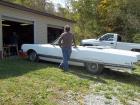
Bill: the guy who owned it; was at work and his friend had stopped by a few times when I was working on the car saying I wouldn't be able to break it free and such. Well he saw me break it free and decided to pull it out and take it to his house. Without telling anyone.
It's not my car but I was really trying to make it be mine.
I guess I'll have to let this one pass then. It's one of Bills good friends that took it, So he knows where it is but I don't think he's gonna try to get it back any time soon.
Figures someone would take it seeing the progress I was making on it.

Last edited by 84oldshurst; Jul 11, 2016 at 09:24 AM.
Connoisseur d'Junque
Joined: Sep 2010
Posts: 21,183
From: The Hudson Valley
As I said a week ago,
... why are you doing all of this work on this car? Are you being paid?
If you are doing this to investigate the car prior to making an offer to buy it, you are making a mistake, as you will pay less for a car with a seized engine than you will for a good-running car that you just fixed for free because you are a "nice guy."
If you are doing this to investigate the car prior to making an offer to buy it, you are making a mistake, as you will pay less for a car with a seized engine than you will for a good-running car that you just fixed for free because you are a "nice guy."
- Eric
Thread Starter
Registered User
Joined: May 2015
Posts: 50
Well my plan was to get the motor running and pay the guy monthly or something. I don't have the money to just hand him cash at once
Military doesn't pay much and I'm not allowed a second job

Administrator
Joined: Oct 2009
Posts: 42,496
From: Poteau, Ok
The problem was, that while the car was not running it had no real value with its owner, when you brought out its potential... we know how the story ends. Learn from your mistake and save your money. I'm sure other opportunities will arise, they always do.
PS, from an old Vet, thanks for your service.
PS, from an old Vet, thanks for your service.
Connoisseur d'Junque
Joined: Sep 2010
Posts: 21,183
From: The Hudson Valley
Hey, you're ahead $40 and a whole boatload of experience, all, in the end, with no risk of actually screwing up your own car -- if you did anything wrong on this car, you're completely in the clear. 
Not a bad deal in return for some fair-weather wrenching time and a few skinned knuckles.
- Eric
Not a bad deal in return for some fair-weather wrenching time and a few skinned knuckles.
- Eric
Thread Starter
Registered User
Joined: May 2015
Posts: 50
Hey, you're ahead $40 and a whole boatload of experience, all, in the end, with no risk of actually screwing up your own car -- if you did anything wrong on this car, you're completely in the clear.
Not a bad deal in return for some fair-weather wrenching time and a few skinned knuckles.
- Eric
Not a bad deal in return for some fair-weather wrenching time and a few skinned knuckles.
- Eric

Thread
Thread Starter
Forum
Replies
Last Post


