


1981 cutlass cruiser diesel

Thread Starter
Registered User
Joined: Mar 2010
Posts: 2,049
From: Mt Vernon,WA
1981 cutlass cruiser diesel
I’m wanting to go check out a custom cruiser to replace my current cutlass cruiser. Wondering if you guys have any insight on what to check out if I do, idk anything about the olds diesel.


Phantom Phixer
Joined: Dec 2011
Posts: 5,530
From: Apopka, FL


Thread Starter
Registered User
Joined: Mar 2010
Posts: 2,049
From: Mt Vernon,WA
Does anyone know what transmission an 81 custom cruiser diesel should have? I read that in 81 the diesels started coming with 200r4 but the gear indicator in the car I’m looking at only has one D and no circle around it

Registered User
Joined: Mar 2013
Posts: 1,914
From: St. Clair, MI
Are you willing to be ready to do an engine/trans swap on this car. The diesels are notorius for over heating/ blowing head gaskets, or killing the injector pump. My dad had 2 Cutlss Supreme diesels and didnt get more than 40k miles out of either motor(both were dealer maintained)
There is always the possibility that this will turn out to be a well cared fore diesel, but you should be aware of the down side. Id love to have one of these, but only with a motor swap.
Good luck
There is always the possibility that this will turn out to be a well cared fore diesel, but you should be aware of the down side. Id love to have one of these, but only with a motor swap.
Good luck
Thread Starter
Registered User
Joined: Mar 2010
Posts: 2,049
From: Mt Vernon,WA
I decided to pick it up, pretty clean car. I got a stack of receipts that the original owner kept. Haven’t looked at them all yet but I saw receipts as old as 83 and as new as 09 including a transmission rebuild in 05(10k miles ago). I’ll post more after I get it cleaned up.

Oldsdruid
Joined: Dec 2007
Posts: 10,629
From: Southside Vajenya
Run the best oil you can in it, at least Rotella or Delo. Use fuel and oil filters designed for Diesels, something like Baldwin or Wix. Add extra fuel filters and get your Diesel fuel somewhere that moves a lot of it. These cars have water detectors and maybe a water separator filter. Find somewhere to put one if it doesn't have it.
Reference my thread https://classicoldsmobile.com/forums...erted-gas.html and follow the factory recommendations on cold weather fueling to avoid that.
You might be surprised what this old Diesel wagon can do. It'll be slow but I know many people who routinely got 30+mpg with Diesel-powered big Oldsmobiles.
And Rawja, you will for damn sure have one of the few left!!
Reference my thread https://classicoldsmobile.com/forums...erted-gas.html and follow the factory recommendations on cold weather fueling to avoid that.
You might be surprised what this old Diesel wagon can do. It'll be slow but I know many people who routinely got 30+mpg with Diesel-powered big Oldsmobiles.
And Rawja, you will for damn sure have one of the few left!!

Registered User
Joined: Jun 2009
Posts: 15,194
From: southeastern Michigan
What years were these cars? From what I've seen, there are "early" diesels ('79 and earlier), and "later" diesels ('80 and later). My father had a '79 Toro with a diesel, and it did exactly what you said. Blew the head gasket at 22,000 miles. He ended up getting money from GM as part of a class-action lawsuit back then. But I had a friend who had an '81 Cutlass with a diesel, and he drove it for well over 100,000 miles with no problems before I lost track of him when I changed jobs. The OP's diesel is that same year, so I wouldn't necessarily assume that the diesel will give him trouble. I think, after several years of trying and lawsuits galore, by the early '80s, Olds finally figured out how to build diesel engines. I think one positive sign for the OP's prospective car is that is hasn't already had its diesel pulled and replaced with a gasoline engine.
Registered User
Joined: Jun 2009
Posts: 15,194
From: southeastern Michigan
The OP might want to read this, just so he knows what he's getting himself into. From Popular Mechanics in 2011.
The Top Automotive Engineering Failures: Oldsmobile Diesels
https://www.popularmechanics.com/car...obile-diesels/
And here's an article from 1983 about the legal action GM faced.
THE SAGA OF THE G.M. DIESEL: LEMONS, LAWSUITS AND SOON AN F.T.C. DECISION
https://www.nytimes.com/1983/03/27/b...-decision.html
The Top Automotive Engineering Failures: Oldsmobile Diesels
https://www.popularmechanics.com/car...obile-diesels/
And here's an article from 1983 about the legal action GM faced.
THE SAGA OF THE G.M. DIESEL: LEMONS, LAWSUITS AND SOON AN F.T.C. DECISION
https://www.nytimes.com/1983/03/27/b...-decision.html


Thread Starter
Registered User
Joined: Mar 2010
Posts: 2,049
From: Mt Vernon,WA
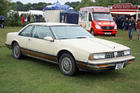
Thanks for rotating those. With how many service records and the condition it’s in I think it’ll be fine. It has 142000 miles now, based off receipts it hit 100k in 88. Reciepts show it had the th350 rebuilt in 05( about 10,000m ago) and it was converted to r134 in the 90’s. It was definitely a well taken care of car, once I feel confortable driving it away from the house I’ll pressure wash it and clean out the interior and post more pics and details.

Registered User
Joined: Feb 2013
Posts: 1,520
one thing about these is the oil cooler lines.they rub thru on the brackets by the starter/i don't even know if you can buy em anymore so keep an eye on em.also the newer ones like 84 or so used a gear reduction starter,they are alot lighter and work better,might look into swapping that out too.

Moderator
Joined: Jul 2007
Posts: 18,227
From: Edmond, OK
That's very cool!
Make sure you get a water separator. This is the one I have on my diesel truck.
I consider myself quite handy with cars and I even had a Diesel Technology class under my belt when I bought my truck. It's definitely a learning experience working on a diesel vs. a gas engine.
The reason Olds diesels have such a bad reputation is that owners, dealers and technicians didn't know how to care for them. Interestingly, the Olds diesel, Ford IDI and Detroit diesel all used a Stanadyne rotary style injection pump.
Make sure you get a water separator. This is the one I have on my diesel truck.

I consider myself quite handy with cars and I even had a Diesel Technology class under my belt when I bought my truck. It's definitely a learning experience working on a diesel vs. a gas engine.
The reason Olds diesels have such a bad reputation is that owners, dealers and technicians didn't know how to care for them. Interestingly, the Olds diesel, Ford IDI and Detroit diesel all used a Stanadyne rotary style injection pump.
Registered User
Joined: Jun 2009
Posts: 15,194
From: southeastern Michigan
This is from one of the articles I quoted above, and it describes exactly what happened to the diesel in my father's '79 Toro. Again, nothing about this would have been prevented by better maintenance. It was a bad design.
Typically, diesel engines have more and stronger head bolts to compensate for the diesel's higher cylinder pressure. The Oldsmobile diesel, however, maintained the same 10-bolt pattern and head bolts as gasoline engines, so that common production tooling could be used for both the gasoline and diesel engines. In the field, this proved disastrous. The insufficient head bolts stretched or broke and led to head-gasket failures. Once the head gasket was breached, coolant leaked into the cylinders, and because clearances in a diesel engine are so tight, invariably this lead to hydrolock and severe engine damage.
Last edited by jaunty75; Sep 10, 2018 at 06:48 AM.
Moderator
Joined: Jul 2007
Posts: 18,227
From: Edmond, OK
Well, perhaps I should have mentioned the engineers too. An Olds 350 can't take 22.5:1 compression without changing the way heads are fastened to the block. That's why the first major upgrade to an Olds diesel I would suggest would be head studs (if you can even get them).
Registered User
Joined: Jun 2009
Posts: 15,194
From: southeastern Michigan
Not if it's the original engine. In 1981, Olds offered only one diesel, a 350. It was not standard on any Olds, but it was an option on Cutlass, Delta 88, 98, and Custom Cruiser.
The 260 diesel was offered only in 1979 and only on the Cutlasses. A 263 diesel was again offered beginning in 1982 through 1985, but, again, only on the Cutlass lines.
Through all of this, the full-size cars never got anything but the 350 diesel (if they got a diesel at all).
The 260 diesel was offered only in 1979 and only on the Cutlasses. A 263 diesel was again offered beginning in 1982 through 1985, but, again, only on the Cutlass lines.
Through all of this, the full-size cars never got anything but the 350 diesel (if they got a diesel at all).
Last edited by jaunty75; Sep 10, 2018 at 07:04 AM.
Registered User
Joined: Jun 2009
Posts: 15,194
From: southeastern Michigan
Phantom Phixer
Joined: Dec 2011
Posts: 5,530
From: Apopka, FL
I had an interesting experience when I was working for a GMC truck dealer back in the 80's .
The owner of the dealership , had just taken in an Olds diesel station wagon on trade for a GMC surburban .
He asked me to , "take a look at it , It runs like crap ."
Well , the first thing I went for was the fuel filter . I removed it and emptied it into a glass jar .
There was rust , crud , and beads of water .
I knew that all that stuff had to come from somewhere , so I pulled the fuel tank next .
When I removed the sending unit I discovered lots of rust , dirt , water , and some "stringy " looking stuff called "algae".
A thorough cleaning of the tank . and a new strainer "sock " as well as a new fuel filter . And it was good to go .
I found out later that the previous owner had a neighbor who was getting rid of his furnace oil tank after converting to natural gas .
They thought it would be a neat idea to use up all this old heating oil in the Olds .
The owner of the dealership , had just taken in an Olds diesel station wagon on trade for a GMC surburban .
He asked me to , "take a look at it , It runs like crap ."
Well , the first thing I went for was the fuel filter . I removed it and emptied it into a glass jar .
There was rust , crud , and beads of water .
I knew that all that stuff had to come from somewhere , so I pulled the fuel tank next .
When I removed the sending unit I discovered lots of rust , dirt , water , and some "stringy " looking stuff called "algae".
A thorough cleaning of the tank . and a new strainer "sock " as well as a new fuel filter . And it was good to go .
I found out later that the previous owner had a neighbor who was getting rid of his furnace oil tank after converting to natural gas .
They thought it would be a neat idea to use up all this old heating oil in the Olds .
Last edited by Charlie Jones; Sep 10, 2018 at 09:37 AM.
Moderator
Joined: Jul 2007
Posts: 18,227
From: Edmond, OK
Charlie, that's a cool story. 
Folks on the IDI forums often suggest changing the fuel filter and filling it with ATF. Supposedly ATF has more detergents in it and helps clean the injectors and injection pump. I know my truck chatters less for a day when I fill my fuel filter and water separator with ATF.
If you drop the tank to clean it make sure the rubber hoses are in good condition. Deteriorated rubber hoses at the tank cause hard starting with a gasoline Olds. Their also a spot for air intrusion which is a diesel's worst enemy as far as drivability is concerned.
Folks on the IDI forums often suggest changing the fuel filter and filling it with ATF. Supposedly ATF has more detergents in it and helps clean the injectors and injection pump. I know my truck chatters less for a day when I fill my fuel filter and water separator with ATF.
If you drop the tank to clean it make sure the rubber hoses are in good condition. Deteriorated rubber hoses at the tank cause hard starting with a gasoline Olds. Their also a spot for air intrusion which is a diesel's worst enemy as far as drivability is concerned.
Thread Starter
Registered User
Joined: Mar 2010
Posts: 2,049
From: Mt Vernon,WA
yes, I thought it would be a th200 but the receipt for the tranny getting rebuilt said th350 so I looked at the pan and sure enough it’s a 350.
Thread Starter
Registered User
Joined: Mar 2010
Posts: 2,049
From: Mt Vernon,WA
That's very cool!
Make sure you get a water separator. This is the one I have on my diesel truck.
https://www.amazon.com/GOLDENROD-496...od+fuel+filter
I consider myself quite handy with cars and I even had a Diesel Technology class under my belt when I bought my truck. It's definitely a learning experience working on a diesel vs. a gas engine.
The reason Olds diesels have such a bad reputation is that owners, dealers and technicians didn't know how to care for them. Interestingly, the Olds diesel, Ford IDI and Detroit diesel all used a Stanadyne rotary style injection pump.
Make sure you get a water separator. This is the one I have on my diesel truck.
https://www.amazon.com/GOLDENROD-496...od+fuel+filter
I consider myself quite handy with cars and I even had a Diesel Technology class under my belt when I bought my truck. It's definitely a learning experience working on a diesel vs. a gas engine.
The reason Olds diesels have such a bad reputation is that owners, dealers and technicians didn't know how to care for them. Interestingly, the Olds diesel, Ford IDI and Detroit diesel all used a Stanadyne rotary style injection pump.
Registered User
Joined: Dec 2012
Posts: 189
From: New York, Miami in winter.
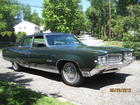
An 81 model with the new DX block is much improved over the 78 to 80 D block for a number of reasons. If you research D and DX block Oldsmobile Diesels, you will see why. I can tell by the photo under your hood, you have a DX block. Of course, there is always the possibility the engine was changed over time. It could be a GM Goodwrench replacement. In that case, they are pretty bulletproof. The injector pumps stunk from day one and never improved. Many GM diesels met their end simply due to a bad injector pump. Most others had their engines replaced with a gas 307 or 350. As a true fan of the Oldsmobile Diesels, I have a number of them, don't ask me why, it becomes an addiction. I had issues with every single one of them except for one freak example 80 model D block Cutlass. That car never failed me once plus it pulls 30mpg on the highway like clockwork. It's also by far the fastest GM Diesel in my fleet of Oldsmobile Diesels. It has alot of jump off the line and on the highway. Again, it's a freak example. These cars stink in everyway but I still love them!
Registered User
Joined: Feb 2013
Posts: 1,520
the shutoff solenoid is on the pump.pull the air cleaner off and in front of the air horn will be i believe a big thick orange wire.and while your there,there is 3 bolts that hold the top to the pump,look for a tag with a E on it.these are the good pumps.
Thread Starter
Registered User
Joined: Mar 2010
Posts: 2,049
From: Mt Vernon,WA
I noticed that the glow plug solenoid continues to cycle on and off speratically while the engine is running. It causes a voltage drop and the idle drops and becomes very rough. Also found these guys that appear to be missing some lines. Any ideas on these?
Moderator
Joined: Jul 2007
Posts: 18,227
From: Edmond, OK
Check your GPs and GP controller. If the GP controller is on it's way out it might not be deactivating the GPs properly. You can remove the GPs and measure their resistance. All of the GPs should have a similar resistance.
Interestingly, RockAuto indicates that the Motorcraft ZD1A is the GP for your Olds diesel. That's the same GP used in my Ford IDI engine. If that's true then make sure you ONLY USE the Motorcraft GPs. The Autolite and Bosch GPs are notorious for swelling and separated tips. If you remove your GPs I suggest spraying PB Blaster on them every night for a week. Also, tighten/loosen them a bit each night. This will hopefully prevent any GP tips from separating in your pre-chamber.
Interestingly, RockAuto indicates that the Motorcraft ZD1A is the GP for your Olds diesel. That's the same GP used in my Ford IDI engine. If that's true then make sure you ONLY USE the Motorcraft GPs. The Autolite and Bosch GPs are notorious for swelling and separated tips. If you remove your GPs I suggest spraying PB Blaster on them every night for a week. Also, tighten/loosen them a bit each night. This will hopefully prevent any GP tips from separating in your pre-chamber.
Thread Starter
Registered User
Joined: Mar 2010
Posts: 2,049
From: Mt Vernon,WA
found the shut off, it does have a big orange wire and seems to be functioning properly. Next time I’m in there I’ll look for the E
Thread Starter
Registered User
Joined: Mar 2010
Posts: 2,049
From: Mt Vernon,WA
Check your GPs and GP controller. If the GP controller is on it's way out it might not be deactivating the GPs properly. You can remove the GPs and measure their resistance. All of the GPs should have a similar resistance.
Interestingly, RockAuto indicates that the Motorcraft ZD1A is the GP for your Olds diesel. That's the same GP used in my Ford IDI engine. If that's true then make sure you ONLY USE the Motorcraft GPs. The Autolite and Bosch GPs are notorious for swelling and separated tips. If you remove your GPs I suggest spraying PB Blaster on them every night for a week. Also, tighten/loosen them a bit each night. This will hopefully prevent any GP tips from separating in your pre-chamber.
Interestingly, RockAuto indicates that the Motorcraft ZD1A is the GP for your Olds diesel. That's the same GP used in my Ford IDI engine. If that's true then make sure you ONLY USE the Motorcraft GPs. The Autolite and Bosch GPs are notorious for swelling and separated tips. If you remove your GPs I suggest spraying PB Blaster on them every night for a week. Also, tighten/loosen them a bit each night. This will hopefully prevent any GP tips from separating in your pre-chamber.
Registered User
Joined: Feb 2013
Posts: 1,520
front of the intake next to the thermostat housing.bout 4 inches tall with a 7 or 8 wire connector on top.there are 2 ribbed areas on the sides of it.squezze these together and the connector will come off.drain some water out of it and replace it,then refill and let set for about an hour or so to acclimate to the water temp.
Thread Starter
Registered User
Joined: Mar 2010
Posts: 2,049
From: Mt Vernon,WA
Do you know where the sensor for “water in fuel” is? My light is on and based off my research I believe it to be accurate but I’m wandering where it’s “sensing” from. Also I read the owners manual and it says the is a water separator in the fuel tank, wondering if there is maintenance for that?
Thread Starter
Registered User
Joined: Mar 2010
Posts: 2,049
From: Mt Vernon,WA
one thing about these is the oil cooler lines.they rub thru on the brackets by the starter/i don't even know if you can buy em anymore so keep an eye on em.also the newer ones like 84 or so used a gear reduction starter,they are alot lighter and work better,might look into swapping that out too.


