When you click on links to various merchants on this site and make a purchase, this can result in this site earning a commission. Affiliate programs and affiliations include, but are not limited to, the eBay Partner Network.
Those numbers are a lot better. That kind of voltage drop will happen at idle. The output from the alternator will not reach maximum until about 2000 RPM. The lights and blower together probably draw 15~20 amps and you have, what, 45 amp alternator? That is almost half of the alternator capacity.
Something else you mentioned earlier is that your battery ground is actually bolted to the lower alternator bracket. Make sure all the bolts on the alternator and altermator bracket are clean and tight, just like on the horn relay. ANY connection between the battery and the vehicle chassis is suspect at this point in the life of a 50 year old car. Put your volt meter between the alternator housing and the battery negative while the car is running. If you see anything other than zero, you still have a bad ground on the alternator. 👍
Those numbers are a lot better. That kind of voltage drop will happen at idle. The output from the alternator will not reach maximum until about 2000 RPM. The lights and blower together probably draw 15~20 amps and you have, what, 45 amp alternator? That is almost half of the alternator capacity.
Something else you mentioned earlier is that your battery ground is actually bolted to the lower alternator bracket. Make sure all the bolts on the alternator and altermator bracket are clean and tight, just like on the horn relay. ANY connection between the battery and the vehicle chassis is suspect at this point in the life of a 50 year old car. Put your volt meter between the alternator housing and the battery negative while the car is running. If you see anything other than zero, you still have a bad ground on the alternator. 👍
Ok...that'll be my next test for another day. Does it matter which MM probe goes where?...and if I have zero, then all grounds are good?
CJ & others have provided excellent testing scenarios. However, I must mention this to you. You have stated you have NO firewall mounting ground screw where your BLOWER MOTOR ground wire should attach to. It is absolutely essential you demonstrate you do, in fact, have a BLOWER MOTOR ground strap mounted to the BLOWER MOTOR and the chassis frame. You have some departures from the wiring - e.g. no BLOWER MOTOR ground strap. It is ENTIRELY possible you're vicariously/mistakenly picking up "some" form of grounding to the BLOWER MOTOR "if" the BLOWER MOTOR is working. With that said, if you DO NOT have a secure, dedicated ground wire from the BLOWER MOTOR to the chassis you'll likely experience very heavy amperage draw as your BLOWER MOTOR attempts to find "some" form of grounding - where it's coming from is anyone's guess - but, bottom line is you must have a dedicated ground to the chassis for your BLOWER MOTOR.
CJ & others have provided excellent testing scenarios. However, I must mention this to you. You have stated you have NO firewall mounting ground screw where your BLOWER MOTOR ground wire should attach to. It is absolutely essential you demonstrate you do, in fact, have a BLOWER MOTOR ground strap mounted to the BLOWER MOTOR and the chassis frame. You have some departures from the wiring - e.g. no BLOWER MOTOR ground strap. It is ENTIRELY possible you're vicariously/mistakenly picking up "some" form of grounding to the BLOWER MOTOR "if" the BLOWER MOTOR is working. With that said, if you DO NOT have a secure, dedicated ground wire from the BLOWER MOTOR to the chassis you'll likely experience very heavy amperage draw as your BLOWER MOTOR attempts to find "some" form of grounding - where it's coming from is anyone's guess - but, bottom line is you must have a dedicated ground to the chassis for your BLOWER MOTOR.
So could I run another ground strap from the blower motor to the firewall?
So could I run another ground strap from the blower motor to the firewall?
Absolutely. First, however, you need to determine (1) "if" you have a ground wire from the blower motor to firewall (e.g. or somewhere else in a hidden location) - priority; (2) if you don't have a blower motor ground wire to the original OEM firewall screw location you need to find out WHERE you're picking up a ground connection to the blower motor "if" the blower motor is, in fact, working.
Absolutely. First, however, you need to determine (1) "if" you have a ground wire from the blower motor to firewall (e.g. or somewhere else in a hidden location) - priority; (2) if you don't have a blower motor ground wire to the original OEM firewall screw location you need to find out WHERE you're picking up a ground connection to the blower motor "if" the blower motor is, in fact, working.
Ok...so I'm in the midst of more troubleshooting, so any prompt replies would be appreciated.
Here's what I've done...all tests were done with the car running.
1. Ran a voltage check from the negative battery terminal to the alternator case...got .02
2. Disconnected the negative battery (car DID NOT shut off). Checked voltage from positive alternator connection to the negative side of battery...got 12.8
3. Left negative battery cable disconnected and turned on the headlight switch to do a load test on the alternator, and the car cut off. Turned headlight switch off.
4. Connected negative battery cable and started it up. Disconnected negative battery cable to do another load test with the blower motor on and headlights off, and the car shut off.
5. Connected the negative battery cable and started it up, let it run for about 5 minutes and Checked voltage across positive and negative sides of battery...got 12.9
6. Started it up and with the battery connected and turned the headlights on.. checked voltage at the alternator with no load...14.1
7. Turned headlights on and checked voltage at the alternator...14.1
8. Turned headlights off and turned on the blower motor and checked voltage at the alternator...13.7
9. Left blower on and turned the headlights on and checked voltage at the alternator...12.8
10. Left headlights on and the blower motor and hit the high beams and checked voltage at the alternator...12.5
Your trouble-shooting is progressing well. But you only proved that our old alternators at engine idle speed don't generate enough current to supply headlights or blower motor.
Your trouble-shooting is progressing well. But you only proved that our old alternators at engine idle speed don't generate enough current to supply headlights or blower motor.
So do I rev it up and do my checks? And I added some more steps to my post #88 above.
Bring your battery to full charge overnight with a charger capable of 5 to 7 amps output. Check the battery voltage in the morning. If it is above 13.5 V or so, start the car, run at high idle and test the voltage between the horn relay and the alternator case. It should be at least 14 V. If it is not, you may need a new regulator, not necessarily a new alternator.
p.s. Just read your extra steps. It seems your alternator/regulator is in good shape.
Last edited by VC455; Feb 13, 2025 at 01:54 PM.
Reason: saw new steps in post 88
Bring your battery to full charge overnight with a charger capable of 5 to 7 amps output. Check the battery voltage in the morning. If it is above 13.5 V or so, start the car, run at high idle and test the voltage between the horn relay and the alternator case. It should be at least 14 V. If it is not, you may need a new regulator, not necessarily a new alternator.
p.s. Just read your extra steps. It seems your alternator/regulator is in good shape.
So even though it cuts off under a load at idle, alternator and regulator are good?
Yes. Our old alternators only put out around 15 amps at idle speed. If you disconnect the battery and create more than a 15 amp load, the car will stall. That's just a fact about 1960s tech.
In the 1970s, I had a Vista Cruiser with extremely powerful auxiliary lights. I was vacationing with my children in the Everglades and we drove slowly with the beams on to look for wildlife. After about an hour of this, my car quit (the battery depleted because the alternator at low engine speed had insufficient output to operate the lights). That was my personal introduction to the limitations of old alternators.
Yes. Our old alternators only put out around 15 amps at idle speed. If you disconnect the battery and create more than a 15 amp load, the car will stall. That's just a fact about 1960s tech.
In the 1970s, I had a Vista Cruiser with extremely powerful auxiliary lights. I was vacationing with my children in the Everglades and we drove slowly with the beams on to look for wildlife. After about an hour of this, my car quit (the battery depleted because the alternator at low engine speed had insufficient output to operate the lights). That was my personal introduction to the limitations of old alternators.
Sounds like the added ground strap to the body helped. The voltages seem about right with the lights and blower running. Your charging system was designed to just barely match the maximum draw your car can use from the factory. If you are uncomfortable with that small margin between max charge and max draw your only option is a higher output alternator. I dunno what is available in the externally regulated options, maybe a 65 amp?
Norm, the blower motor ground issue was a non-issue. The wiring that was thought to be for the blower turned out to be A/C compressor wiring. The blower would not work without a ground. It's all good.
Norm, the blower motor ground issue was a non-issue. The wiring that was thought to be for the blower turned out to be A/C compressor wiring. The blower would not work without a ground. It's all good.
Removing battery terminals while the engine is running is not recommended as the diodes in the alternator or the internal electronic voltage regulator on vehicles so equipped can be damaged due to a voltage spike.
Dave stated he has no Blower Motor Ground Wire connected to the Blower Motor Ground screw located on the firewall in addition to stating he has no ground screw in that location.
You can either do this correctly via troubleshooting or throw the dice. A correctly sized & located Blower Motor Ground Wire is required to produce a proper energized circuit. Thus far, we have zero/none/zilch validation of the location of any make-believe/perceived Blower Motor Ground Wire. The ground wire of dubious unknown size and location is located evidently SOMEWHERE which will ALWAYS continue to be the great unknown in his electrical circuitry.
There was no ground wire from engine head to engine firewall.
There remains no defined location of a ground wire from the Blower Motor to ANY known grounding point on the entire car. For all anyone knows, whatever ground that Blower Motor has achieved might be coming from a washer, nut, bracket, or another loose (-) wire located SOMEWHERE (never to be identified/located).
Did this apparent dimming of the headlights appear last month, two months ago or has this been an issue since the 1st day Dave purchased the car?
End of day, the Blower Motor needs a properly sized, secure ground wire - just like he needed a proper ground strap from engine head to firewall.
Dave - You don't know the location of ANY ground wire from the Blower Motor to any known ground on your entire car. For all you know, any ground wire for your Blower Motor might be found not even attached to a secure mounting point (FACT: It certainly is NOT attached to the firewall mounting screw) - therefore, WHERE is it. Is it just stuffed between two wires from your radio, attached to an exhaust manifold, wrapped around your transmission oil fill tube? Hello, you need a proper ground wire. I'm willing to hedge a bet all your dashboard circuitry components have been "struggling" (e.g. starving) for a properly energized electrical circuit - when not sufficiently/adequately grounded you increase the draw on every component in that circuit. That's likely what's happening with no established Blower Ground wire - the resistance has increased substantially, making each component work harder & harder to provide a properly sized energized circuit.
EDIT: You finally corrected one aspect of a non-existent grounding point by attaching a ground strap from the engine head to the firewall. You want to stop there or do this correctly?
Last edited by Vintage Chief; Feb 13, 2025 at 04:04 PM.
Removing battery terminals while the engine is running is not recommended as the diodes in the alternator or the internal electronic voltage regulator on vehicles so equipped can be damaged due to a voltage spike.
Good point - a 100% fact. Great/Excellent way to blow up a VR &/or ALT (actually, any electrical/electronic device).
As long as no one is willing to locate the Blower Motor grounding strap, I'll take liberties to provide some make-believe scenarios:
(1) The same PO who elected to never provide a ground strap to the firewall:
(a) Removed the screw on the firewall used to ground the Blower Motor: (i) because they didn't know what it was for; (ii) it got in the way; or, it had no apparent function since they didn't follow any wiring schematic - at all;
(b) Someone attached a plastic strap with a screw SOMEWHERE then ran a wire into the fiberglass Blower Motor housing & some form of grounding is occurring which is entirely insufficient/incorrect & creating a very heavy draw on that circuit.
(c) A PO attached a 32 GA AWG to the rusted body frame when it had maybe 10 wires in the insulated wire casing but now has 1 or 2 wires remaining (after the other 8 or 9 broke/severed).
You're borrowing trouble where none exists. You have convinced yourself there is an issue with the blower motor missing a ground wire but that was never confirmed. The blower is tucked up under the fender where it is almost never molested. It is mounted in plastic and would not work at all without having a legitimate, realistic, and secure ground. The blower works. The lights work. The alternator voltage is much more stable. Stick a fork in it, this one is done!
You're borrowing trouble where none exists. You have convinced yourself there is an issue with the blower motor missing a ground wire but that was never confirmed. The blower is tucked up under the fender where it is almost never molested. It is mounted in plastic and would not work at all without having a legitimate, realistic, and secure ground. The blower works. The lights work. The alternator voltage is much more stable. Stick a fork in it, this one is done!
Wish I could agree w/ you but I can not. Your "theory" would suggest there's a sufficient ground circuit, my "theory" suggests there is not. I liken your theory to the notion of an 18 gauge wire comprised of 50 strands of copper wire but only ONE copper wire (of the 50 strands) is actually attached to any grounding point (enormously/significantly increasing the resistance of that circuit). I may have missed it - was it mentioned the headlights no longer dim when the Blower Motor is turned on? Sorry, but you haven't convinced me of any legitimate, realistic and/or secure ground of ANY type for the Blower Motor. You want to consider the notion of having no discernible Blower Motor ground wire substantiated and validated as being done? I say not - he's maybe picking up ground from a U-Joint (and that's surely a reliable, legitimate, realistic & secure ground).
But, you are correct in one aspect. I am sooooooo...........done w/ this thread.
Removing battery terminals while the engine is running is not recommended as the diodes in the alternator or the internal electronic voltage regulator on vehicles so equipped can be damaged due to a voltage spike.
Not to mention a charging system capable of supplying enough current to run the ignition proved nothing. The real test is how much current the charging system will actually provide. That requires a real charging system test
Not to mention a charging system capable of supplying enough current to run the ignition proved nothing. The real test is how much current the charging system will actually provide. That requires a real charging system test
Well, the weather finally cooperated and I decided to drive it to work today. Hit the key and it barely turned over, let alone start. So I hooked the jumper cables from my daily, hit the again and she fired right up.
I let it idle for about 10 minutes to warm up, then headed to work with no issues...voltage held a steady 13-13.5 on the gauge. When I got to work (30 minute drive), I shut it off and let it set for 5 minutes. Hit the key and no joy, so I grabbed the battery tester from my store and tested the battery. 84% charged and it was bad. Installed a new battery and hit the key...started right up with no hesitation whatsoever.
So I decided to do a full charging/starting system check. The battery tested good and 100% charged. Then I proceeded to the starting test and all good. Next was the charging system test.. output voltage and voltage regulator were good, but the test failed on output current. So I ran the test again just to make sure with the same result. I will add that I have an external regulator and I will be checking battery voltage tomorrow.
So, I ask, how can the battery test good and 100% charged if the alternator failed on output current? Is it because the test equipment is too sophisticated for the alternator design?
What are the parameters that define pass or fail for that piece of test equipment? With a charging system we want to know the charging voltage which should be 13.8-14.2 VDC and the charging current/amperage output. The current/amperage output will vary dependent upon the alternator amp rating, the state of charge of the battery and the current demand from accessories at the time of the test. E.g, a 37 amp alternator should never produce more than 37 amps and the closer the battery gets to 100% charged the more the amperage output will taper down to almost nothing.
A quality tester will be able to induce a variable load to the system so that voltage and amperage output can be monitored simultaneously. The tester used may have detected no current/amperage output because the battery was 100% charged, try retesting at a high idle with the lights on high beam and the blower fan on high speed to create a load.
What are the parameters that define pass or fail for that piece of test equipment? With a charging system we want to know the charging voltage which should be 13.8-14.2 VDC and the charging current/amperage output. The current/amperage output will vary dependent upon the alternator amp rating, the state of charge of the battery and the current demand from accessories at the time of the test. E.g, a 37 amp alternator should never produce more than 37 amps and the closer the battery gets to 100% charged the more the amperage output will taper down to almost nothing.
A quality tester will be able to induce a variable load to the system so that voltage and amperage output can be monitored simultaneously. The tester used may have detected no current/amperage output because the battery was 100% charged, try retesting at a high idle with the lights on high beam and the blower fan on high speed to create a load.
Ok, but the tester puts a load on the alternator when it does the test.
Ok, but the tester puts a load on the alternator when it does the test.
Does it tell how much of a load in amps? The issue could be that it is putting a very high load on an alternator that wasn't designed to produce that much current when it was new. As an example, the alternator may be a 37 or 55 amp output version and the tester is putting a 100 amp load.
Does it tell how much of a load in amps? The issue could be that it is putting a very high load on an alternator that wasn't designed to produce that much current when it was new. As an example, the alternator may be a 37 or 55 amp output version and the tester is putting a 100 amp load.
That's what I was thinking...I checked battery voltage today and it was 12.6.
Well, turns out it was the alternator. Bought a new one and even before I put it on, I bench tested it and it passed. So I swapped it out, fired it up and hit the lights...no drop. Left the lights on and turned on the blower and it dipped a little but climbed right back up. So I drove it to the local Auto Zone down the road and did a battery, starter and alternator test...all good. And I know the tester put a load on the alternator because I could hear the change in the revs.
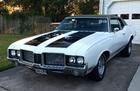
If anyone is interested in higher amp upgrade to an externally regulated alternator, here's the one I used. I had to file .050 off of the upper mount "ear", but other than that, it bolted right in. Oh, and BTW, it's 100% new, not a reman.