


Brake help Please


Thread Starter
Registered User
Joined: May 2012
Posts: 7
From: Norfolk, VA
Brake help Please
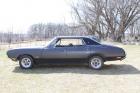
I bought a 72 Cutlass fairly recently and the only (and big) problem is the brakes. It takes forever to stop even with the pedal all the way depressed. The pedal itself doesn't seem overly soft or hard. If I am coming to a stop light, I have to start braking well in advance in order to stop at the light and god forbid someone stops quick in front of me because I will cave their trunk in. It had the rocket 350 replaced with a stroker 383 and is configured with pwr brakes disc front / drum rear. I replaced the master cylinder (bench bled), brake booster, front pads, rear shoes, and thoroughly bled... This changed absolutely nothing. I measured the vacuum pressure and it read a little low, so I installed an electric vacuum pump and canister and that turned out to be a complete waste of time and money. I have had this beautiful car for a little over a month and driven it only to test the repairs. Any suggestion or advice would be greatly appreciated. Thanks in advance.
Registered User
Joined: Jul 2012
Posts: 66
From: Minnesota
What Is you idle? When you bled the brakes did you have some one depress the brake pedal, Then you open the bleeder up then they hold the pedal down until you have the bleeder tightened back up? then are you sure that your self adjusters are adjusted right?
Maybe check the proportioning valve (I think it is built into the distribution block)
just things i would check.
Maybe check the proportioning valve (I think it is built into the distribution block)
just things i would check.
Thread Starter
Registered User
Joined: May 2012
Posts: 7
From: Norfolk, VA
I honestly do not know the idle because it doesn't have a tachometer. And yes, I was working the brake pedal as a friend of mine work the bleeder valves. The self adjusters seem to be correctly adjusted. The only thing I haven't checked is the proportioning valve. Do you think that could cause the issue that I am having?
Just an Olds Guy
Joined: Jul 2008
Posts: 24,528
From: Edmonton, AB. And "I am Can 'eh' jun - eh"
So some quick questions first:
1. Was the car a power front disc/drum car to start with or did you convert it?
2. What was the car's braking ability BEFORE you made any of these changes?
3. Did you hook up the brake booster push rod to the right hole with the clevis pin?
4. What was your vacuum reading at the booster?
5. You're using all stock components for the brake components??
The only thing that sounds weird about this whole thing is that you're not transferring enough mechanical advantage from the brake pedal through the booster to the brake system.
Changing the 350 to a 383 should have no bearing on your brakes.
1. Was the car a power front disc/drum car to start with or did you convert it?
2. What was the car's braking ability BEFORE you made any of these changes?
3. Did you hook up the brake booster push rod to the right hole with the clevis pin?
4. What was your vacuum reading at the booster?
5. You're using all stock components for the brake components??
The only thing that sounds weird about this whole thing is that you're not transferring enough mechanical advantage from the brake pedal through the booster to the brake system.
Changing the 350 to a 383 should have no bearing on your brakes.
Thread Starter
Registered User
Joined: May 2012
Posts: 7
From: Norfolk, VA
So some quick questions first:
1. Was the car a power front disc/drum car to start with or did you convert it?
2. What was the car's braking ability BEFORE you made any of these changes?
3. Did you hook up the brake booster push rod to the right hole with the clevis pin?
4. What was your vacuum reading at the booster?
5. You're using all stock components for the brake components??
The only thing that sounds weird about this whole thing is that you're not transferring enough mechanical advantage from the brake pedal through the booster to the brake system.
Changing the 350 to a 383 should have no bearing on your brakes.
1. Was the car a power front disc/drum car to start with or did you convert it?
2. What was the car's braking ability BEFORE you made any of these changes?
3. Did you hook up the brake booster push rod to the right hole with the clevis pin?
4. What was your vacuum reading at the booster?
5. You're using all stock components for the brake components??
The only thing that sounds weird about this whole thing is that you're not transferring enough mechanical advantage from the brake pedal through the booster to the brake system.
Changing the 350 to a 383 should have no bearing on your brakes.
2. It is the exact same way I bought the car, which led me to make the repairs attempts.
3. Yes, the booster rod was attached to the correct pedal hole
4. The vacuum reading was a little below 15 lbs at the booster
5. All stock brake components were used (with the exception of the added electric vacuum pump and canister)
The reason I mentioned the engine is that a friend said it might be powering through the braking and might need a bigger stall converter?
Thanks for your time and help

Registered User
Joined: Dec 2009
Posts: 395
From: KY
It's easy enough to test your friends theory. Get it going and when you're are about to stop, put it neutral and see if it stops better.

Registered User
Joined: Jul 2012
Posts: 66
From: Minnesota
i am having problems with my rear brakes and the only with i have not fixed yet is the proportioning valve. i am fairly positive that is my problem (it is the original one so i can just imagine how dirty it is.
i guess one thing you could do too is jack it up and press the brakes down and see if all the brakes are locking
but try what w30442 said put it in N and see if it helps with stopping, then after that i would make sure all wheel are locking.
i guess one thing you could do too is jack it up and press the brakes down and see if all the brakes are locking
but try what w30442 said put it in N and see if it helps with stopping, then after that i would make sure all wheel are locking.
Thread Starter
Registered User
Joined: May 2012
Posts: 7
From: Norfolk, VA
1st off, I just wanted to say thanks for all the advice I've gotten so far. Clearly I have joined a good forum.
@rickman i thought the same thing, that is why I installed an electic vacuum pump and canister. Now it maintains a consistent 20 lbs of pressure and there is no improvement in the brakes.
@rickman i thought the same thing, that is why I installed an electic vacuum pump and canister. Now it maintains a consistent 20 lbs of pressure and there is no improvement in the brakes.
Thread Starter
Registered User
Joined: May 2012
Posts: 7
From: Norfolk, VA
the pads and shoes were not glazed over... the front pad were worn, but had already decided to replace all 4 corners since I was going to have the tires off to bleed the brakes. And the rear drums appear to be adjusted properly. The brake pedal feels like it has good stiffness and doesn't travel all the way to the floor, but have to press it down as far as I can to get the car to stop.
Thread Starter
Registered User
Joined: May 2012
Posts: 7
From: Norfolk, VA
This is really frustrating because it is a beautiful car and my 1st classic and I haven't been able to drive it. I really thought the brakes were going to be an easy fix and the harder thing to do was replace the A/C that was removed at some point. Now, I haven't even worried about the A/C until I get the brakes fixed. No point in having cold A/C in a car sitting in the garage.
Administrator
Joined: Oct 2009
Posts: 42,385
From: Poteau, Ok
When you changed the pads and shoes, did you also cut the rotors and drums? The reason I ask is, if not, it takes time for the pads and shoes to conform to the rotors and drums. When this happens, the brakes don't work worth a crap fo a while.
Just an Olds Guy
Joined: Jul 2008
Posts: 24,528
From: Edmonton, AB. And "I am Can 'eh' jun - eh"
Based on what you answered, I'm more inclined to agree with Randy and oldcutlass ^. The brakes should be working perfectly. If the pedal will still travel down a LOT further after the brakes contact the rotor I would suspect air in the lines somewhere. Have you done a full system flush/bleed? When I overhauled the front end on my car, after the bleed the brakes get full pressure and the pedal holds firm at about 1/2 travel. It will go a tad further but the brakes are on solid.
You may also have some air in the rear lines if they were done too or the proportioning valve was disconnected. Air in any of the lines will create that problem you're describing if all the other components are set up properly.
a reference thread for you - some or none of it may apply, but it's good info for you: https://classicoldsmobile.com/forums...tml#post263259
You may also have some air in the rear lines if they were done too or the proportioning valve was disconnected. Air in any of the lines will create that problem you're describing if all the other components are set up properly.
a reference thread for you - some or none of it may apply, but it's good info for you: https://classicoldsmobile.com/forums...tml#post263259
Registered User
Joined: Dec 2009
Posts: 395
From: KY
I wonder if the front brake hoses are soft allowing them to balloon out when pressure is applied reducing pressure at the pads? Sounds like that and the prop valve are the only things left other than the idea that, if the rotors have grooves around them from wear and the pads just need to seat to them. Or turn/replace the rotors.
Just an Olds Guy
Joined: Jul 2008
Posts: 24,528
From: Edmonton, AB. And "I am Can 'eh' jun - eh"
Randy - any brake hose that does that should have blown out or popped by now and should have been seen just after bleeding. Last thing I always do on a bleed is test full pedal pressure and check for leaks.
The rotors and pads should have seated pretty close when the brake bleed was done though. Shouldn't be THAT much of a discrepancy??? Still - you're right - it's out there for a check.
Part of that link I suggested ^^ talks to the prop or dist valve issue too.
The rotors and pads should have seated pretty close when the brake bleed was done though. Shouldn't be THAT much of a discrepancy??? Still - you're right - it's out there for a check.
Part of that link I suggested ^^ talks to the prop or dist valve issue too.
Registered User
Joined: Dec 2009
Posts: 395
From: KY
Randy - any brake hose that does that should have blown out or popped by now and should have been seen just after bleeding. Last thing I always do on a bleed is test full pedal pressure and check for leaks.
The rotors and pads should have seated pretty close when the brake bleed was done though. Shouldn't be THAT much of a discrepancy??? Still - you're right - it's out there for a check.
Part of that link I suggested ^^ talks to the prop or dist valve issue too.
The rotors and pads should have seated pretty close when the brake bleed was done though. Shouldn't be THAT much of a discrepancy??? Still - you're right - it's out there for a check.
Part of that link I suggested ^^ talks to the prop or dist valve issue too.
Granted, it's not likely but a possiblity that the hoses could swell with pressure applied. For all we know, it's about to pop.
We are not there to see what they have seen in order to know exactly what was noticed or went unnoticed. The front brake hoses could be marginal or it could even be a rear brake hose which is pretty well out of sight unless you're looking for it.
As for the pads seating, I don't think you understood what the previous poster meant about the pads not seating to the rotors. If the rotors had deep cuts/grooves in them, then there would be corresponding high spots around the rotor. If this is the case, the new (flat)pads would only be touching the high spots on the rotors until the pads wore down to match the contour of the rotors. In this case, you would have very little surface contact between the pads and the rotors and likely poor braking until the pads wore down to match/seat with the rotors. Depending on how scored the rotors are and the type of driving done, it could take a 100 miles to fully seat the new pads to badly scored rotors.
PS. You hear a lot about the rubber brake lines breaking down on the inside creating a flap that keeps the fluid from returning to the master when the pedal is released. Basically, a one way check valve in the hose. That would seemingly be a two way street. There could be a flap inside the hose not allowing fluid to flow TO the caliper.
Jpbrad0711,
Does it pull to the left or right when braking hard?
Last edited by W70442; Jul 19, 2012 at 01:03 PM.
Just an Olds Guy
Joined: Jul 2008
Posts: 24,528
From: Edmonton, AB. And "I am Can 'eh' jun - eh"
Good points Randy. I guess based on my experience changing more than a few brakes I would have assumed that whoever did the brakes would do what any reasonable guy would do. Either machine the rotors or replace as needed. I've never see them ground down that badly on any of my cars or friends cars that I've serviced though, knock on wood.
I did understand the PP, but prolly took it a little less for granted someone would do that on a brake job; IMO that would be negligent and unsafe. My bad.
I did understand the PP, but prolly took it a little less for granted someone would do that on a brake job; IMO that would be negligent and unsafe. My bad.
Registered User
Joined: Dec 2009
Posts: 395
From: KY
I would have assumed that whoever did the brakes would do what any reasonable guy would do. Either machine the rotors or replace as needed.
I did understand the PP, but prolly took it a little less for granted someone would do that on a brake job; IMO that would be negligent and unsafe. My bad.
I did understand the PP, but prolly took it a little less for granted someone would do that on a brake job; IMO that would be negligent and unsafe. My bad.
That's what I meant by pointing out that we aren't there to see everything for ourselves.
I can't tell you how many times I've helped someone with a problem via a thread like this only to find out, after a LOT of time and typing, that they left out a major fact or didn't really replace something when they said they did cause they didn't think it would be the problem.
Last edited by W70442; Jul 19, 2012 at 02:06 PM.
Mr. Johnson
Joined: Feb 2012
Posts: 574
From: Cleveland Ohio
Maybe the calipers are frozen up a little bit. My 2 cents if everything checks out Cheap to test. the core is almost the price to get one. And remember were stopping almost two tons here. Its not gonna stop on a dime no matter what you do.

Registered User
Joined: Feb 2008
Posts: 11,798
From: Plano, TX
And remember, after installing new pads / shoes, break them in easily for the first 100-200 miles to seat them to the discs and drums. This means no hard stops (unless an emergency). Brake sooner and lighter than usual during break in. If you do not, the pads / shoes can glaze over from heat, which will be the end of good braking performance.
Just an Olds Guy
Joined: Jul 2008
Posts: 24,528
From: Edmonton, AB. And "I am Can 'eh' jun - eh"
This response was in no way meant to insult anyone or keep anyone from asking questions here. I've just found that, when replying to posts, you can't assume anything and you have to start with the VERY basics and go from there because the person replying to the post most often has no idea of the knowledge or skill level of the original poster.
A valid consideration too. I'd rather rebuild them than go out and buy new ones. The parts to rebuild are like 8.00 / caliper. It's not a hard job, but you need compressed air to blow out the piston.
Mr. Johnson
Joined: Feb 2012
Posts: 574
From: Cleveland Ohio
Just bought 2 at autozone about a month ago. 20 dollars a piece with a 15 dollar core charge. They pay for themselves in time and effort instead of a rebuild. Bleeding gives no diagnosis as to if the piston is working properly or not. How long was the car sitting?

Registered User
Joined: Jan 2011
Posts: 1,665
From: Maryland
CH3NO2 LEARN IT BURN IT
Joined: Jul 2010
Posts: 5,591
From: Land of Taxes
Step back and take a look at the basics.
Do you have good pressure at all 4 bleeders?
If yes then the next step is are all the slaves working properly? (Slaves meaning the calipers and rear cylinders).
A power bleeder is worth its weight in gold. See Jegs their $60-$70 for a basic kit.
Test the 4 corners after a thorough bleeding by pressing the pedal and see if another person can rotate the tire at each corner. If you can rotate any tire replace that slave. Try it again.
Next step is the lining to rotor or drum surfaces correct? A freshly turned surface with new linings should stop well from the get-go. Yes there is some break in but you should feel significant difference from worn out glazed parts vs new and the car should stop well.
If the above tests ok then Id gravitate towards the booster. Is it weak or not keeping vacuum? Start car idle for 2 min shut it off. Pull the vacuum line off see if it has stored vacuum? Then do the same test but let the car sit for say a 1/2 hour. See if it held vacuum.
This system isn’t very complex. By troubleshooting systematically like this you should be able to hone in on the problem rather quickly.
Do you have good pressure at all 4 bleeders?
If yes then the next step is are all the slaves working properly? (Slaves meaning the calipers and rear cylinders).
A power bleeder is worth its weight in gold. See Jegs their $60-$70 for a basic kit.
Test the 4 corners after a thorough bleeding by pressing the pedal and see if another person can rotate the tire at each corner. If you can rotate any tire replace that slave. Try it again.
Next step is the lining to rotor or drum surfaces correct? A freshly turned surface with new linings should stop well from the get-go. Yes there is some break in but you should feel significant difference from worn out glazed parts vs new and the car should stop well.
If the above tests ok then Id gravitate towards the booster. Is it weak or not keeping vacuum? Start car idle for 2 min shut it off. Pull the vacuum line off see if it has stored vacuum? Then do the same test but let the car sit for say a 1/2 hour. See if it held vacuum.
This system isn’t very complex. By troubleshooting systematically like this you should be able to hone in on the problem rather quickly.

Thread
Thread Starter
Forum
Replies
Last Post


