When you click on links to various merchants on this site and make a purchase, this can result in this site earning a commission. Affiliate programs and affiliations include, but are not limited to, the eBay Partner Network.
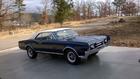
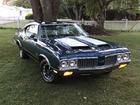
So I recently picked up my 1967 442 from storage after many years to start working on it. The other day I noticed that the passenger frame horn was cracked. It looks to be just forward of the suspension and is cracked along the factory weld. Has anyone seen this before? Any opinions on repairing this?
Just looking for some feedback.
As of now I am thinking that I could repair this myself. My thought process was that I could put the frame on Jack stands and level it out. Then take measurements to put the horn into the proper position. I found frame blueprints online that show what height and width the horns should be at. Prep and weld the crack. I would also add extra gussets to the area for additional strength. It looks like there is plenty of room in this area to add extra metal. The horn really only seems to support the radiator / bumper & fender, so I'm thinking I should be OK to repair. But I may talk with some local frame shops just to see what they would charge to have options.
If anyone has experience with this issue please chime in.
I would think that can be repaired. I would relieve the stress of the suspension, remove upper arm, and drill a hole at each end of the crack to keep it from extending further and then weld it.
Thanks for the feedback.
I am probably going to start working on it this weekend. Once I get the frame leveled out I can see how tweeked this horn is. After welding it I am going to add a brace from SC&C to the front frame section, see the pic. After that it should be good.
If there are any complications I did contact a local fab shop that said they could repair it.
After welding it I am going to add a brace from SC&C to the front frame section, see the pic. After that it should be good.
As an aerospace engineer specializing in structures, I am at a complete loss to understand what benefit that brace provides. All it does is triangulate the front frame horns. I guess that makes sure your bumper is straight.
From a chassis rigidity and handling perspective, it does nothing. It simply adds triangulation from the crossmember to the bumper brackets. The only POSSIBLE benefit I can see is that the part of the frame that the steering box mounts to is infinitesimally stiffer, but frankly there are MUCH simpler and more efficient ways to do that than to install this massive structure. Also, understand that a bolt-on brace like that has very limited benefit for increasing stiffness. Any clearance in the bolt holes negates the stiffness benefits. A welded brace would be better, but still of dubious value. The "kink" in the diagonal links to clear the front sway bar add compliance to the brace and further detract from any benefit. This was clearly designed by someonewho has no clue about chassis rigidity or basic structural design.
However, for the sake of what were they thinking. Do you think, the designer was trying to somehow transfer the stress/force of the sway bar back to the center of the car? Sway bar looked a tad bigger in the picture. (Granted, rubber/ urethane bushing should absorb this). Otherwise, the only thing I could see than it would do is try to pull the sheet metal down in a front end collision.
However, for the sake of what were they thinking. Do you think, the designer was trying to somehow transfer the stress/force of the sway bar back to the center of the car? Sway bar looked a tad bigger in the picture. (Granted, rubber/ urethane bushing should absorb this). Otherwise, the only thing I could see than it would do is try to pull the sheet metal down in a front end collision.
Troy,
That bolt on truss unfortunately does nearly nothing for the sway bar. First, even polyurethane bushings are more compliant than the stock frame. Second, the primary loading on the sway bar mounting points is normal to the ground. This truss is parallel to the ground and does just about nothing to increase vertical or torsional stiffness of the frame. There's a reason why real race cars have diagonal bars that run above the frame, from the front suspension attach points to the firewall (and from there to the main cage). THAT improves bending and torsional stiffness dramatically.
Frankly, the only improvement generated by this truss is to the bottom line of the vendor.
Unrelated to this thread, but, once you start thinking about stiffness matching, those straps over the main caps that Mondello used to advocate really start to look ridiculous.
Unrelated to this thread, but, once you start thinking about stiffness matching, those straps over the main caps that Mondello used to advocate really start to look ridiculous.
Just one point to add on that: The 288 test engines of ±1950-51 had GM specified and installed main cap straps in anticipation of 12:1cr testing, GM drawings exist outlining the mods to fit them to early V-8 Oldsmobile engines in the included paperwork. Hard to know now if this was Ketterings'/the team idea for the test engine or was accepted practice, but the drawings might note who checked and approved them. I'm sure Fords I-4 and then the V-8's had straps, braces and girdles added in racing from the teens forward.