When you click on links to various merchants on this site and make a purchase, this can result in this site earning a commission. Affiliate programs and affiliations include, but are not limited to, the eBay Partner Network.
Well I sure did it.
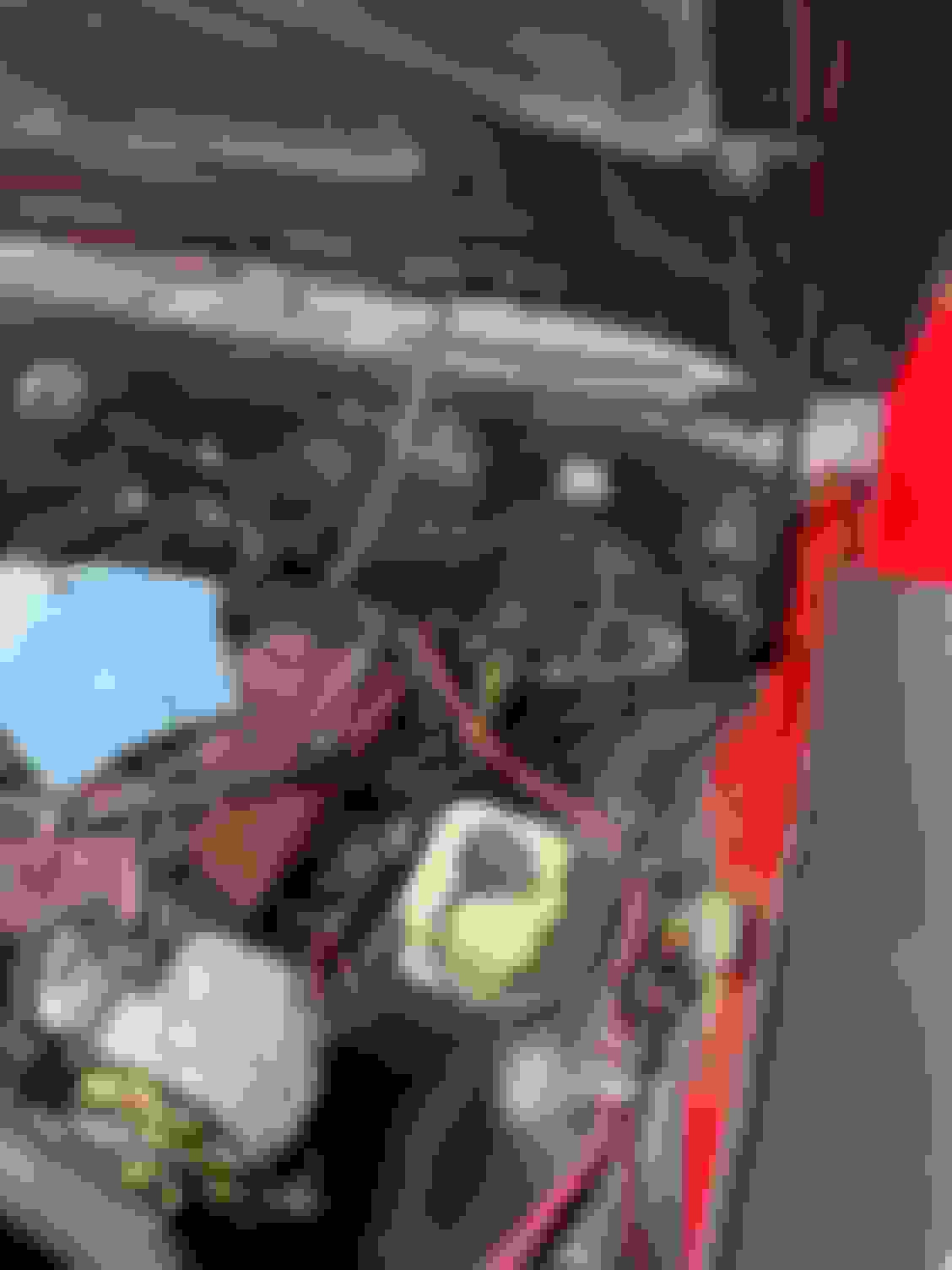
the bottom left nut is almost 100% rounded off.
I have removed the wiper motor to get better access. I’ve sprayed PB Blaster as well. There is a little pin in the way of getting a different angle that I am debating cutting off next to the threads but I need to find out what it goes to.
other options for removing? Very very little room.
What if you were to put the nut back on the stud that you have taken off and snug it a bit. Do you think that may even the pressure on the flange enough to make the nut you want to break free not be in a bind.
A couple things I have had success with are a bit of heat, yes the PB Blaster and when you get a snug grip on that nut ...Tap Tap Tap.. let that blaster soak a bit. Take your time. Breath...
I've occasionally had success by hammering the next smallest metric socket onto the nut. Alternately, a die grinder with a thin cutoff wheel to slice the nut.
I don't know if you have enough room to use these. I don't know this brand but have an older set of this type of tool I've used several times with good results. John
Try a very long very sharp flat-blade screwdriver or a very sharp cutting chisel. Align an edge of the screwdriver blade or chisel blade onto an edge (or near to an edge) of the nut and strike a dead-blow onto the offending nut. Sometimes you're able to dead-blow the nut enough to get it to loosen up from the threads.
EDIT: If it loosens up, you can use vice-grips or channel locks to remove.
Last edited by Vintage Chief; Jun 24, 2023 at 07:01 AM.
I've occasionally had success by hammering the next smallest metric socket onto the nut. Alternately, a die grinder with a thin cutoff wheel to slice the nut.
I have done what Joe has mentioned if you can get at with a thin cutoff wheel. Works..
Well, I used a dremel and took off some threads so I could try to get a socket on there.
no dice. We are totally round now!
I might try to use the same dremel and careful cut the nut and try to preserve the threads. If I can get it cut 3/4 of the way through I might be able to hit it with a flathead and hammer and break the nut off the threads.
[QUOTE=MPSax;1506883]Well, I used a dremel and took off some threads so I could try to get a socket on there.
no dice. We are totally round now!
I might try to use the same dremel and careful cut the nut and try to preserve the threads. If I can get it cut 3/4 of the way through I might be able to hit it with a flathead and hammer and break the nut off the threads.
You can with the dremel with a small cutoff wheel, like Joe Joe mentioned. Once you get close to the threads with the cutoff wheel ,I used a small chisel to split the nut. But it will separate from the threads enough to get it off.
Had the same problem. Once you find a wrench that will work to get the nut off. Pre soak the bolt threads with some paint and varnish remover to dissolve the build up in the thread. The nut will unscrew a lot easier in that tight space.
This may be a little far-fetched but you might try screwing a new nut down snug against the rounded nut. Mig weld the two nuts together and then put a six-point socket or box end wrench on the new nut and back them both off. If you don't have a Mig welder then the idea is moot.
BFH and Chisel, Dremel, Torch, PB Blaster. Nearly converted to whatever religion it took to get it off but I finally got it off!!
I can perhaps chase these threads but I think we may be a little beyond that. As much as I tried to save the threads, there’s not much there.
Would smacking this bolt with a hammer and punch push it back into the cab and I can press another bolt in through the firewall or would it mess up the thin metal firewall? Don’t want to do any more damage than what is done right now. Currently limited to just this one bolt.
One of the bolts on my car fell out when I removed the nut. The bolts have a round head and are spot welded to the inside of the firewall. You might be able to use a chisel and hammer to break the weld from under the dash. Just depends upon how much stuff is in the way.
One thing to keep in mind is with a new regular bolt you will need a wrench on the bolt head under the dash and the nut behind the booster.
I just realized you could use one of those flat bolt retainer / washer on the engine side to hold the bolt in place. Tighten the retainer so the bolt can’t turn, then just tighten the nut.
One of the bolts on my car fell out when I removed the nut. The bolts have a round head and are spot welded to the inside of the firewall. You might be able to use a chisel and hammer to break the weld from under the dash. Just depends upon how much stuff is in the way.
One thing to keep in mind is with a new regular bolt you will need a wrench on the bolt head under the dash and the nut behind the booster.
I just realized you could use one of those flat bolt retainer / washer on the engine side to hold the bolt in place. Tighten the retainer so the bolt can’t turn, then just tighten the nut.
that’s not a bad option. I’m not a small person so working under the dash has its limitations.
Use carbide drill bits. Begin with a small pilot hole, graduate to large drill bits and drill it out. I drilled out a threaded lug stud in a wheel and that metal is harder than the metal on that bolt.
At which point just cut that nut and stud off with a cutoff wheel.
Looking at the pictures Joe I think he's already there. Its been a few years since I pulled one of these pedal bracket assemblies out. I was thinking the stud didn't have a bolt head but a large flat piece that fit against the bracket then goes through the firewall. Is that right? If so, is that stud welded in place or just pressed in?
Looking at the pictures Joe I think he's already there. Its been a few years since I pulled one of these pedal bracket assemblies out. I was thinking the stud didn't have a bolt head but a large flat piece that fit against the bracket then goes through the firewall. Is that right? If so, is that stud welded in place or just pressed in?
John, the stud has a flat head that is spot welded to the brake pedal bracket. You can remove it and weld a new one on. That's what i did to move the stud on my 62 when I changed to the Fox-body master cylinder.
John, the stud has a flat head that is spot welded to the brake pedal bracket. You can remove it and weld a new one on. That's what i did to move the stud on my 62 when I changed to the Fox-body master cylinder.
OK, thank you for describing that as I didn't remember how the stud was attached. So if the OP drops the steering column I'm thinking it would still be easier to pull the pedal bracket and either replace the stud on a workbench or swap in another pedal bracket assembly.
OK, thank you for describing that as I didn't remember how the stud was attached. So if the OP drops the steering column I'm thinking it would still be easier to pull the pedal bracket and either replace the stud on a workbench or swap in another pedal bracket assembly.
I got a little carried away with my impact on the bolt for the sway bar link on my car when I was removing it. I wasn't quite on it and I buzzed that nut almost completely round. Those Turbo sockets that 2blu442 posted above took it off with no problems whatsoever. At this point I guess it is too late but they're pretty inexpensive and work excellent in these situations. They are pass-through as well so you can get a long stud right through and then use a deep socket on the Turbo socket.
Last edited by ourkid2000; Jun 28, 2023 at 02:46 PM.