When you click on links to various merchants on this site and make a purchase, this can result in this site earning a commission. Affiliate programs and affiliations include, but are not limited to, the eBay Partner Network.
Does anyone have a picture of the intake manifold, preferably looking down on it? I have a few holes and openings that I am trying to figure out what belongs where. Thank you.
Does anyone have a picture of the intake manifold, preferably looking down on it? I have a few holes and openings that I am trying to figure out what belongs where. Thank you.
What year? Which carb? What options on the car? All of this will affect the location and function of various connections on the intake.
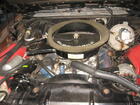
This is what I'm working with. I have two pictures. One is pretty early on before things were cleaned up. The other is recent.
I marked in red what we are trying to figure out. Unfortunately my dad put this plate and his carb on a little early so I wasn't able to get a picture that was more descriptive.
There are three openings on that runner. They are roughly 1/4" in diameter. The right most isn't an actual opening through the intake, but it is threaded. Potentially for a bracket or something.
Farthest left is a vacuum port and the other two are for the Carburetor dashpot.
Thank you. Is there a specific use for the vac port?
Are there any common situations where the dashpot would no longer be necessary? We didn't remove one, so either the previous owner removed it for some "race hack" or there is a modification that renders it unnecessary.
It’s designed to slowly dampen return of the accelerator linkage employing OEM hardware linkages. In particular it’s often beneficial in an A/C car &/or vehicles navigating a lot of in town stop & go driving in very hot conditions in particular to hasten a rapid lowering of RPM in order to maintain an appropriate idle condition.
The dash pot bracket threaded bolt hole does not extend ‘into’ the intake manifold. Albeit no need to worry about any escaped vacuum or compromising vacuum should you elect not to cover the dashpot bracket holes.
The dash pot bracket threaded bolt hole does not extend ‘into’ the intake manifold. Albeit no need to worry about any escaped vacuum or compromising vacuum should you elect not to cover the dashpot bracket holes.
So the there are two holes for the bracket, which do not penetrate the manifold. Correct?
As for the vacuum port, does it have a specific component that it is for?
Note the one is not a ‘hole’ (per se) but instead an alignment boss for the dashpot bracket - not threaded.
Regarding your vacuum bung/port. I’d need to review the CSM (which you should own). I’m not looking at your image currently. Generally, that intake manifold vacuum port was originally configured to accommodate both the TCS/DVCS (Christmas tree) and the Automatic Transmission Modulator line with a vacuum ‘T’. Configuration of the devices for this vacuum port is dependent on a couple things, as I recall. With or without A/C, perhaps year/model of vehicle, as well. Additionally, many have removed the TCS/DVCS (Christmas tree) and accompanying solenoid. Again, on my phone limited reference documents. That OEM configuration is covered in the Chassis Service Manual (CSM).
Note the one is not a ‘hole’ (per se) but instead an alignment boss for the dashpot bracket - not threaded.
Regarding your vacuum bung/port. I’d need to review the CSM (which you should own). I’m not looking at your image currently. Generally, that intake manifold vacuum port was originally configured to accommodate both the TCS/DVCS (Christmas tree) and the Automatic Transmission Modulator line with a vacuum ‘T’. Configuration of the devices for this vacuum port is dependent on a couple things, as I recall. With or without A/C, perhaps year/model of vehicle, as well. Additionally, many have removed the TCS/DVCS (Christmas tree) and accompanying solenoid. Again, on my phone limited reference documents. That OEM configuration is covered in the Chassis Service Manual (CSM).
So the there are two holes for the bracket, which do not penetrate the manifold. Correct?
As for the vacuum port, does it have a specific component that it is for?
One of the two holes for the idle solenoid bracket DOES go through the manifold and into the intake port. Use a small screwdriver to probe the holes and you can see which one it is. Be sure this hole is sealed.
If I decide not to use it, I would just need to plug the three holes, correct?
That vacuum port is typically connected to the transmission vacuum modulator. There is a steel line that runs from up top down to the transmission, with short sections of rubber hose on either end .
That vacuum port is typically connected to the transmission vacuum modulator. There is a steel line that runs from up top down to the transmission, with short sections of rubber hose on either end .
Providing several images from the 1971 CSM demonstrating layout/configuration(s) of the intake manifold(s) & TCS/DVCS w/ an image of the Christmas tree (TCS/DVCS). As Joe stated in Post #4, year, carb, and options affect various functions on the car. Thus far, I believe you've only been eluding to a 455 intake manifold w/o discussion(s) pertaining to year/model? Unless I missed it.
I couldn't recall the exact routing while on my phone. There's good information pertaining to the TCS (Transmission Controled Spark) on this site. Here are the results of a search I performed w/ NUMEROUS in-depth details/descriptions by various CO members, but in particular by Joe.
Kenneth (above - Fun71) is correct, that vacuum port is typically connected to the Automatic Transmission Modulator valve. It would be helpful for you to own a Chassis Service Manual (CSM).
BTW, you do have the TCS/DVCS installed in your intake manifold - whether it is an operable/functioning valve + solenoid (Christmas tree) can't be evaluated by looking at it alone, but you "will" need to address its correct configuration if you intend to use it - it's often disconnected.
Pretty picture of a TCS (Christmas tree) - Transmission Controlled Spark device. I 'suspect' your TCS device is from a 1971 Oldsmobile? Do not hold me to that statement.
BTW, you do have the TCS/DVCS installed in your intake manifold - whether it is an operable/functioning valve + solenoid (Christmas tree) can't be evaluated by looking at it alone, but you "will" need to address its correct configuration if you intend to use it - it's often disconnected.
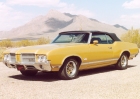
Thank you. It is installed and the electrical is ran to it as shown in the picture. We have not gotten to the vacuum part of it yet. The car is a 72 cutlass. It was hacked up by the previous owner so we are trying to put it back together how it is supposed to be. This car does not have vacuum advance. Does this render the TCS useless then?
Last edited by Tegra1027; Oct 13, 2025 at 03:20 PM.
Here are images from the 1971 CSM demonstrating configuration(s) of the TCS. These may or may not be pertinent to your application. Re-read Joe's Post #4. Did I mention you should OWN the CSM - the CSM (buy a used original OEM paperback edition off eBay) also contains a color wiring diagram you will find helpful.
Thank you. It is installed and the electrical is ran to it as shown in the picture. We have not gotten to the vacuum part of it yet. The car is a 72 cutlass. It was hacked up by the previous owner so we are trying to put it back together how it is supposed to be.
What I can tell you from your TCS (Christmas tree) device, is the TCS 'solenoid' is built into the top of the TCS. Note also, there is a resistor attached to the top of the TCS solenoid (I believe it is a green wire or two green wires) which is why I suspected it was a 1971 TCS device - don't hold me to this because I don't own a 1972 CSM but I'll take a peek at the wiring diagram(s).
What I can tell you from your TCS (Christmas tree) device, is the TCS 'solenoid' is built into the top of the TCS. Note also, there is a resistor attached to the top of the TCS solenoid (I believe it is a green wire or two green wires) which is why I suspected it was a 1971 TCS device - don't hold me to this because I don't own a 1972 CSM but I'll take a peek at the wiring diagram(s).
It also does NOT have vacuum advance. Would that render the TCS useless?
The switch is part of the Transmission Controlled Spark system, which was a prehistoric emissions control system first used on the 1970 cars. The purpose of TCS was to inhibit vacuum advance unless the trans was in high gear to reduce NOx emissions. The wires to the trans plug into a switch that senses the trans is in high gear (a pressure switch for ATs and a physical switch for MTs). The switch is normally closed in all gears except high, which energizes the solenoid in the valve and prevents the vacuum signal from reaching the distributor. In high gear the switch opens, which de-energizes the solenoid and vacuum advance operates normally. Disconnecting the wires at the trans or at the vacuum switch prevent the solenoid from operating, which disables the TCS function and provides vacuum at all times, just like on non-emissions-controlled cars. The valve has a secondary function, which is to switch the vacuum advance from ported to manifold vacuum if the engine starts to overheat at idle or low speeds. This is independent of the TCS operation and is something you want to retain. The thermal function does not require the electrical connection to work properly. When EGR became federally mandated for the 1973 model year, it superseded the need for TCS, so the TCS system was dropped after 1972.
Yes it does have AC. It also does NOT have vacuum advance. Would that render the TCS useless?
You will need to connect the AC vacuum reservoir to a manifold vacuum source. Your picture shows a 90º vacuum fitting behind the carburetor on the same intake runner as the brake booster.
You will need to connect the AC vacuum reservoir to a manifold vacuum source. Your picture shows a 90º vacuum fitting behind the carburetor on the same intake runner as the brake booster.
Thank you. What do I do with the TCS? Remove it and plug the hole?
Thank you. Great write up. There are so many acronyms and I feel like some components have multiple names/acronyms. It's seems like the TCS is completely useless for me.
Thank you. Great write up. There are so many acronyms and I feel like some components have multiple names/acronyms. It's seems like the TCS is completely useless for me.
It likely is. I removed mine entirely and plugged the hole. Simply unplug the connector [disconnect the electrical wire(s) from the top of the TCS (solenoid)], wrap it in a bundle and hang the wire(s) on the bottom of the firewall or elsewhere in an inconspicuous place. You can also disconnect the other end from the transmission if you like (but not necessary).
I think it's the 2nd link (above) which has an image of the std. water pipe fitting used to fill the hole after removal of the TCS should you elect to remove the entire nine yards.
You'll need to be mindful of connecting/routing your vacuum hoses depending on what carb. you're using & any PCV valve cover hoses. You'll get there.
Great price on this OEM used paperback CSM...it's your bible. Some are in better condition than others, some w/ free shipping, do your own research but get an original OEM paperback edition....
It is. Don't feel you're alone. It was nothing more than a band-aid emissions solution.
This community is truly amazing! I'm definitely going to get the CSM.
I'll have to look at these pictures while I'm in front of the car and route the vacuum lines appropriately.
I read these same threads several times. It's kind of funny as you share them because I've already read them, but they make more sense every time I read them.
I also notice your name coming up quite a bit. Quite the guru are you?
Here's your very own copy of the 1972 color wiring diagram (also located in our electrical section forum). You'll get your own color copy enclosed in the original OEM CSM.