When you click on links to various merchants on this site and make a purchase, this can result in this site earning a commission. Affiliate programs and affiliations include, but are not limited to, the eBay Partner Network.
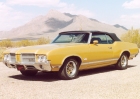
The car is a '69 4-4-2 convert, original G-block/TH400/Q-Jet. Fuel delivery issues last summer, so I replaced a dying Carter M6109 fuel pump with a new Delphi 0152. Unfortunately, I used too much muscle on the wrench loosening the fuel line and when it let go the line banged the manifold and cracked.
So, new fuel line from Inline Tube. Took a whole bunch of tweaking/massaging/persuasion to get it to fit but eventually it did. Car ran great for the rest of the summer.
Fast forward to November: last cruise of the season to fill the gas tank before storage. Arrived at station, popped the hood and what do I see? An ocean of gasoline pooling on my hot intake manifold. Yikes! I painstakingly mopped it all up and let it dry out. No sign of where it might be coming from -- everything from pump to carb inlet is now tight and dry. So I cautiously started the car and let it idle. Nothing -- dry as a bone! Next I revved it up a little bit. Still nothing. Put it in gear, drove around the block -- still dry. At this point I decided to risk a cautious drive home, peering in the rear view every ten yards to see if I'm leaving a combustible trail behind me but nope, all good.
Because we were travelling this spring/summer, the car sat from November until yesterday, when I started it up and took it for another cautious shakedown cruise. No leaks.
Anybody got a theory as to WTF that was all about?
Last edited by BangScreech4-4-2; Aug 29, 2025 at 11:09 AM.
Debris in the needle valve that resulted in the carb flooding, and the gas came out the float bowl vent?
That did occur to me, and then the debris blew out with driving...?
Also might check the PSI on the new fuel pump. I've been reading in here about issues guys have had with new pumps testing @ 10 PSI, which I imagine could cause a problem or two.
Some years back I was at the track on Friday playing around with 2 different carbs & having to make a diffent fuel line quickly out of copper. Got in some runs with each, drove the appx 110 miles home, all good. Sunday I head to the New England Olds show which required making a (legal) U turn to get on the correct side of the road to turn in. All of a sudden the car is running rough & stumbling as I check in & park. I opened the hood & found the carb flooding over.
I think I whacked the bowl & inlet with a screwdriver handle & dismissed it. Later I tried it, still flooding, so I pulled the carb off & apart right there in the parking spot. I found a nearly microscopic shard of copper that was fouling the needle. Removed it, reassembled and was good to go.
Moral if the story? Sometimes the smallest little thing you might have been doing can create a ghost in the machine.
The next year I took a participant from MA to the parts store to get a replacement for his dead alternator & half way there my HEI quit! Luckily I always keep a complete distributor in the car and just swapped it out so we were only down 10-15 minutes and then back on the road.
That location was bad luck for my otherwise dead reliable car, haven’t had any problems since they moved it to the Southington Drive In!
May have solved the mystery. The leak started up again and I was able to isolate it to the inlet/filter housing, so I took the fuel line off at the inlet and inspected. Everything looked okay, but I couldn't leave it at that so I did some internet "research". YouTube speaks of an O-ring gasket that seals the filter to the inlet housing. I saw no such gasket when I removed the old filter and the new one didn't come with a gasket either.
So: 1) Is there supposed to be a gasket? and 2) Where can I get one, seeing as the new filters don't seem to come with?
As always, appreciate everyone's assistance and patience.
Yep, checked several other sources and the consensus is, it's supposed to have a gasket. I wonder why it didn't leak before I changed the filter -- it had no gasket then, either.
I wonder if I can just get a neoprene O-ring and roll it over the inlet threads.
Ended up ordering a new filter and two gasket packs from QuadrajetParts.com, plus a new filter spring, which everybody seems to agree should be replaced. Hopefully that'll do the trick.
Now to see if it all gets here before the rains come and another driving season is shot to hell.
Parts got here, weather's still nice, what could go wrong?
Well, after spending an hour threading the new gasket onto the male piece of the filter housing (not sure that's how it should be done, but it's the only way it seemed possible), I am now ready to reclock the elbow fitting at the pump -- very carefully, as there's only about a millimeter's play available to allow the fuel line flare nut to line up well enough to snug it up.
Why did I disconnect the line at the pump, you may ask. Well, in order to reconnect the inlet, I had to re-route the entire fuel line up from the pump, otherwise the thermostat housing interferes with it. It's quite funny, every time I disassemble this fuel line (and I've done it several times now) I run into a different and exciting clearance/clocking/fitment challenge.
Now I have to go find a proper fuel-resistant PTFE thread seal tape instead of the subpar teflon tape I used last time in order to clock the brass elbow fitting at the necessary angle to get that millimeter sweet spot I described above.
For the two or three folks who may see this, I'll update with any progress made. Still hope to get out there before the monsoons come.
Parts got here, weather's still nice, what could go wrong?
Well, after spending an hour threading the new gasket onto the male piece of the filter housing (not sure that's how it should be done, but it's the only way it seemed possible), I am now ready to reclock the elbow fitting at the pump -- very carefully, as there's only about a millimeter's play available to allow the fuel line flare nut to line up well enough to snug it up.
Why did I disconnect the line at the pump, you may ask. Well, in order to reconnect the inlet, I had to re-route the entire fuel line up from the pump, otherwise the thermostat housing interferes with it. It's quite funny, every time I disassemble this fuel line (and I've done it several times now) I run into a different and exciting clearance/clocking/fitment challenge.
Now I have to go find a proper fuel-resistant PTFE thread seal tape instead of the subpar teflon tape I used last time in order to clock the brass elbow fitting at the necessary angle to get that millimeter sweet spot I described above.
For the two or three folks who may see this, I'll update with any progress made. Still hope to get out there before the monsoons come.
Wish me luck.
I won’t be able to sleep tonight until I know you got this problem licked.
knowing it took you an hour to thread the gasket, or O ring like you called it before, onto the fitting…it’s quite the task
Last edited by CANADIANOLDS; Oct 6, 2025 at 02:43 PM.
Got everything assembled, gasket, new spring and filter, fuel line installed, 90° fitting clocked into line and secured with proper yellow gas-resistant thread tape and everything snugged up nice and tight, and ....
... damn thing still leaks.
Dale should be in convulsions when he reads this ****.
Got everything assembled, gasket, new spring and filter, fuel line installed, 90° fitting clocked into line and secured with proper yellow gas-resistant thread tape and everything snugged up nice and tight, and ....
... damn thing still leaks.
Dale should be in convulsions when he reads this ****.
you need to ask again on the internet,, how to fix it.
Thanks, Jeff. I looked at a few of those, plus some of the other threads they linked to, and the main possibility I came up with is that I threaded the gasket onto the male piece (see Dale's thoughtful encouragement above) and it's possible I should have instead inserted it into the receptacle. Will investigate later.
... and it's possible I should have instead inserted it into the receptacle. Will investigate later.
Nope, the only place that gasket wants to go is threaded onto the male inlet piece. I even double-checked the CSM, which wasnt all that helpful -- sure, they show an exploded view of the assembly but offer no clue with regard to orienting the gasket.
I buttoned everything up again, but ran out of time so I didn't start the car.
Have to wait until Thursday now, but maybe I'll get lucky ...
Any way to post a few pictures of what you're dealing with? I also have a '69 442 convertible and ran the original Qjet for years with no leaks. You mentioned an o-ring earlier and that doesn't make sense to me. I've only ever had the fiber flat gaskets that always came with a new fuel filter (from what I remember - lotta stuff different now and no more Qjet). I agree 100% that brass 'adaptor' elbow for the fuel pump can be a major PITA to orient properly without leaking.
I'd also recommend you check the pressure coming out of that new pump you installed. I'd be very surprised if you don't find it to be 7+psi. That alone can cause flooding under different conditions. Might be the root cause of your problem.
Any way to post a few pictures of what you're dealing with? I also have a '69 442 convertible and ran the original Qjet for years with no leaks. You mentioned an o-ring earlier and that doesn't make sense to me. I've only ever had the fiber flat gaskets that always came with a new fuel filter (from what I remember - lotta stuff different now and no more Qjet). I agree 100% that brass 'adaptor' elbow for the fuel pump can be a major PITA to orient properly without leaking.
I'd also recommend you check the pressure coming out of that new pump you installed. I'd be very surprised if you don't find it to be 7+psi. That alone can cause flooding under different conditions. Might be the root cause of your problem.
Tell you what: I snugged everything up the other day and haven't had a chance to start it up since. If it leaks next time I start it (this weekend?) I will take pictures.
My Q-Jet was also leak-free before I started monkeying around with the fuel line. I too was surprised to discover that fuel filters now come without gaskets. I had to order one (actually they come in packs of five) from QuadrajetParts.com and what I got was a flat circular neoprene(?) disc, which after much muttering and cursing (tight fit!) I was able to thread onto the inlet, and in turn into the inlet receptacle on the carb. It definitely wasn't fiber.
With regard to the fuel pump, you're absolutely right. If the leak isn't better on the weekend, the next thing will be to get an accurate reading of fuel PSI.
Tell you what: I snugged everything up the other day and haven't had a chance to start it up since. If it leaks next time I start it (this weekend?) I will take pictures.
My Q-Jet was also leak-free before I started monkeying around with the fuel line. I too was surprised to discover that fuel filters now come without gaskets. I had to order one (actually they come in packs of five) from QuadrajetParts.com and what I got was a flat circular neoprene(?) disc, which after much muttering and cursing (tight fit!) I was able to thread onto the inlet, and in turn into the inlet receptacle on the carb. It definitely wasn't fiber.
With regard to the fuel pump, you're absolutely right. If the leak isn't better on the weekend, the next thing will be to get an accurate reading of fuel PSI.
Thanks very much for your thoughtful post.
you’ll figure it out..I’ll bet before the end of this year.
Back in the 80's when I was a teen, I had a rebuilt quadrajet put on my then-original (heads never off) 425 in my '66 98 convertible. No one really paid attention to the quality of the rebuilt that got bolted on. One day while driving around town, the engine caught fire. As I recall I stole a nearby fire extinguisher & saved the car. Heavy electrical damage - fixing that took a local shop months. At the time, I knew just about nothing other than an oil change, maybe...
The qjet on top was a not-very-well rebuilt side fuel inlet model. To be specific, it was a Rochester 70-series. As original for '66 big cars. On those carbs, the fuel path makes a 90° turn from the passenger side inlet to a Rochester-drilled large diameter passage that runs directly fore-aft to the needle & seat. The drill hole is then sealed with a "freeze plug". My rebuilt freeze plug leaked one day - hot fuel onto the manifold like OP describes. My car caught fire. It still has a wave in the hood from the heat if you look hard.
All these decades later, I suspect what happened is the rebuilder used a different metal than the carb body for the freeze plug. If different metals have different expansion/contraction characteristics when presented with the heat of an engine bay, that may been my problem. I believe the carb body pot metal expanded just enough differently than the different-metal freeze plug to cause a leak at hot temperatures which was absent at low temperatures.
On a related note, the SR71 (Blackbird) aircraft specifically leaks fuel until the tanks get hot enough to seal. Wild to me that the skunkworks designed that in! Well anyway, Olds didn't do that, but an cheapo-rebuilder did...
Long story long, I abandoned the side-inlet qjets years ago for the center inlet 170-series for safety, more CFM, & better part throttle adjustability. I've been happy ever since. No more fires either.
Both of my big block big cars use Rochester qjet model 17058553. You can find these on eBay pretty easily for around $500 or so. Generally a good rebuild will mention rebushing the primary throttle shafts & maybe enlarging a few key internal passages to flow a bit more gas or air in certain use situations or RPM ranges.
I'm a _big_ qjet fan, but will never put a side inlet carb on my cars again. I've spent weeks learning rod/jet metering and use exhaust gas O2 sensors to get them as close as I can to stochiometric optimal AFR/Lamda. Just to say I'm not a bolt-on & pray guy.
Nothing against those who use the 70-series, they worked great, and were factory correct for years for millions of GM cars. I just like the later design better for reasons stated.
The qjet on top was a not-very-well rebuilt side fuel inlet model. To be specific, it was a Rochester 70-series. As original for '66 big cars. On those carbs, the fuel path makes a 90° turn from the passenger side inlet ...
All these decades later, I suspect what happened is the rebuilder used a different metal than the carb body for the freeze plug. If different metals have different expansion/contraction characteristics when presented with the heat of an engine bay, that may have been my problem.
Long story long, I abandoned the side-inlet qjets years ago for the center inlet 170-series for safety, more CFM, & better part throttle adjustability.
Both of my big block big cars use Rochester qjet model 17058553.
I'm a _big_ qjet fan, but will never put a side inlet carb on my cars again.
Thanks, Chris. My car still has its original 7029251 which is in fact a "front-loader". It was rebuilt some years ago by a guy I trust and has operated flawlessly up to the point of this maddening fuel inlet leak. I would definitely be reluctant to part with it at this point as it is both correct and runs very well.
So far, I have been able to notice no difference between leakage at operating temperature vs. cold, but will continue to monitor.
Thanks, Chris. My car still has its original 7029251 which is in fact a "front-loader". It was rebuilt some years ago by a guy I trust and has operated flawlessly up to the point of this maddening fuel inlet leak. I would definitely be reluctant to part with it at this point as it is both correct and runs very well.
So far, I have been able to notice no difference between leakage at operating temperature vs. cold, but will continue to monitor.
I believe the front inlet Quadrajets began in 1968.
The "Side inlet" Quadrajets were 1966 and possibly 1967. The "side inlet" carbs had other visual and mechanical differences. There was a 1966 SB put out to solve the fuel leakage problems on the side inlet carbs. I believe these early (1966-1967) Quadrajets also had the fuel well leakage problems that everyone tries to epoxy on every Quarajet made. Joe P would be the source for correct information.
Notice any cracks in the body where the fitting goes into? Or uneveness where the gasket seals? Gasket damage? It's obvious the gasket isn't gasketing where the leak is.
... Joe P would be the source for correct information.
Most likely. I'm not going to ping him, but if this thread continues to turn into a freak show, I'm sure he'll notice it.
Originally Posted by 69HO43
Notice any cracks in the body where the fitting goes into? Or uneveness where the gasket seals? Gasket damage? It's obvious the gasket isn't gasketing where the leak is.
Gasket is new, as described above. I have four more though, so maybe I'll try a different one. Inlet threads look okay, male and female, but when threading I do get a bit of mild resistance mid travel, but it doesnt require force to overcome.
The crack question from 69HO43 is an interesting one. You may want to pull the carb and inspect that inlet really closely. A hairline fracture, especially if it's on the bottom of the inlet, would be extremely hard to see but would open up a little after the adaptor is torqued. I wouldn't expect it to be in the steel part with the hex but the carb body is delicate in comparison.
Also, I was thinking about my earlier comment saying new filters used to come with gaskets. That's not correct. They always came with the small gasket for the filter itself. That large diameter gasket that goes on the steel hex adaptor was never included. Mine still has the original which is a thin steel piece.
One experiment that occurs to me is that the front fuel inlet may have a hairline fracture which only shows when the fuel line is torqued in. One approach might be to be to measure how tight the fuel line is torqued in on the car, then reproduce that on the bench and see if you see any cracks maybe with magnifying glass.
This thing could also be a faulty crimp on your fuel line going into the carb, or a divot of some kind on the carb body flare sealing surface that creates a gap allowing pressurized fuel to escape.
It’s probably occurred to you, but this may be one of those jobs where you want an assistant to fire up the car from the driver’s seat, while you man the engine compartment with fire extinguisher in hand looking for the leak.
These safety things are frustrating since they inhibit your ability to use the car while you’re chasing the problem. We’ve all been there.
Good advice, Chris. I took everything apart and refitted it with yet another new gasket. I haven't fired it up yet because if everything looks dry this time, I hope to take it for a short spin (fire extinguisher in back seat!) to get everything up to operating temperature and see what I see.
But of course now the weather has turned monsoonal.
There are two styles of Qjet inlet fittings and correspondingly two different gaskets at the carb. Early Qjets (including your 69) use a 7/8" fitting with a fiber gasket that seals outboard of the threads. Later Qjets use a 1" fitting with a plastic gasket that seals inboard of the threads. Be sure everything matches. As for an intermittent leak, I've had a similar problem with the inlet fitting on one of my 1985 cars. The fitting keeps loosening up at the carb, despite the fact that I tighten it correctly and use two wrenches when tightening the flare nut on the tube so as not to preload the inlet fitting. I have a correct 1" flare nut wrench for the inlet fitting hex and it still loosens up. At this point I just go back and check it every six months or so, or when I smell gas. Verify that your new inlet tube does not preload the fitting when you tighten it and be sure to use a wrench on the inlet fitting when tightening the flare nut. Also, I assume you've inspected the flare on the inlet tube to ensure there is no cracking or debris or other damage to the sealing surface. And once again, do NOT use any sealer on either of the threads. If there is any question about the inlet fitting, new ones are readily available.
Thanks, Joe. Good list of things to check. I am using the gasket orientation shown in Fig. 1, with the gasket threaded on the fitting to the end of thread travel. This is the only way it seems to want to work.
I can confirm that the only sealer used is on the thread of the brass 90° fitting into the fuel pump. If I continue to have a leak I will inspect the flares next and after that I guess I'll get another inlet fitting.
Once again, thanks to all for your help and ideas. I'll report back with results next time I fire it up.