


tips on adjusting points?


Thread Starter
Registered User
Joined: Jul 2004
Posts: 18
From: stratford,ct

i replaced the points in my 66 425. i had pulled out the distributor because i needed to pop in a new vacuum advance and needed to fix the wiring. my manual says to turn in the points untill it misfires then backoff a half turn. does anyone have any tips or tricks on how to be more acurate? i got it to run and seem to time it ok. the car has no exhaust right now so maybe im just paranoid but it seems to run rough. the distributor is in correctly. just want to make sure im not overlooking anything. thanks

Past Administrator
Joined: May 2004
Posts: 10,358
From: Rural Waxahachie Texas
There are two ways to set points. The first way is to do it with the distributor cap off and car not running (of course), this is the point gap setting. You have to use a feeler guage set to do this. Your manual should give a point gap setting, if it doesn't get one that does. The way you set the point gap is to rotate the rotor in the distributor manually and observe the points. They should open and close. At the place where the space between the points is the largest should be the setting as specified in the manual (say it is .035 in). If it isn't, you have to use an allen wrench to adjust the space to the correct point gap. You should be able to slide the appropriate feeler guage (.035 in for our example) in and out of the space with minimal resistance offerd by the points as they drag against the feeler guage. You may have to use a combination of guages to get the correct size, ie. a .025 with a .010 to make a .035. After you have set the points this way, then if you have a tach/dwell meter (you should have one since you own an older car) you can verify the dwell is correct. Dwell is relative to the points and is a dynamic way to measure point gap. Your manual should also give the dwell setting for your engine in the tune up specs. Let's say the dwell should be 28 degrees but when measured you get 32 degrees. You will have to re-adjust the screw you adjusted earlier with the allen wrench when you did the point gap setting. There should be a window in the distributor cap to allow this to be done, it should be covered with a metal sliding cover that can be lifted up. Set up your tach/dwell meter, start the engine, read the measurement, and adjust while the engine is running (warm and off choke, at idle). Usually the book says to do this at a particular engine rpm also, so if that is off a little you should adjust that first (say 850 in park). The only thing to watch for is dropping the allen wrench!!
Good luck
Good luck
Thread Starter
Registered User
Joined: Jul 2004
Posts: 18
From: stratford,ct
in my manual it actually doesnt give a points gap size..all it says is to turn in allen screw untill engine misfires then back off a half turn. (its an old MOTOR manual..big blue book) ill look around on the net and see if i could get an actual gap inch setting (i would imagine there has to be one as opposed to the way my manual says) do auto part stores still have distributor machines to adjust and make sure the distributor is at maximum voltage output? thanks for your information..ill give it a shot. the car had electric ignition in it when i got it but it was all homemade looking and quite frankly it scared me. so i opted to pop in the original setup (with new points, condenser and rotor of course)...however ive always had electronic ignition kits in my cars and never had to deal with points(im in my 30s...im not 100 percent old school i guess)
Past Administrator
Joined: May 2004
Posts: 10,358
From: Rural Waxahachie Texas
I will try to see if I can find the tune-up specs for your engine. The numbers I gave in my example are close but not exact. They do make distributor re-curve/repair machines for rebuilding them but lately, a person who knows how to do it is a dieing breed, racers used to use them to optimally set the advance curve on a distributor. More than likely the bushings will be worn a little if your distributor is as old as the car. If your car is a street car and after geting a good tune-up it runs well I wouldn't worry about the wear on the distributor. The distributor really doesn't have anything to do with the strength of the voltage spark, that is more determined by the coil. Again, if your car is street driven and stock all the way original parts (or replacements) will do fine. The distributor "distributes" the signal to the appropriate spark plug/cylinder hence it's name. A good tune-up does wonders for an engine.
Thread Starter
Registered User
Joined: Jul 2004
Posts: 18
From: stratford,ct
well i was able to find some tune up specs on oldsmobility.com .016 gap inch. i pulled the distributor again and set it on the bench with a feeler gage that i had to cut to get it around the condesor. it worked really well and now it seems to run the way i like it. thanks for all your advice [img]smile.gif[/img]

Registered User
Joined: Dec 2019
Posts: 3
There are two ways to set points. The first way is to do it with the distributor cap off and car not running (of course), this is the point gap setting. You have to use a feeler guage set to do this. Your manual should give a point gap setting, if it doesn't get one that does. The way you set the point gap is to rotate the rotor in the distributor manually and observe the points. They should open and close. At the place where the space between the points is the largest should be the setting as specified in the manual (say it is .035 in). If it isn't, you have to use an allen wrench to adjust the space to the correct point gap. You should be able to slide the appropriate feeler guage (.035 in for our example) in and out of the space with minimal resistance offerd by the points as they drag against the feeler guage. You may have to use a combination of guages to get the correct size, ie. a .025 with a .010 to make a .035. After you have set the points this way, then if you have a tach/dwell meter (you should have one since you own an older car) you can verify the dwell is correct. Dwell is relative to the points and is a dynamic way to measure point gap. Your manual should also give the dwell setting for your engine in the tune up specs. Let's say the dwell should be 28 degrees but when measured you get 32 degrees. You will have to re-adjust the screw you adjusted earlier with the allen wrench when you did the point gap setting. There should be a window in the distributor cap to allow this to be done, it should be covered with a metal sliding cover that can be lifted up. Set up your tach/dwell meter, start the engine, read the measurement, and adjust while the engine is running (warm and off choke, at idle). Usually the book says to do this at a particular engine rpm also, so if that is off a little you should adjust that first (say 850 in park). The only thing to watch for is dropping the allen wrench!!
Good luck
Good luck


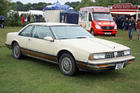
'87 Delta 88 Royale
Joined: Dec 2010
Posts: 2,514
From: Margate, England
I've never heard of adjusting points until the engine runs rough. I'm not saying it's not one way of doing it though.
I have always worked on getting the dwell ancle spot on - it normally follows that the points gap will then be correct on a distributor in good shape. Then Get the timing set properly. Exactly what your timing should be depends on a huge number of variables, compression ratio, fuel octane rating, altitude, any modifications made spring to mind. We need all that information to figure that one out!.
Roger.
I have always worked on getting the dwell ancle spot on - it normally follows that the points gap will then be correct on a distributor in good shape. Then Get the timing set properly. Exactly what your timing should be depends on a huge number of variables, compression ratio, fuel octane rating, altitude, any modifications made spring to mind. We need all that information to figure that one out!.
Roger.

Registered User
Joined: Jun 2014
Posts: 1,647
From: Ft. Wayne, IN
Originally Posted by rustyrodger
Then Get the timing set properly. Exactly what your timing should be depends on a huge number of variables, compression ratio, fuel octane rating, altitude, any modifications made spring to mind. We need all that information to figure that one out!.

Phantom Phixer
Joined: Dec 2011
Posts: 5,525
From: Apopka, FL
I did literally thousands of tune ups " back in the day " and never " adjusted " a set of points . ( on a GM V-8 )
I slipped them in , started it up , and adjusted the dwell to 30 degrees .
Most GM 8 cyl points are adjusted at the factory to be close enough for the engine to start and run .
The dwell can also be adjusted with the engine cranking . ( and the coil wire grounded )
This is the way I would adjust six cylinder Chevies and all Fords .
I slipped them in , started it up , and adjusted the dwell to 30 degrees .
Most GM 8 cyl points are adjusted at the factory to be close enough for the engine to start and run .
The dwell can also be adjusted with the engine cranking . ( and the coil wire grounded )
This is the way I would adjust six cylinder Chevies and all Fords .

Administrator
Joined: Oct 2009
Posts: 42,475
From: Poteau, Ok
I did literally thousands of tune ups " back in the day " and never " adjusted " a set of points . ( on a GM V-8 )
I slipped them in , started it up , and adjusted the dwell to 30 degrees .
Most GM 8 cyl points are adjusted at the factory to be close enough for the engine to start and run .
The dwell can also be adjusted with the engine cranking . ( and the coil wire grounded )
This is the way I would adjust six cylinder Chevies and all Fords .
I slipped them in , started it up , and adjusted the dwell to 30 degrees .
Most GM 8 cyl points are adjusted at the factory to be close enough for the engine to start and run .
The dwell can also be adjusted with the engine cranking . ( and the coil wire grounded )
This is the way I would adjust six cylinder Chevies and all Fords .
Registered User
Joined: Dec 2019
Posts: 3
Master Mechanic
Before you get upset maybe you should try out the process I offered then make a decision instead of just remarking about how you used to do it. Sorry John
Last edited by johna; Dec 30, 2019 at 08:17 AM. Reason: Trying to help those who need it
Phantom Phixer
Joined: Dec 2011
Posts: 5,525
From: Apopka, FL
I don't understand the "and with coil wire grounded" part. You won't get any dwell reading with the coil- wire grounded, your wanting the meter to read the points opening and closing. Everyone used to say that spark plugs come pregapped, I guess they never got a set that may have been dropped. I always checked the gap before starting the car, old habits I guess.
Phantom Phixer
Joined: Dec 2011
Posts: 5,525
From: Apopka, FL
However thirty degrees dwell is the correct adjustment of GM eight cylinder points .
Dwell meters are cheap , and all over E-Bay . So why not get one and do it right ?

Thread
Thread Starter
Forum
Replies
Last Post


