When you click on links to various merchants on this site and make a purchase, this can result in this site earning a commission. Affiliate programs and affiliations include, but are not limited to, the eBay Partner Network.
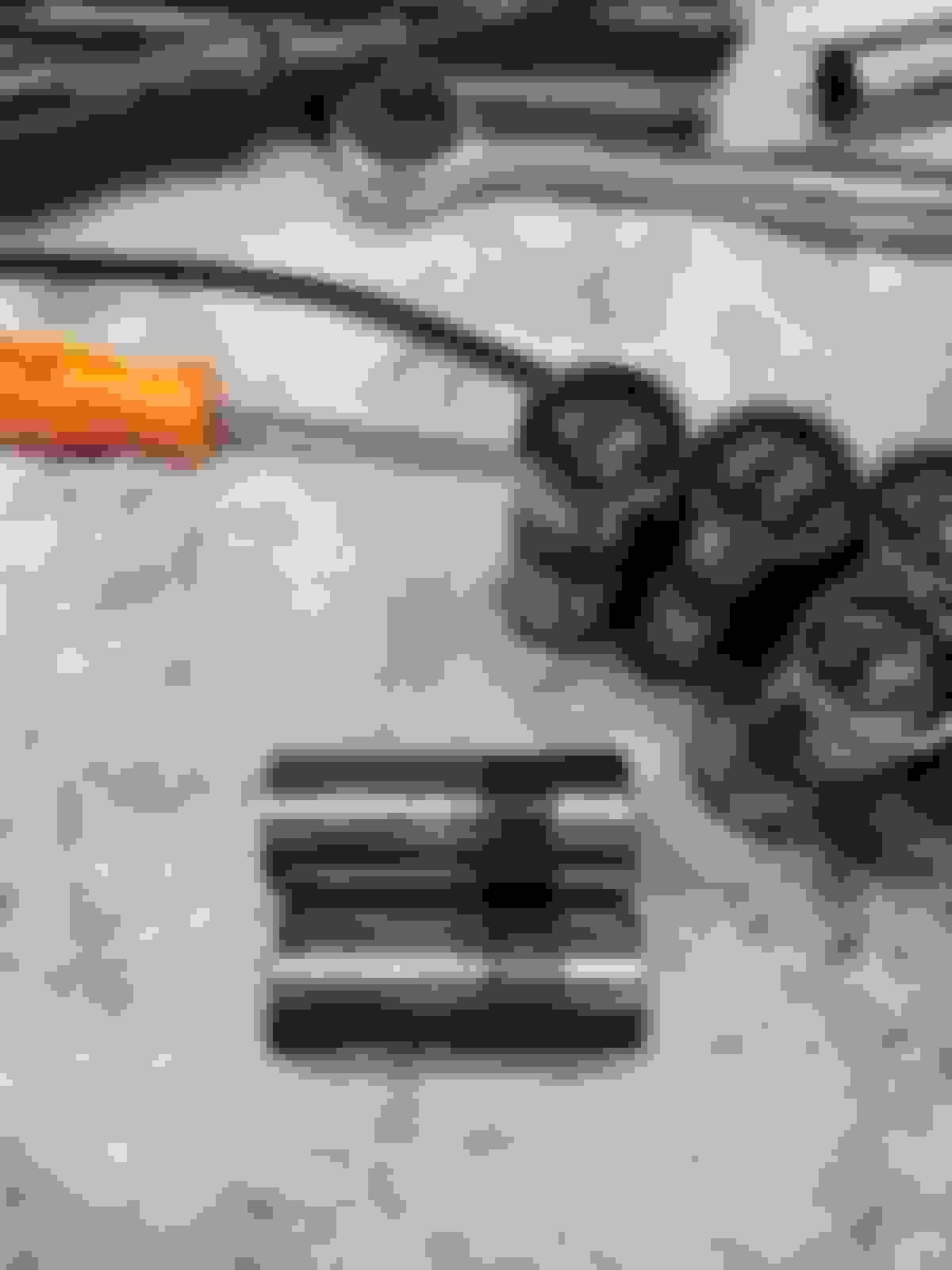
Bad day for the 71 442. I had a lifter tapping. The exhaust manifold gaskets were leaking and I was hoping this was the cause of the lifter noise. So I replaced exhaust manifold gaskets and got the exhaust nice and sealed up, but still had the lifter noise. I pull the valve covers and one rocker is super loose. Rocker and stand are OEM style and are in good shape, not much wear. So I'm thinking collapsed lifter. I pull the intake and all the lifters look good. None collapsed. So I measure pushrod and it's short, not 9.570" like the CSM states. They are new pushrods and they all measure the same, just about 9.5". So I pull out a set of original equipment pushrods and they measure 9.570". So it looks like the person who had the car before me replaced the pushrods with shorter pushrods. It get's better. So I start popping out the hydraulic lifters and all but one pop out easy. The lifter for the loose rocker was tough to pop out. I'm examining the lifters and the one is almost an 1/8" shorter than the rest. See picture below. There's chips off the corner of the lifter at the cam, it's also really badly dished on the bottom, and the cam has scratches on that lobe. See pictures below.
I have two questions. Should I use the longer original equipment pushrods because. They are a little more than 1/16" longer than the pushrods that were in the motor when I got it back? And since there are scratches on the cam lobe do I need to replace the cam as well as the lifters? Scratched Cam Lobe Cupped Lifter Comparison Chips on Lifter
Bad day for the 71 442. I had a lifter tapping. The exhaust manifold gaskets were leaking and I was hoping this was the cause of the lifter noise. So I replaced exhaust manifold gaskets and got the exhaust nice and sealed up, but still had the lifter noise. I pull the valve covers and one rocker is super loose. Rocker and stand are OEM style and are in good shape, not much wear. So I'm thinking collapsed lifter. I pull the intake and all the lifters look good. None collapsed. So I measure pushrod and it's short, not 9.570" like the CSM states. They are new pushrods and they all measure the same, just about 9.5". So I pull out a set of original equipment pushrods and they measure 9.570". So it looks like the person who had the car before me replaced the pushrods with shorter pushrods. It get's better. So I start popping out the hydraulic lifters and all but one pop out easy. The lifter for the loose rocker was tough to pop out. I'm examining the lifters and the one is almost an 1/8" shorter than the rest. See picture below. There's chips off the corner of the lifter at the cam, it's also really badly dished on the bottom, and the cam has scratches on that lobe. See pictures below.
I have two questions. Should I use the longer original equipment pushrods because. They are a little more than 1/16" longer than the pushrods that were in the motor when I got it back? And since there are scratches on the cam lobe do I need to replace the cam as well as the lifters?
Scratched Cam Lobe
Cupped Lifter Comparison Chips on Lifter
1. The side by side comparison is noticeable, but you need to measure from the bottom of the lifter to the "plunger cup" using maybe a 5/16" ball bearing. Thats where the push rod actually sits.
2. Is this a stock cam ?
3. I would say the cam is junk.
Can you feel the scratches in the camshaft? How does the lift on the lobe in question compare to an unscratched love? Is there any measurable difference?
That lifter looks like the cam chewed it away. At least by the photo it looks like there is an angle on the bottom of that lifter. Would suspect cam is totally junk also. Cut oil filter open and look for metal debris.
Yep cam is shot too... I wouldn't buy pushrods yet as you don't know what length you will need yet. If the cam you get isn't OEM, the base circle will probably be smaller and you will need longer push rods than stock. I found this out a while back when I changed my cam. Good luck, Keep us posted...
It’s a little late to test now, but it would have been nice to know what the oil pressure is like, hopefully the lifter wore slow enough that the oil filter caught the debris before damaging the bearings. But that’s pretty slim odds.
Best plan is to pull the engine. Who knows what else is worn or damaged, best to find out before wasting money doing it twice.
Man I hate when this happens. Seems to always be one of the rear lifters / lobes.
Not just on Olds either, other brands as well. Bet the oil pump is trashed too.
Agree with pull engine and clean and inspect, replace cam and lifters. With that much of the lifter missing, the metal had to go somewhere. You really need to check everything now, bearings and piston skirts for embedded metal, etc..
I wouldn't buy pushrods yet as you don't know what length you will need yet. If the cam you get isn't OEM, the base circle will probably be smaller and you will need longer push rods than stock.
This is what I was going to post as well. Push rod length is the last thing to check after everything else is assembled. Head milling, block deck milling, head gasket thickness, and camshaft base circle all contribute to the necessary pushrod length.
Not only is the cam now junk, but you may have wrecked the lifter bore by forcing the worn lifter "up" and out instead of "down", having removed the cam first.
If that lifter bore is scratched...you're probably looking at a different block, or a sleeve in the lifter bore.
As said...there's no predicting how long the pushrods are going to be. You'll be checking sweep or preload (depending on the rockers used) with an adjustable pushrod once you have the long-block back together.
I'm surprised the rockers and stands are usable. Every engine I take apart, 1/2 or more of the rockers or stands are scrap.
Well, the good news is the lifter socket is not scratched. The scratches on the cam are minimal. If it weren't for the wear spots on either side of the lobe I would have said polish the scratches and the cam might have been salvageable. I think before I pull the motor I'm going to pull the pan and look at the rear main. I was going to change the rear seal to the ford 460 seal while I'm there anyway. See what the bearings look like. The oil pressure has not changed and is still good, but I'm using the Ralley Pack gauges. I'm running the OEM rockers and stands and I could move some of the rockers with my fingers without a ton of force. The rocker at the bad lifter was noticeably looser. The rockers and stands are all in good shape. I replaced them less than 20,000 miles ago. I have not cut open the filter but I still have it and the oil from the oil change I did days before pulling this apart. I'm trying to figure out what cam this is. I know it's not the original cam. At the rear end is stamped 1023R and cast into the shaft towards the front is EP28. Originally I thought it might be the Speed Pro CS-1023, but that is shaft EP2. Now I'm thinking it might be an Engle EP28, but I'm guessing. Following are pictures of the cam markings I mentioned. There are other markings on the shaft. Anyone have any idea about ID'ing this cam? I don't want to go down in performance when I buy the new cam.
What causes a motor to eat a lifter like this?
EP28 cast into shaft 1023R stamped on end
Last edited by friesjh; Feb 23, 2021 at 08:33 AM.
Reason: More detail
Well, the good news is the lifter socket is not scratched. The scratches on the cam are minimal. If it weren't for the wear spots on either side of the lobe I would have said polish the scratches and the cam might have been salvageable. I think before I pull the motor I'm going to pull the pan and look at the rear main. I was going to change the rear seal to the ford 460 seal while I'm there anyway. See what the bearings look like. The oil pressure has not changed and is still good, but I'm using the Ralley Pack gauges. I'm running the OEM rockers and stands and I could move some of the rockers with my fingers without a ton of force. The rocker at the bad lifter was noticeably looser. The rockers and stands are all in good shape. I replaced them less than 20,000 miles ago. I have not cut open the filter but I still have it and the oil from the oil change I did days before pulling this apart. I'm trying to figure out what cam this is. I know it's not the original cam. At the rear end is stamped 1023R and cast into the shaft towards the front is EP28. Originally I thought it might be the Speed Pro CS-1023, but that is shaft EP2. Now I'm thinking it might be an Engle EP28, but I'm guessing. Following are pictures of the cam markings I mentioned. There are other markings on the shaft. Anyone have any idea about ID'ing this cam? I don't want to go down in performance when I buy the new cam.
What causes a motor to eat a lifter like this?
EP28 cast into shaft 1023R stamped on end
You can remove oil filter and cut open. That will determine how much trash is in motor. I would not polish lobe and reuse. Maybe get cam reground but then you may lose some lift. Just depends how much they need to grind off base circle.
Crappy cam cores, crappy lifters are the primary causes.
Lifter failures like you experienced got real popular about the same time that companies ramped up Chinese imports of cam cores and lifters.
Since that would mean the folks responsible would have to pay for warranty repairs for substandard, failed lifters and cams, they invented the whole "BLAME THE EPA" "Zinc myth" that went hobby-wide. It wasn't the fault of the dirtbags importing faulty crap from a manufacturing hell-hole, it was the fault of a Government Agency.
That myth still persists; in fact it's opened-up a whole new profit stream: expensive break-in Oil. You know...the really-expensive version of old-fashioned low-detergent single-weight stuff Grandpa put in his '65 Delta 88.
Condensation will form inside dormant engines that are exposed to temperature changes and will cause surface corrosion. Then when ran the corrosion acts as a lapping compound creating severe galling. This process can be accelerated when the metals are lesser quality or insufficiently heat treated. Buy good parts, use good oil, run the engine long enough to cook out moisture, not just until slightly warm. We have witnessed this time and time again with our aircraft that don’t get properly used, and the increased cam failures in the last eight years is reflective of the diminishing quality of parts. The price continues to rise though.
Crappy cam cores, crappy lifters are the primary causes.
Lifter failures like you experienced got real popular about the same time that companies ramped up Chinese imports of cam cores and lifters.
Since that would mean the folks responsible would have to pay for warranty repairs for substandard, failed lifters and cams, they invented the whole "BLAME THE EPA" "Zinc myth" that went hobby-wide. It wasn't the fault of the dirtbags importing faulty crap from a manufacturing hell-hole, it was the fault of a Government Agency.
That myth still persists; in fact it's opened-up a whole new profit stream: expensive break-in Oil. You know...the really-expensive version of old-fashioned low-detergent single-weight stuff Grandpa put in his '65 Delta 88.
^^^^ THIS
Couldn't agree more with everything you said Schurkey.
I remember when the cam break-in procedure was: keep it under 2500 rpm for the first 500 or so miles.
EP28 is the casting from EPC for an Oldsmobile Flat Tappet core. This is what I found on the 1023R is 214/224 @ 0.050", 290/300 @ 0.006" 112 Lobe Separation
So do you think it's the Speed Pro can or the Engle can? From what I can tell the Speed Pro is a EP2 core and the Engle is a EP28 core. At least from what I can tell.
So do you think it's the Speed Pro can or the Engle can? From what I can tell the Speed Pro is a EP2 core and the Engle is a EP28 core. At least from what I can tell.
It’s a Speed-Pro 1023R camshaft in an EPC EP28 cast core from what I can see. PM me if you want to verify the cam specs.