When you click on links to various merchants on this site and make a purchase, this can result in this site earning a commission. Affiliate programs and affiliations include, but are not limited to, the eBay Partner Network.
I have a 1967 Cutlass Convertible which I bought in about 2000. After kids came along and an additional 15 years of benign neglect, I just had the car (partially) restored and its back on the road. But when we moved to a house with a much steeper driveway, the car was towed into my garage and I only now realize that this car is scraping (albeit *just* scraping) when it comes out of our driveway. It needs new tires anyway, but I don't know what all of my options are there -- I only see the recommended tire size as 205 75 R 14 or 225 70 R 14 (what is on my car is 215 70R14) -- is there a reasonable limit to how tall of a tire I can put on this thing? My guess is about another 1" of clearance solves for this. Alternately, are tires the solution here or should I look to raising the back end by an inch or two?
I'm not particularly mechanical but I can throw money at this problem (to a point). I have a trusted shop. But it needs new tires and I figured I'd start with that.
If you plan to keep the 14" wheels, your tire options are severely limited. The stock tires were 7.75x14, which had a 7.75" section width and a 26.7" outside diameter. Unless you plan to buy reproduction bias ply tires in that size, your only options are 225/70-14, which are 26.4" in diameter or 225/75-14, which are 27.3" in diameter. Note that these are the ideal unloaded diameters. The problem with radial tires is that the sidewalls flex more than do those of bias ply tires, which means that the effective height is a little less. Note that your 215/70-14s are only 25.8" diameter. The 225/70-14 redlines will look sweet on that car, but since Coker took over sale of the Silvertowns from BF Goodrich, the price has gone through the roof.
Since you say the rear is scraping, it may be time for new springs. If so, they are easy to install.
Maybe post a picture of your car from the side so we can see if the rear is sagging; or alternatively. measure the ride height using the information from the CSM. (This would be a good time for someone with that info to post a picture of the page).
Thanks to both of you! Any sense about how big a wheel is too big (both practically and for looks)? I'll ask the guys at the tire shop to take a look at the springs.
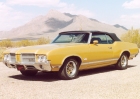
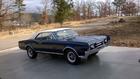
I'll pull it out of the garage again later today and take a few snaps. Here's me getting it back from the shop on Friday.
Moving up to a larger wheel size would be a better choice, to broaden your tire choices - as has been said, 14" tire options are essentially few and far between. Even a swap to 15" wheels could make all the difference for you - and they're adaptable to front disc brake kits should that be on your longer list.
That said, going to a taller profile just by itself may not solve your problem entirely if your springs are worn and have dropped in height. If they're original (or close to it), may be time to address them first - rear springs are a fairly easy DIY job so maybe do those first to see the result - but probably best to do all 4 to ensure an even ride height from front to rear.
moving up to a larger wheel size would be a better choice, to broaden your tire choices - as has been said, 14" tire options are essentially few and far between. Even a swap to 15" wheels could make all the difference for you - and they're adaptable to front disc brake kits should that be on your longer list.
That said, going to a taller profile just by itself may not solve your problem entirely if your springs are worn and have dropped in height. If they're original (or close to it), may be time to address them first - rear springs are a fairly easy diy job so maybe do those first to see the result - but probably best to do all 4 to ensure an even ride height from front to rear.
Thanks to both of you! Any sense about how big a wheel is too big (both practically and for looks)? I'll ask the guys at the tire shop to take a look at the springs.
Don't hold your breath expecting a competent answer. The Chassis Service Manual provides details on how and where to measure ride height, and the correct measurements for each model and body style. Simply looking at a spring unfortunately won't tell you anything (unless there's something obvious like a broken coil). The tire shop isn't going to have the correct ride height measurements for this car. Frankly, you don't want to go too tall either. If new tires and/or springs don't fix the problem, consider air lift bags in the rear springs with an on-board compressor. You can air up the suspension to get in and out of the driveway and return it to normal once on the road. GM sold an aftermarket kit to do just that, and it would be "period correct" for your car.
The control head goes under the dash.
The GM system used a pump operated by engine vacuum and air shocks. Personally I'd use the air bags that go in the rear springs for better load carrying.
The Air Lift bags go in the rear coil springs. This puts the load directly into the spring pockets on the frame, which are designed to take it (unlike the shock mount locations when using air shocks).
GM sold an aftermarket kit to do just that, and it would be "period correct" for your car. The control head goes under the dash.
The GM system used a pump operated by engine vacuum and air shocks. Personally I'd use the air bags that go in the rear springs for better load carrying.
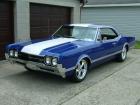
So here's the driveway -- it's at a ~10-14 degree angle where the rear wheels are as it scrapes. We measured how much deflection the car makes before it frees itself from the scraping and it's only about 1.5" -- it's hitting on the back right corner of the bumper. So I think a larger wheel (I like the look of those 17"s up above) ought to give us plenty of clearance. Also figured out that if I angle the car to point the back end toward the left side of the driveway, it only scrapes for about an inch or two along the ground.
And I like that air suspension thing, although that's a "let's do later" accessory --- but it's very cool!
...I think a larger wheel (I like the look of those 17s up above) ought to give us plenty of clearance...
A larger wheel won't automatically solve your problem. Tires for larger wheels have shorter sidewalls that keep the tire height close to what you already have. The difference is that there is a greater variety of tires available for larger wheels. So you still need to shop by tire outside diameter, no matter what your wheel size is.
Go with a larger wheel only if you like its design and how it makes your car look. The shorter sidewalls can make the ride rougher.